
Audit finds problems in UK's body bequeathal program; coroner Gary Ginn loses second job
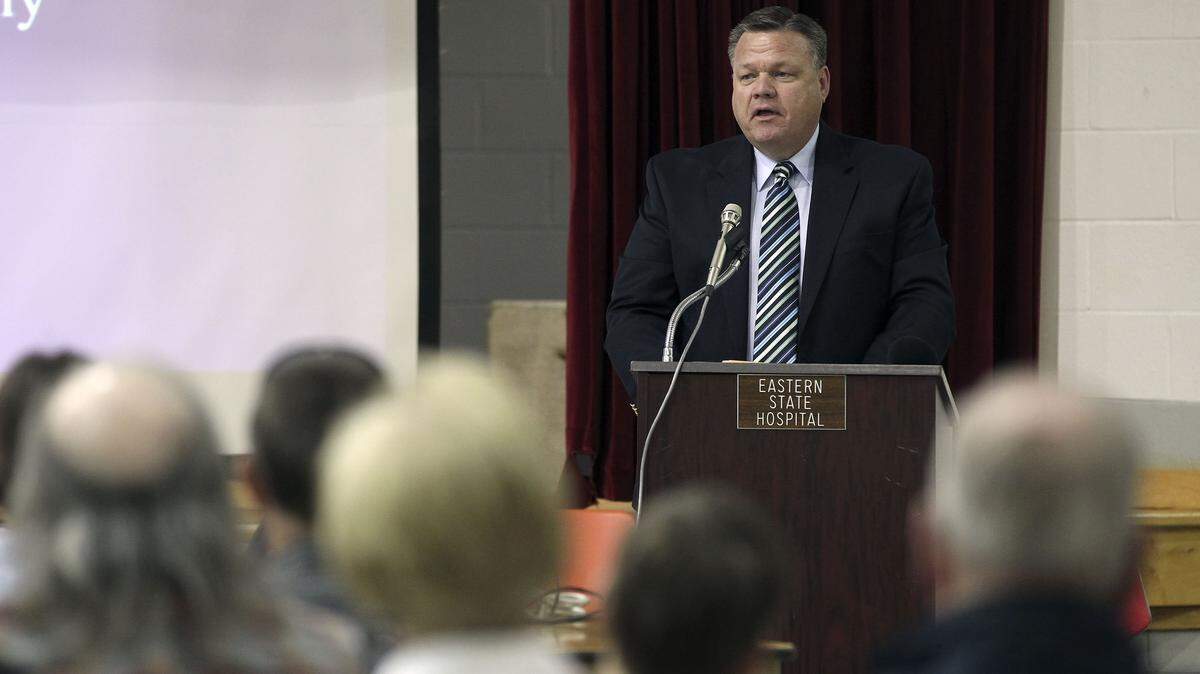
The University of Kentucky has begun a sweeping overhaul of its body bequeathal program after finding numerous problems with its administration and oversight, including a three- to five-year delay in burying the remains of people who had given their bodies for scientific research.
The overhaul includes eliminating the position of program director Gary Ginn, who also is the Fayette County coroner.
"I want to apologize on behalf of the entire UK community for the failings we have uncovered in this important program," UK President Eli Capilouto said. "The body bequeathal program has long been important to our teaching mission. It has also been important to so many individuals and their families who made selfless donations, born of compassion and fueled by a sense of service to others. We apologize to them and want them to know that we are moving quickly to fix what was broken and restore their trust in us."
Ginn did not respond to messages seeking comment Tuesday.
The program has been handed over to a third-party administrator, Kentucky Mortuary Services of Lexington, and a request for proposals will be issued to find a permanent administrator, UK officials said.
Capilouto ordered an internal audit of the program after the Herald-Leader published a story in January about the backlog in burials. In a letter sent to affected families in January, Capilouto pledged an "immediate review of the program, what happened, and what must be done to ensure that it doesn't happen again."
At the time, Ginn first blamed budget problems for delays in burials, but then said he'd been off the job with an illness.
Currently, there are 235 cremated remains at UK that have not been buried. UK officials said they are contacting all of those families.
According to the audit, bodies are used by students and scientists an average of 2.7 years before they are cremated. That amount of time is considered normal. But according to UK's review of other body bequeathal programs, the time between cremation and burial should be six months. At UK, it averages 3.2 years.
The audit also found numerous problems with record-keeping, documentation and correspondence with families. Many records were kept on paper, instead of in computer files. Auditors found it difficult to track records of donations and student fees used to finance the program, and they couldn't always tell from records when burials had taken place.
The crematorium at UK was not on a routine maintenance schedule, and there were poor records of when it was used.
The audit did not find financial impropriety or misuse of donated remains.
Questions were raised about whether Ginn, who has a full-time job as county coroner, could embalm and cremate the bodies — about 60 a year — while overseeing all record-keeping and arranging burials and shipments of remains back to their families.
"There were a lot of responsibilities for one person," said Eric Monday, UK's executive vice president for finance and administration, who oversees the audit division.
The audit also found that there was not sufficient oversight of Ginn and the program.
Don Gash, who oversaw the program as chairman of UK's anatomy and neurobiology department, will step down as chairman, provost Tim Tracy said. He declined to comment further on a personnel matter. The dean of the College of Medicine will now oversee the program.
"This is about institutional oversight, and we should have done better," Tracy said of the audit's findings.
Among other changes, UK will now pay for the program's annual budget, roughly $150,000, from its general fund. In the past, the program was financed through $300 burial fees and an $87 fee from each student at the health colleges who used the bodies in their studies. Those two fees will be eliminated.
Between 2,300 and 2,500 remains of people whose bodies were donated to UK since 1960 are buried in Section 36, the University of Kentucky section of the Lexington Cemetery. Ginn arranged the burial of 91 sets of remains in December. Before that, the most recent burial had occurred in 2009.
Ginn's full-time employment with UK became an issue in last year's race for county coroner.
Ginn, who has held the elected office and the UK job since 2002, was challenged by Larry Owens, who filed a complaint against Ginn with the Lexington-Fayette Urban County Government Ethics Commission.
The commission dismissed the complaint, saying there was not a conflict of interest in holding the two jobs, and Ginn beat Owens by a wide margin.
The coroner's job pays $71,000 a year, and the UK job paid $55,000.
Russ Zirkle contacted the Herald-Leader last January because the remains of his brother, UK art professor Ross Zirkle, who died in 2007, had not been buried.
"As far as I'm concerned, that's great news," Russ Zirkle said of the UK audit. "Those are people's loved ones they're taking care of."
This story was originally published May 19, 2015 at 2:50 PM with the headline "Audit finds problems in UK's body bequeathal program; coroner Gary Ginn loses second job."