
Rand Paul spent much of his Senate re-election money while running for president
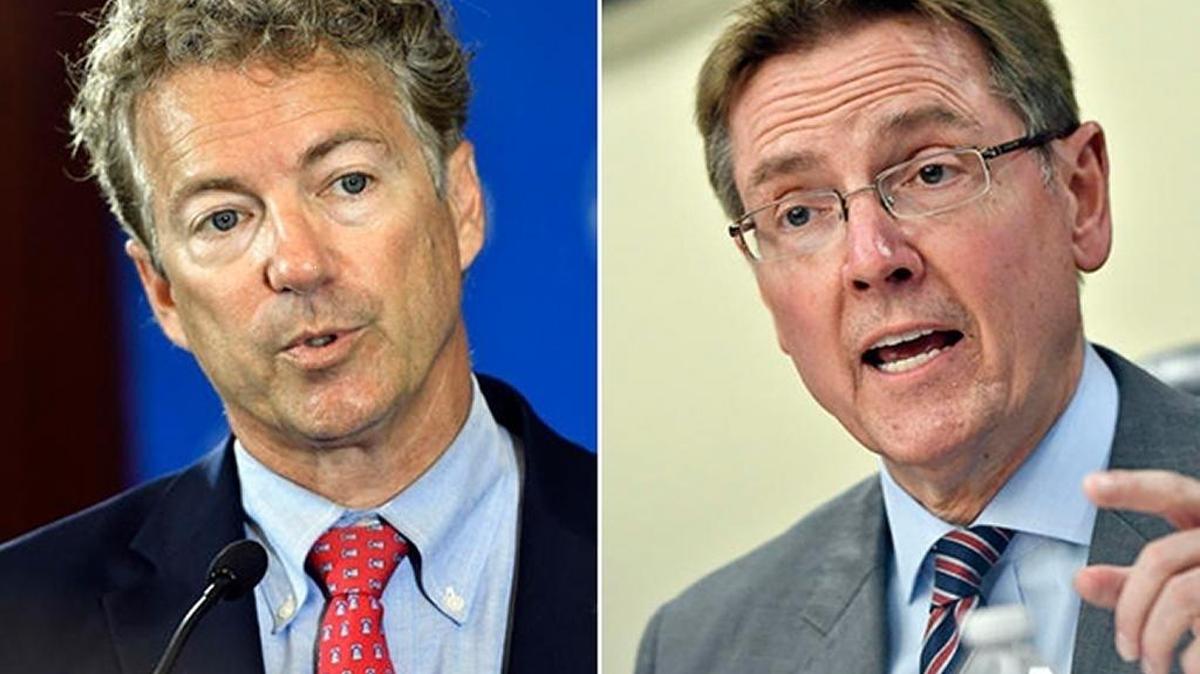
Rand Paul spent four years in the U.S. Senate accumulating millions of dollars to support his re-election campaign, but when it came time to actually run, much of the money was gone.
By the time Paul officially dropped out of the presidential race early this year to focus on maintaining his Senate seat, he had $1.5 million cash on hand, despite raising $6.2 million between 2011 and 2014.
In 2015, Paul’s Senate campaign fund transferred $1.4 million to his presidential campaign. Prior to that, he had been laying the groundwork for a national campaign, spending some of his Senate re-election money on communications firms and mailers.
Those moves helped open a door for Democratic nominee Jim Gray, the mayor of Lexington, who has out-raised Paul in 2016, putting him in a competitive place financially with less than three weeks left until the Nov. 8 election.
When Gray entered the race in January, he quickly cut Paul’s financial advantage by loaning his campaign $1 million from his own pocket.
Since then, Gray has collected $284,271 more than Paul, not including his personal loans to the campaign.
Gray has outspent Paul in two of the last three quarters and by $1.1 million in 2016. Still, Paul has around $580,000 more cash on hand than Gray.
“It’s not the difference in the money that matters,” said Stephen Voss, an associate professor of political science at the University of Kentucky. “It’s does the challenger have enough to make his message heard?”
Polls have consistently shown Gray trailing Paul, with the most recent poll by lobbyist Bob Babbage’s Cofounder group giving Paul a 6.5 percentage point lead. Statistical analysis website FiveThirtyEight gives Gray a 25.3 percent chance of winning, up significantly from the 10 percent rating Gray held through most of the summer.
“The fact he still lags Paul in recent polling, despite Trump’s decline among voters in that same poll, calls into question whether more spending can tighten the race,” Voss said.
Where the money went
As a freshman senator, Paul raised only $287,000 in 2011 and 2012, but his numbers jumped significantly in 2013 and 2014 as Paul gained more national recognition and was called “the most interesting person in politics” by Time.
By the end of 2014, Paul had $2.9 million cash on hand.
When asked where the campaign spent it’s early senate campaign cash, Paul spokeswoman Kelsey Cooper said it was spent “communicating with people in Kentucky and our donors.”
Paul’s presidential bid undoubtedly helped keep his name recognition high in Kentucky, “but it didn’t tell people what he’s accomplished as a Senator,” Voss said.
Since refocusing on the Senate race, Paul hasn’t accumulated cash at the same rate as in 2013 and 2014. Earlier this year, his presidential campaign returned around $262,000 to his re-election effort.
“Rand Paul is not exactly the most friendly candidate for deep pocket donors or corporations,” Voss said.
Gray, though, has received little to no help from the National Democratic Party and the Kentucky Democratic Party, which is focusing what little money it has on maintaining a majority in the Kentucky House of Representatives.
Voss said lack of support from the national and state parties allows Gray to craft his own message, but could also mean the national party doesn’t think Gray has a chance of defeating Paul.
Regardless of where the money is coming from, Voss said, Gray still has enough to make his voice heard before Election Day.
“By the time this is over,” Voss said, “Gray seems to have enough money that voters will have had to make a choice.”
Daniel Desrochers: 502-875-3793, @drdesrochers, @BGPolitics
This story was originally published October 21, 2016 at 6:11 PM with the headline "Rand Paul spent much of his Senate re-election money while running for president."