
This race will determine Lexington's next vice mayor. See who's running and why.
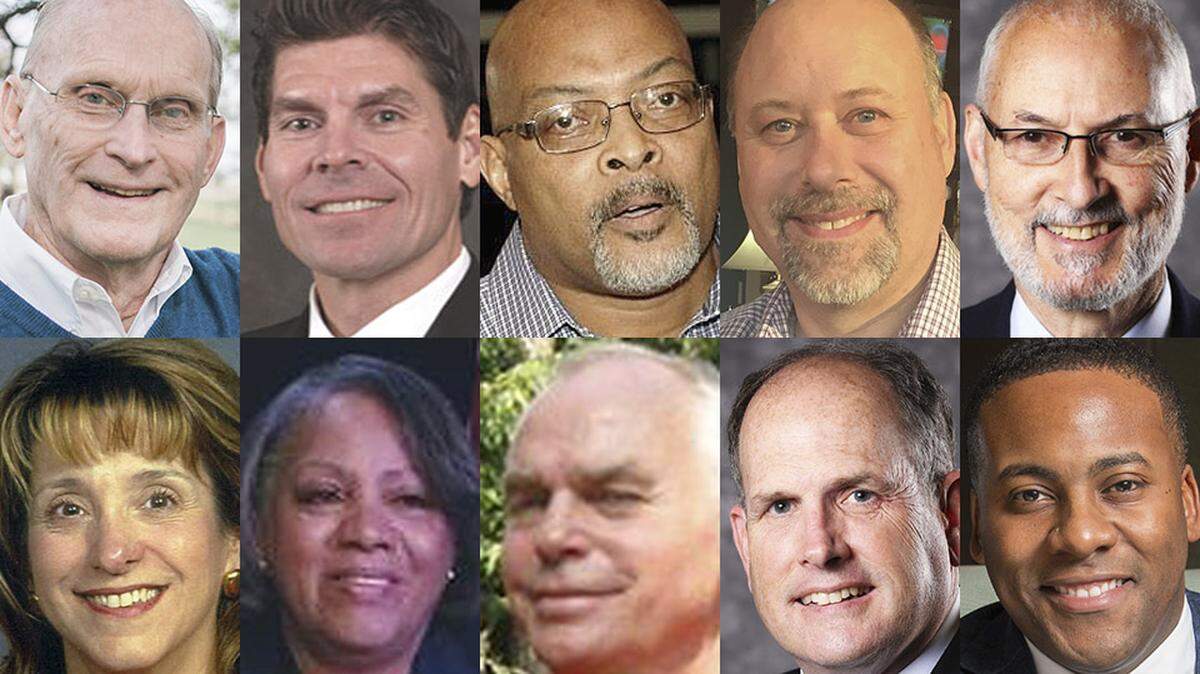
The race for three at-large Lexington council seats includes four current and former council members and six other candidates with varying degrees of political experience.
The top six vote getters in the at-large race on May 22 will advance to the November general election. The person who receives the most votes in November becomes vice mayor and will lead the 15-member Lexington-Fayette Urban County Council. The second and third place finishers become at-large members and serve four-year terms.
The city-wide race is nonpartisan. The vice mayor makes $34,451. All other council members receive an annual salary of $31,606.
These are the 10 candidates:
Harry Clarke
Harry Clarke, 80, is a retired University of Kentucky faculty member who served as the 10th District Council representative from 2012 and 2014. He said he wants to return to public service and is "excited about the concept of representing the entire city."
Clarke said he thinks Lexington is doing pretty well as a city, but it's obvious that one of its biggest problems is the opioid epidemic. He'd like to see the Urban County Council form a group that is responsible for finding out why people abuse drugs and then address those issues.
"If we don't get to the root causes, we'll never get to the real problem," he said.
Clarke said he also strongly supports Lexington's current urban service boundary, which defines where urban-style growth can occur in Fayette County.
"When people come to Lexington, they are amazed by what they see," with the rural areas and horse farms, he said. "The boundary really defines what Lexington is."
Chuck Ellinger
Another familiar face is Chuck Ellinger II, 54, who served as an at-large council member from 2003 to 2014, and is looking to return. He ran unsuccessfully for the 3rd District Council seat in 2014.
"Lexington has been very good to me and I want to give back," said Ellinger, an attorney and investor. "There's not a more noble profession than public service."
His first priority is working on public safety, then affordable housing, which is a topic he has worked on before.
"Council's goals and objective are infill and redevelopment, but we have to make sure that if we're going to grow up and not out, we have to also make sure we're providing opportunity for development," he said.
Ellinger said the opioid crisis is close to his heart after a friend's son died of an overdose. "I think all of us have been touched by this," he said.
Arnold Farr
Arnold Farr, 53, is a philosophy professor at UK and a first-time candidate.
Farr said he has three top issues: poverty, opiate addiction and violent crime. "These three things are intertwined, and you should not treat them separately," he said.
Farr pointed out that economic struggles can lead people to crime or drug use.
He'd like to continue the fight to raise Lexington's minimum wage and to create some kind of city-wide bargaining right for workers, giving them a stronger voice about wages and working conditions. He would also like to increase the amount of affordable housing in the city, then work on improving neighborhoods without making them too expensive for homeowners who have always lived there.
"Problems with gentrification are impacting that problem to a great extent," he said.
Todd Hamill
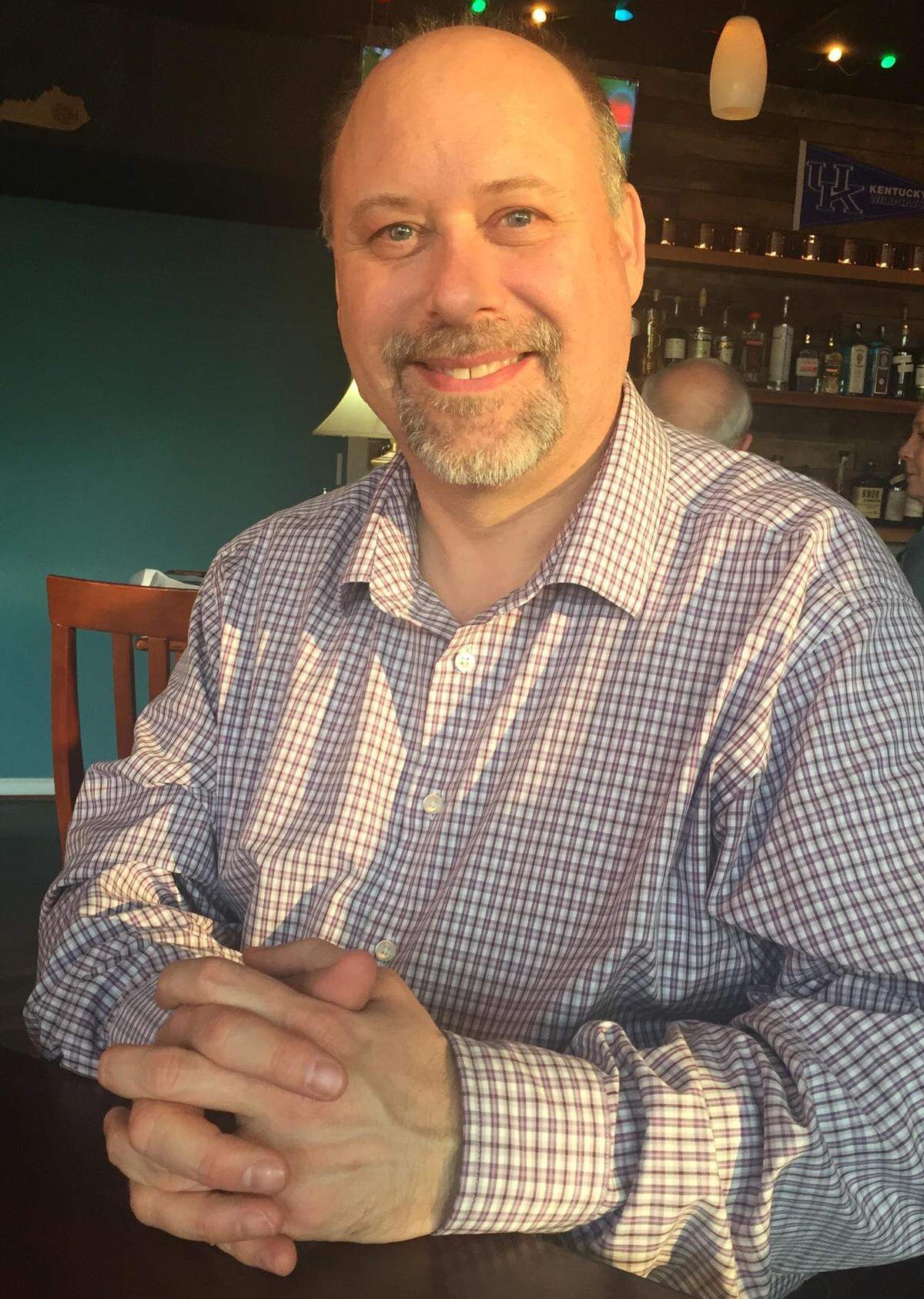
Todd Hamill is a senior account executive for Windstream Enterprise, but in his spare time he co-directs the Glendover Basketball League. Hamill, 48, says work and hobbies have prepared him for a first run at elected office. "I'm at that point in life when you're supposed to give back," he said.
Hamill said his greatest strength is an understanding of technology that eludes many elected officials, which then hurts their constituents. For example, when candidates recently had a discussion of traffic, he asked "are we talking about traffic today or in just a few years, when we'll have driverless cars?"
A similar question is about development and jobs. "Do I really need to find 500 acres to build a factory, or do I instead need to ask how technology will change what my work needs are?" he asked. "Instead of trying to deal with a 20th-century approach, we have to realize that all these things are all changing."
Steve Kay
Steve Kay, 74, was elected vice mayor in 2014. Kay won his first at-large seat in 2010. He also is a partner in Roberts & Kay, a consulting firm in organizational development.
Kay said growth and infill development is still one of the top issues facing Lexington.
"How do we continue to grow and how do we maintain our quality of life?" Kay said. "I think we need to look at more comprehensive and long-range perspectives about how we are going to grow."
Kay said emphasizing community-based policing that allows police to spend time and develop relationships in neighborhoods will help reduce crime.
"Community policing has been part of what we have been doing," Kay said. "We need more of an emphasis on community policing."
Kay said he pushed forcreation of the affordable housing fund three years ago but said more money is needed. It now gets $2 million annually.
"There is a growing need," Kay said. "We need to commit more resources."
Connie Kell
Connie Kell, 64, has run unsuccessfully for Urban County Council before, both for an at-large seat in 2014 and for the 9th Council District seat in 2012. As a retired auditor, she thinks Lexington is letting too many taxes from out-of-town businesses go uncollected, money that could improve the community with projects such as public retirement communities for the aging.
"That's why I ran before and why I'm running again," she said. "We need to increase revenues to all divisions of government and then have more stewardship and accountability for spending."
Public safety is also a big priority because "I do think neighborhoods are less safe than when I moved here in 1995." Kell also supports keeping the urban service boundary as it is, improving the quality of community growth rather than its breadth.
Lillie Miller-Johnson
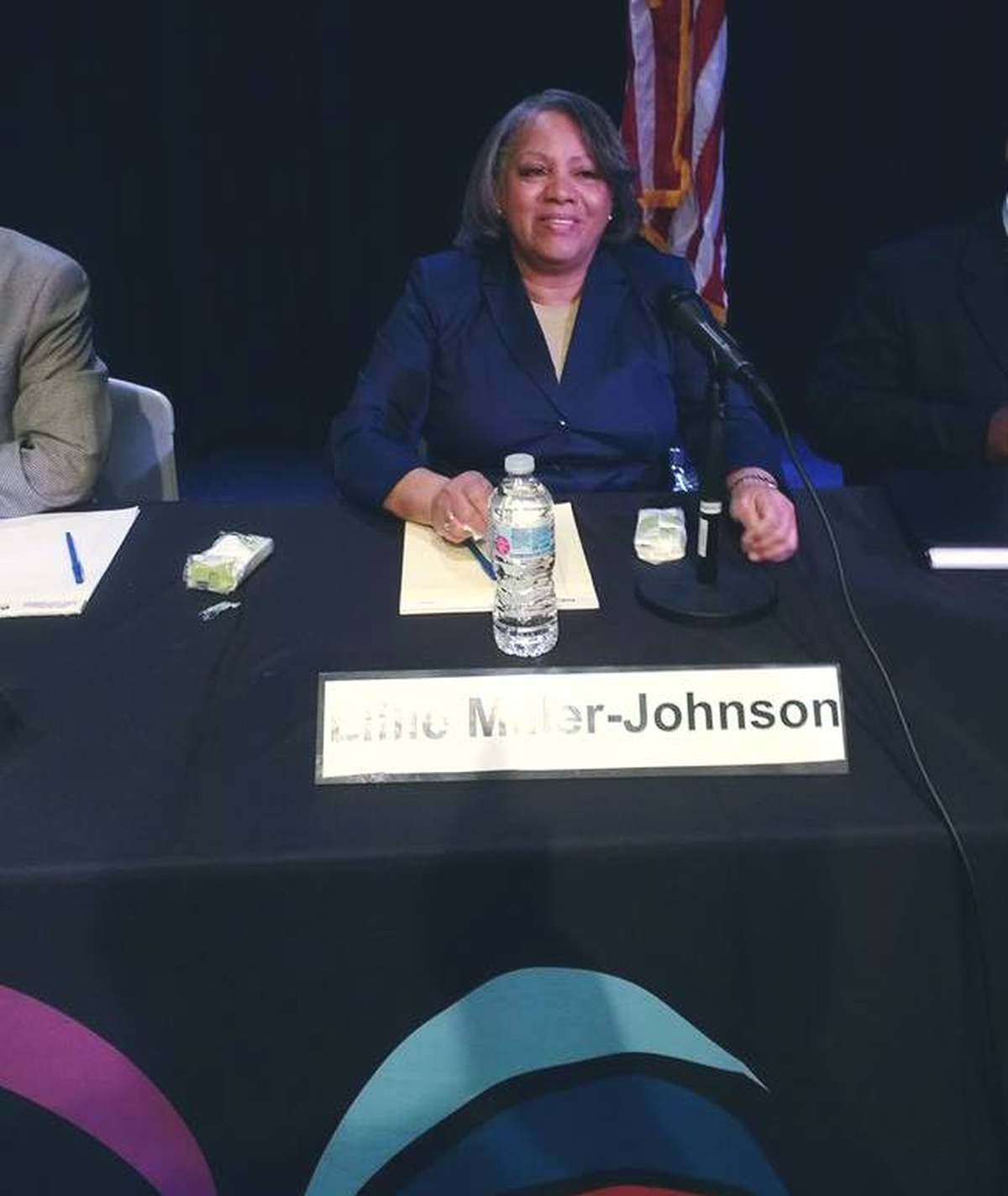
Lillie Miller-Johnson, 63, is in her third-term as a soil and water conservation district supervisor. She is currently unemployed but has previously worked in various positions, including as an office manager.
Miller-Johnson said she prayed and decided that God wanted her to run for the at-large position. Although unemployment is low, not everyone can find a job, she said..
"We have housing going up all over the place but is it affordable?," Miller-Johnson said. "Besides that, we need to bring in more revenue."
Public safety is also a big issue, she said.
Matt Miniard
Matt Miniard, 61, is taking a first run at office to pursue what he calls a "social justice" platform. It's a cause near to his heart because of his own troubles with the law, including jail time for domestic violence, that he believes are unfair. A long-time real estate appraiser who has twice had his license suspended by state regulators, Miniard said affordable housing and infill are the most important ways to improve social equality.
"I'm running because I think I can make a difference to enhance the overall quality of life for people living in this city," he said.
For example, Miniard said the city could build high-rise developments to house anyone in Lexington's senior population who needs housing. Despite his advocacy for more development inside the urban service boundary, he said he's not a fan of the city's Purchase of Development Rights program, which pays landowners to leave farmland undeveloped.
"Instead of purchasing development rights, the city should take that funding and update its infrastructure to have greater sewer capacity inside the urban service area," he said.
If Lexington wants to fulfill its role as a great city," Miniard said, "it must do more for the 97 percent of the 'have nots' who are neglected within the framework of social inequality."
Richard Moloney
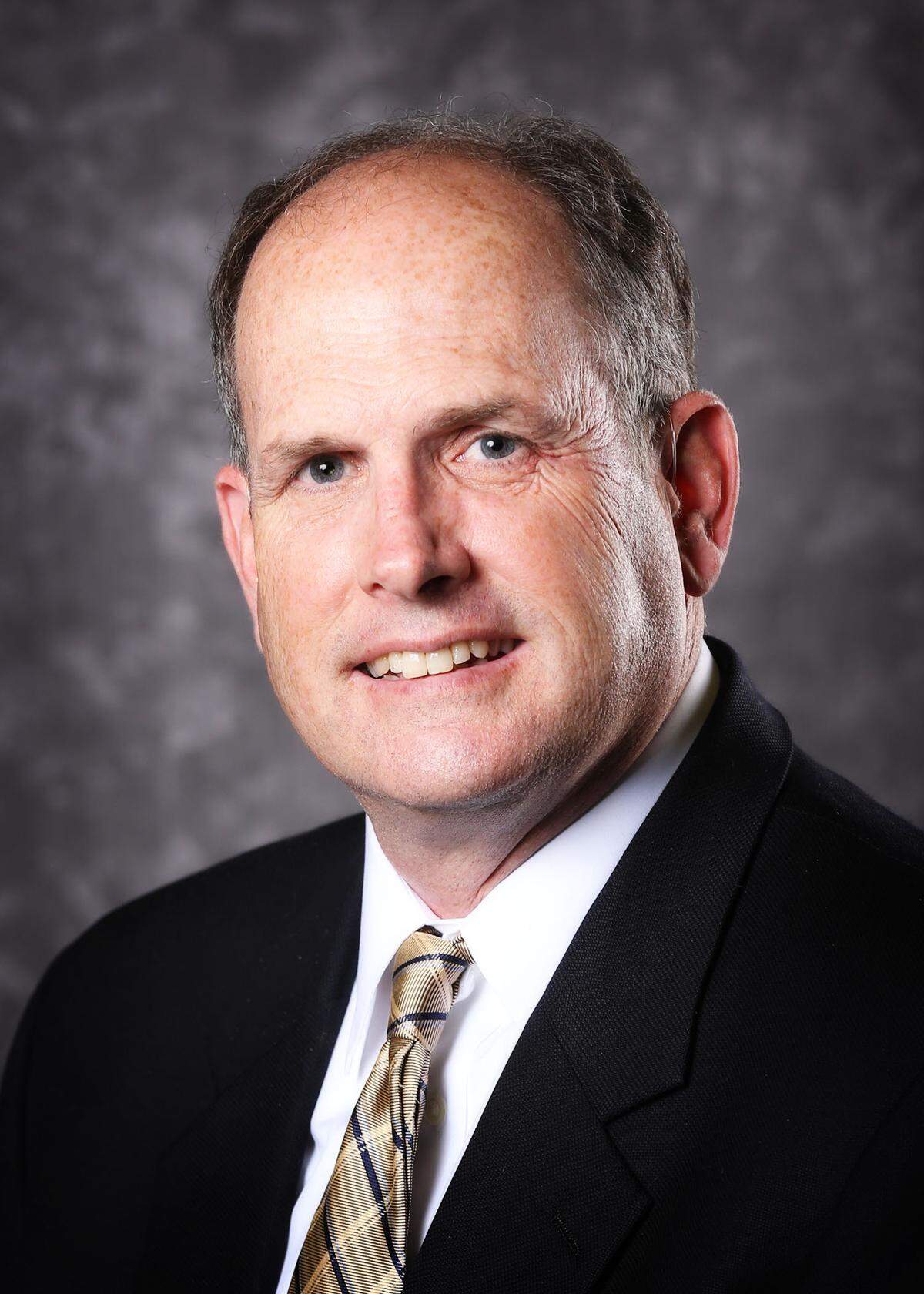
Richard Moloney, 58, is an at-large council member who was elected to the position in 2014. Moloney also served seven terms on the council from 1987 until 2007. Prior to returning to council in 2014, Moloney was chief administrative officer and held other positions in Mayor Jim Gray's administration.
Moloney said ballooning pension payments to the state will mean lean budgets for the next several years.
"We have to come up with $21 million over the next four years," Moloney said, leaving little or no money to hire more police or start additional programs.
"The only way you can get money is to raise taxes or create more jobs," Moloney said. "I don't want to raise taxes. My number one priority is bringing in new jobs."
The city needs to partner with more nonprofits and social service agencies to address the opioid epidemic and provide more treatment options, he said.
Moloney said he also wants to make sure the city's money is being spent in all neighborhoods and not just downtown.
"We've put a lot of money in downtown but I want to make sure that the suburbs get a piece of the pie," he said.
Adrian Wallace
.jpg "IMG_9948 (1).jpg")
Adrian Wallace, 32, runs a community development nonprofit and does public relations consulting. He is the former president of the Lexington-Fayette branch of the NAACP.
Wallace said he wants to see the city step up its prevention and intervention efforts on drug abuse.
"We have put far too little effort into prevention and intervention," Wallace said. "We need a comprehensive prevention plan that goes from birth to earth."
By the time some kids are 12, they are already being recruited by gangs, he said. Wallace said the city also needs to focus on small business development and nurturing entrepreneurs.
"We will see a return on investment by focusing on entrepreneurs, as opposed to large tax breaks we give to large companies to relocate to Lexington," Wallace said.
He also thinks preschool school be free to all kids.
"If that's not something the school system can fully fund then the city should try to fund it or form partnerships with other nonprofits," Wallace said.
Wallace was charged with driving under the influence in Franklin County in 2008, in addition to speeding and two counts of having an open beverage container in his car. He entered an Alford plea — he maintained his innocence but acknowledges there was enough evidence to convict him — to the DUI charge and paid fines totaling $718 and attended court-ordered alcohol education classes . Wallace said he had been celebrating with friends after returning from a year in Iraq with the Kentucky National Guard.
"I had too much to drink and drove back from Frankfort to Lexington. I was over the limit," Wallace said. "It was a mistake."
A website called arrests.org also lists a burglary and animal cruelty charge in connection to the 2008 DUI charge, but a search of Kentucky court records and the original 2008 citation does not list burglary or animal cruelty charges.
"That's a mistake," Wallace said. "I have contacted that website and tried to get those charges taken down. I know people are trying to use it during the campaign and some people think I've had those charges expunged. It's not true. Those charges don't even make sense in connection with a DUI charge."
Wallace has also been sued in small claims court. In December 2013 he was sued for payment of $8,334.26 plus interest on a debt he owed to C&F Finance Company in Virginia. His wages were garnished and the judgment was paid in March 2014. In July 2015, he was sued by University of Kentucky Federal Credit Union for $510.25. His wages as an employee of Broadway Christian Church were garnished to collect that debt, according to court records.
As late as March, Wallace was served with an eviction notice but it was dismissed, court records shows.
Wallace said he has struggled at times to pay all of his bills.
"We aren't rich," he said. "I have a seven-member family and have struggled to pay bills sometimes. But I think that I represent and understand what a majority of people in Lexington are facing."
This story was originally published May 17, 2018 at 2:31 PM with the headline "This race will determine Lexington's next vice mayor. See who's running and why.."