Thousands were freed from Kentucky jails to avoid COVID-19. Few have re-offended.
COVID-19 forced Kentucky into a sudden experiment with bail reform as local courts officials released thousands of jail inmates to await trial at home rather than make them risk infection behind bars.
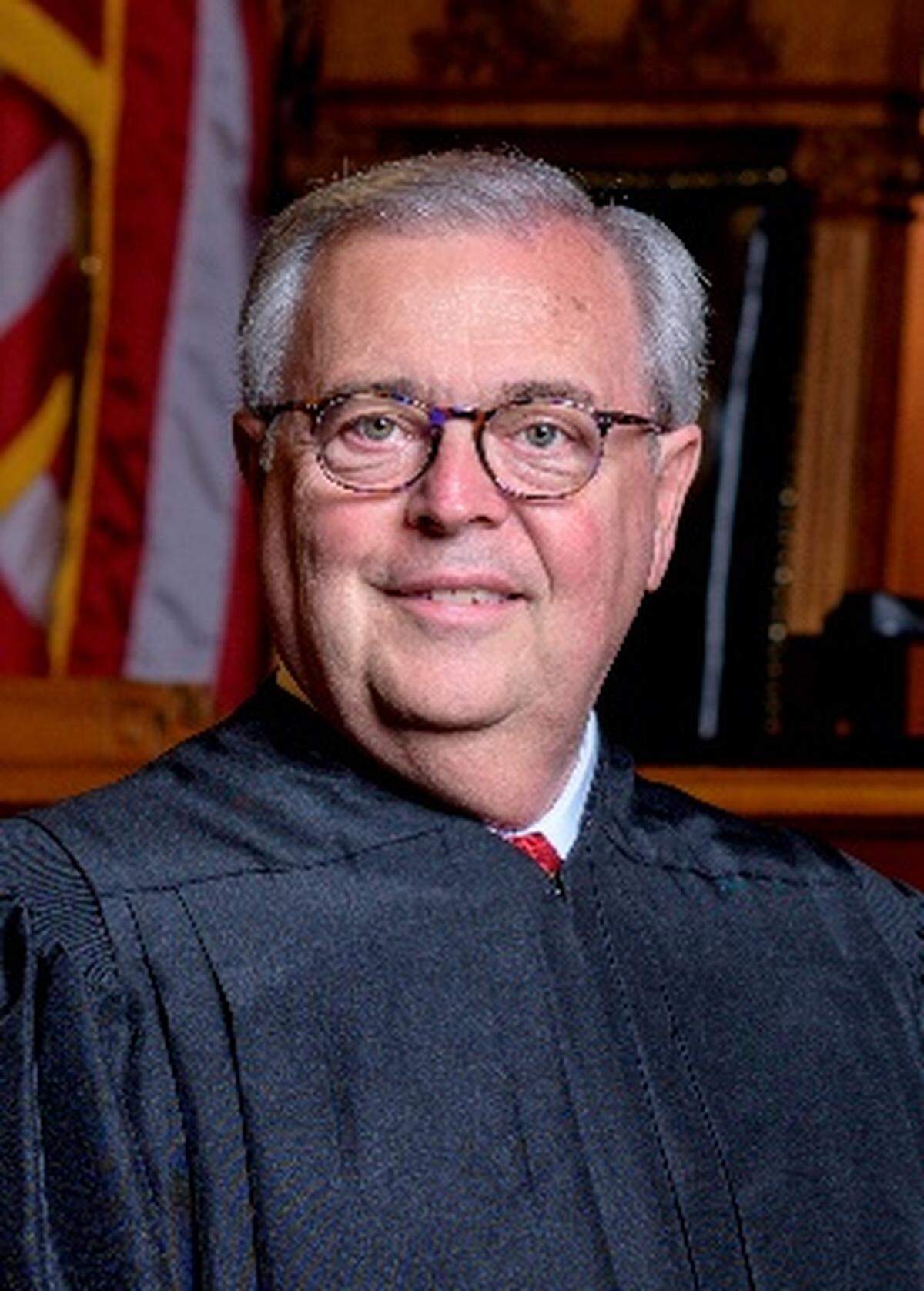
So far, the experiment has proven a success, Chief Justice John Minton Jr. told state lawmakers last week.
“I’m pleased to report that the re-arrest rate for defendants released by pretrial services between April 15 and May 31 of 2020 was 4.6 percent, which was the same re-arrest rate for defendants released by pretrial services during the same period in 2019,” Minton told the legislature’s Interim Joint Committee on the Judiciary.
The actual number of Kentuckians arrested for a new offense within weeks of their jail release — 276 — was larger than last year’s 143, data shows. But the re-arrest rate stayed the same, which is impressive given that the 6,024 people released before trial was nearly twice as many as the 3,124 released during the same six weeks in 2019, Minton said.
In Kentucky, the jail population plunged by 32 percent from late February through last week, falling from 24,449 to 16,542, according to a data analysis from the Vera Institute of Justice. More than 8,600 of the remaining jail inmates are state prisoners serving their felony time in jail because there is not enough space for them in state prisons.
Jail populations shrank as judges, prosecutors and defense lawyers reached agreements on which inmates safely could await trial at home, typically for nonviolent and non-sexual offenses, rather than remain behind bars on bail they could not afford. Efforts by the legislature to fix the bail system have ended in failure in recent years, but the novel coronavirus pandemic forced a dramatic response at the local level.
At the same time, police started arresting fewer people, opting for citations instead. Before the COVID-19 outbreak began in March, the state’s daily arrest rate averaged between 500 and 700, Minton told lawmakers. The daily arrest average fell to 193 in April before gradually increasing to about 300 last week, Minton said.
So far, no local jail has reported deaths from the novel coronavirus, unlike at the Green River Correctional Complex, a state prison in Muhlenberg County, and the Federal Medical Center, a federal prison in Lexington. A combined seven inmates have died at those two prisons after testing positive for COVID-19.
The population of the Lincoln County jail — where cells last year were crushed at 182 percent of their capacity — shrank by more than half over the past several months. Last week, there were only 64 inmates in the 72-bed jail, a remarkable achievement given the facility’s history of dangerous overcrowding.
The uptick in pretrial releases has not resulted in a local crime wave, said Lincoln County Attorney Daryl Day.
“I haven’t seen great numbers of people being re-arrested, and I haven’t heard of any serious problems related to this from our law enforcement,” Day said.
“There was some push-back from a small percentage of our population that said we’d gone soft on crime,” he said. “They said — and they weren’t entirely wrong — that anyone who could get coronavirus in the jail could get it out here in the community, too. But you have to keep in mind, the jail is a confined population, like a nursing home. They can’t distance or check themselves out if there’s an outbreak. So we don’t need to be moving 100 different people through there every week if we can help it.”
In a few instances, Day said, the new COVID-era policy led scofflaws to assume they could commit a string of burglaries and merely get a citation, not arrest and a jail cell. This was a faulty assumption, he added.
“If we catch you committing a second and a third property crime in 24 or 48 hours, we are going to have to arrest you, and we are going to set a higher bond,” Day said.
The Lexington-Fayette County jail’s population has fallen by nearly 38 percent since late February, from 1,188 to 741, according to the Vera Institute.
Fayette County Attorney Larry Roberts said his office helped prepare a list of 150 jail inmates who safely could be released to await trial at home, focusing in particular on older inmates and those with health issues who would be especially vulnerable to the coronavirus.
“In my opinion, it was the right thing to do,” Roberts said. “I have not heard any people telling me, ‘There has been a rampage because of this!’ There will always be a few people who turn around and re-offend, but I don’t know of any criticism of what we did that is legitimate. Really, I have to say, I haven’t heard any criticism of it at all.”
This story was originally published June 8, 2020 at 2:22 PM with the headline "Thousands were freed from Kentucky jails to avoid COVID-19. Few have re-offended.."