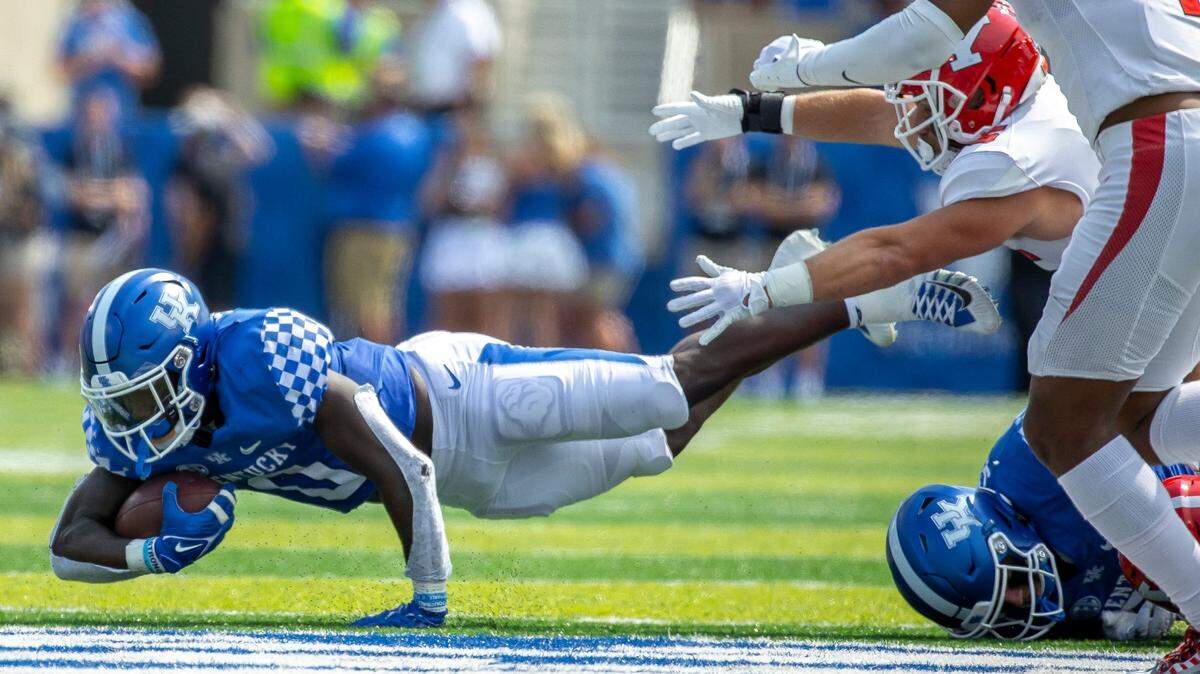
Documents show UK investigated hospital program that employed Wildcats football players
READ MORE
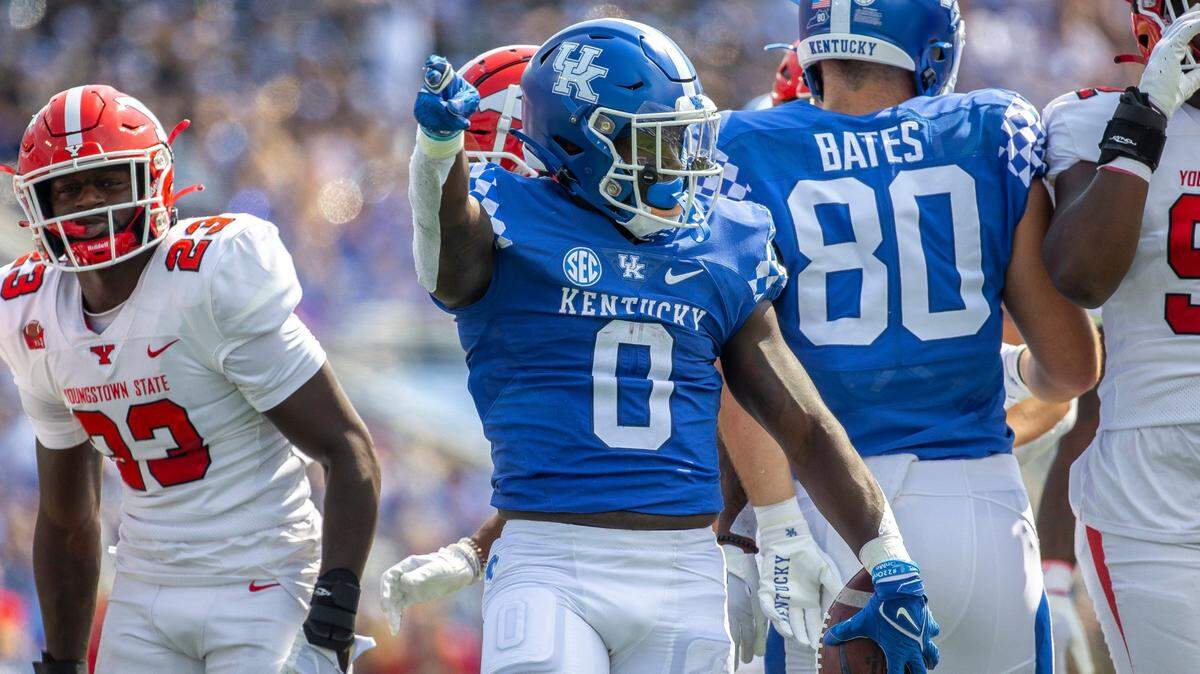
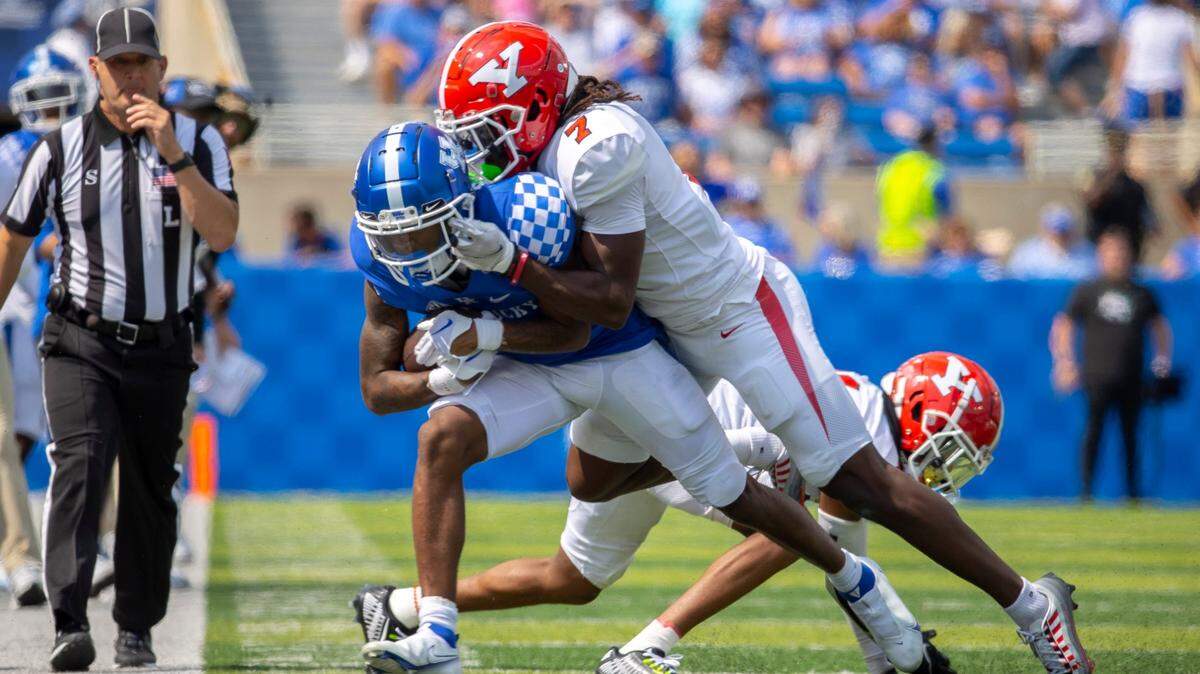
Game day: No. 9 Kentucky 31, Youngstown State 0
Click below for more of the Herald-Leader’s and Kentucky.com’s coverage of Saturday’s Kentucky-Youngstown State football game at Kroger Field in Lexington.
Expand All
The University of Kentucky launched an investigation in February into members of the Wildcats football team filing inaccurate timecards for jobs worked at the university hospital, according to documents obtained Friday by the Lexington Herald-Leader through the state’s open records law.
That investigation determined multiple members of the team listed hours worked that they were not present at the hospital for when video surveillance showed them leaving the facility or there was a conflict with class or game schedules. Players, whose names were redacted from a letter sent to the NCAA and provided to the Herald-Leader on Saturday, were declared ineligible.
All UK athletes were barred from working jobs for UK HealthCare in the future unless a specific academic reason necessitated one. The hospital supervisor for the athlete jobs was also fired.
Since 2017, UK football players have worked as patient transporters at the hospital.
The program, which was highlighted on an athletics department recruiting website, was started by former Kentucky kicker J.J. Housley in his role as director of enterprise operations for UK HealthCare. In a 2017 email to then-UK football recruiting coordinator Dan Berezowitz, Housley offered to guarantee a number of positions to football players each year.
“Selfishly, this helps us fill positions,” Housley wrote, before suggesting the program could help the football program in its efforts to recruit players while also providing players structure during downtime and exposing players to careers in healthcare.
Housley even suggested the football staff could use the program to guarantee recruits a paid position.
“Not sure if that is allowed but it’s not lying,” Housley wrote before signing his email as the “recruiting liaison to healthcare.”
The jobs were permitted under NCAA rules as long as the players were paid “only for work actually performed” and “at a rate commensurate with the going rate in that locality for similar services.”
Emails obtained by the Herald-Leader show Berezowitz would send a list of football players he wanted placed in the jobs to Meredith Rice, the UK HealthCare transfer center director. Berezowitz would frequently check on the status of employment paperwork for those players in an effort to expedite the process of getting them started in the jobs administered through STEPS, UK’s temporary staffing agency.
The athletic department’s compliance office also sent Rice multiple emails with an explanation of the NCAA rules regarding athlete employment.
That email reiterated that athletes could only be paid for work actually performed.
In April, Rice was suspended with pay, according to a letter sent to Rice by UK chief nursing officer Kimberly Blanton. Among the allegations made against her was that she “allowed STEPS employees who are student athletes to be paid for work they did not perform” and “assisted some of these STEPs employees by creating their statements for investigation.”
None of the documents obtained by the Herald-Leader suggested the athletic department was aware of the alleged inaccurate timecards before February. Rice met with Rachel Baker, the athletic director’s executive associate athletic director for compliance, as part of the investigation.
In her response to the suspension, Rice, who was also facing a separate investigation into allegations she allowed a nurse under her supervision whose license had expired to work, denied the allegations.
“I have never been made aware of any allegation that employees would clock into work and leave the facility and then return sometime later and clock out,” Rice wrote. “If I would have had any knowledge of this, I would have immediately reported the issue so a proper investigation could be conducted.”
According to her personnel file, Rice, who began working for UK HealthCare in 2007, stopped working for UK on May 26, 2022. The letter UK sent to the NCAA reporting the rules violation lists that date as the day the football players’ hospital supervisor was fired for “inappropriate or unsuitable job performance and/or gross negligence of oversight.”
Berezowitz, who was promoted from recruiting coordinator to UK football chief of staff in 2018, was no longer working for the football program by the time of the investigation into the timecards. He was suspended in June 2021 after being arrested on a charge of fourth-degree assault without visible injury. The assault charge was later dismissed without prejudice, but Berezowitz’s contract was not renewed in November.
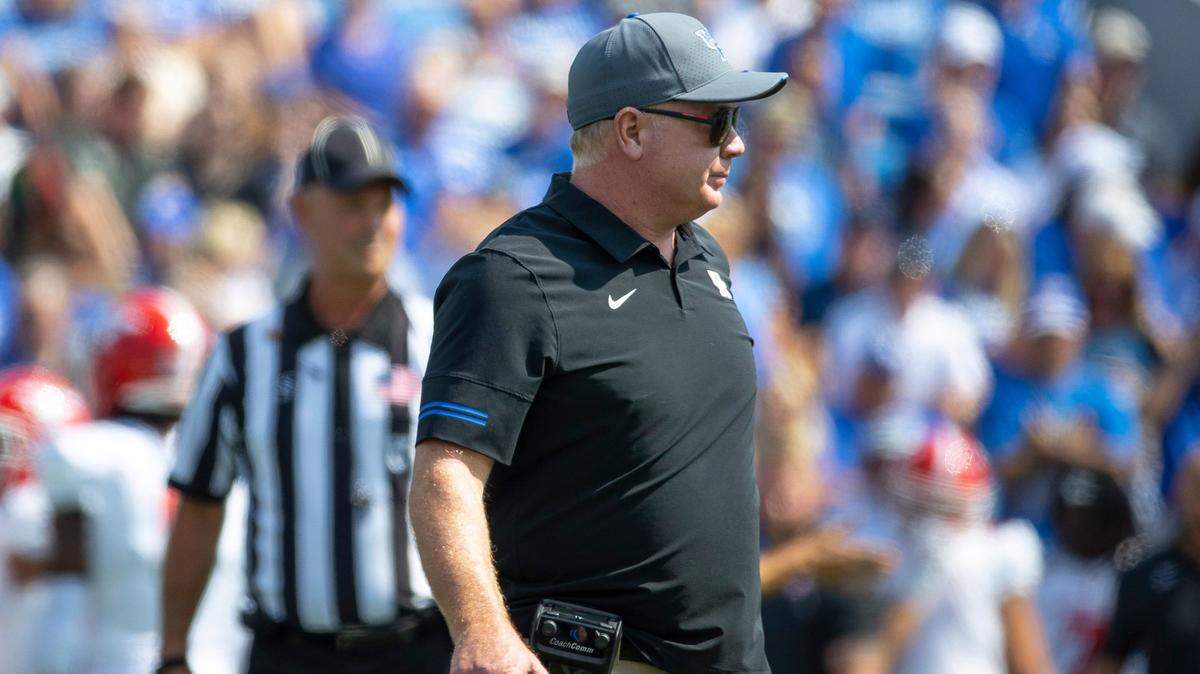
The names of the players involved were redacted from the documents provided to the Herald-Leader, but UK Coach Mark Stoops confirmed prior to the Wildcats’ 2022 season opener this month that multiple players were unavailable due to an investigation he had been advised not to comment on.
.JPG "LEX_20220803_UKfball_340 (1).JPG")
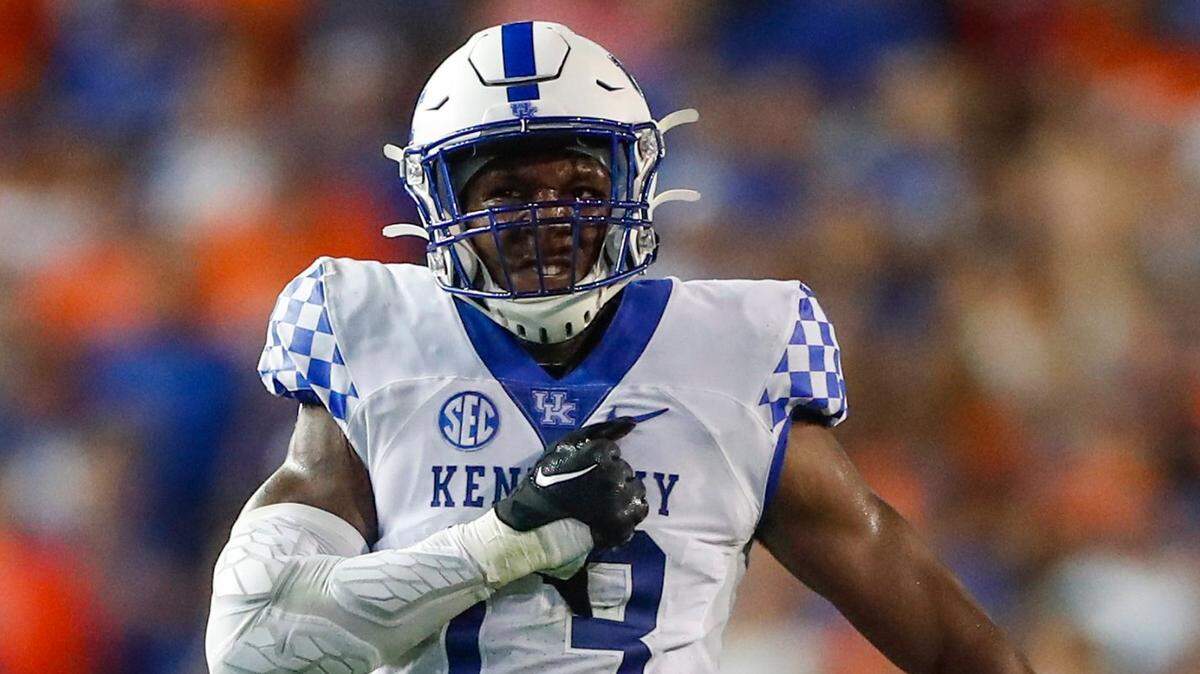
Outside linebacker Jordan Wright missed the opener but returned to action for the second game at Florida. Earlier this week UK confirmed running back Chris Rodriguez would be suspended for the first four games before being eligible to return on Oct. 1 at Ole Miss.
Asked for the cause of Rodriguez’s suspension Monday, Stoops declined to comment, citing student privacy laws. UK Athletics Director Mitch Barnhart also declined to comment on the cause of the suspension after the university’s Board of Trustees athletics committee meeting Thursday but did confirm there had been an investigation into Rodriguez’s eligibility.
Prior to Monday’s announcement, Stoops had made it clear that the decision about when Rodriguez would be allowed to return was not his, at one point saying, “I have bosses and they have bosses.”
“I think the decision is to obviously honor his student rights and those kinds of things,” Barnhart said. “Chris really wants desperately to get on the field, but he understood there was a process we had to go through. There was an eligibility process we had to work our way through to make sure he was ready to play. He’ll play against Ole Miss in Oxford and understands he’s got two more games to sit aside. We’ll honor his student rights and those pieces.”
UK denied the Herald-Leader’s request for Rodriguez’s UK HealthCare employee file because “he occupied a position that was open only to students” and therefore his employee file qualified as an education record exempt from disclosure under federal student privacy law.
In response to questions from Kimberly Blanton, one of Rice’s coworkers at the UK HealthCare transfer center said that Rice had informed him she was meeting with two football players after learning of the investigation.
“She told us that one of them would probably have to pay the money back, and the other would probably be in more trouble,” the coworker wrote in an emailed response to Kimberly Blanton’s questions about Rice’s behavior.
That coworker also voiced unease about handling timecard approval for the football players.
“One week I noticed that some of them were clocking in 5 or 6 days a week,” he wrote. “Mostly 12 hour shifts, some as much as 14. When I made this realization, the next morning during our impromptu ‘morning meeting’ we usually have prior to bed meeting, I mentioned to her that I did not feel comfortable doing their time anymore. She simply nodded her head and said she would take care of them from that point on.”
Several employees interviewed by Kimberly Blanton said they had not noticed many football players at the hospital since the start of the COVID-19 pandemic. Others noted how helpful the players had been when the program started.
That sentiment was shared by Rice in a November 2018 email to Berezowitz.
“I honestly have had no issues out of any of the players you have sent,” she wrote. “The staff absolutely love you boys!!! Everyone is a pleasure to have. Hope this continues to be beneficial from your standpoint.”
UK’S LETTER TO THE NCAA
According to the letter to the NCAA, the compliance office in the athletics department became aware of the potential rules violation in February when an employee speaking with the university’s Office of Institutional Equity and Equal Opportunity on matters unrelated to athletics volunteered that there were athletes not showing up for jobs at the hospital but still getting paid. After the compliance department interviewed the supervisor for the athletes’ hospital jobs, an anonymous tip was submitted to the “Comply Cats” reporting system that athletes were clocking in at the hospital, leaving and later returning to clock out several hours later.
After learning of the potential rules violation, the athletics department and chief nursing officer at the hospital suspended the athletes from their hospital jobs and withheld any pending pay until a determination could be made that the hours claimed had actually been worked.
Surveillance video evidence showed athletes clocking in at the hospital, leaving and then returning several hours later.
The audit concluded that “some, but not all, hours” for a redacted number of athletes were recorded but not worked, according to the letter to the NCAA. The audit did not find evidence that other athletes working in the patient transport jobs had submitted inaccurate timecards.
“While the information for other time entries was insufficient for Internal Audit to conclude that the time reflected in those entries was not worked, athletics compliance reviewed the information further and determined that there was sufficient evidence to reasonably conclude for NCAA eligibility purposes that a student-athlete received compensation for additional hours not worked,” UK wrote in the letter to the NCAA.
The involved athletes told the compliance department they were present at the hospital for most of the hours they recorded but had been advised by hospital staff it was permissible to leave after clocking in.
The compliance office determined hours recorded as worked that conflicted with players’ class schedules, the 24 hours immediately before or after a game or time when surveillance video showed the players leaving the hospital had not been worked. UK cited federal student privacy law in redacting the section of the letter detailing specific punishments for the involved players.
UK reported extensive rules education had been provided to the athletes’ supervisor at the hospital and to the athletes themselves. The compliance office found no evidence the football coaching staff was aware of the violation.
“This violation involves a limited number of student-athletes who, despite knowing the employment rules, took advantage of lax supervision by hospital personnel in a narrow time frame,” UK wrote in the letter to the NCAA. “Employment in the patient transport department is not limited to student-athletes, and the institution is satisfied that the patient transport job is legitimate.”
The letter provided to the Herald-Leader does not include the NCAA’s response to the rules violation.
“We put the success of our students first, as our goal — both in competition and in the classroom — is to prepare students for lives of meaning and purpose. In what are, fortunately, rare circumstances for this program, that commitment to compliance sometimes necessitates taking disciplinary action as part of ensuring the integrity of our programs and educating our student athletes regarding their responsibilities as members of this community,” UK wrote. “That is what has happened here.”
This story was originally published September 17, 2022 at 7:15 AM with the headline "Documents show UK investigated hospital program that employed Wildcats football players."