
New old music: The Beatles, Rolling Stones & Bob Dylan tracks you didn’t hear
Perhaps the most familiar axiom referencing the 1960s, especially the decade’s latter half, pokes fun at the aftermath of the era’s excesses.
“If you remember the ’60s, you really weren’t there.”
But does that attitude extend to music forged by three of the decade’s most enduring pop figures - The Beatles, The Rolling Stones and Bob Dylan – as they crept into the ’70s and ’80s? Well, three new collections of recordings made at the end, and in the wake of, the 1960s will jog more than a few memories. Dismiss specific recollections of the ‘60s all you want. The decade’s profound artistic inspirations abound in these three sets.
It’s nothing unusual for veteran artists with extensive back catalogs to release anthology recordings, nor is it uncommon for those with especially lengthy careers to issue sets that focus on a single chapter or two from a massive musical history. What is out of the ordinary is for three of the ’60s most profound pop music ambassadors to celebrate their past within weeks of each other, as they have this fall.
In each case, the collections come in at least two editions. The first is a deluxe set containing four-to-six discs complete with a hardbound book outlining the recording sessions that sells for approximately $130 each. The second is a pared down two-disc offering for about $22. For the sake of economy – time, as well, as finances – we’re reviewing the two-disc versions here.
So fasten your seat belt. We’re heading back not to the haze of the 1960s, but to a slightly less distant point in history to survey the lasting influence of the decade so many are proud to claim they forgot.
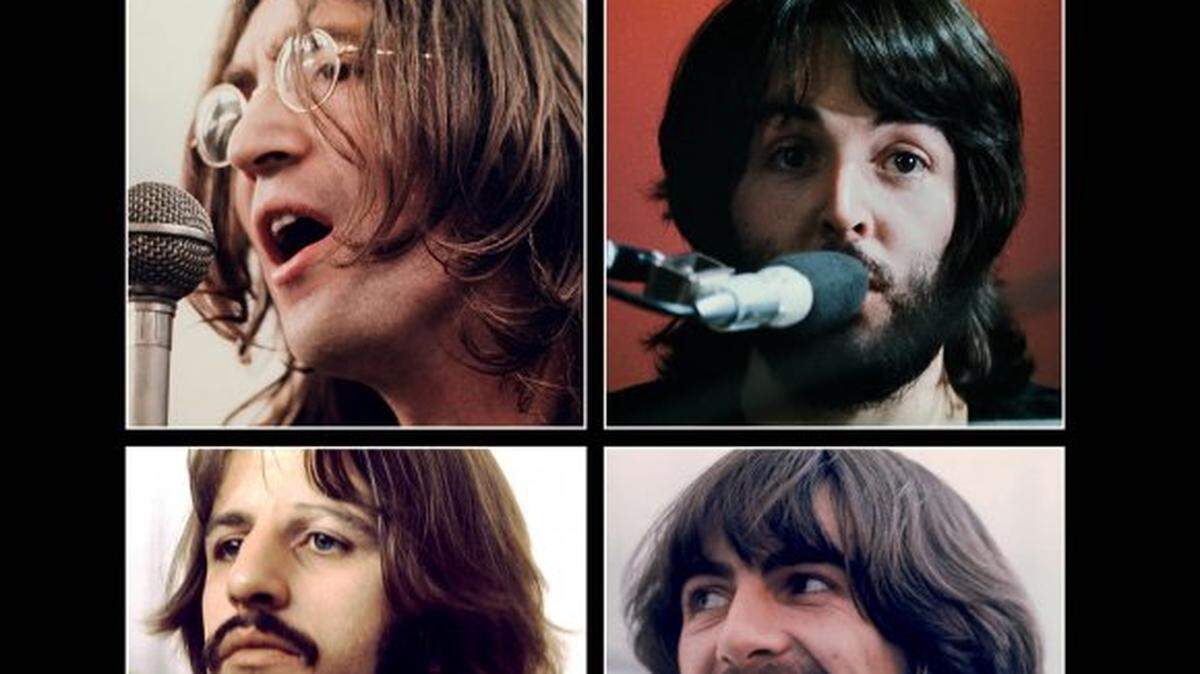
The Beatles: “Let It Be”
Oddly enough, The Beatles are the only one of our Three Musketeers acts to barely make it out of the ’60s. The band dissolved in April 1970, one month before the release of the band’s final album, “Let It Be.”
Of course, the sweeping irony about “Let It Be” remains that its songs were not the Beatles’ final recordings. They were actually cut in 1969 prior to the masterful “Abbey Road.” The history of the “Let It Be” sessions is too vast and scattered to be repeated here. The Beatles lineup saw defections and reunions while the producer’s chair shifted several times. But what we hear leaping out at us on this newly mixed edition is the looseness and live feel the band initially intended for the album.
Admittedly, that doesn’t come across in tracks like “The Long and Winding Road’ that were recast by Phil Spector with strings and vocal choirs. But the lightness of “Two of Us,” the blues aloofness of “One After 909” and earthy cheer of George Harrison’s “For You Blue” speak to what essentially is a rootsy deconstruction of the Beatles’ prior pop experimentation.
The second disc of unreleased material goes deeper down this path. It also suggests the wealth of material director Peter Jackson was given access to for his upcoming three-part documentary series, “Get Back.” This is more fly-on-the-wall stuff that will fascinate Beatles die-hards, from Ringo Starr’s introductory greeting (“Morning Camera”) to Paul McCartney’s off-the-cuff piano revision of “Please Please Me” that eases into the title track from “Let It Be” to a skeletal, gospel-esque take on “The Long and Winding Road” without the Spector-fied window dressing.
This may be the most disarming music we’ll ever hear from the Beatles – the work of a pop juggernaut nearing the end of it career marked by a thirst to rediscover the simplicity and directness that brought it together in the first place.
The Rolling Stones: “Tattoo You”
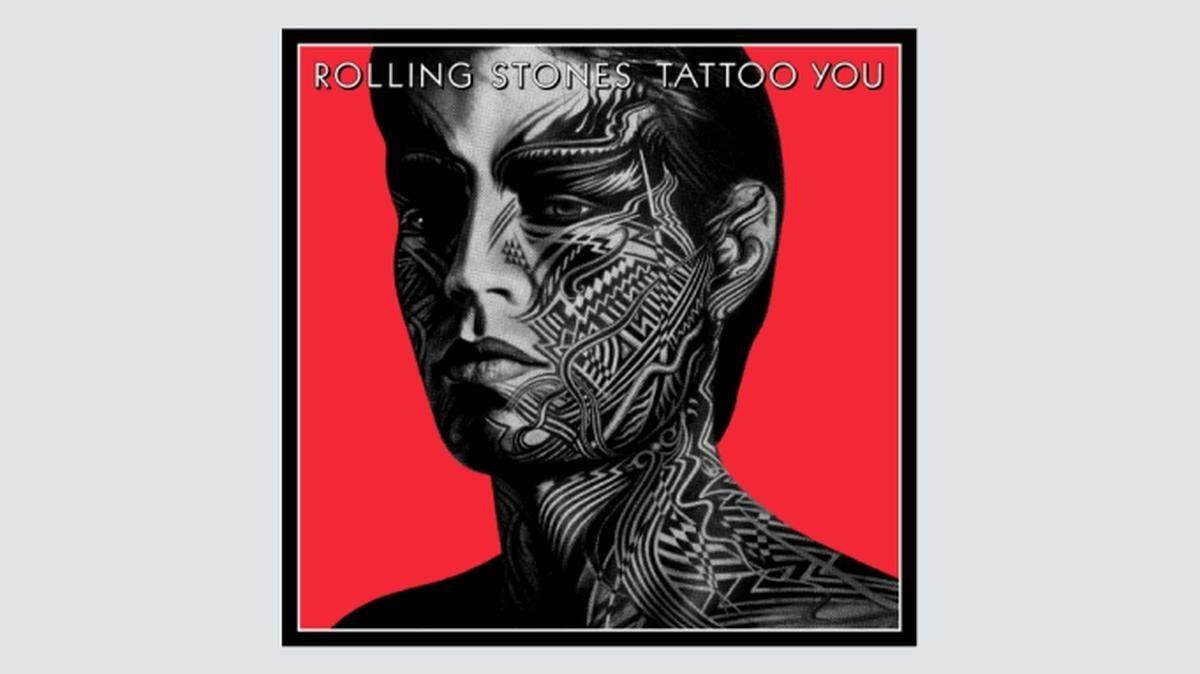
Released in the late summer of 1981, “Tattoo You” triggered yet another renaissance for the Rolling Stones. Seemingly beset by inner band squabbles, the Stones didn’t return to the studio with a full album project in mind. Instead, the record assembled fragments of song ideas dating back to 1972. Recording sessions simply completed the patchwork project. Bolstered by the immediate impact of its leadoff single, “Start Me Up,” the album became a worldwide hit.
The original record’s first side offered the Stones we knew – brassy and bluesy, a band ripe with rockish gusto. The second presented a real surprise – a set of slower, quieter songs that shifted from the incantatory “Heaven” to the pop-soul reflection of “Worried About You” to the sunny reserve of the record’s other big hit, “Waiting on a Friend” (complete its joyous saxophone solo by jazz colossus Sonny Rollins). Together, the two sides formed what many (myself included) consider to the last classic Stones album.
The bonus disc of nine unreleased tunes is a true curiosity – a set of leftovers from a 40-year album of leftovers. But the beauts abound within this new excavation, including a trio of cover tunes that sit at the heart this reissue. First up is a jittery take on a 1970 Chi-Lites soul gem, “Trouble’s A-Comin’” which the Stones fill with a mix of merry and ominous menace. Then we get a screaming blues version of Jimmy Reed’s “Shame, Shame, Shame” that pits Mick Jagger’s scorched runs on harmonica against the late Charlie Watts’ effortless swing. Wrapping up the covers is a reserved but reverential version of Dobie Gray’s 1973 pop-soul hit “Drift Away.”
The Stones’ own compositions include a blueprint version of “Start Me Up” (which, ironically, ends the disc) that returns the song to its neo-reggae roots.
Bob Dylan: “Springtime in New York: The Bootleg Series, Vol. 16 – 1980-1985”
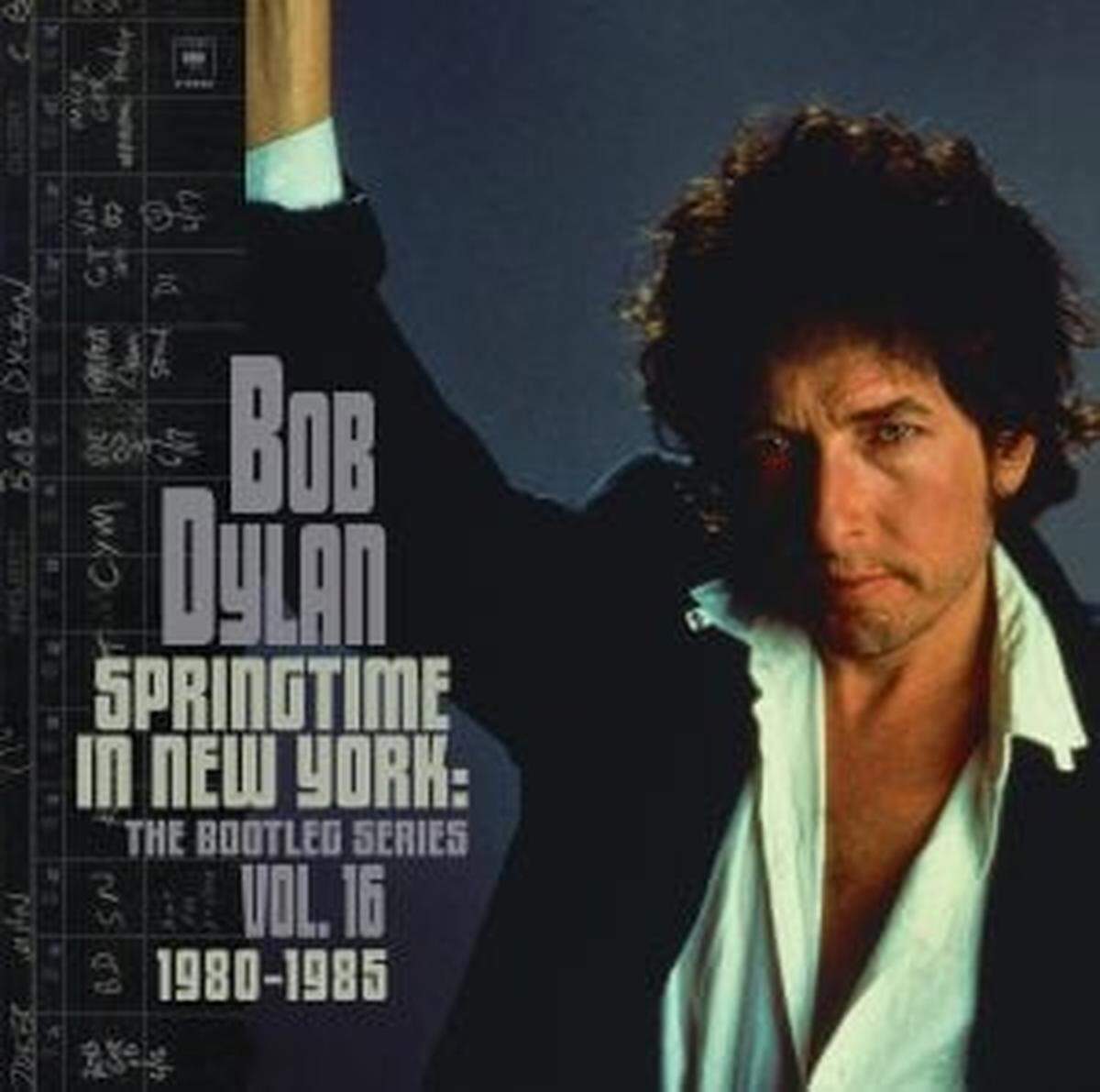
You know you’re dealing with an artist whose career is as extensive as it is prolific when his archival “bootleg” series hits its 16th installment.
“Springtime in New York” takes us back to the first half of the 1980s with music from three albums – “Shot of Love,” “Infidels” and “Empire Burlesque” – that are curiously linked with trace elements of the religious immersion that so dominated Dylan’s life and music at the end of the 1970s.
“Shot of Love” didn’t so much erase the Christian slant of his two preceding albums as simply shove it aside so a broader world view could be considered. In fact, the first lines to “Angelina,” a “Shot of Love” outtake that opens the two-disc edition of “Springtime in New York” (but not the five-disc set), hints at Dylan’s modus operandi not just for his early ’80s music, but for his entire career: “It’s always been my nature to take chances, my right hand drawing back while my left hand advances.”
But it’s the music from “Infidels,” easily the strongest of the three represented albums, that drives “Springtime in New York.” An early take of the majestic “Jokerman” is an astonishing work-in-progress with Biblical imagery and a reggae-fied groove already set along with a soon-to-be revised set of lyrics while a revisit to the sobering but redemptive “Foot of Pride” (“Ain’t no goin’ back when your foot of pride come down”) affirms its status as an unheralded Dylan classic.
But the collection’s true highlight is saved for last, the masterful solo acoustic gem “Dark Eyes.” This version differs little from the one that closed “Empire Burlesque,” yet its impact – both as a recollection of Dylan’s primal folk beginnings and a stark evaluation of his own place in pop culture - is astounding.
“A million faces at my feet,” Dylan sings with resigned grace. “But all I see are dark eyes.”
Chief Keef at Rupp Arena
Bonus concert pick of the weekend: Halloween won’t be keeping the grooves from Rupp Arena this weekend. Chicago rapper Chief Keef will perform on Oct. 30 (7 p.m.; $42-$182) for a performance seasonally billed as “Stage Fright.” Canton, Ohio-native Trippie Redd will serve as co-headliner.
Keef, born Keith Cozart, established a strong following on Chicago’s South Side before releasing a series of indie and major label albums that culminated with 2017’s “Dedication.” Redd, born Michael Lamar White II, is currently the bigger deal chart-wise. His third album, “Pegasus,” hit No. 3 on the all-genre Billboard 200 chart in October 2020.
For tickets, go to ticketmaster.com.
This story was originally published October 27, 2021 at 6:00 AM.