
There’s Christian music, then there’s pop. Somehow Lauren Daigle shines in both worlds.
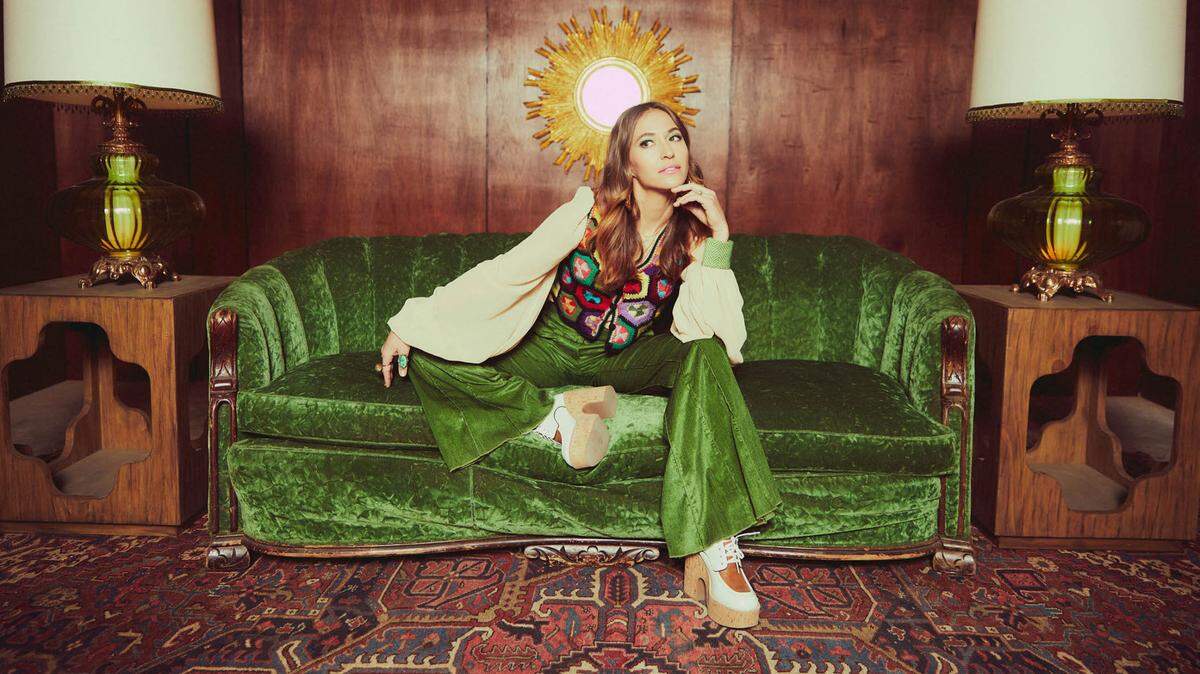
Arrangements were in place and appointment times were set to speak with Lauren Daigle, the Grammy winning Christian singer whose Southern Louisiana roots and stylistic open-mindedness has also made her a hit with mainstream pop audiences.
Everyone with her promotion company has been pleasant and accommodating in arranging the phone interview. Then the agreed upon time arrives, the phone rings and one of Daigle tour representatives, calling from evening’s performance stop in Grand Rapids, greets me and with the seriousness of an impending funeral.
“Please,” she said, “don’t talk about ...”
Turns out there was an elephant in the room – well, on the phone line, actually. But it was as obvious as it was huge.
The date was March 12, 2020, and the entire entertainment world was already imploding due to the breakout of the COVID-19 pandemic. Daigle’s rep asked for our conversation to be COVID-free. I reluctantly agreed, seeing as A: the interview probably would not happen if I declined and B: the likelihood of Daigle’s April 30 concert taking place seemed increasingly remote.
So the interview unfolded as the concert industry burned to the ground. Sure enough, Daigle’s Rupp concert, along with everything else scheduled at the arena for more than a year, was called off.
Flash forward to 19 months later. COVID is still a reality, but concert tours have cautiously resumed. Her show is rescheduled for Nov. 18.
In returning to the tape of our unused March 2020 interview, I was convinced the info it contained would be outdated and, essentially, useless. Surprisingly, the majority of what we discussed dealt with Daigle’s beginnings – her Louisiana upbringing, her grassroots-style approach to building a career and the duality of being a Christian music artist in a pop music universe.
Her most recent album remains 2018’s “Look Up Child,” although a pair of 2021 singles – the earthy affirmations’ “Hold On to Me” and “Tremble” – brightly inform us Daigle’s music has emerged from COVID lockdown with her musical positivity intact.
“For me, it’s really about, ‘Okay. What is true to who I am right now?’ Daigle said in 2020. “What is it I’ve experienced or walked through? What stories have I gained along the way because those will be the things that come out through the music. When you write for an award, you can hear that in the sound and in the quality of the music. When you write for someone’s soul or when you write about experiences you can bring in, it transcends in a different way. For me, I think it was just, ‘Okay, how do we stay authentic in the process even though there has been some success?’”
Authenticity, for Daigle, seems rooted in home – specifically, the people, sounds and inspirations gathered from growing up in Lake Charles, La. Don’t expect some kind of Christian/Creole hybrid as you dig into her songs. But the accents are obvious, from the depth and resonance of her singing to the dense gospel-esque patterns that seem a natural part of her musical landscape.
“I remember as a young one going down to New Orleans and hearing people play on the streets. But in Lafayette, where I was living, the music was very generational. It wasn’t just, ‘Oh, I picked this up from my friend.’ My grandfather got me on his knee and taught me how to play the washboard. That’s kind of the essence of where I’m from. It’s very generational, very family oriented.
“I remember my grandfather would play music and dance with me in the living room when I was a kid. He would teach me to waltz or teach me to two-step. I would go see zydeco bands with accordions and all that. It was all just part of who we are. I feel that there is music that has been embedded in our soul and everything that we do has some sort of rhythm or some sort of melody – the way that we talk to people and the way that we engage with people that we never met.
“You know that whole thing of never meeting a stranger? That is so true. The other day I was in Lafayette and I saw a lady when I walked in store. That lady’s eyes just looked so inviting. And we just sat down. There were four of us. We all sat down and spent some time together. Never met them in my life. But that’s Louisiana. That kind of thing is pretty common. There are links to the heritage of music that are so dense and so rich there.”
What is perhaps most astonishing about Daigle’s career is how relatively young it is. Her popularity has been largely built around just two studio albums (“Look Up Child” and her 2015 debut “How Can It Be”) along with a Christmas record (2016’s”Behold.”) “How Can It Be” became a quick hit with Christian music audiences while “Look Up Child” debuted on the all-genre Billboard 200 chart at No. 3.
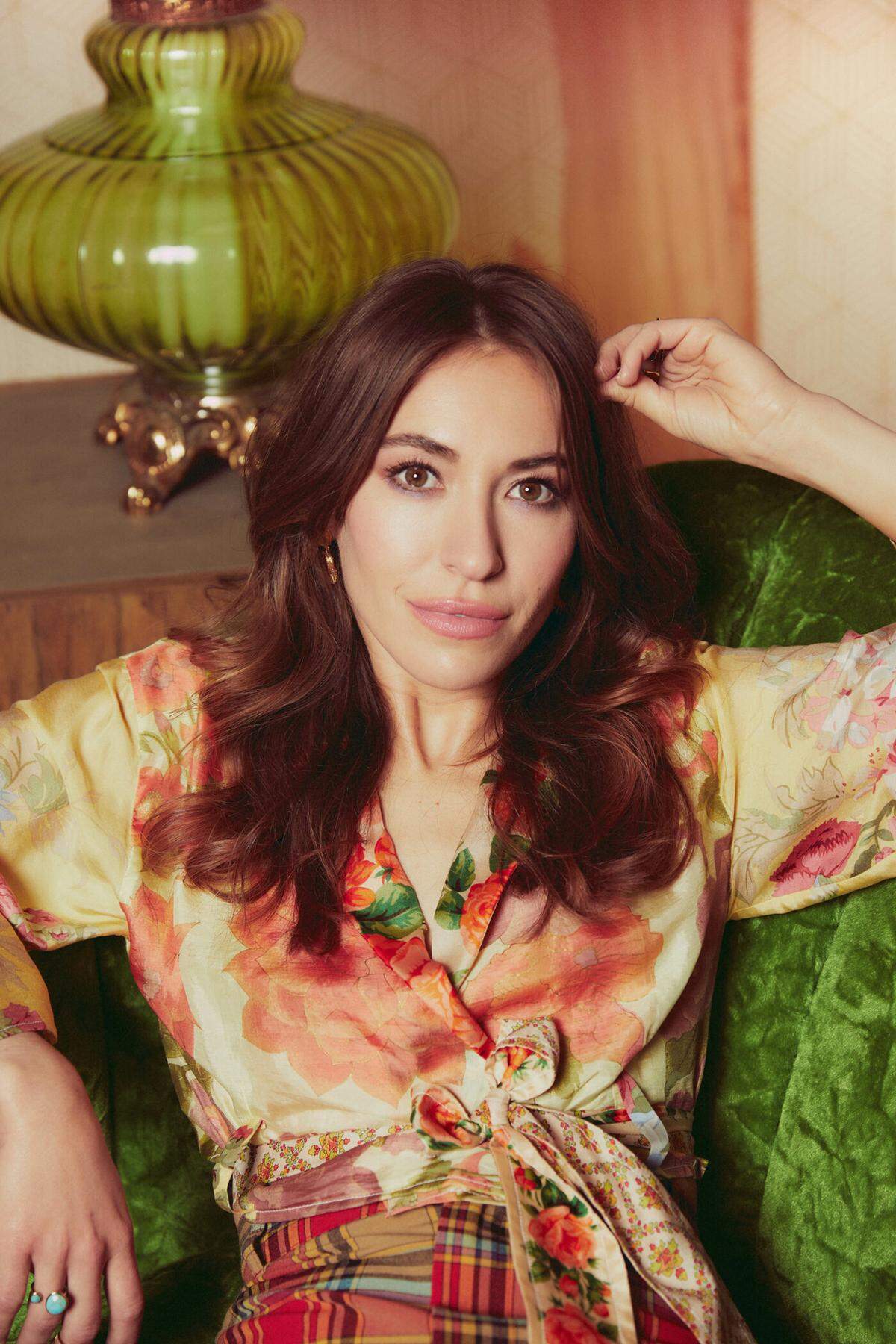
“When I came into this, I was so green. I didn’t come from a family that was in the industry. We would worship in church and play gigs on the weekend with cover bands. I was writing songs in my bedroom and that was about it. So there have been moments when I thought, ‘Ooh, I could have done this better’ or ‘I should have learned to do this better.’ But I think that comes with the territory. That’s the beauty of growing. That’s the beauty of finding out. What does failure feel like? What does triumph look like? How do I chart my own path and how do I make my way through all of this? I think that’s the goodness that comes with stepping into unfamiliar territory.”
Forging a fanbase with mainstream pop audiences wasn’t something Daigle purposely avoided. She said her songs are rooted in connections with anyone willing to accept their sense of heart and faith.
“I know that when we were writing for the record, we were saying, ‘Let’s just bring music to people that we haven’t brought music to yet. How do we do that? What does that look like?’ And all the while keeping to true to who I am and what I believe in, not leaving any people or group behind.
“At the end of the day, everything else becomes technical. The meat and potatoes, the true bones of it all, comes down to this. Did I write a song that connected with someone and impact their life in a positive way? If that is what’s happening, then I couldn’t be happier with where my career has gone.”
Lauren Daigle, with The War and Treaty
When: 7:30 p.m. Nov. 18
Where: Rupp Arena
Tickets: $20-$126, through ticketmaster.com. Tickets for the originally scheduled April 30, 2020 date will be honored.
Gregory Tardy Quartet
Bonus concert pick of the weekend: The fourth season of the Origin Jazz Series continues with Nov. 12 performances at Base 249 (249 East Main) by the Gregory Tardy Quartet. A native of New Orleans currently serving as an instructor at the University of Tennessee-Knoxville, Tardy exhibits a rich and often relaxed tone on tenor saxophone that has been placed on expert display through a duo recording with guitar great Bill Frisell (2019’s “More Than Enough) and his own 2020 album “If Time Could Stand Still.” A veteran of a massive pack of new artists to emerge in the early 1990s, Hardy has collaborated and/or performed with Wynton Marsalis, Joe Lovano and the late Andrew Hill, among many others.
Tickets are $20 each for sets at 7 and 9:15 p.m. or $30 for both at originsjazz.org.
This story was originally published November 9, 2021 at 6:00 AM.