
Finding the joy: Del McCoury bringing bluegrass, humor to Lexington Opera House
AI-generated summary reviewed by our newsroom.
- Del McCoury sustains a 70-year career blending tradition with genre fluidity.
- The Del McCoury Band continues releasing new music, including a 2024 single.
- Collaborations span icons from Bill Monroe to Phish, bridging musical divides.
It’s difficult to appreciate the full artistic reach of Del McCoury until you find yourself in conversation with him.
As a bluegrass journeyman with a career closing in on seven decades, he offers stories of working with genre patriarch Bill Monroe from the early ’60s as readily as he discusses playing a late ’90s festival hosted by jam band giant Phish. That such reminiscences are told with a grandfatherly eagerness and charm is perhaps expected. At 86, he has accumulated a seemingly limitless array of recollections from a storied career. With them come bragging rights, although McCoury stories don’t come across as bragging. They instead reflect the same inviting, unassuming animation that has long distinguished his music.
But here’s the thing. McCoury and the longtime bluegrass unit that bears his name are in no way legacy acts. A concert by The Del McCoury Band may stay effortlessly close to the traditions of bluegrass. The still-unblemished clarity, drama and range of McCoury’s high tenor vocals see to that. Yet the band’s repertoire is continually updated. Standards and original tunes wind up mixed with songs written and/or originated by such non-bluegrass brethren as Tom Petty, Robert Cray and Richard Thompson.
Similarly, “Songs of Love and Life” album, the 18th album issued since The Del McCoury Band formed in the early ’90s, came out as recently as last year. An even newer single, the Larry Keel-penned “So Black and White,” surfaced on streaming platforms earlier month.
In short, few artists of any genre have been so attuned to the music swimming around them while remaining steadfast to the traditions sitting at the heart of their own sound as McCoury. Fewer still have exhibited such open-ended joy along the way.
“I think there is a difference in make-up,” McCoury said of what distinguishes his creative drive from that of contemporaries, even those a generation or two removed from him. “I’ve known guys that like to play music, but, boy, they could not take the road. And they were great musicians. I’ve always liked every aspect of what we do — the road, the music. I like to talk to the audience and I like learning new songs. I never really get tired of any of it.
‘It’s all fun for me’
“I tell you what. I’m supposed to entertain people, which I do, I think. But the audience entertains me more than I entertain them. They’ll holler out a request or a song and the name might be one word off. I’ve got a song out, ‘1952 Vincent Black Lightning’ (a Richard Thompson penned motorcycle/outlaw ballad that earned Song of the Year honors at the 2002 International Bluegrass Music Association Awards and has remained one of McCoury’s most popular tunes ever since). They get it all right but the year. They’ll say, ‘Play me that ‘1957 Vincent’ song. I’ll tell them back, ‘I don’t know that one,”’ and of course, they’ll have a blank look on their face. ‘But I do know a song titled after the ‘1952 Vincent Black Lightning.’
“That’s just one example, but it’s all fun for me.”
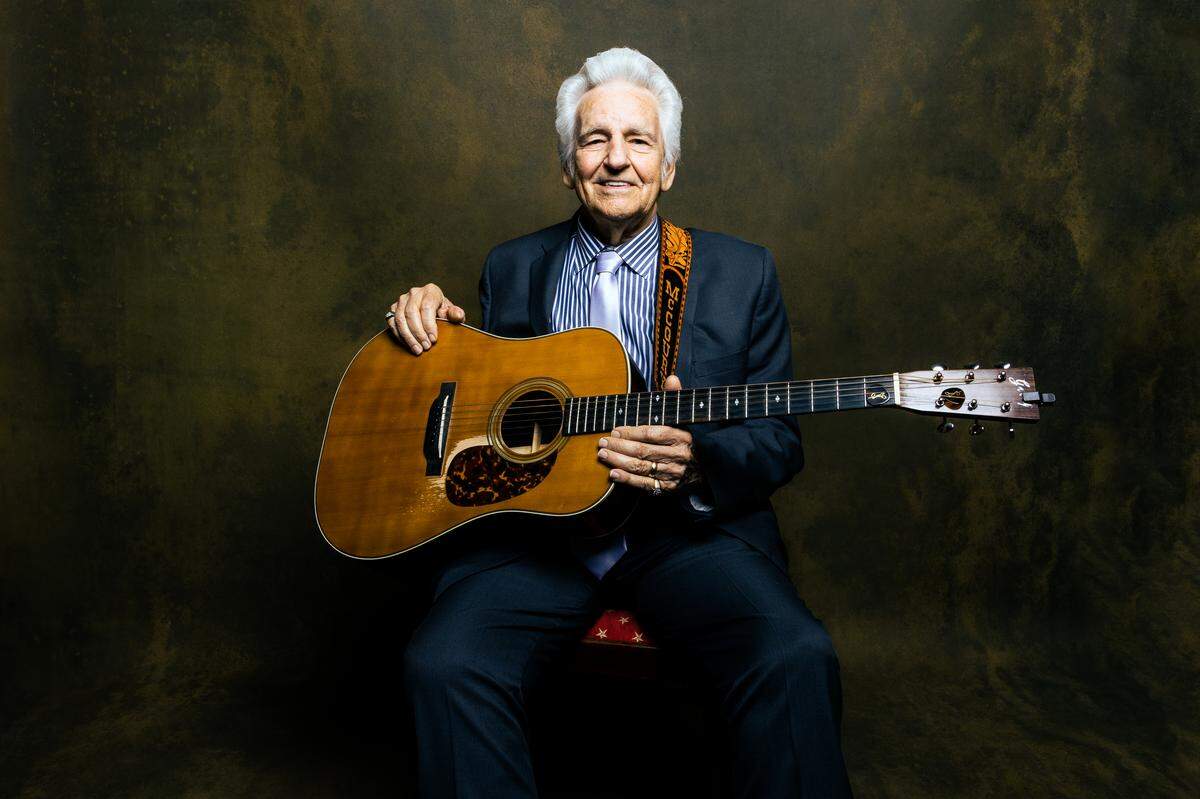
Serving as his band’s guitarist as well as vocalist, McCoury was first drawn to banjo — specifically, the innovative techniques of Earl Scruggs. After connecting with Monroe in 1963, he shifted to guitar. With the change came a sense of artistic self, a confidence that would carry over into McCoury’s own bands.
“When I was in high school, everybody was listening to Jerry Lee Lewis and Elvis Presley. Of course, I had already heard Earl Scruggs. But I would mention Earl Scruggs, and everyone would go, ‘Who’s that?’ But he hit me pretty hard when I was young, so I started to play banjo. I played it 10 years till I got a job with Bill Monroe.
“Then when I got my own band, I knew that everyone was not going to like my style or my singing or my playing. But that never bothered me, because I know what I do I can do pretty well. I just don’t worry about it. I think that attitude carried me through. It seemed like that was the thing that kept me going.”
What has long distinguished The Del McCoury Band, though, has been a continually sterling level of musicianship that has utilized sons Ronnie on mandolin and Rob on banjo. Ronnie also served as co-producer for “Songs of Love and Life” with his father.
The band unit has remained tight. Until this year, the last personal shift was the 2005 addition of Alan Bartram on bass. In February, fiddler and Greenup County native Jason Carter departed to pursue a solo career. Curiously, Carter had a hand in the choosing of successor Christian Ward.
“Jason came in the band when he was 19. I could have hired some really professional fiddlers at the time. But when Jason auditioned for me, I thought, ‘This guy’s got something in his playing. He’s got the blues in there.’ Around his 53rd birthday, he came to me and said, ‘I’m thinking about getting my own band.’ We parted on great terms.
“Before he left, Jason mentioned this guy to me. He said, ‘Christian is young, but he’s a good fiddler.’ So we used him at the Grand Ole Opry. Then we had a tour out on the West Coast. When we do the Opry, we only play about three songs, so we wanted to see how he would do with a whole 90-minute show. There was a lot of new stuff to learn, but he surprised me. He knew that stuff really well and did a great job. By the time we got to Phoenix, I said to the band, ‘Boys, I think I’m going to ask him if he wants a job. He can definitely play with us.’ So I did. And Jason recommended him.”
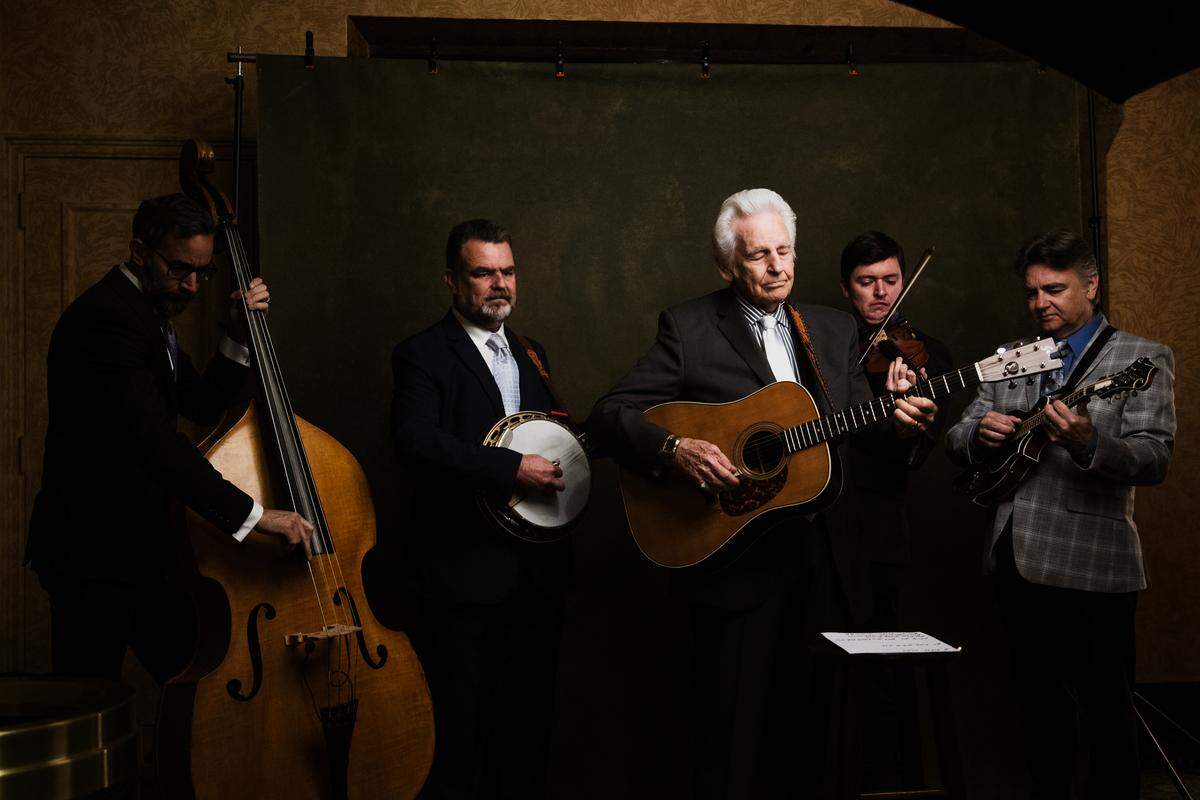
If there is a spark within the music of Del McCoury that makes everything ignite — the tunes, the players, the bandmates, the unending respect for bluegrass tradition and performance — it’s attitude. Seldom in our conversation did a comment not elicit some level of laughter. Such unwavering joy seems almost instinctual to him. And that triggers another story, one from the Monroe days when McCoury’s employer crossed paths with one of his most honored alumni, Lester Flatt. The attitude of the elders, though, was considerably less sunny.
“Lester and Bill were still on the outs when I was working for him (Monroe),” McCoury recalled. “One time, I was walking with Bill down the backstage of the Opry. It had a ramp and it was kind of dark. We went down to the stage to do the next show. I looked down at the end of that ramp and Lester Flatt was starting up it the other way and I thought, ‘I wonder if they’ll speak.’ And, boy, when they went by each other, they just stuck their noses right up in the air. They didn’t even look at each other. Both of them were so stubborn. Man, were they stubborn.”
Playing with Phish
Now parallel that to when The Del McCoury Band arrived as guests at Phish’s 1999 Camp Oswego Festival in upstate New York. The popular progressive jam band had included a version of the McCoury composition “Beauty of My Dreams” on a 1998 edition of its “Live Phish” series of concert recordings.
“I hadn’t really heard that much about Phish, so I figured it was just another date. But there were 77,000 people at that show. Trey (Anastasio, Phish guitarist and vocalist) asked, ‘What do you think we could do together? Do you know a song called ‘I’m Blue, I’m Lonesome’?’ I said, ‘Well, I do know a ‘Blue and Lonesome,’ but it’s probably not the one you know.’ I mean, they’re a rock band, you know?’ Trey said, ‘Well, the one I’m talking about is the one Bill Monroe and Hank Williams wrote.’ I’m like, ‘Man, I had to sing that thing every night when I was working for Bill Monroe.’
“He was really well-versed in bluegrass music We did that song and it just amazed me. I remember Trey asking, ‘Can you sing the high part?’ I smiled and said, ‘Yeah. Yeah, I can do that.’”
The Del McCoury Band
When: 8 p.m. Aug. 21
Where: Lexington Opera House
Tickets: $51.40-$110.35 through ticketmaster.com