
Turtle Island’s classical-meets-jazz string quartet coming to Singletary Center
AI-generated summary reviewed by our newsroom.
- Turtle Island Quartet blends classical quartet form with jazz improvisation.
- Feb. 26 Singletary program 'Shades of Blue' honors Davis and Coltrane centennials.
- Tickets $12–$29; University of Kentucky students admitted free; show 7:30 p.m.
Four decades ago, David Balakrishnan was searching for a traditional ensemble setting that could link one musical world — classical music — to another — jazz.
Bringing such a genre-jumping project to life, however, meant pulling a few strings. Thus, the double Grammy -winning Turtle Island String Quarter — now simply the Turtle Island Quartet — was born.
“I started exploring,” Balakrishnan said. “What if I could write for a string quartet that was like a string band thing. But those players didn’t exist in a string quartet, so I went and overdubbed the parts myself. I had my violin tuned down an octave lower to pretend to be a cellist and got very serious into writing because I was studying Beethoven deeply. I wanted to come up with a way of writing string quartet music that really integrated a wide range of styles that I love. Then I looked for players who could play this music with the right accent. When that happened, I realized, ‘We could really do this. We could play this music for real live.’”
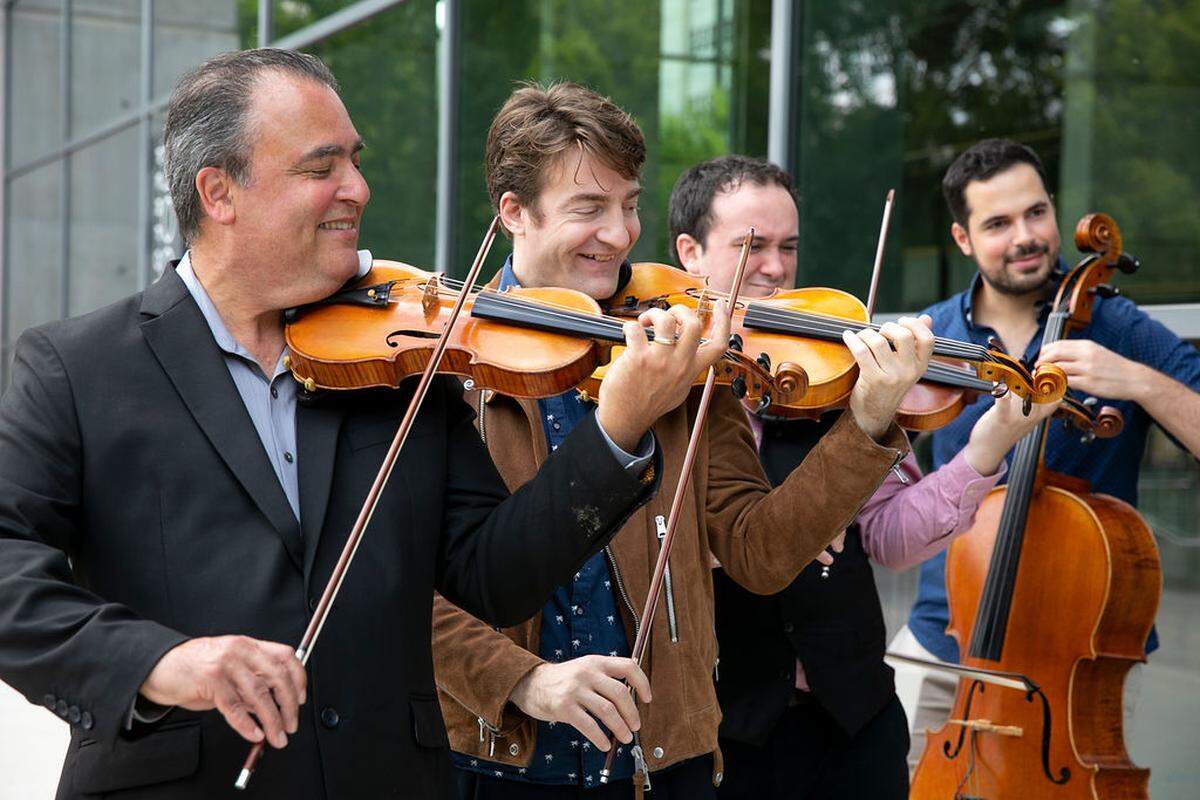
From the debut album “Turtle Island String Quartet” in 1988 up through the just-released “Island Prayers,” the Turtle Island Quartet has served as a leading voice for improvising string groups with a repertoire devoted to Balakrishnan’s original works as well as the music of jazz giants from the past century. Fittingly, “Shades of Blue,” the program the Turtle Island Quartet will bring to the Singletary Center for the Arts on Feb. 26, centers on this year’s centennial celebrations of two jazz legends — Miles Davis and John Coltrane.
Both artists have figured prominently in the Turtle Island Quartet’s own history. A crisp, animated string arrangement of Davis’ “Milestones” was featured on the group’s debut album. Coltrane’s beautiful “Naima” was a highlight of Turtle Island’s second recording, 1989’s “Metropolis.” But the saxophonist’s work was featured more prominently on 2007’s “A Love Supreme: The Legacy of John Coltrane,” the album that won Turtle Island its second Grammy.
“Turtle Island, in some ways, was built to play the American jazz music canon,” Balakrishnan said. “A string quartet is known for great artistic expression. It’s like Beethoven and Mozart and going forward into the great classical tradition they represented. We take the same tact when we play Coltrane and Miles. They’re like Mozart and Beethoven.
“I remember playing ‘Milestones’ on the very first recording back in the ’80s and exploring the whole footprint Miles has had. This is an excuse to put together a program of music we love to play, celebrating those two giants of jazz Turtle Island style. Of course, there is a ton of improvisation involved. That’s what the group is known for. We will also be playing ‘A Love Supreme,’ my arrangement of the full four movement piece. For us, it’s a warhorse. It’s like playing Opus 59 by Beethoven. It’s familiar territory, yet on the other hand every time we play the piece, it has a different feeling.”
The idea of a jazz-leaning quartet came to Balakrishnan after moving to the San Francisco Bay Area from Los Angeles. After completing graduate studies at Antioch University West, Balakrishnan became fascinated by the new acoustic music of the David Grisman Quintet. At the time (the mid-to-late 1970s), mandolinist Grisman was in the initial stages of an earlier progressive variation of string music. Instead of using classical music as its foundation, Grisman called upon bluegrass instrumentation to execute his new sound.
“They were very interested in playing in a string band, jazz-based style — not having a drummer, using string instruments like mandolin, guitar, violin, that kind of thing. And so, it was a natural thing for me. I just started exploring.”
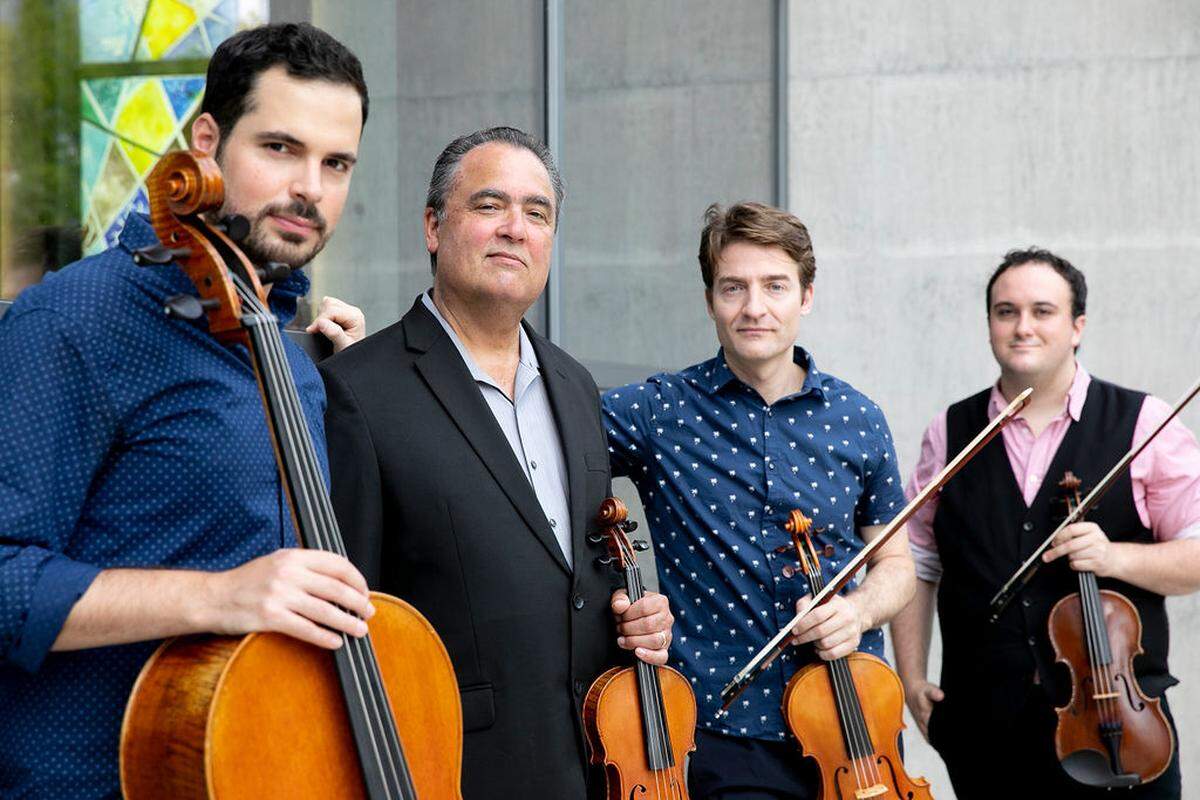
One of Grisman’s chief band members and composers, violinist Darol Anger, would become an original member of Turtle Island, remaining with the group until 1997. The rest of the current Turtle Island lineup is comprised of younger players — violinist Gabriel Terracciano, violist Benjamin Von Gutzeit and cellist Naseem Alatrash — whose influences play into the quartet’s newer music.
“Improvising string players, they’re restless souls,” Balakrishnan said. “That’s built into the music. The membership changes have really kept the group vital. We’re improvising. We’re arranging. It’s all coming from us. When you’re playing classical music, it’s all written out. It’s a different thing here. In that change of personnel, the group has been growing and evolving. My point is to be the one bellwether that stays constant to that original vision when I was by myself with the music trying to find myself.”
Balakrishnan would go on to find some very notable support for Turtle Island. Through the years, the quartet has recorded and/or performed with saxophonist Paquito D’Rivera, guitarist Leo Kottke, the champion vocal group Manhattan Transfer, vocalist Tierney Sutton and more. The new “Island Prayers” album features works by vocalist and cultural music titan Rhiannon Giddens and composer/pianist Jerod Impichchaachaaha’ Tate .
Among the most prominent and current of Turtle Island collaborators is Grammy winning trumpeter and film score composer Terence Blanchard. His composition “Turtle Trajectory” is featured as part of “Island Prayers” and the quartet’s current concert repertoire. But their alliance has also included extensive collaborative touring. Concerts bookending this week’s Singletary Center concert have Turtle Island and Blanchard performing jazz-chamber versions of the latter’s film score for Spike Lee’s 1992 biopic “Malcolm X” and his Grammy winning 2013 opera “Fire Shut Up in My Bones.”
“Audiences that come to see string quartet concerts are running a certain way,” Balakrishnan said. “But Terence has more of a hardcore jazz audience. In the middle of these shows, Terence gives us this chance to a do a piece of mine called ‘The Second Wave” (featured on Blanchard’s 2021 album “Absence.”) When we play that for audiences, they go nuts. They go crazy. They go, ‘Man, these guys play jazz for real.’ They get a sense of the power of Turtle Island. You give that music to the right audience, and it blows people away.
“But it’s never been an easy sell. A jazz fan might go, ‘’I don’t know. They don’t have a singer. They don’t have a drummer.’ They shy away from it to a certain extent.’ What we do is a blessing and a curse because it’s such a unique concept.”
Turtle Island Quartet — “Shades of Blue”
When: Feb. 26 at 7:30 p.m.
Where: Singletary Center for the Arts Recital Hall, 405 Rose St.
Tickets: $12 (students); $29 (public); Free for University of Kentucky students
Online: finearts.uky.edu/singletary-center/tickets