
Update: Concert planned for Singletary cancelled after artist injures hand
AI-generated summary reviewed by our newsroom.
- Williams will perform May 27 at Singletary Center Recital Hall.
- She uses tap shoes, guitar-body percussion and a kalimba onstage.
- Acadia is her Nonesuch debut and includes guest collaborators.
UPDATE: Singletary Center announced on Tuesday that the May 27 concert by Yasmin Williams and Joseph Williams has been cancelled due to artist injury.
“Yasmin has injured her left thumb and will be unable to perform. We wish Yasmin all the best in her recovery,” according to the announcement.
All tickets will be refunded in full; no action is necessary.
After three albums of instrumentally inclined music possessing both the traditional depth of folk and the melodic accessibility of pop, Yasmin Williams has forged a devout fanbase. But a hefty part of the fun surrounding her concerts is the reaction of listeners who are not only new to her songs, but to how she performs them.
“A lot of people who maybe just listen to records or have just heard my songs in passing aren’t aware of how I play,” said Williams, who will perform as part of a double-bill concert on May 27 with Tennessee roots-schooled guitarist Joseph Allred at the Singletary Center for the Arts. “It’s always interesting to hear their comments after the show. They’re like, ‘I’ve never seen a guitar played like that before.’ And I’m like, ‘Well, you have now.’”
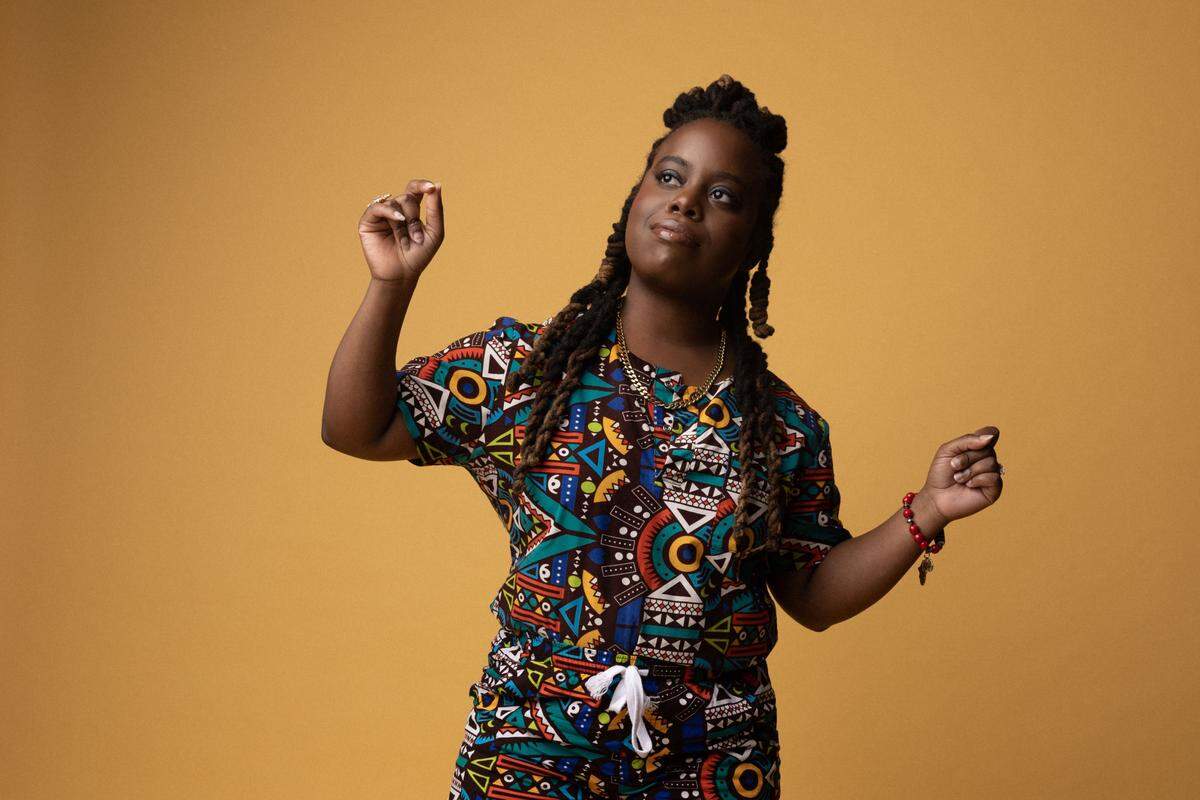
So, let’s examine the performance style of a young Virginia-born artist that led The New York Times to herald her as “one of the country’s most imaginative young solo guitarists” in a 2021 feature article empowered by the headline of “The Face of Solo Guitar is Changing. It’s About Time.”
To start with, Williams regularly plays the instrument face up, tapping notes and chords on the neck and base as if the instrument were a piano. Percussion? Sure thing. She wears tap shoes during shows and creates modest accompaniment by lightly hammering them on a floorboard — that is, when she isn’t using the body of the guitar itself as a makeshift drum. And let’s not forget the kalimba, the African “thumb piano” that Williams plays with just about any fingers except her thumbs. Those she devotes to the main course of guitar. Slap all that together, and you have an artist who approaches the guitar as if it were a single-instrument orchestra.
“That’s because it is,” Williams said. “That’s what the guitar is. That’s why I love it so much.
”A lot of my different techniques, like using tap shoes for percussion and using the guitar body for percussion, putting instruments like the kalimba on top of my guitar to get different timbres, etc. ... all of those things stem from playing by myself. Very early on, the guitar revealed itself to me. It was an instrument that was capable of a lot more than what I heard most people doing with it. Once I discovered open tunings and alternate tunings and honed my style a little more, I realized the guitar is an orchestra. You can do so much with it. People are barely scraping the surface — I’m barely scraping the surface — of what’s possible with the guitar. It lends itself so well to solo instrumentalists because, if you have the imagination, you can do anything with it.”
Williams’ techniques weren’t the only things that came to her as she explored the possibilities of the guitar. She forged nearly all of her technical command of the instrument on her own, as well.
“I took lessons for, I think, a month. It was mainly blues/rock guitar kind-of stuff, but lessons weren’t for me. I’m about 99% self-taught, I tried the lessons thing, and it didn’t last long. I didn’t really like being told what to do, so I had to quit that.”
If lessons didn’t further Williams’ instrumental abilities and vocabulary, what did? For starters, playing Guitar Hero with her brothers.
“I didn’t play guitar at all prior to playing Guitar Hero. I wasn’t really interested in the guitar before that at all. I played clarinet. I played clarinet for 15, 16 years - a long time, but I gave it up for guitar in college. I had to pick one. But yeah, Guitar Hero definitely influenced me, especially with the lap-tap technique. That’s kind of where I got the idea to do it from.
“And as far as techniques go, a lot came just from being in interesting situations because I was a solo player. I still am a solo player.”
Being a solo artist, though, didn’t stop Williams from enlisting some high profile help on her third and most recent album, “Acadia” (her debut for the celebrated folk-and-more record label Nonesuch.) Americana songstress Aoife O’Donovan added breezy, wordless singing to “Dawning,” Canadian clawhammer pro Allison De Groot brought banjo colors to “Hummingbird” and saxophonist Immanuel Wilkins (who, in March, played the same Singletary stage Williams will visit this week) hoisted the jazz flag on the album-closing “Malamu.”
“‘Acadia’ has a lot of influences, most of them stemming from what I was doing at the time I was writing the songs. For example, ‘Hummingbird’ came at a time when I was playing a lot of bluegrass festivals and hearing different sounds and different groups that I hadn’t been previously familiar with. I was hearing a lot more banjo, fiddle and all of that stuff — just different experiences that have shaped those songs in the period they were conceived.”
Along with tunes that have Williams switch-hitting on harp guitar, bass guitar and the harp-like kora is a sonic lushness that reaches from folk traditions to richly contemporary lyricism. In essence, “Acadia” is a folk record spanning several generations and cultures, along with the variations that stem from both.
“My music tends to call back to different musical idioms and traditions. For example, I really love African kora music. But I also I love Piedmont guitar music by Etta Baker and Algia Mae Hinton. That definitely reaches into my playing and has for a long time. And I love jazz. My music ... it’s kind of a weird concoction of all these different influences that I grew up with, as well as ones I discovered later in life. I think that’s why there is a contemporary feel along with a nod to the past.”
And what of the mighty kalimba? It doesn’t appear on “Acadia,” but does surface regularly in Willams’ concerts, secured to the face of the guitar so both instruments can, in essence, accompany the other even though Williams is the only artist playing them.
“I got the idea from Earth, Wind & Fire and their song ‘Kalimba Story,’ which I loved since I was a kid. I thought I should just try to do what Maurice White did. He wasn’t playing kalimba taped on a guitar or anything, but there was a guitar playing in the background, soloing. So, I was like, “I think I could try that by myself. I got a kalimba and played with it for a couple of weeks just to get used to it. Usually you play the kalimba with your thumbs, but since I had to tape it to my guitar, I had to kind of relearn how to play it with different fingers because I can’t play it with both hands. My left hand is doing guitarwork and my right hand is doing kalimba stuff.”
Speaking of hands and how they command her performances, Williams was originally set to play the Singletary in February, but a hand injury and subsequent physical therapy pushed her performance to this week.
“I’m happy I can come to Lexington for sure, officially. I had an injury flare up to my right hand. And, you know, when I’m playing, I need my right hand.”
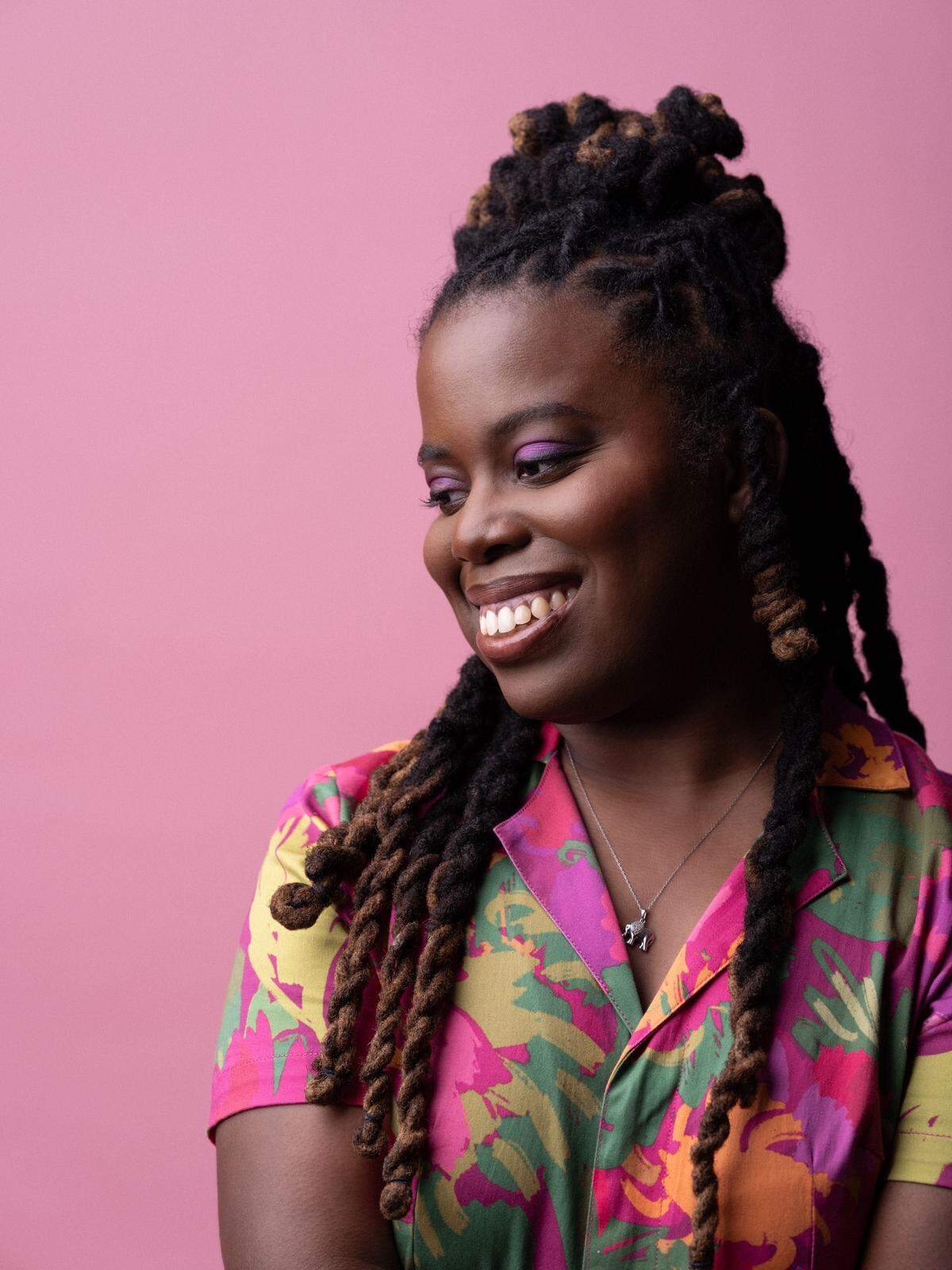
Yasmin Williams/Joseph Allred
When: 7:30 p.m. May 27
Where: Singletary Center for the Arts Recital Hall
Tickets: $20 public, $12 students, Free for University of Kentucky students
Online: finearts.uky.edu/singletary-center
This story was originally published May 26, 2026 at 4:55 AM.