
Herald-Leader music writer Walter Tunis’ last column: 45 years of high notes
AI-generated summary reviewed by our newsroom.
- Walter Tunis wrote for the Lexington Herald-Leader for 45½ years beginning in 1980.
- Farewell column to readers remembers Wayne Shorter, John Prine interviews.
- Tunis plans to continue writing about musicians in the future outside the Herald-Leader.
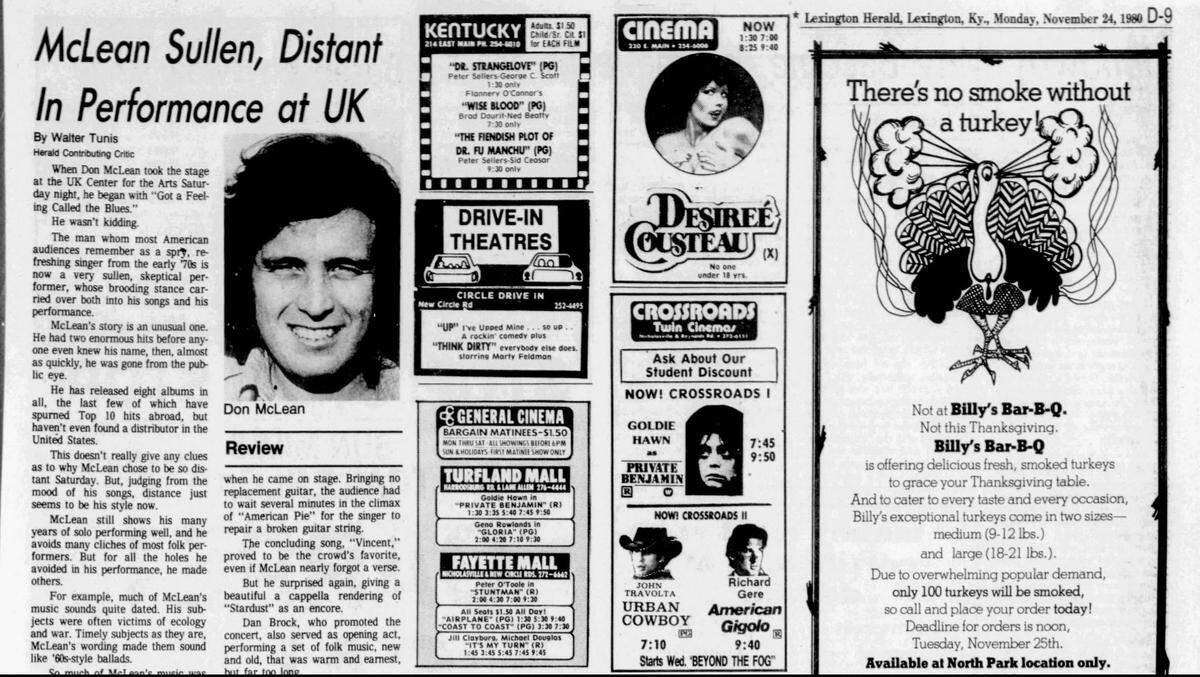
When journeying to Pittsburgh in November 1980 to spend Thanksgiving weekend with my then-girlfriend, a trip that included meeting her parents, I came armed with something I thought was pretty spectacular: My first published story in the Lexington Herald-Leader.
It was a review of a Don McLean concert at the University of Kentucky Center for the Arts, a sprawling new performance facility just over a year old. It would be renamed the Singletary Center for the Arts in 1987. I displayed the printed story to my girlfriend’s family as though it were an Olympic medal.
My girlfriend beamed. Her mother beamed. Her father, his face as immobile as a sphinx, took a few moments to read the whole piece. His verdict: “This is journalism?”
For me, it certainly was and would remain so with the paper for the next 45-and-a-half years. It would become an adventure of unimaginable artistic discovery, an education that expanded what I initially viewed as a simple fascination for music into a boundless appreciation of human culture and expression.
Through the journey, writing became a driving passion for my entire adult life — a consuming practice my friend and mentor Joe Ferrell regularly equated to the philosophy surrounding his lifetime as a theatre director and educator. “It’s something I cannot not do.”
That journey — or at least this mammoth portion of it — is now closing. The review I took to Pittsburgh in 1980 was my first Herald-Leader story. What you are reading now is my last.
For me, this is a moment of tremendous reflection. Spending over 45 years immersed in any singular satisfying activity makes it a part of your life. When it goes beyond that to serve as an ongoing conduit to a world of creativity, it becomes part of your very being. Simple as that. My writing isn’t stopping, but my writing for the Herald-Leader is as of today. (Full disclosure: I did not initiate the departure. McClatchy Media, which owns the Herald-Leader, announced in April it was severing ties with all its freelancers, of which I am one.)
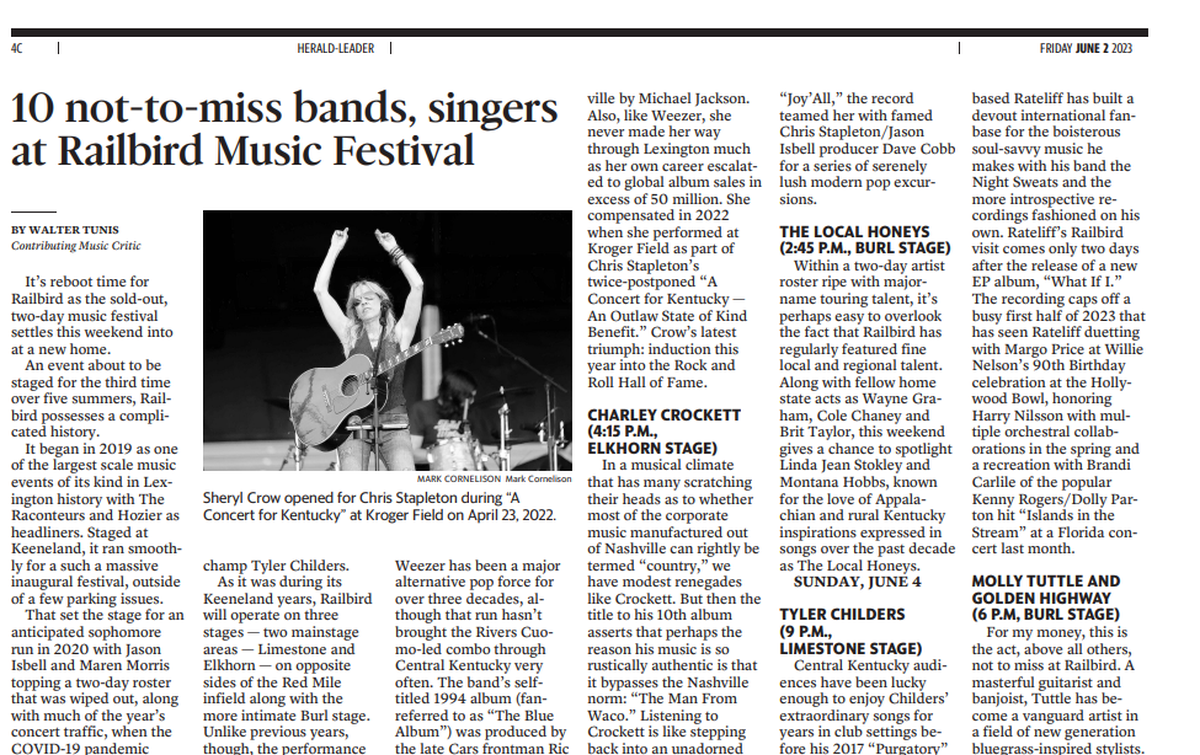
For the better part of my tenure, my byline read Contributing Music Critic largely because when I started, daily newspapers regularly ran reviews of live arts performances. For me, that meant attending, appraising and, hopefully with some level of insight, offering an honest and informed opinion of what I experienced — and doing it often under serious deadlines.
Over the last decade or so, reviews were de-emphasized and my work dealt more with interviewing and profiling artists before they played the Central Kentucky area. Hence, the gradual byline shift to the more appropriate Contributing Music Columnist.
Both avenues were equally rewarding. Reviewing, for me, was a chance to share my sense of excitement over music presented in recorded or live performance settings. All art is a shared experience. Yes, a review is, by definition, a critical appraisal. But nothing excited me more than to share accounts of when a performance moved me in ways that went beyond purely musical terms, when it ignited something deeper, more indefinable inside — something that, clichéd as it sounds, stirs the soul.
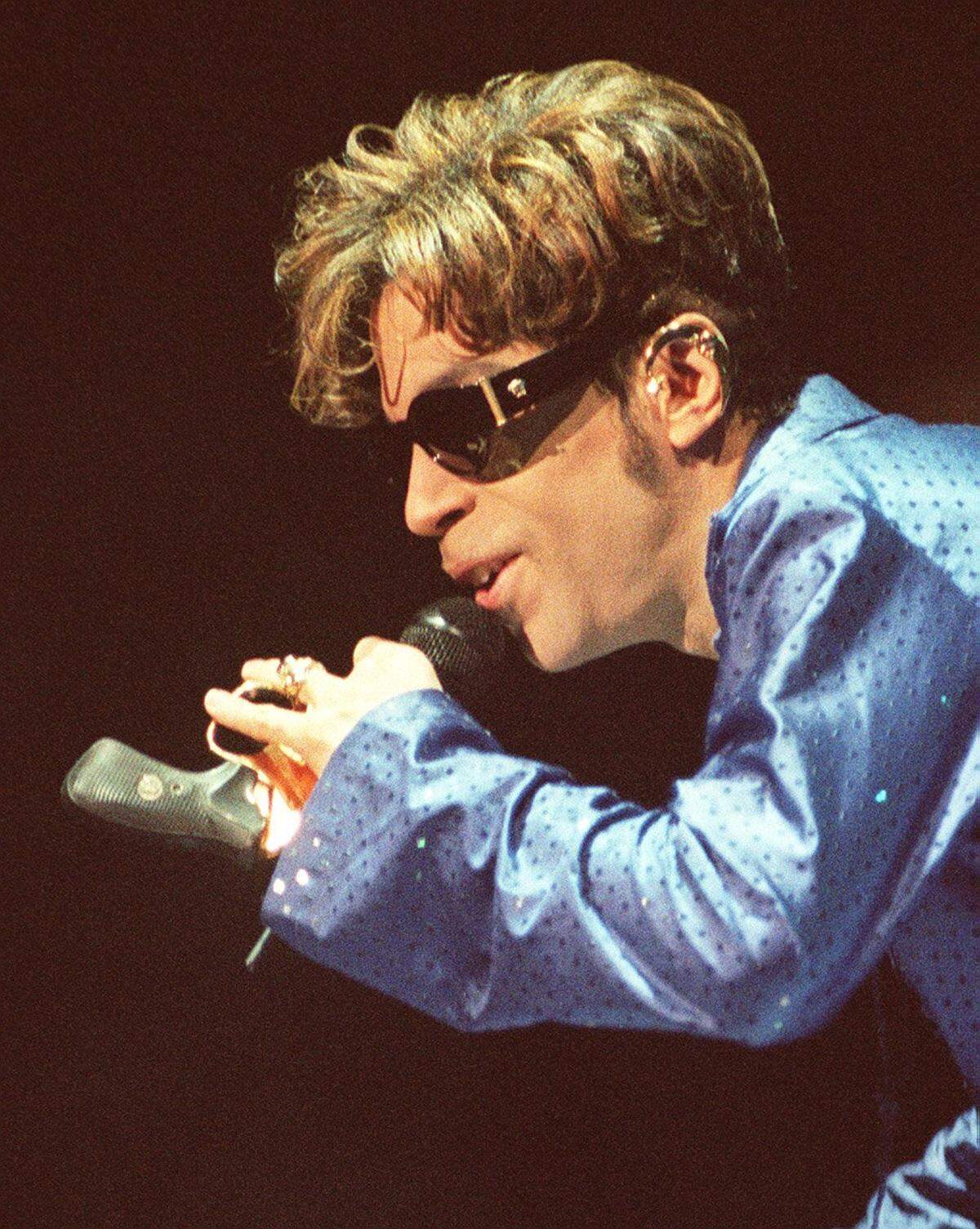
Yeah. Write about that.
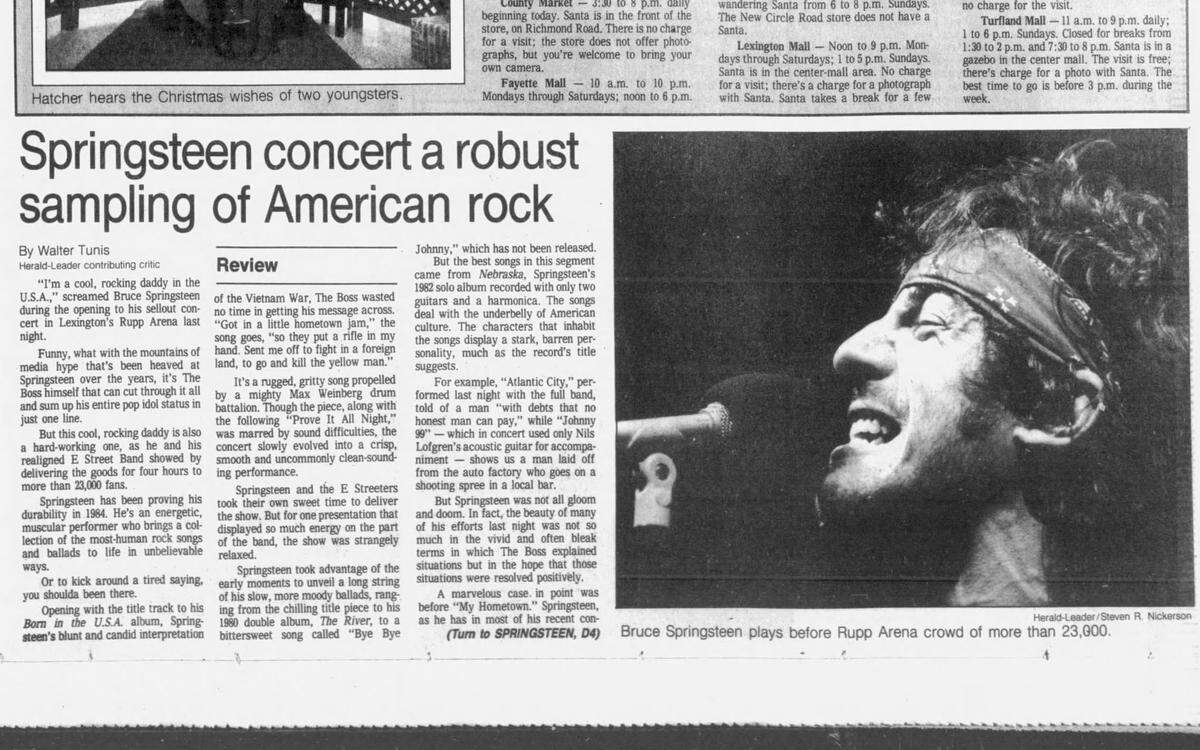
And there were plenty of times when it did, and I did, like when Bruce Springsteen raised the roof at Rupp Arena in 1984, when Emmylou Harris turned her cosmic country music into an Americana séance at the Kentucky Theatre in 1996 or when Al Green testified with churchy soul at the Norton Center for the Arts in Danville in 2008. There were a few other times, too. A few hundred other times.
But talking with artists and then putting their own words together with a little context on my part in ways that told stories about how their music fueled their sense of creative purpose was just as thrilling.
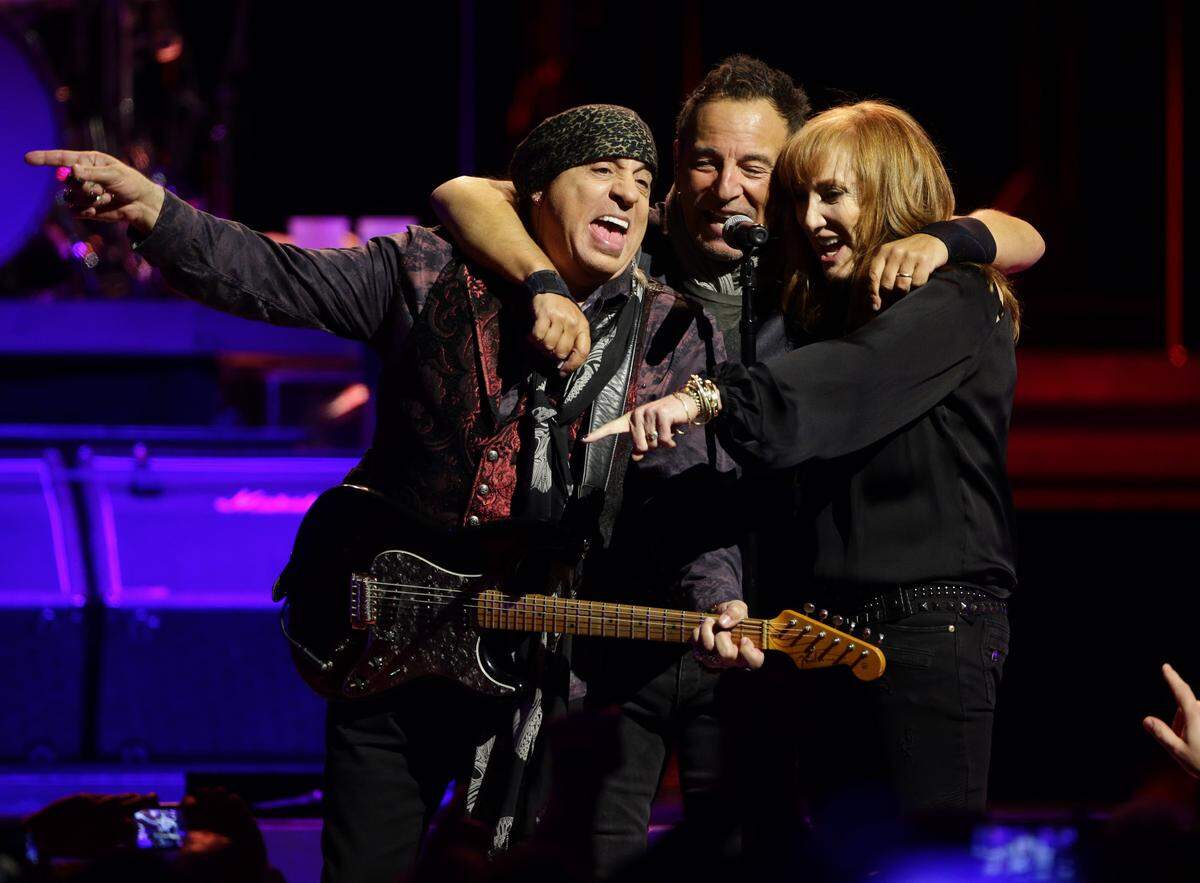
Sometimes subjects were skittish. Sometimes they recited remarks that were likely replicated countless other times from countless other interviews. But on occasion they opened up. Maybe they were relaxed. Maybe they just felt like talking. Maybe the moon was in the right phase. It didn’t matter. When it happened, the conversations were as arresting as the actual music I was writing about.
A prime example was an interview I was granted with the great jazz saxophonist and composer Wayne Shorter. I spoke with him by phone ahead of a 1997 duet concert at the Singletary Center for the Arts with Herbie Hancock. A devout practitioner of Nichiren Buddhism, Shorter had a reputation for giving interview answers that often strayed into seemingly esoteric plains far removed from the initial question. That didn’t bother me in the least. His reply to a query about artistic inspiration took a grand tour around decades of working with jazz giants like Art Blakey and Lee Morgan before landing, without any prompting on my part, on a reference to his second wife, Ana Maria. She was among the 230 passengers who perished when TWA Flight 800 exploded and crashed into the Atlantic Ocean the previous year.
“She speaks to me in the language of life,” Shorter told me in a tone barely above a whisper. “She speaks to me and I listen.”
Other unplanned interview exchanges carried a more whimsical tone, as in the one and only time I was able to converse with John Prine. The time was October 1991. Prine was in the early stages of the second of three great career renaissances with the release of his Grammy winning album “The Missing Years.” The plan was for him to call me at my home. The appointed time came and went. Nothing. His publicist didn’t know what went wrong, so I was about to write off the interview as a missed opportunity and head out to dinner. I was almost out the door when the phone rang. A voice on the line so scratchy you could practically see the nicotine stains began talking with giddy, dizzying speed.
“Aw man, I’m so sorry I’m late. I had the wrong number. I kept calling the number I had and this woman kept answering. I would say, ‘Hey, this John Prine calling for Walter. And all she would say was ‘Wuhhhhhht?’”
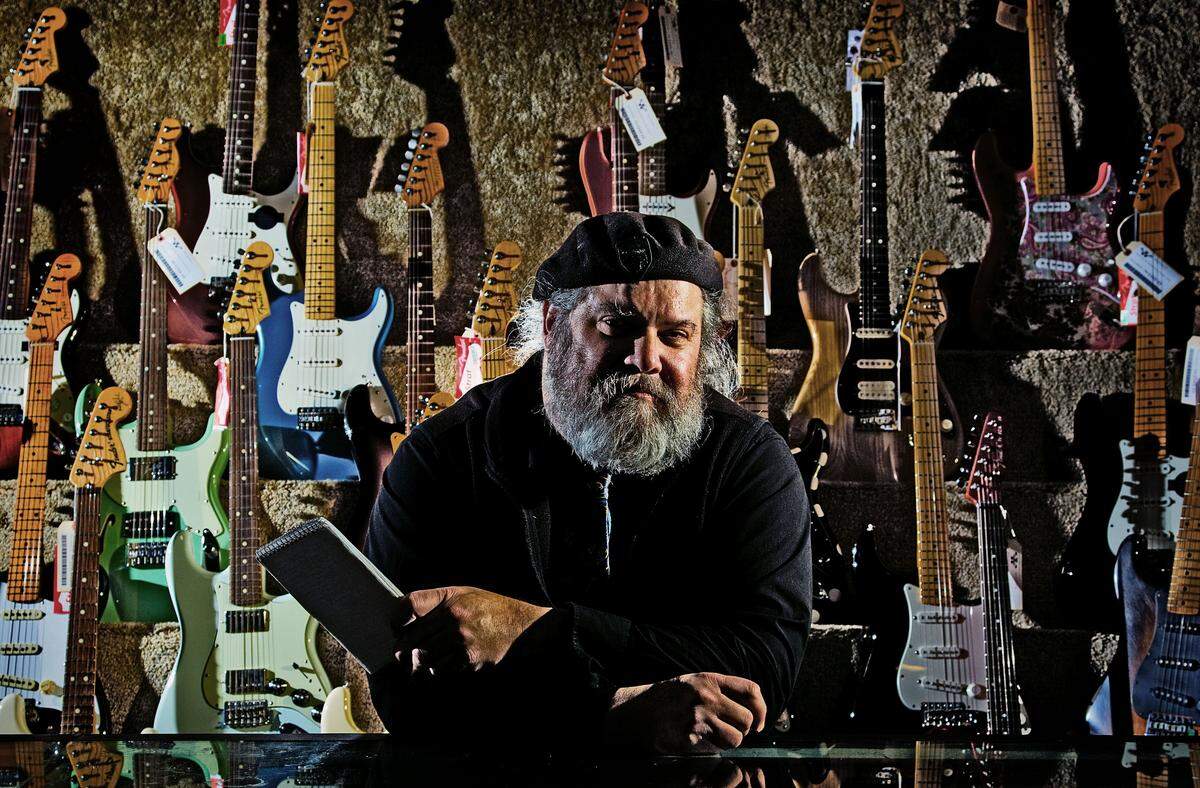
But these were merely the national touring artists I came into contact with. For every one of them was a Lexington or Central Kentucky musician of perhaps less renown but no less important artistic stature.
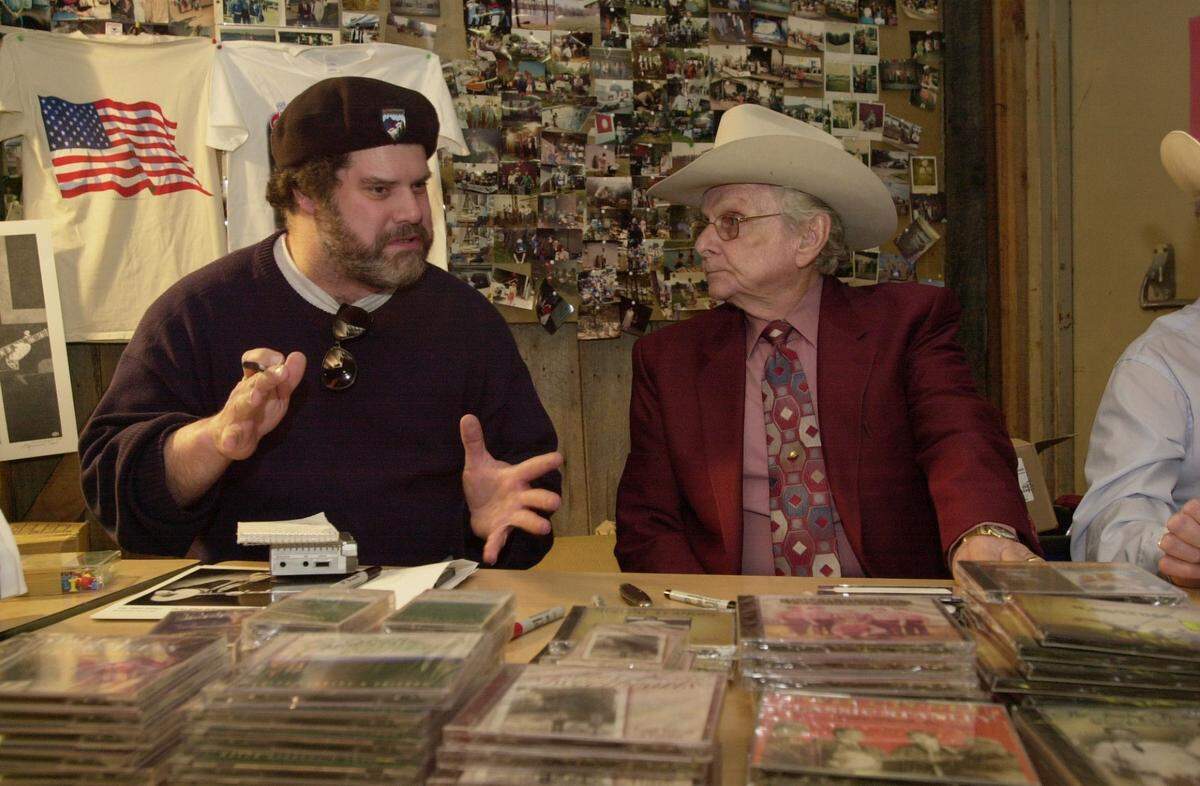
I fondly recall spending an afternoon watching roots musician and instrument maker Homer Ledford construct a dulcimer in his Winchester shop. Then there was an evening spent with banjo great J.D. Crowe in his living room as news came over the television announcing the death of jazz pianist Dave Brubeck, prompting a wholly unplanned chat about bluegrass and jazz.
I think also of the many great club musicians, Lexington mainstays (though seldom natives) I wrote about and joked with who have left us — guitarists Nick Stump, Frank Schaap and Joey Broughman, drummer Todd Copeland and multi-instrumentalist/certified Bob Dylan fanatic Robby Cosenza, among others.
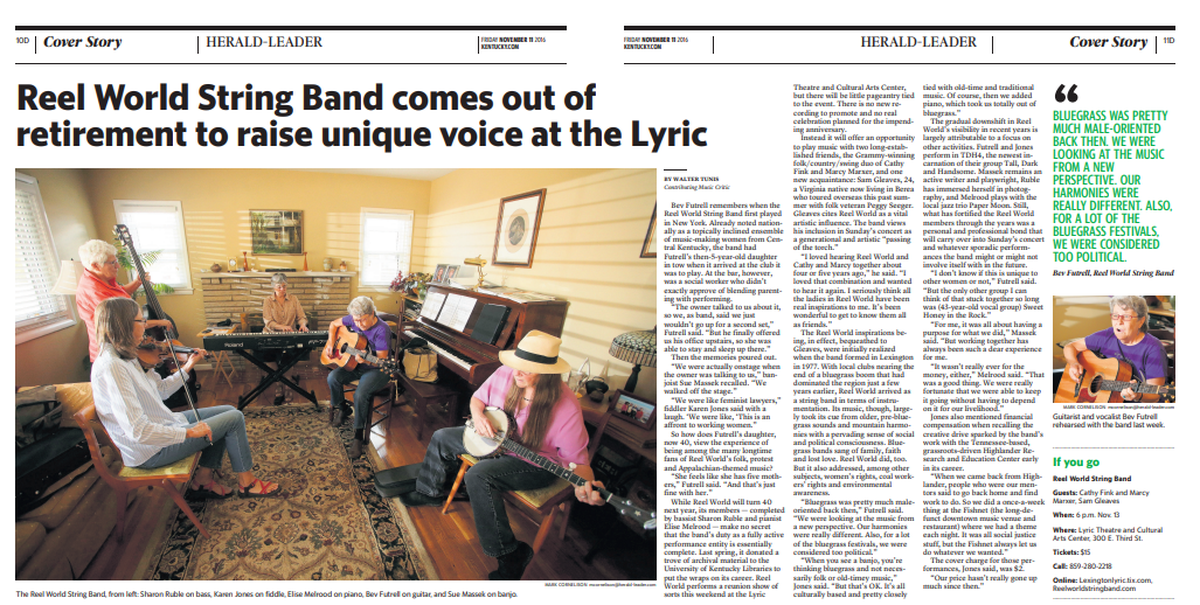
But the most inspiring thing about the vast Lexington musical community today are the leaders still actively fortifying it. Among them: Chester Grundy, a living monument of social culture and awareness, a torch-bearer for all things jazz and a friend of nearly 50 years; Everett McCorvey, who transformed the visibility of the University of Kentucky Opera Theatre and established an international presence for his American Spiritual Ensemble; Mélisse Brunet, who has brought astounding new vigor and vision to the Lexington Philharmonic; and Matt Gibson, who has given the Singletary Center of the Arts a home for the kind of visionary, progressive music unimaginable at the venue less than a decade ago.
I found inspiration from the first group, the one no longer with us, because their talent was matched by keen intellect and humor. After every encounter, I left with a smile.
With the second group, the one still profoundly active, smiles were already abundantly on display. Their respective talents have been bolstered by an obvious and outward sense of joy for their art and work.
All of these artists and all of their wonderful music have enriched my life as well as my writing for the Herald-Leader over these 45-plus years. I plan to keep writing about as many of them as I can in the future, just in a different forum. Establishment of new outlets for my writing is still in the formative stage. Once groundwork is laid, I plan to shamelessly self-promote them. In other words, I ain’t done yet. One chapter, though — a very sizable one — is concluding.
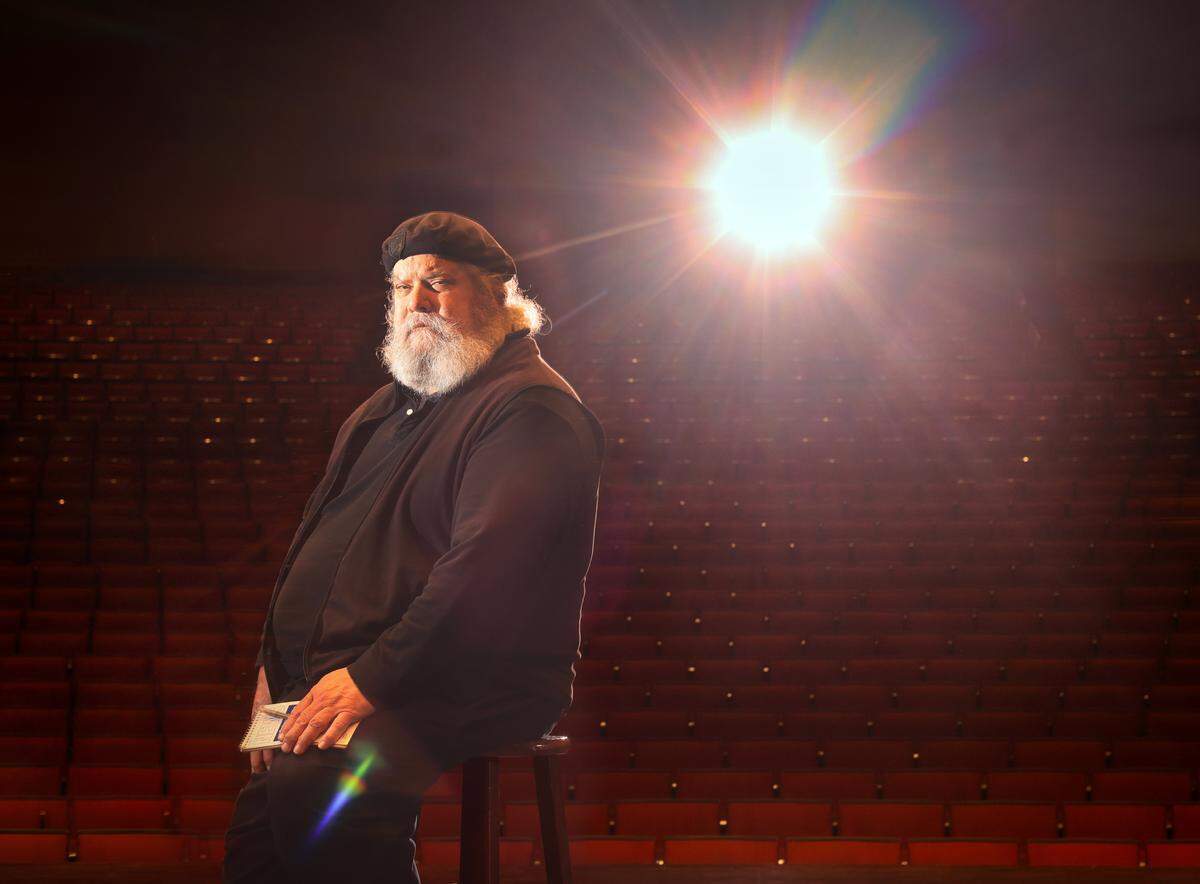
On a recent rainy Thursday morning, I met with one of my most longstanding pals from the Herald-Leader, photographer Mark Cornelison, on the Concert Hall stage of the Singletary. I can’t begin to think of how many performances we covered as a team. Let’s just say the number is substantial. I am flattered that my Herald-Leader tenure is ending with Mark shooting a portrait of my grizzled visage on the very stage where I reviewed my first show for the paper.
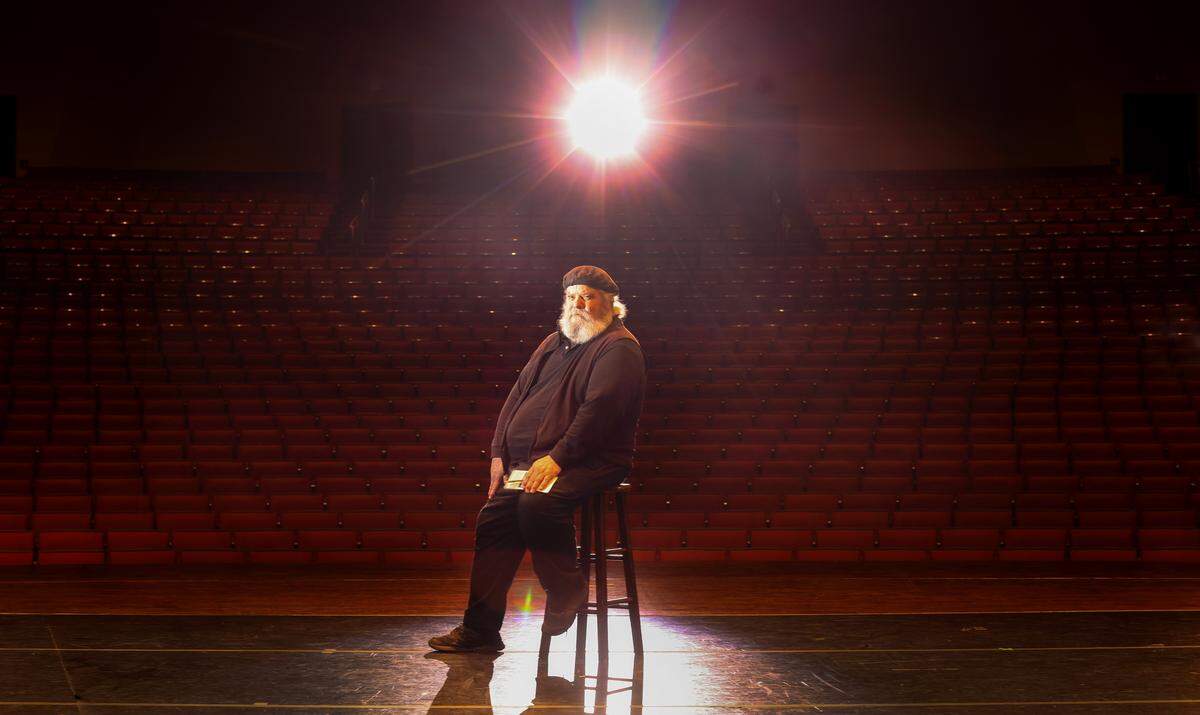
The spirits I sensed within the quiet, empty hall that morning were plentiful. Chick Corea, Dexter Gordon, Gordon Lightfoot, Sonny Rollins, Ravi Shankar, Sarah Vaughan, John Prine, Wayne Shorter and Zakir Hussain all played there over the decades. I didn’t exactly hear their music that morning, but I sure felt it.
The stories, memories and music I absorbed from the past 45 years could fill a book. Maybe one day they will.
Finally, if you ever took the time and interest to read or share any of my Herald-Leader stories through the years, thank you. Thank you and then some. Writing about music, just like music itself, is an empty exercise if there is no one to receive it. I still plan on sending. I’m just changing channels.
This story was originally published June 4, 2026 at 5:00 AM.