‘Opt for Canadian rye over Kentucky bourbon.’ Canada fights back against Trump tariffs
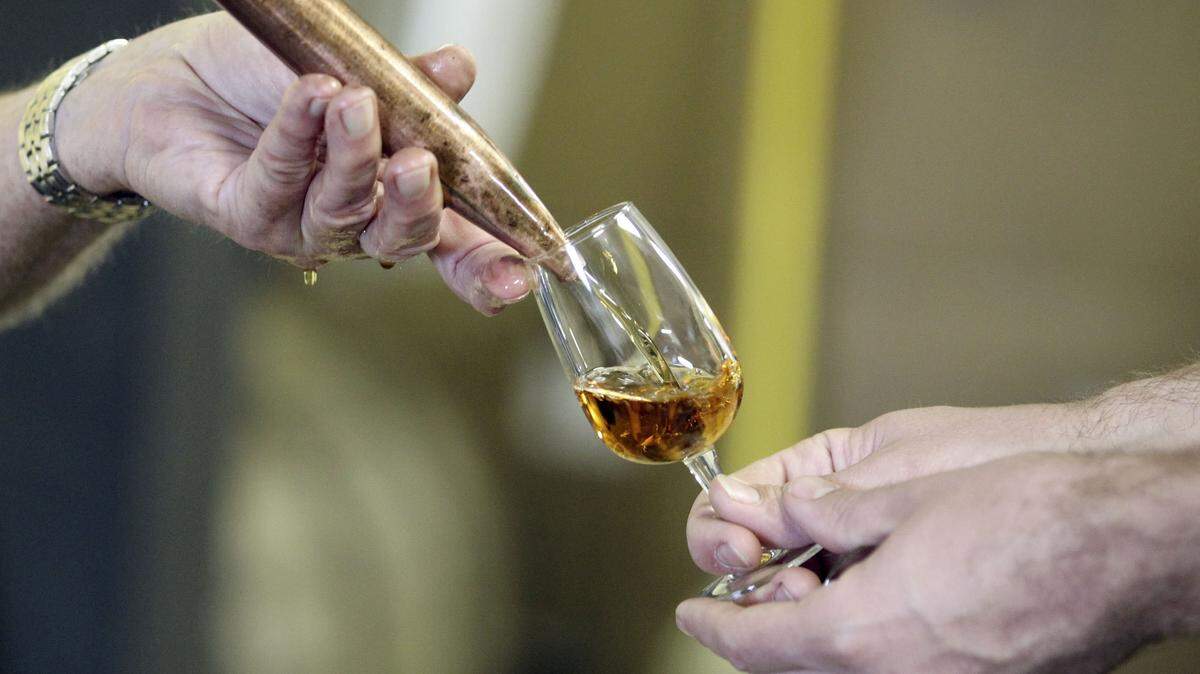
Just hours after President Donald Trump slapped tariffs on Canadian imports Saturday, British Columbia’s leader struck back with a response that likely will have repercussions for Kentucky’s bourbon industry.
David Eby, premier of British Columbia, said he was immediately ordering the BC Liquor Distribution Branch to “stop buying American liquor from ‘red states’, and remove the top-selling ‘red-state’ brands from the shelves of public liquor stores.”
He also directed the province’s government and “Crown corporations,” which are businesses owned by the government, “to buy Canadian goods and services first.”
“President Trump’s 25% tariffs are a complete betrayal of the historic bond between our countries and a declaration of economic war against a trusted ally,” Eby said in a news release. “As British Columbians, and as Canadians, we will stand strong and united in the face of this unprecedented attack.”
Trump signed an order that would affect not only Canadian imports, but also those from Mexico, which would be taxed at 25%, and China, with a 10% tax rate. Canadian energy-related exports would have a 10% tariff.
Kentucky is one of the “reddest” of states that has consistently supported Trump in the past three presidential elections.
In 2024, he won Kentucky by 30.5%, a significant spike from his 26-point victory in 2020. In 2016, he won by nearly 30 points. In 2024, he received nearly 1.34 million votes.
Kentucky voters have not supported a Democrat for the White House since Bill Clinton in 1996.
On Sunday, Canadian Prime Minister Justin Trudeau issued a challenge to his country: “Now is the time to choose Canada.”
He said: “It might mean checking the labels at the supermarket and picking Canadian made products. It might mean opting for Canadian rye over Kentucky bourbon, or forgoing Florida orange juice altogether.
The Canadian leader also announced his country will place 25% tariffs on $155 billion in US imports in retaliation to Trump.
Saturday’s action by Trump comes as distillers are facing the threat of 50% tariffs on American whiskey from the European Union. A distilling industry representative warned earlier this week that the Trump administration’s tariffs could be “catastrophic” for the industry.
In a joint statement Saturday, the Distilled Spirits Council of the U.S., the Chamber of the Tequila Industry and Spirits Canada said they were “deeply concerned that U.S. tariffs on imported spirits from Canada and Mexico will significantly harm all three countries and lead to a cycle of retaliatory tariffs that negatively impacts our shared industry.”
“Since the 1990s, trade in spirits in North America has been largely tariff-free, resulting in significant growth,” the statement said. “U.S.-Canada trade in spirits increased by 147%, while U.S.-Mexico trade surged by 4,080%. This demonstrates how vital our cooperative efforts have been for job creation and economic stability.
“However, recently the North American spirits sector is experiencing a slowdown due to the continued impact of COVID and economic factors like inflation. This slowdown will be exacerbated if a cycle of tariffs and matching retaliation begins, and the impact will be felt not just by the distilled spirits industry, but also by consumers and the struggling hospitality sector, which is still recovering from the pandemic.”
They asked for “constructive dialogue” on the issue.
And on Friday, a coalition of 52 associations representing the U.S. alcohol industry sent a letter to the president, urging him to exclude wine and spirits from new tariffs.
“Zero or low tariffs for wine and spirits are essential to U.S. producers’ export success in foreign markets,” the letter from the Toasts Not Tariffs Coalition stated.
The group said in a release that “nearly 85% of U.S. spirits exports go to countries that eliminated tariffs on all U.S. spirits (such as EU, UK, Canada, Mexico, Japan and Australia), and the vast majority of U.S. wine exports go to countries where the import duty is low or zero.”
Kentucky is second only to Tennessee in the amount of American whiskey it exports.
Louisville-based Brown-Forman recently announced in January it was laying off 12% of its workforce — or about 650 people — and closing its Louisville cooperage in the face of declining sales and its lowest stock prices in a decade.
This story was originally published February 2, 2025 at 11:45 AM.