Brown-Forman CEO: Seeing Jack Daniel’s yanked off Canada shelves ‘worse than tariffs’
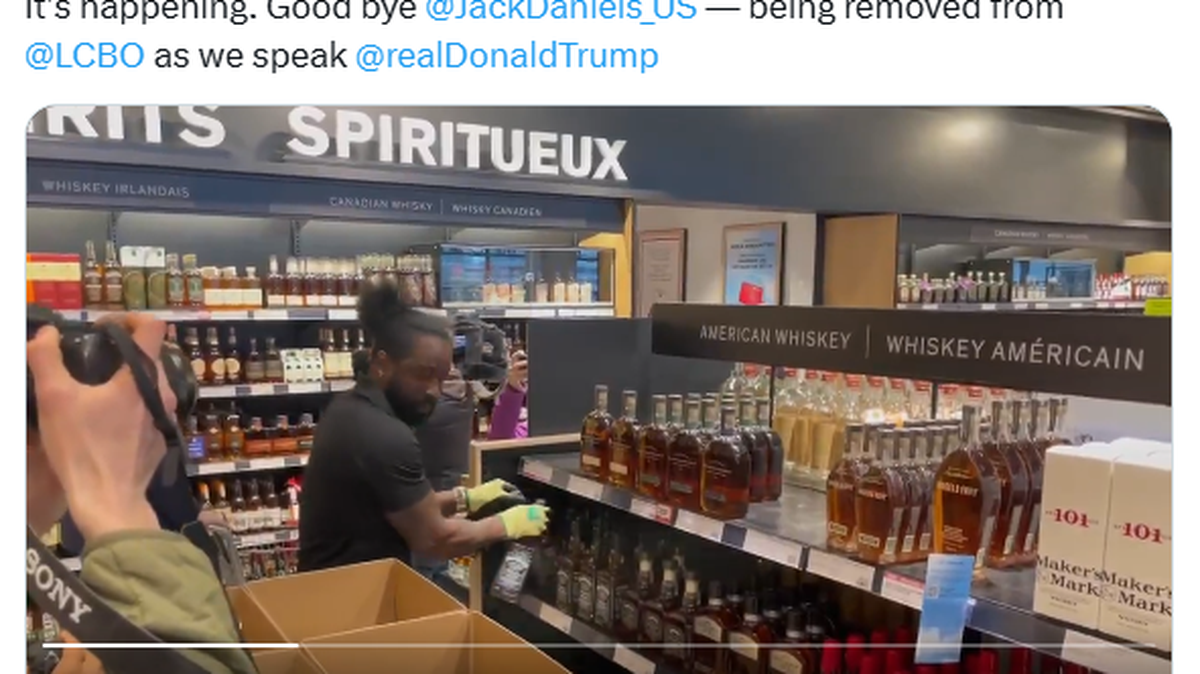
Kentucky bourbon maker Brown-Forman is braced for tariffs but still hopes they can be staved off, even as the company’s products are being yanked off shelves in Canada.
CEO Lawson Whiting, in a March 5 conference call with stock market analysts after releasing third-quarter earnings, said alcohol makers are working internationally “to try to keep this industry out of these trade wars, but we’re going to continue to prepare.”
So far the outlook doesn’t look promising.
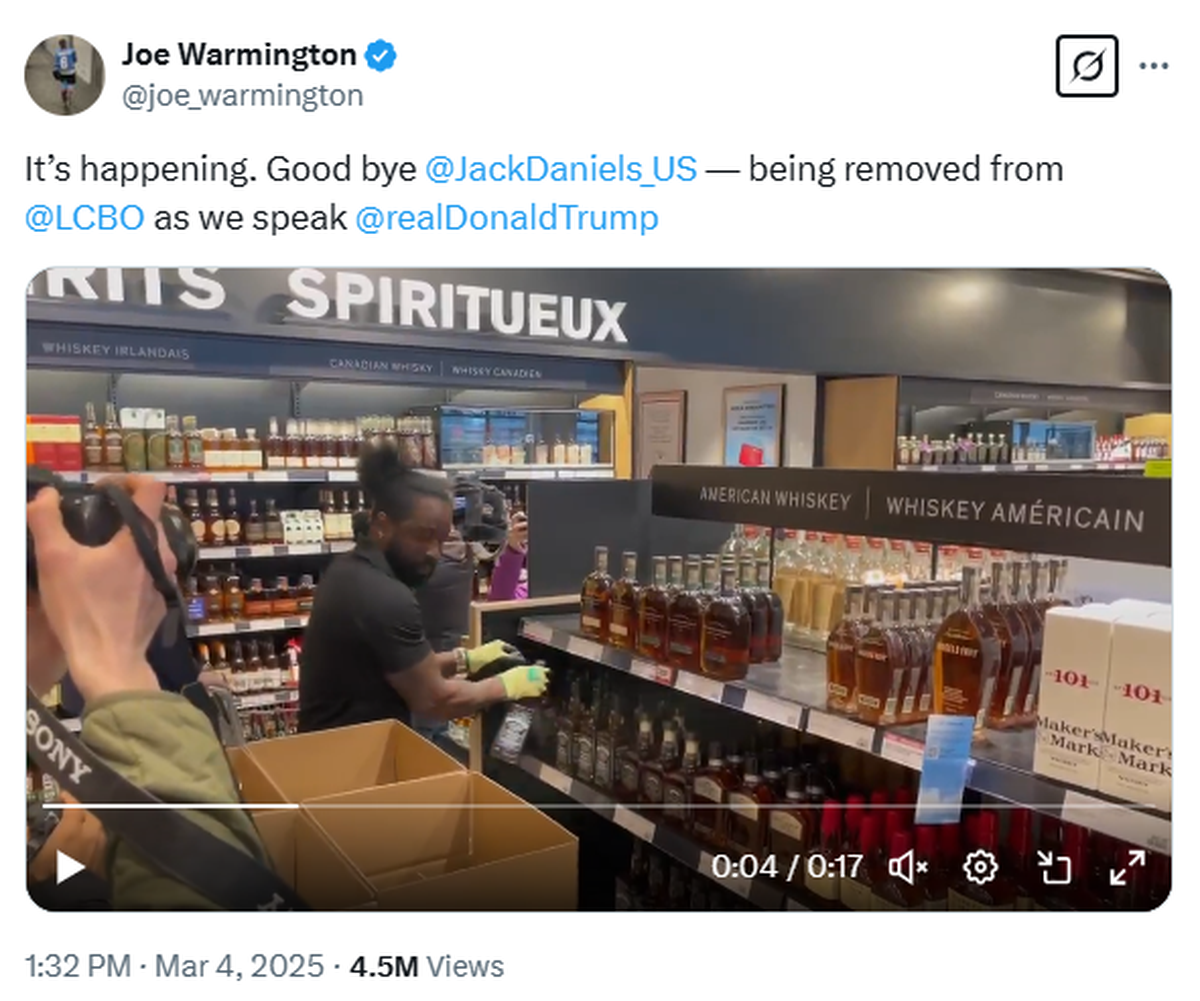
One day earlier, President Donald Trump installed 25% tariffs on goods from Canada and Mexico. In retaliation, Ontario removed American whiskey and all U.S. products from its shelves.
Video of liquor store workers removing Jack Daniel’s bottles went viral on social media.
Later Wednesday Manitoba Premier Wab Kinew announced “a wonderful, beautiful order pulling American booze off the shelves in Manitoba Liquor Marts.”
Whiting called that a “disproportionate response” that is frustrating but not devastating for his company.
“That’s worse than a tariff, that’s completely taking sales away,” Whiting said. “Canada is only around 1% of sales, we can withstand, but it’s disappointing that some of our consumers aren’t going to be able to get our Jack Daniel’s, because it’s a big brand up there.”
Trump has imposed tariffs on Canada, Mexico and China, America’s three biggest trading partners, for a variety of reasons. He has said the tariffs against Canada and Mexico are to force greater efforts against fentanyl trafficking and illegal immigration. But he also said he wants to address trade imbalances, protect American jobs and push foreign corporations open more factories in the U.S.
Spirits companies have argued they should be exempt from the tariffs because many of their products are country-specific already: Bourbon can be made only in the U.S., Canadian whiskey in Canada, tequila in Mexico, for instance.
In Kentucky, Whiting said his company and others in the industry continue to push for “reciprocal zero for zero tariffs” but admitted there is a “real possibility” the European Union will enforce 50% tariffs after March 31, when a negotiating period on steel and aluminum exports comes to an end.
“We don’t know where this thing’s going,” he said. “If they are coming after American whiskey, then the market for spirits once again gets very distorted, but we really believe that’s not going to be the case.”
Preparations for tariffs
During Wednesday’s conference call, Brown-Forman’s leadership was mum about specific preparations for tariffs, not wanting to tip their hand to competitors. But they indicated the possibility had been factored into its guidance for the rest of the year.
The company said that, regardless of several troubling figures — slipping sales (down 3% for the quarter), operating income (down 25%) and earnings (down 5%) — and general uncertainty about the economic picture in the U.S., the company expects fiscal year 2025 to end with growth.
That appeared to be enough for investors, who boosted the share price by almost 10% at midday.
And with news that Trump could again grant a reprieve for Canada and Mexico, the overall stock market bounced back Wednesday.
Gov. Andy Beshear, in a video posted on Tuesday, called on people to “make your voice heard” and call on Trump to “undo this decision” that Beshear said would put a “Trump Tax” on everything from food to new homes to gas.
Tariffs’ impact on distilling jobs
Louisville-based Brown-Forman has already cut more than 12% of its global workforce, and the Kentucky Distillers’ Association warned this week that more layoffs could be coming.
In a statement issued late March 4, KDA president Eric Gregory said: “The return of retaliatory tariffs on American whiskey will have far-reaching consequences across Kentucky ... That means hard-working Americans — corn farmers, truckers, distillery workers, barrel makers, bartenders, servers and the communities and businesses built around Kentucky Bourbon will suffer.”
The distilling industry in Kentucky is a major employer, responsible for more than 23,000 jobs and $2.2 billion in salaries and benefits, he said. The KDA “will continue to remind leaders of the far-reaching impact of our signature spirit and our concern for the loss of American jobs.”
Meanwhile, the Toasts Not Tariffs Coalition of 52 associations representing the U.S. alcohol industry and related industries, issued a statement saying they are “greatly troubled” that U.S. alcohol products are being removed from Canadian stores.
“We urge President Trump to lift the tariffs on Mexican and Canadian distilled spirits and wine due to the special nature of our products. We commend the administration’s objectives to protect the American people and support jobs in the United States, however, we are concerned these tariffs will not contribute to that effort,” they said in a statement.
Uncertainty already hurting business
The tariffs would have a ripple effect on the wine and spirits supply chain, according to the statement from the Toasts Not Tariffs Coalition.
That’s already happening at least one Kentucky-based business.
Hogshead, a recently launched online platform for barrel inventory, has seen recent deals with tequila producers in Mexico fall through.
Chris Wiedmar, co-founder and CEO of Hogshead, built his online marketplace on buying and selling barrels of whiskey. But as the supply began to outpace demand, he’s turned to tequila, working with groups who want to create tequila brands or new product lines and need to find barrels in Mexico.
But suddenly that pipeline has some kinks as well.
“It started with logistics and freight partners saying, ‘If you want to expedite before a certain date, we can rush and put that through.’ So there was a huge rush to get barrels into the U.S.” before the tariffs kicked in, he said.
Now, at least two new brands have completely paused their operations, he said. And existing brands have as well.
“A 25% hike is a massive cost to incur,” he said. “They’re already on pretty thin margins.”
The video of Canada pulling off bottles of whiskey “took me back to images from Prohibition,” he said. “You gotta just hope there’s plenty of people lobbying to get this overturned. ... All this uncertainty is good for nobody.”
This story was originally published March 5, 2025 at 1:42 PM.