Where are KY bourbon scammers coming from? The answer might surprise you.
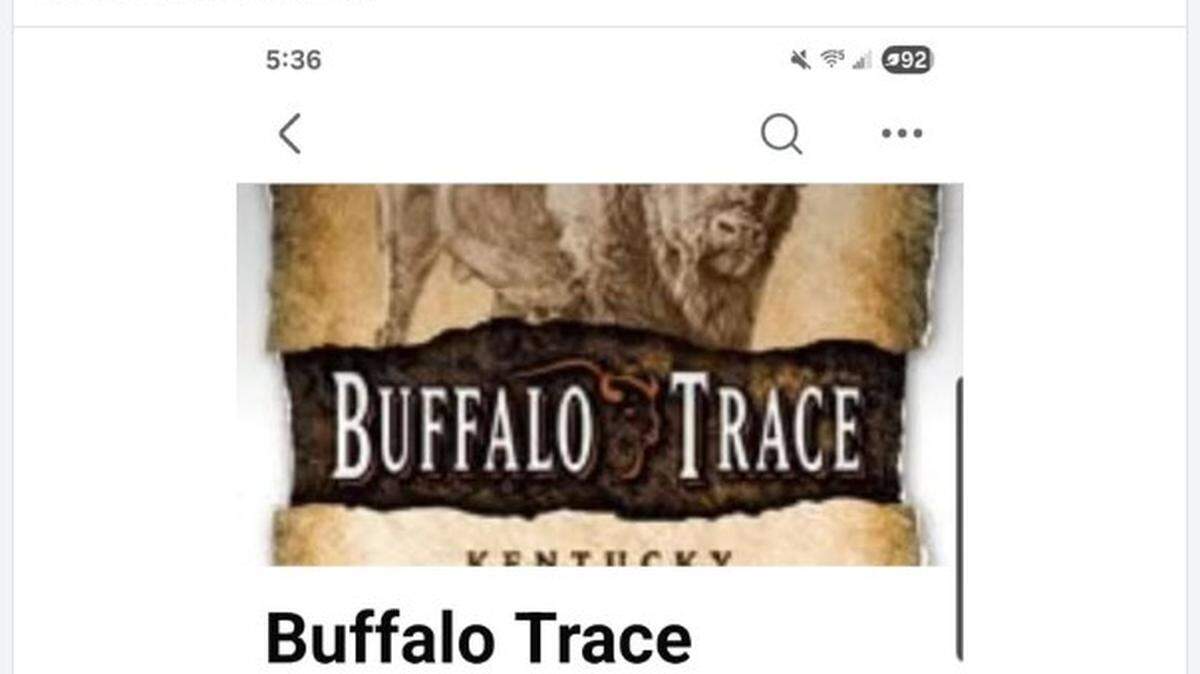
Sazerac may not know exactly who is impersonating Buffalo Trace master distillery Harlen Wheatley online, but a computer expert from Ohio has a pretty good idea of where he is.
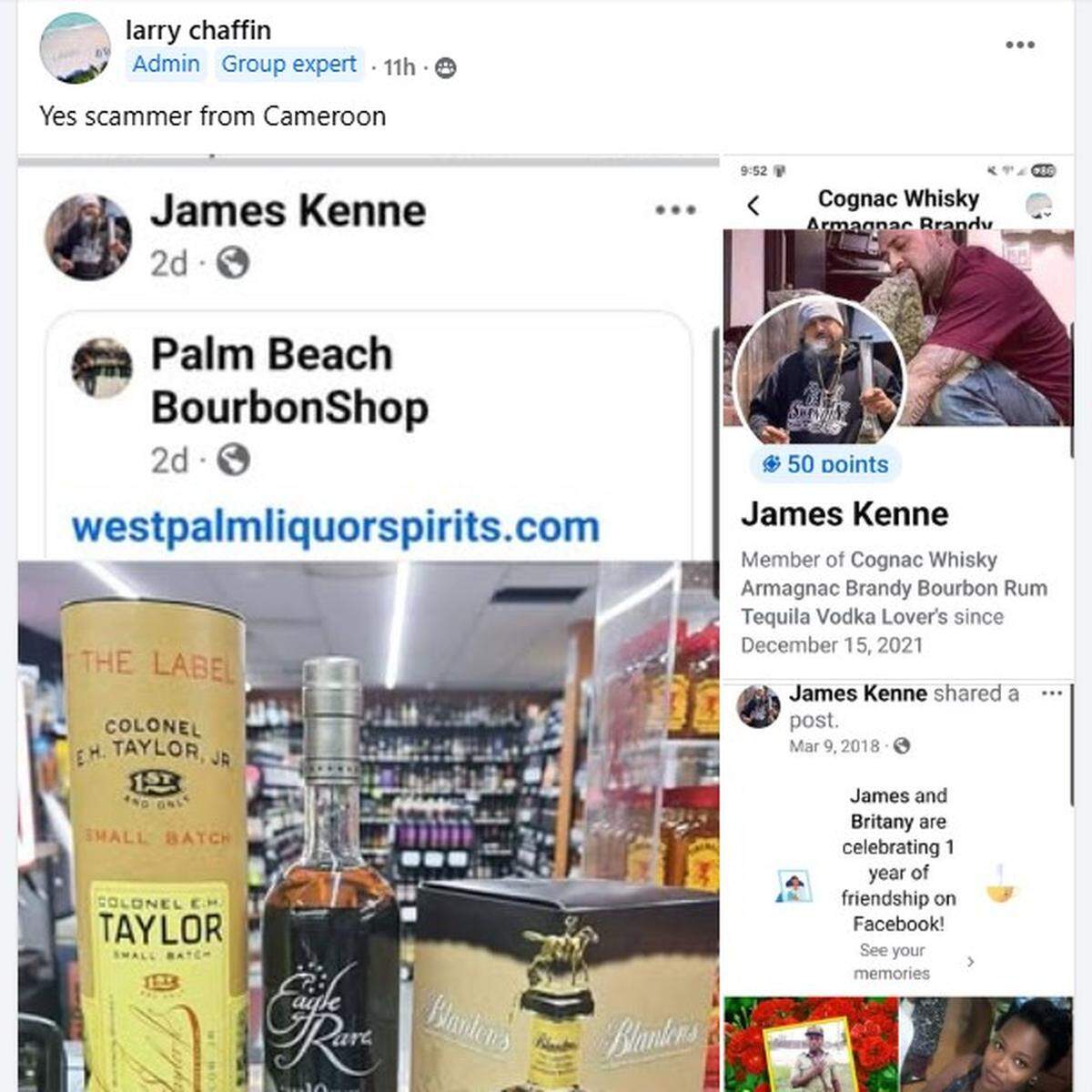
According to Larry Chaffin, who runs a private Facebook group called Bourbon Scammers that “outs” bad actors, Cameroon in Central Africa is hub of online bourbon scams.
“There’s a 90 percent chance that’s where he is,” Chaffin said. “One in the biggest concentration of all these scammers is from Africa, especially, Cameroon, and that’s where the guy from Buffalo Trace is from. ... He uses all these different names. He uses owners’ names, kids’ names. They set up different profiles.”
And it probably isn’t just one person, he said.
Chaffin, who is a bourbon collector and an expert in IT security, said he has tracked most of the fake online sales pitches on Facebook, Instagram, X and other social media to cyber cafes run by criminal gangs in Cameroon that allegedly funnel the money into drug and gun cartels.
“Those are the ones pumping it out day and night,” he said.
But others have noticed the lucrative stream, and now scammers in the U.S., as well as India, Malaysia and China, are also jumping on board, he said.
He estimates this kind of bourbon scam is probably at least a $100 million fraudulent business annually.
Buffalo Trace fighting fake master distiller profile
In the July 16 lawsuit filed by Buffalo Trace’s parent, Sazerac sued an anonymous scammer who was impersonating master distiller Wheatley and attempting to sell fake Pappy Van Winkle and other rare bourbons. The company said they’d tried to get the profiles taken down, but did not know who was behind them.
“Through this longstanding grift, Defendant falsely offers the public access to unique Sazerac products and experiences, including the opportunity to purchase exclusive, high-end bourbons,” according to the suit.
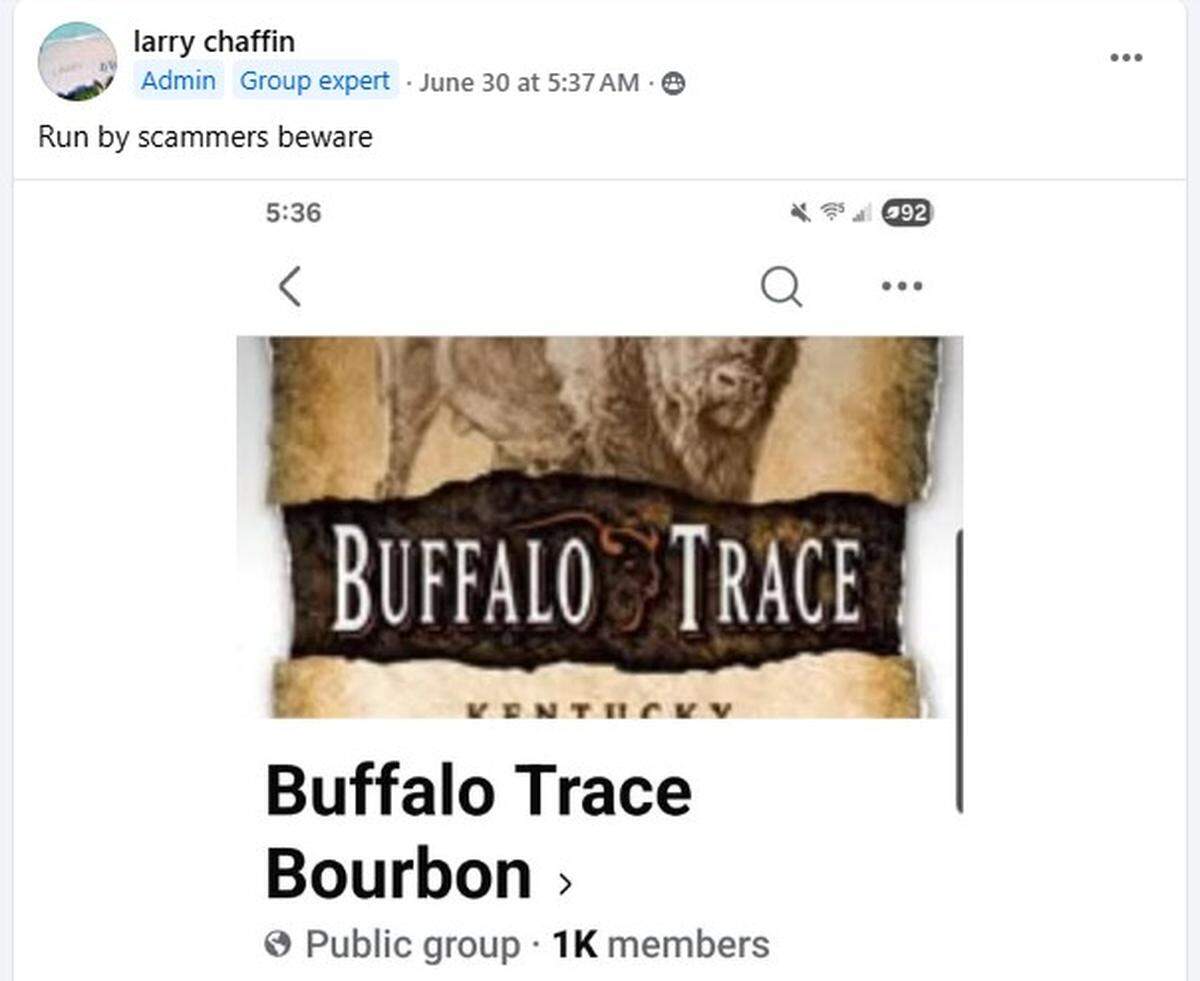
They say it’s a big problem for them and their customers.
“Defendant’s continued and unauthorized marketing, sale, and distribution of Sazerac’s products and further false impersonation of Wheatley have caused, and will continue to cause, confusion in the marketplace, irreparable injury, and material harm to Sazerac’s goodwill and reputation throughout the market,” according to the lawsuit.
Online sales often illegal, always risky
Chaffin said confusion is one reason he launched Bourbon Scammers, a private Facebook group that “outs” fraudulent profiles. Last month he and his friends reported close to 400 different pages or accounts to social media platforms, he said. But the platforms rarely take action on bourbon sales.
“There’s too many scammers out there,” he said. They make the online profiles by the thousands, then follow themselves and post positive reviews and references, but it’s all fake.
The online scammers play off another big trend: Resellers who scoop up coveted special releases and rare bottles, like Pappy Van Winkle, to offer to collectors at much higher prices.
So is there every any safe way to buy bourbon online?
“No. I don’t care what people say,” Chaffin said. “It’s all Cameroon. It’s the biggest organized crime on the Internet for what they do.”
(Another big scam they also run: Puppies. Fake puppy sales also are huge online, he alleges, also mostly going to Cameroon gangs.)
Never send them money over Zelle or PayPal or even Venmo, either.
“You’ll never get it back,” he said.
Reselling bourbon, whether online or in person, between private citizens is illegal in Kentucky and elsewhere, so those who lose money have no recourse under the law. Scammers know there is little to no risk of any kind of prosecution.
“If anybody sends you a message or if they have a posting (offering to sell you a bottle of bourbon), I tell everybody, if you’re going to buy a bottle on Facebook, Instagram, X, Telegram, just send me the money and it will be donated to charity,” he said.
Impersonating real spirits retailers
The scammers even copy legitimate websites. Chaffin said last year he contacted Liquor Barn, a major Kentucky spirits retailer, to tell them criminals in Cameroon had cloned their site online.
“I actually sent emails to the IT department and to the one of the executives at Liquor Barn saying, ‘hey, these guys copied your page and are trying to sell your stuff ... they’re on Facebook, trying to sell your stuff online, and it’s all fake,” he said.
And people were buying it.
“I saw that people were posting their got scammed a couple days in a row,” he said.
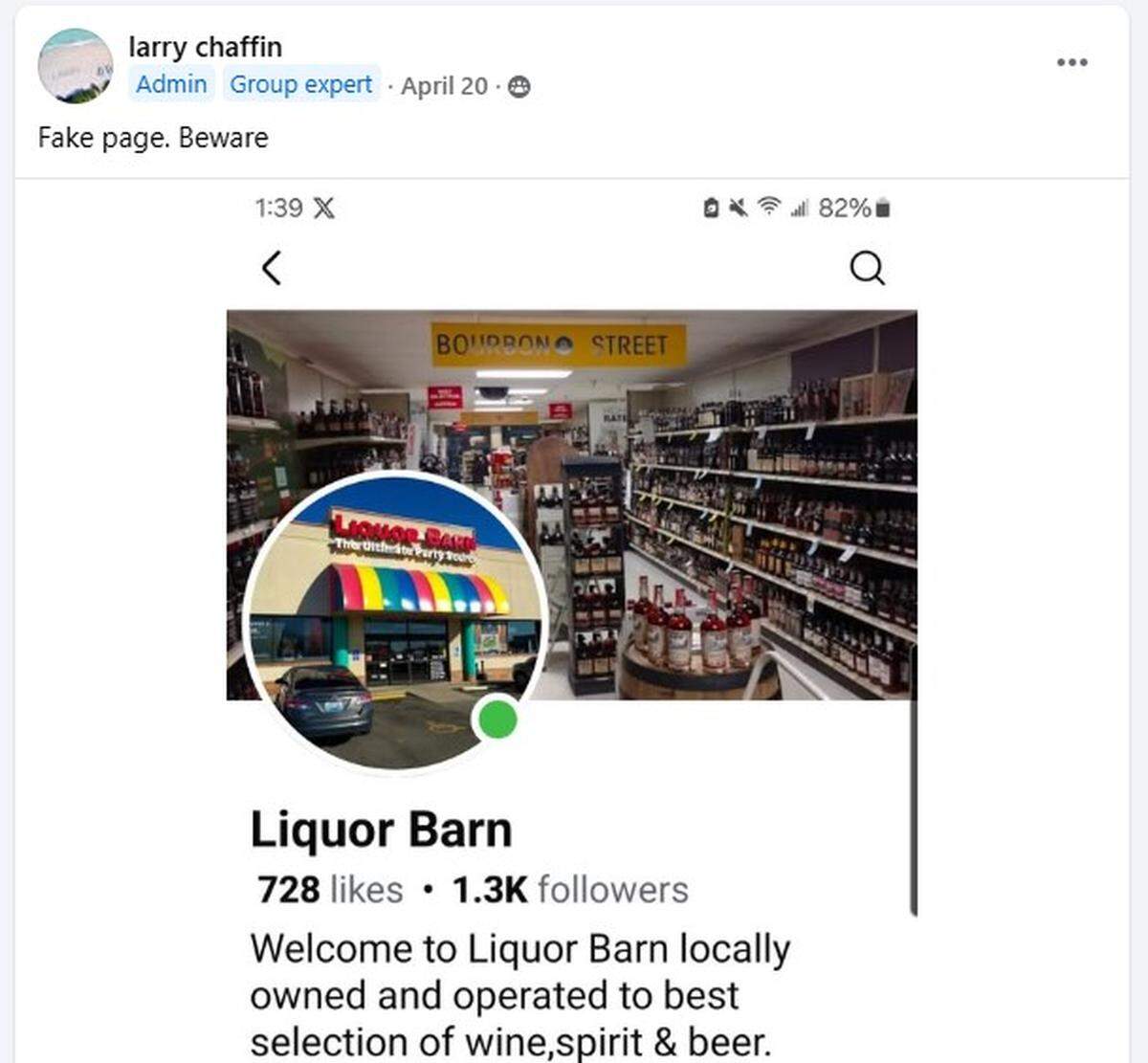
Chaffin said the site was taken down after about a week.
“Just don’t buy off Facebook, Instagram or X, and if you’re looking at a website, do your due diligence before you buy off a website. Because, you know, probably 90, 95% of them are fake,” he said.
This story was originally published July 30, 2025 at 10:18 AM.