Ohio distillery owner declares bankruptcy amid fraud charges, partner lawsuits
AI-generated summary reviewed by our newsroom.
- A.M. Scott filed Chapter 11 Dec. 22, reporting $3.4M liabilities and <$500k assets
- Owner Anthony M. Scott indicted April 2025 on felony theft tied to bad checks
- Company sold spirits only in Ohio, used contract distillers and pivoted from sanitizer
Another distillery has declared bankruptcy, this time in Ohio. But the company’s problems seemed to have arisen outside the bourbon industry.
A.M. Scott Distillery of Dayton, Ohio, filed for Chapter 11 re-organizational bankruptcy protection on Dec. 22, declaring that it had nearly $3.4 million in liabilities with less than $500,000 in assets.
The distillery did not immediately respond to a request for comment.
Following the news that Jim Beam will close down one of its Kentucky distilleries for a year in 2026, the A.M. Scott bankruptcy has been lumped together with other financially troubled distilleries, including Luca Mariano in Kentucky and a litany of spirits industry difficulties in the last year or so. Together, the stories show an industry under economic stress from overproduction of bourbon, declining alcohol sales and disrupted foreign trade.
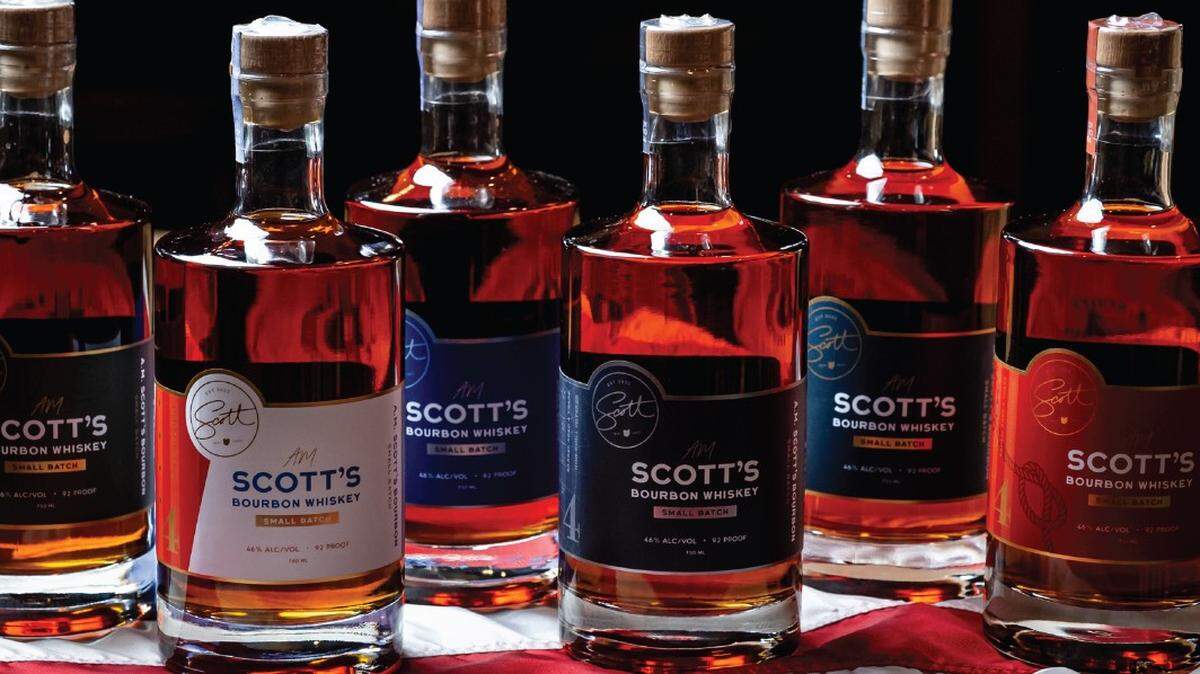
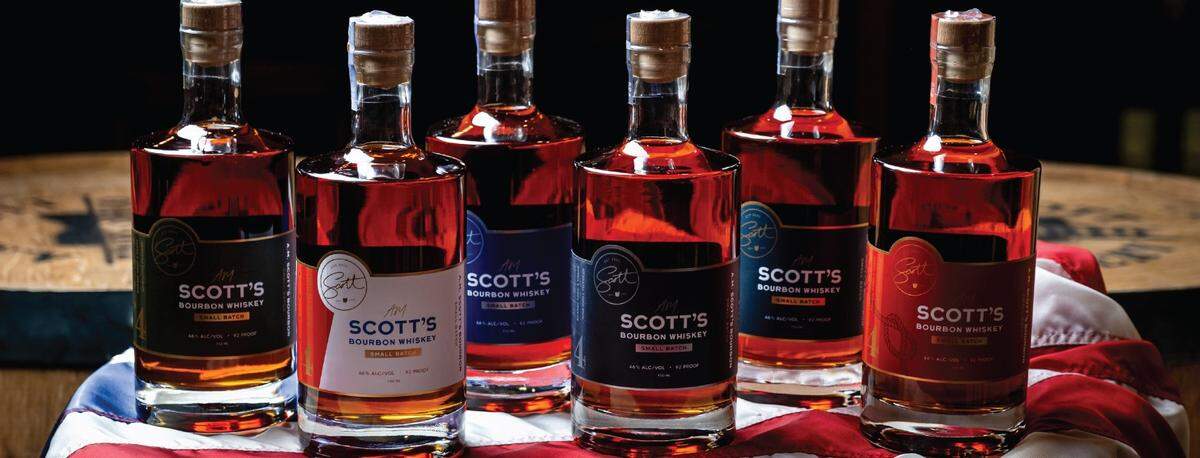
But A.M. Scott Distillery does not fit that pattern. A.M. Scott Distillery’s products, including bourbon, rye and blended whiskeys, were sold only in Ohio, not exported. And, according to the owner, sales were growing, albeit modestly. The barrels were sourced from Lawrenceburg, Ind., and not actually made by the now-bankrupt company.
And A.M. Scott Distillery was facing its own non-whiskey financial troubles, including liens on multiple projects and an arrest for felony fraud.
In April 2025, distillery owner Anthony M. Scott was arrested after being indicted on felony theft charges by a Mercer County, Ohio, grand jury. Scott allegedly passed more than $6,500 in bad checks related to his businesses involving a distillery-related restaurant called The Mayflower in Troy, Ohio.
Scott does not seem to have a background in bourbon. The distillery company’s roots were in the COVID pandemic, when it obtained a license to produce hand sanitizer. In 2022, it pivoted to working with contract distillers to produce drinkable spirits. And it enjoyed moderate success: Several of its releases won honors in various spirits contests, including the Fred Minnick’s ASCOT awards.
According to the declaration filed by Scott with his company’s bankruptcy petition, in 2023, the brand sold 16,712 bottles with revenue of more than $550,000.
But there wasn’t enough momentum to maintain the ongoing construction of the restaurant, retail stores and a bottling plant, he said, so they issued more shares, and the Scotts sold their home to put capital into the business. Anthony Scott blamed the company’s former chief marketing officer, Jessica Nielsen, who also was a shareholder in the business, for reporting financial issues that forced the restaurant and other businesses to close.
To allow the restaurant to be sold, the company had to go through bankruptcy, he said.
Of A.M. Scott’s spirits business, the owner said in the filing, “with a simplified structure, energized team, and revitalized brand strategy, A.M. Scott Distillery is well positioned to emerge stronger and more sustainable than ever before.”
In the company’s bankruptcy filing, the distillery debts include unpaid state and federal taxes, bills and loans, as well as a lien filed by the City of Troy, Ohio, for more than $414,000. The company has moved for debtor-in-possession financing to address the taxes and other bills.
The liabilities also include a claim of $250,000 for “unjust enrichment” alleged by a developer in another Ohio town. In December 2024, distillery owner Anthony Scott was sued in an Ohio court by representatives of The Clock Tower by West Element in Plain City, Ohio. The renovated building was meant to house a distillery venue.
According to A.M. Scott’s website, “to increase customer experience and interaction, A.M. Scott Distillery and its family of brands has committed to refurbishing buildings to bring storefronts and restaurants/entertainment venues to Midwest Ohio.”
But the historic renovation project seems to have run aground.
Scott was accused of improperly using money loaned for the Clock Tower renovation and development of that property. According to the complaint, Scott said the money was going to pay contractors working on The Clock Tower but instead was diverted to his distillery for payroll and other expenses. That resulted in at least one mechanic’s lien on the property.
When Scott and his wife, Katy filed for personal bankruptcy in March 2025, the Clock Tower developers filed an adversarial claim for $712,000 on their personal bankruptcy.
Scott’s partners in the Clock Tower development allege the distillery owner was illegally co-mingling assets of multiple companies and misleading other investors.