Once called ‘future of farming,’ AppHarvest discloses ‘substantial doubt’ about its future
READ MORE
AppHarvest faces challenges for its future
Kentucky-based produce company AppHarvest had ambitious plans to build a dozen huge indoor farms in Central Appalachia, but now it’s searching for cash just to keep going.
Expand All
Once called ‘future of farming,’ AppHarvest discloses ‘substantial doubt’ about its future
What has AppHarvest done for Eastern Kentucky? ‘They’ve delivered the jobs.’
A brief history of AppHarvest: Martha Stewart, big indoor farms, falling stock prices
A look inside a new greenhouse set to grow 45 million pounds of tomatoes in Kentucky
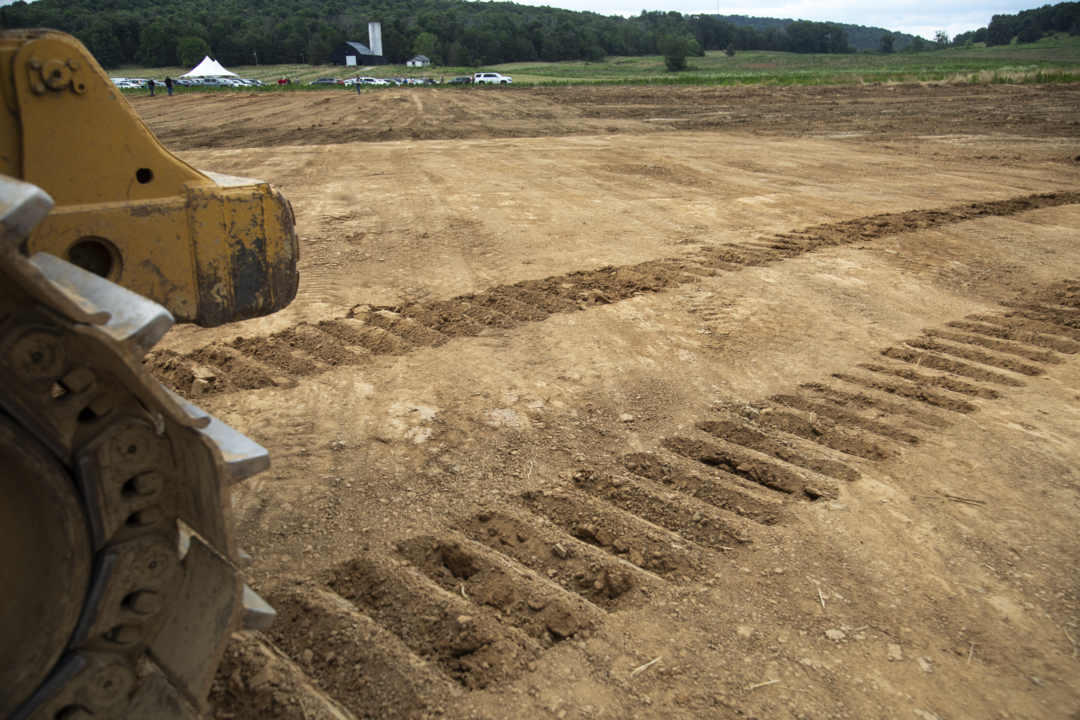
AppHarvest breaks ground on two new facilities
AppHarvest, the ambitious Morehead-based produce company that planned to open twelve huge, high-tech, indoor farms across Central Appalachia by 2025, told investors this month that it’s running out of cash. It’s also removing two top executives as part of a “restructuring” that will cost up to $7 million in severance payments.
Projected net sales for 2022, which the company set at $24 million to $32 million earlier this year, have been revised downward to $14 million to $17 million, or barely half the original sum. The company blames supply chain-related delays in opening three new farms. Net losses also will be worse than originally forecast, the company says.
“Management believes there is substantial doubt about our ability to continue as a going concern,” AppHarvest warned investors Nov. 7 in its 10-Q filing for the third quarter of 2022.
“Absent additional sources of financing, we expect that our existing cash and cash equivalents will only allow us to continue our planned operations into the first quarter of 2023,” the company said.
AppHarvest has generated much positive news coverage for itself since incorporating in 2018. Celebrities on the board of directors included lifestyle entrepreneur Martha Stewart and investor and Hillbilly Elegy author J.D. Vance, although Vance quit as he became more controversial during his Republican campaign for the U.S. Senate in Ohio.
The New York Times, the Wall Street Journal, Rolling Stone magazine, CBS’ “60 Minutes” and Fox News are among the media outlets to praise the company for environmentally friendly practices, such as recycling rain water for crop irrigation, in an economically distressed coalfield region.
“Is the biggest greenhouse in the U.S. the future of farming?” CNN asked in its feature on the company last year.
However, reality has proven far less bullish.
In its Nov. 7 filing, AppHarvest reported net losses of $83 million for the first nine months of the year and net sales of $10 million, with an accumulated deficit of $270 million. The company has cumulatively spent at least $641 million for operations and fixed assets since 2018, when it incorporated, according to public filings.
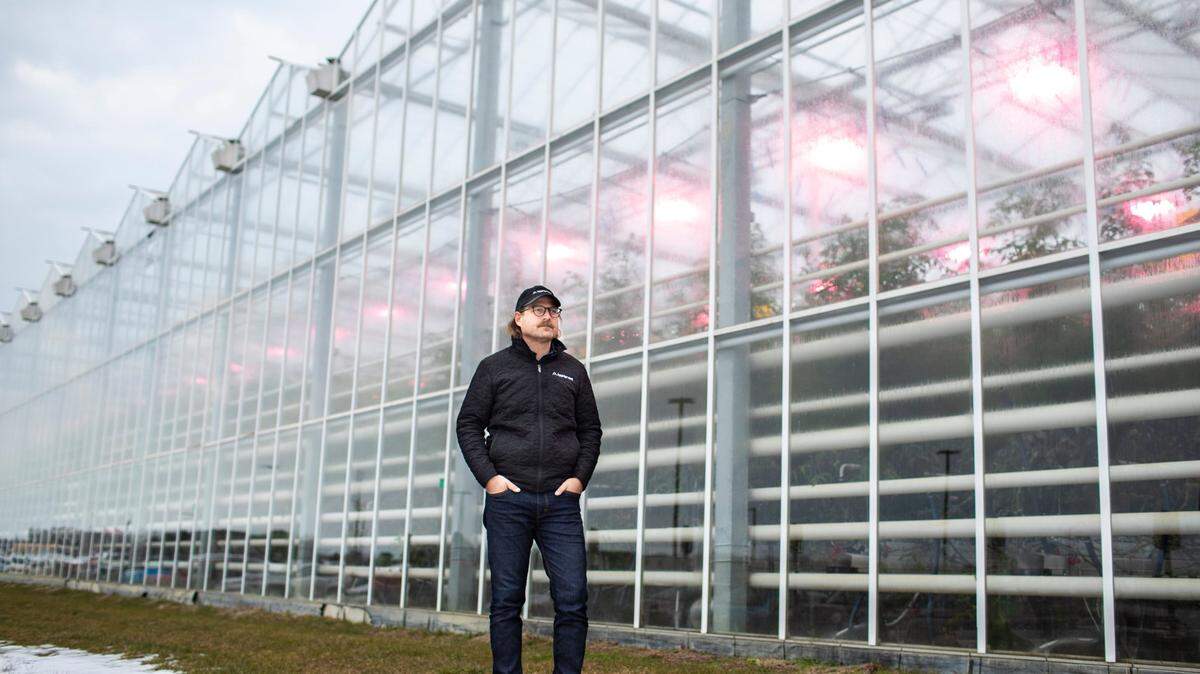
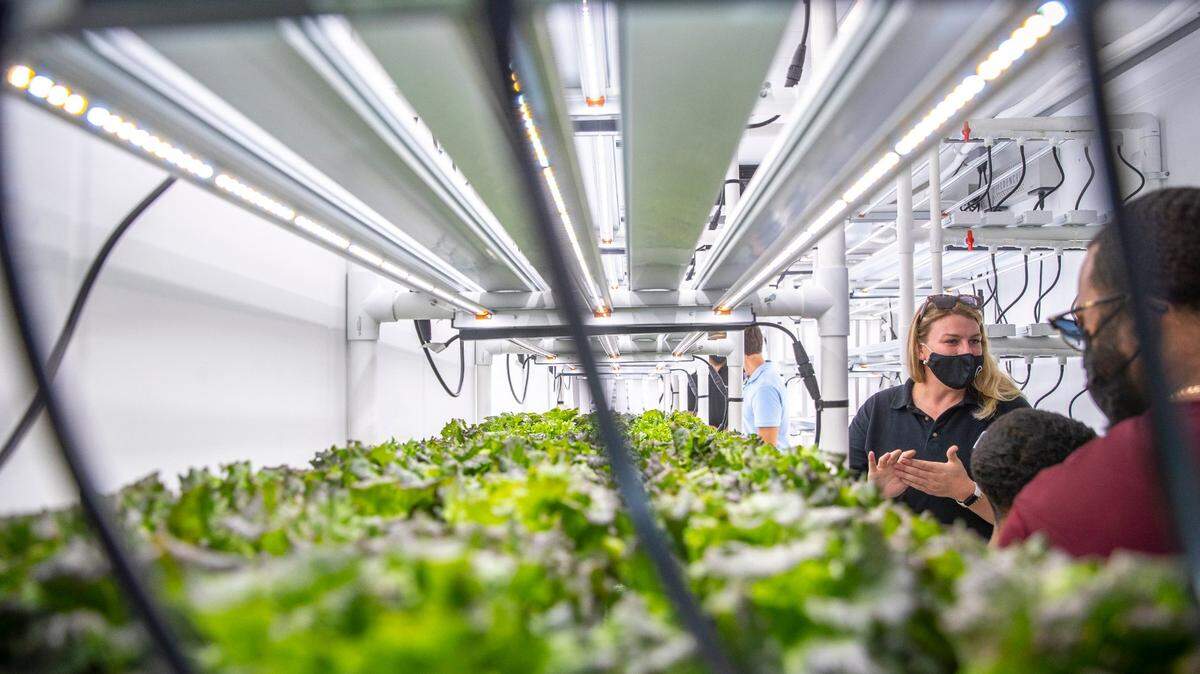
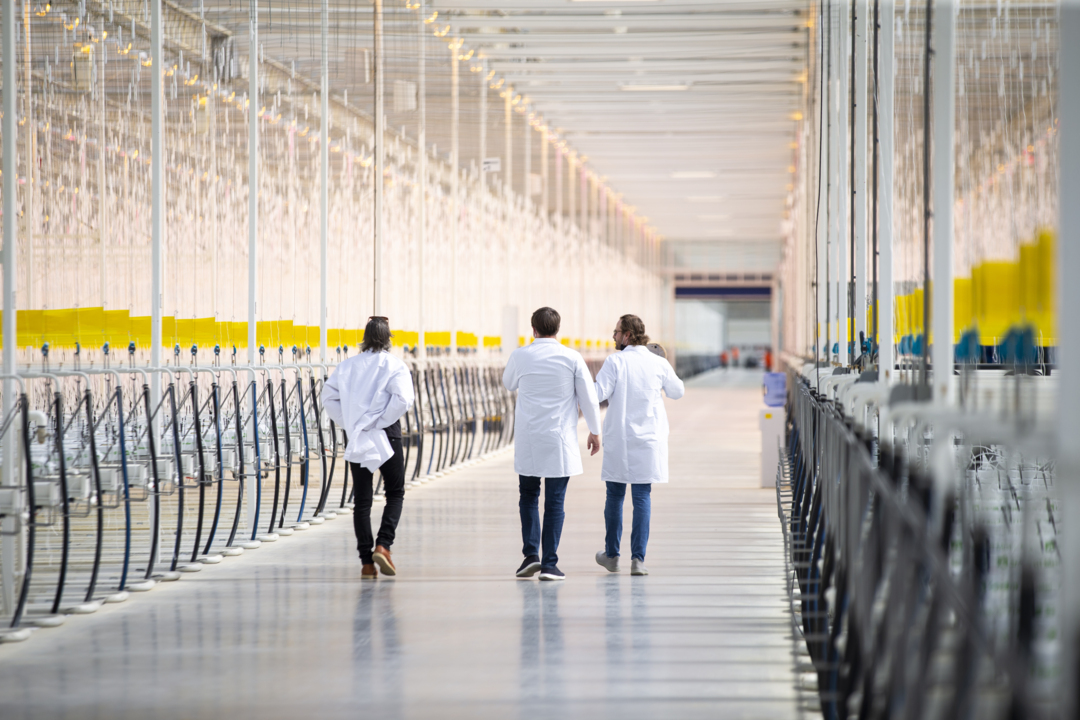
AppHarvest is pausing its plan to build a dozen indoor farms. Instead, it will focus on trying to turn a profit over the next few years at its three existing farms, in Morehead, Berea and Somerset, and a fourth, in Richmond, that should be operating soon. The farms grow tomatoes, leafy greens for salads and berries.
Hitting the exit
Departing the company’s executive offices this month are President David Lee, formerly of Impossible Foods, and Chief Operating Officer Julie Nelson, formerly of PepsiCo.
Lee, who will keep a seat on the AppHarvest board of directors, lasted less than two years in his job. Nelson lasted 15 months. She replaced COO Marcella Butler, who was demoted in April 2021 after five months and terminated four months later.
“It’s unfortunate,” said Jonathan Webb, AppHarvest’s founder and chief executive officer, in an interview with the Herald-Leader.
“It’s not any person’s fault,” Webb said. “Any person who has joined this company has been wildly talented and has put a lot into the company. Sometimes the pieces just don’t fit together as we’re building a team. And we’re just trying to make the hard decisions fast on, how do we get the company set up for success?”
To raise the necessary capital for its next 12 months — an estimated $85 million to $95 million — AppHarvest hopes to sell its 15-acre Berea farm to its distributor, Mastronardi Produce Limited, and then lease back the facility.
The Berea farm, which will grow salad greens, was intended to be the newest jewel in AppHarvest’s crown. Gov. Andy Beshear and U.S. Rep. Andy Barr, R-Lexington, were among the dignitaries who attended the farm’s heavily publicized opening last month.
If the company can get cash in hand from the sale of its Berea farm, AppHarvest should be able to remove the alarming “substantial doubt” language from future investor disclosures, said chief financial officer Loren Eggleton.
“It’s a technical formula,” Eggleton said. “You have to say, ‘Gee, do you have today the cash on hand to get through the next 12 months?’ And if you don’t, you need to insert this language into your SEC filing.”
In the end, it’s possible that AppHarvest itself, not just a farm, could be acquired by a larger company, Webb said.
“I think we’re still going to have that AppHarvest story and that AppHarvest name,” he said.
“But you know, things happen all the time,” he said. “There are large conglomerates in auto manufacturing. I mean, look at GM, for example, and all the different auto brands inside of GM. So yeah, we’re actively having conversations with CEOs, with investors, with partners, with anyone who wants to partner with us here in Kentucky and to help make our mission succeed.”
Kentucky’s agriculture commissioner, Ryan Quarles, said AppHarvest is not the only company in the state to use “controlled environment agriculture,” or CEA, based on ideas pioneered in the Netherlands. But it launched on an ambitious scale in a region of Kentucky that sorely needed new jobs, Quarles said.
“AppHarvest has certainly turned heads,” Quarles said. “We hope that they are able to prosper.”
Fraud or ‘puffery’?
Groups of shareholders — including a public pension fund in Plymouth, Mass. — have filed five federal lawsuits against AppHarvest in the last 15 months. They’re unhappy about the collapse of its stock price, and they allege fraud.
Share prices nosedived from more than $30 in February 2021, when the company went public on the NASDAQ exchange, to about $1.20 this week. If the company’s stock trades below $1 for more than 30 consecutive days, it can be dropped from the NASDAQ.
In the suits, shareholders say that AppHarvest executives misled investors and regulators with the U.S. Securities and Exchange Commission to make it appear they were better prepared for the company’s launch than they really were. Meanwhile, top executives were being awarded millions of dollars in compensation, the suits allege.
While AppHarvest made optimistic statements throughout the inaugural 2021 harvest season, behind the scenes, it struggled with hiring, training, production and produce quality at its farm growing tomatoes in Morehead, the suits allege. At times, the company had to bring in contract labor from outside the region, according to the suits.
“Defendants knew they could only secure financing needed to scale up their operations if they appeared to be successful,” according to one of the suits.
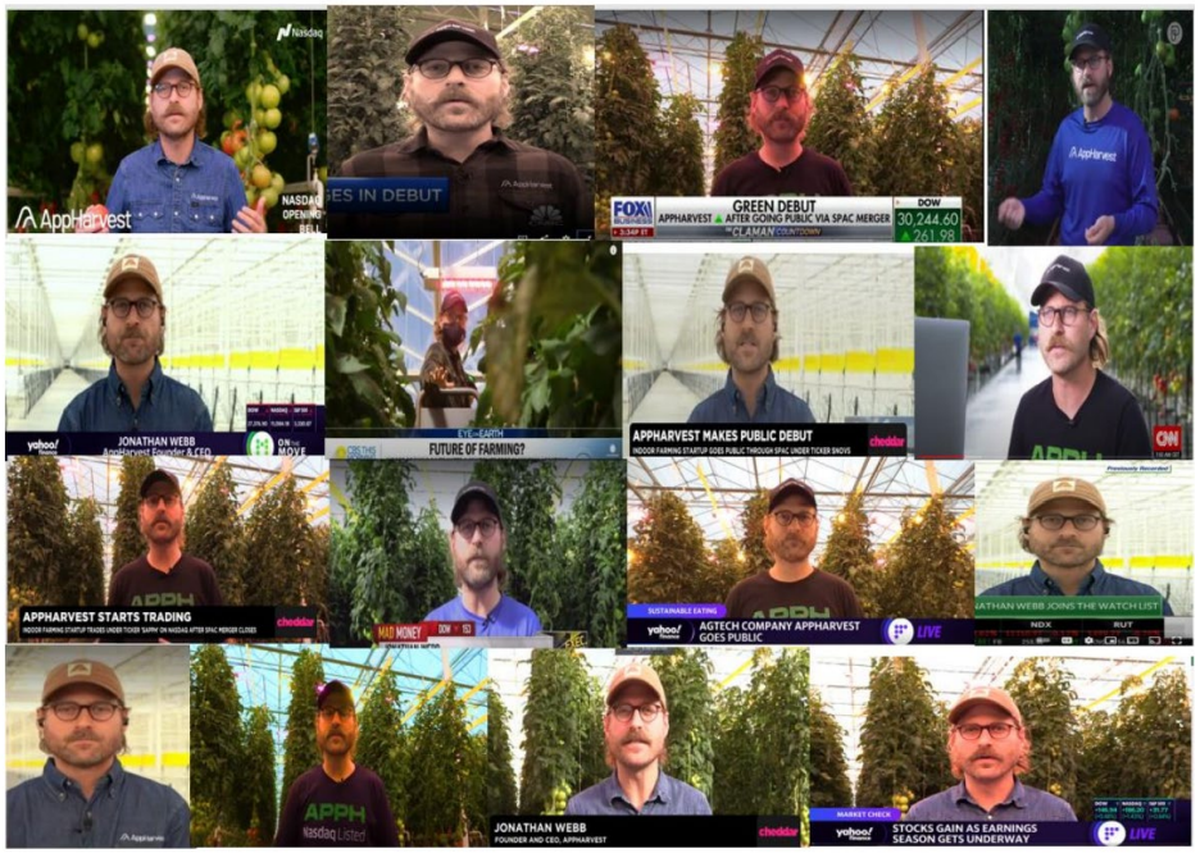
As one of many examples of misleading statements, it cites an interview that Webb gave on March 4, 2021, to an investing news site in which he said, “I think that every tomato that we’ve produced has been readily put into the market.”
In reality, they said, many of the tomatoes grown in Morehead fell short of the USDA Grade No. 1 quality required by Mastronardi for distribution to Kroger, Wendy’s and other national retailers, so they were rejected. When poorly trained workers could not keep up with the harvest, overripe tomatoes dropped to the ground, where “large numbers of gnats” swarmed, they said.
The suits cite the eyewitness accounts of six unnamed “confidential witnesses” who allegedly held different jobs inside AppHarvest during 2021.
On Aug. 11, 2021, AppHarvest “shocked the market” with a second-quarter filing that finally revealed the true scope of its problems, including “lower-than-expected labor productivity” and “quality challenges,” according to the suits.
The company disclosed a $32 million net loss and dramatically cut projected earnings for the year. One analyst described the report as “well below expectations.” The company’s stock price plunged.
AppHarvest says it never misled anyone. It has filed motions to dismiss the shareholder suits. In one motion, it calls the litigation a “textbook example” of plaintiffs’ attorneys alleging “fraud-by-hindsight” under securities law because a company is losing money, not because there is actual evidence of fraud.
“Markets are complex, and financial predictions made months or even a year into the future — particularly for a young, public company like AppHarvest — are always uncertain,” the company said in its recent motion.
While acknowledging the “headwinds” it has faced, AppHarvest says it accurately explained its financial condition and the risks to investors. When Webb gave optimistic interviews, such as describing the “good, healthy, consistent supply” of tomatoes, that was not fraud by any legal definition, the company said.
“Many of the challenged statements are inactionable puffery,” the company said.
“AppHarvest was a young company with an inexperienced management team undertaking a massive farming endeavor for the first time in a region where workers were transitioning from a different industry,” it said. “It would have been evident to the ordinary investor that AppHarvest would encounter problems with labor and tomato quality and yield.”
Less talk, more results
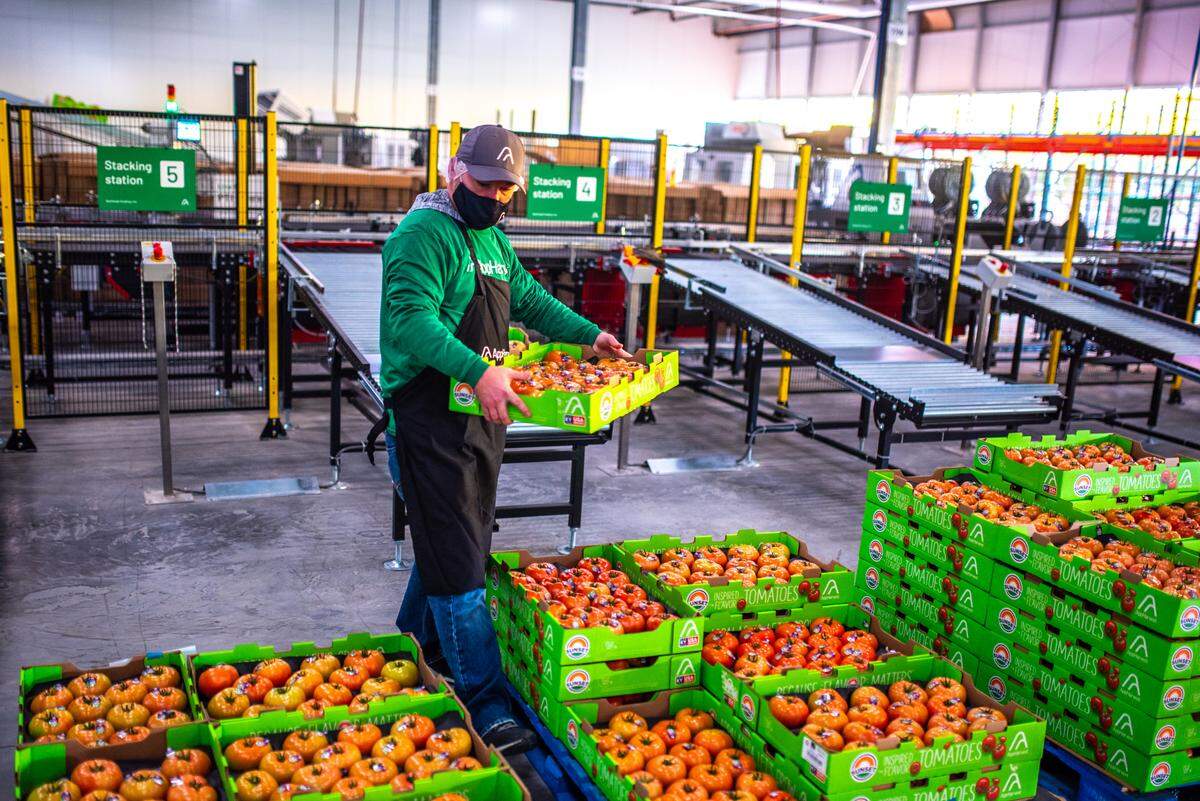
Webb, a Kentucky native and University of Kentucky graduate, says he remains committed to his goal of employing large numbers of people at high-tech farms around the eastern half of the state. Appharvest has nearly 700 workers as of this month, he said.
However, given the financial challenges facing the company, his original plan to open 12 mega-farms by 2025 is off the table for now, he said.
“If you’re asking today, we’re going to focus on saying, let’s get these four farms up and running in 2023, and month by month in 2023, we’ll continue to evaluate options to expand the business,” Webb said. “As far as to your question of where we’ll be in ‘25 and ‘26, we’ve kind of cut out the long-term discussion of the company.”
“But I would say if you let the past be a predictor of the future, we started with absolutely nothing two and a half years ago and we’ve built eight million square feet of stuff. Anything we do going forward will never be as hard as what we’ve already done on the development side,” he added.
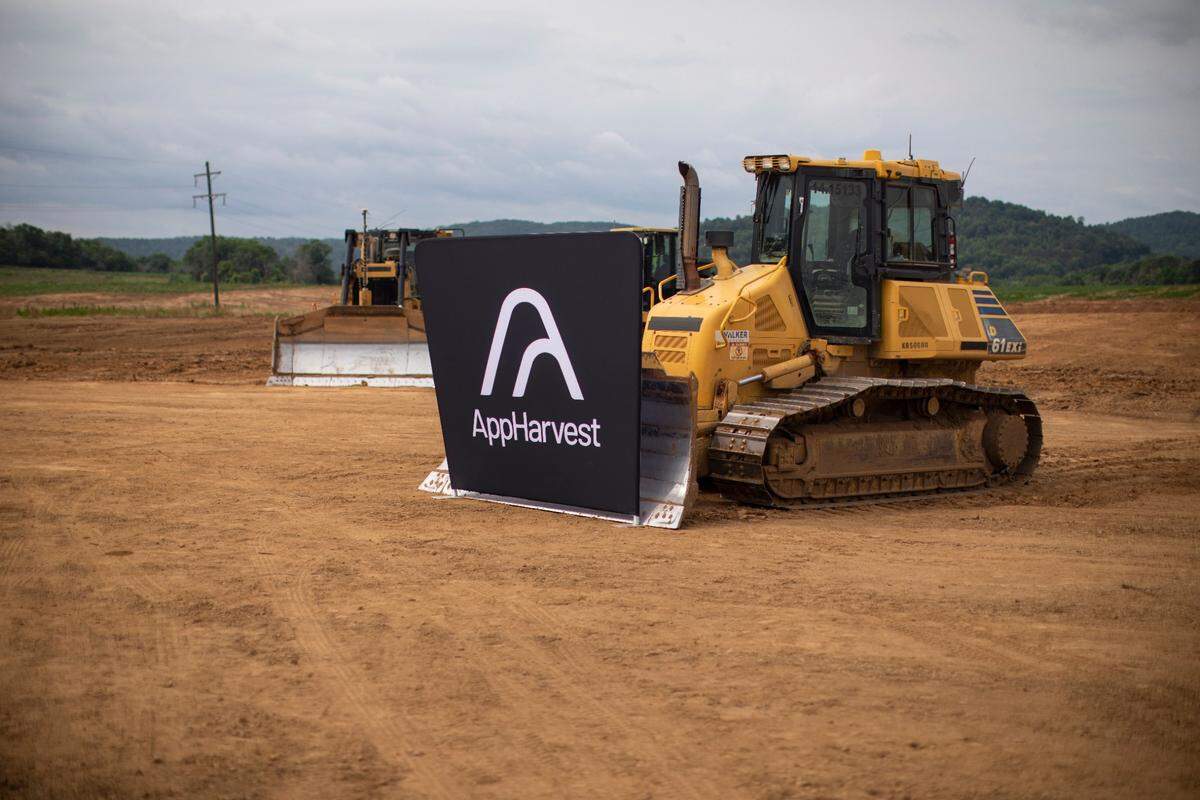
According to its financial disclosures, AppHarvest has spent hundreds of millions of dollars building and operating the farms in Morehead, Berea, Somerset and Richmond while seeing sales in only the tens of millions of dollars.
But that will change shortly, Webb said.
“2024 is gonna look a lot different than 2022,” the CEO said.
“We’re releasing the race cars onto the track, but we’re still kind of in ramp-up mode on the race cars,” he said. “The cars are really going to be driving by the end of ‘23 going into ‘24. And that’s where these facilities start throwing off tens of millions of pounds of vegetables and fruits and we’re optimizing production and that cash is thrown back into the company.”
People in Eastern Kentucky are understandably skeptical about companies that come into the region and make promises about jobs, Webb said. In just the last few years, Braidy Industries failed to build an aluminum mill near Ashland despite $15 million in state investments and EnerBlu dropped plans for a battery plant in Pikeville.
But AppHarvest actually has built farms, hired people and started to deliver produce to market, Webb said.
“We just have to prove ourselves,” Webb said.
“The team is very cognizant of that outside skepticism and negativity that’s come down on the company, and I think our 700 employees have taken that as a challenge to really prove what we can do here,” he said. “Hopefully when we have this conversation in the end of ‘23, you’ll see a company that is less about talk — and less about me talking, candidly — and more about results.”
Herald-Leader reporter Rick Childress contributed to this article.
This story was originally published November 22, 2022 at 9:46 AM.