Lexington Blue bankruptcy converted to liquidation. What it means for homeowners
AI-generated summary reviewed by our newsroom.
- A judge converted Lexington Blue's bankruptcy to Chapter 7 to liquidate assets.
- Homeowners and unsecured creditors will share recoveries, likely pennies on dollar.
- Texts show owner Brad Pagel involved in finances despite claims of limited role.
A bankruptcy judge on Thursday ordered failed roofing company Lexington Blue’s bankruptcy be converted immediately to a Chapter 7 liquidation case rather than dismissing it outright, as Kentucky Attorney General Russell Coleman’s office had sought.
An experienced, independent trustee will be appointed to go after all the assets that can be recovered, using whatever means are available under state and federal law to give as many impacted creditors as much as possible, said U.S. Bankruptcy Judge Gregory R. Schaaf.
But that still may not be much more than pennies on the dollar for homeowners who say they were scammed by the company, Schaaf said.
Lexington Blue abruptly closed in April after a decade in business in Lexington, with offices in Louisville and Cincinnati at one time. Many homeowners told the Herald-Leader they’d paid thousands of dollars in insurance deposits for roof work that was never done, and employees said owner Brad Pagel ran the company as “cult” of fraud and intimidation.
Kentucky’s attorney general has filed a consumer protection civil suit, and several homeowners have filed lawsuits. Lexington Blue filed for bankruptcy protection in June.
Schaaf’s move to convert the bankruptcy to Chapter 7 was supported by Lexington Blue attorney J. Christian Dennery, who had recently submitted a motion admitting that a previously floated plan to sell “bundles” of roofing jobs to contractors for completion had no chance of succeeding.
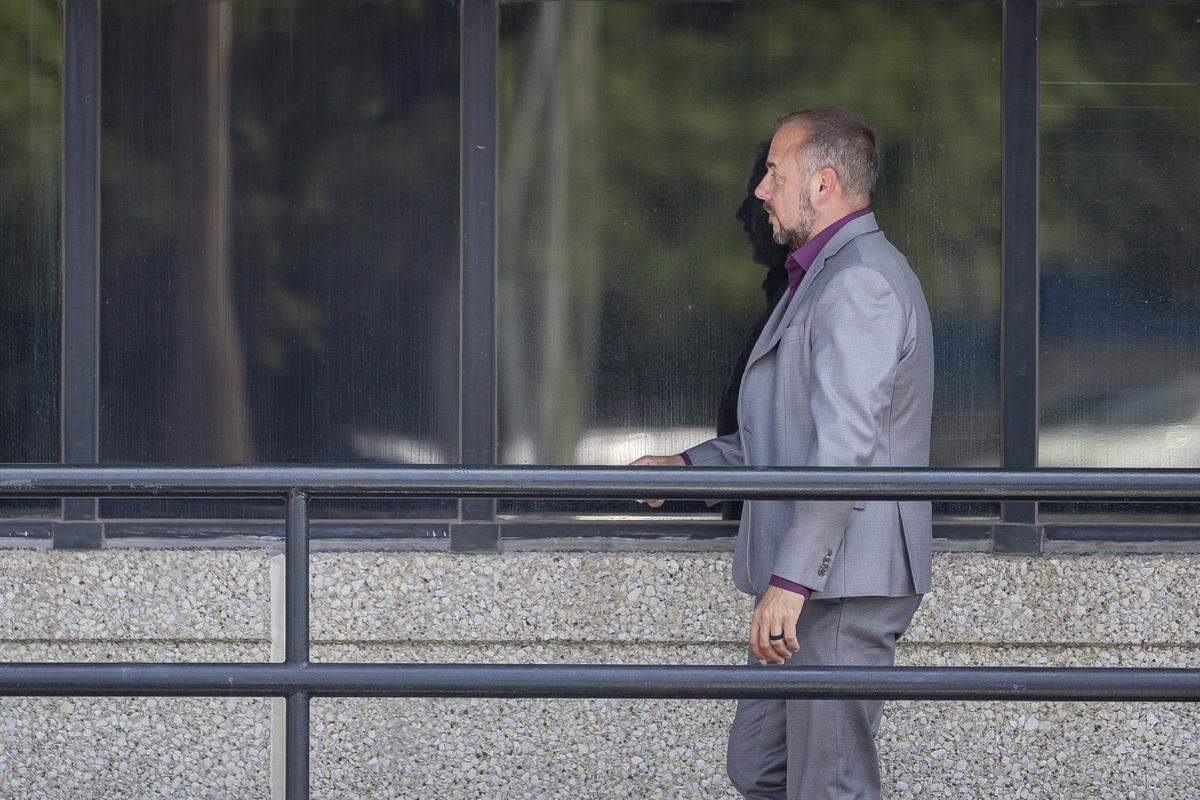
Lexington Blue owner Brad Pagel was not in court on Thursday. Pagel and his wife, Courtney, have not filed personal bankruptcy.
Judge explains bankruptcy move to homeowners
Schaaf took the unusual step Thursday of explaining his decision in open court for the non-attorney homeowners present.
Conversion provides for equal treatment for similarly situated creditors, Schaaf said. In the case of Lexington Blue, almost all of the creditors are unsecured, meaning there is no collateral or asset, such as a house or car, to which a claim can be attached.
“The Chapter 7 trustee will collect all the assets and then everybody wins equally, or everybody loses equally,” Schaaf said. “In this case, I don’t hold out hope for 100% recovery. In most cases, it’s cents on the dollar. Everybody will share equally in what’s recovered.”
That puts the hundreds of homeowners who paid Lexington Blue for roof work that they never received in the same position legally as Lexington Blue’s landlord, unpaid roofing suppliers and the IRS, as well as employees with EEOC complaints and backpay issues.
Schaaf said the trustee’s goal would be to pay everyone as quickly as possible, in partial payments if necessary. But it still could be months before anyone receives any money.
Trustee will go after Lexington Blue assets
Lexington Blue’s attorney apparently has already recovered $128,000 that may be used by the trustee to finance other recovery efforts, Schaaf said.
Those efforts may include clawing back payments made by the company over the six to 12 months before the bankruptcy filed in June, when Lexington Blue was already in financial trouble. The trustee also can go after payments that could be considered fraudulent conveyance.
Pagel and his wife, Courtney, were paid significant amounts in 2024, for instance. And multiple unexplained cashier’s checks were issued from Lexington Blue’s bank accounts in 2024, too.
And there are potential assets that could be recovered, according to the hearing, including liability insurance claims.
Impact on Attorney General’s case, potential prosecution
The conversion will not directly affect the Kentucky Attorney General’s consumer protection lawsuit in state court, though it could impact the state’s ability to recover money paid by homeowners. The case evidently will proceed, and the state will coordinate with the bankruptcy trustee to share information and ensure they are not in conflict.
Also, the conversion will not stop any other kind of investigation against Pagel. The U.S. Trustee is part of the Department of Justice and is required to turn over potential evidence of a crime to the U.S. Attorney’s office, including perjury.
Pagel testified under oath last week that even though he owned Lexington Blue, he was largely hands-off in the final years of the business, with no knowledge of day-to-day operations.
.jpg "attachment (22).jpg")
But text messages submitted in court filings this week by the Kentucky Attorney General’s office appear to contradict those statements, showing Pagel texting about minutiae including cleaning services.