
This Lexington company is studying astronaut health on NASA’s mission to the moon
Thirty hours before Artemis II takes off for the moon, engineers from a Lexington-based company will hand off an experiment to astronauts in order to study how the trip — and future ones — affects the human body.
Space Tango has sent almost 300 experiments to the International Space Station, including ones to understand the conditions of space and others to make advancements in medicine to bring back to Earth. Now, they’re about to go even farther.
The company, born out of Kentucky Space and the Kentucky Science Technology Corporation, is staffed by several University of Kentucky graduates who view space as revolutionary for myriad studies of science.
Without the presence of gravity, heat doesn’t rise, oil and water don’t separate, muscle mass decreases and there are higher levels of radiation.
There are still a lot of unknowns about space. As space flight transforms, the industry pushes farther into deep space, and stays in orbit for longer periods of time, meaning science has to change with it.
On Artemis II, Space Tango is running an investigation where cells from humans are placed in tiny channels etched onto a chip about the size of a USB drive. In the experiment, called A Virtual Astronaut Tissue Analog Response or AVATAR, the chips will hold bone marrow samples from the flight’s astronauts as they steer a 10-day mission around the moon.
The spaceflight mission led by NASA is the first crewed mission around the moon since 1972.
The data gathered from the chips, combined with previous studies, are anticipated to give NASA insight into what microgravity does to the human body and how the agency can work to protect its astronauts as space exploration expands to longer stays on the moon and trips to Mars.
“The idea is personalized astronaut medicine,” said Jason Rexroat, Space Tango’s lead engineer on the AVATAR project. “Health kits in the future will be informed by studies like this. It may well be that deep space travelers have to inoculate themselves against the effects of deep space regularly and it might be with their own samples. The idea is to really characterize that.”
The moon rocket’s launch has been delayed to at least April 2026, due to a helium systems issue found in February.
Members from the Space Tango team were in Florida for the pre-launch test to fuel and drain a rocket, run through the final hours of countdown up to 10 seconds, and verify communication systems are working properly.
“Going through the process of getting everything ready, handing it over and then seeing the launch,” said Trevor Nienaber, lead fluidics engineer on the project. “There’s some realization that hits: Something I just touched is about to go up there. It’s hard to explain the feeling, but as it’s counting down — once that starts — there’s a surreal aspect of it.”
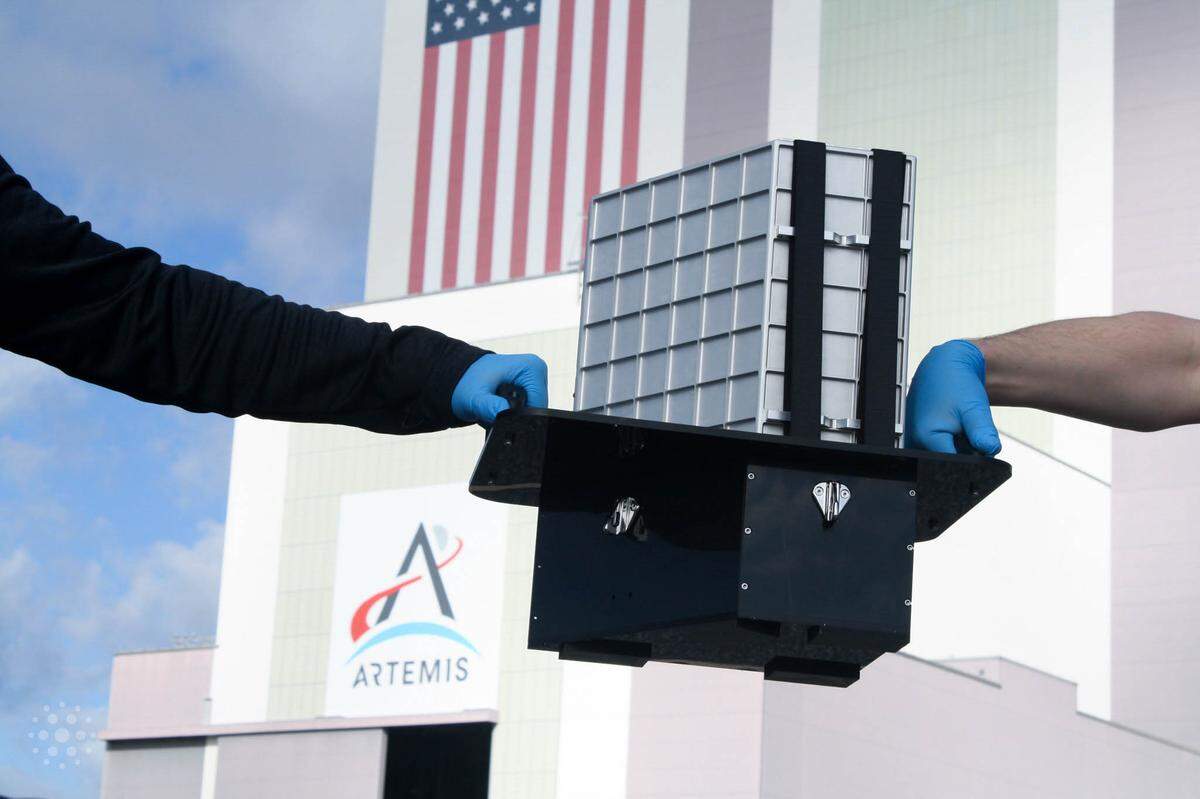
Rexroat said it wasn’t until the last decade that it became possible to do human research in space outside of the human body.
Though the mission is delayed, the trip to Florida still gave the team something to look forward to and continue working on for the launch later this spring.
“With this last mission, it was a great exercise really in setting all that up and preparing everything to move,” Rexroat said. “...We basically rolled straight back into a test campaign. So we’re running four consecutive, four concurrent test setups right now. It just basically gives us more time to exercise the entire system; more cycles, more runs, more science.”
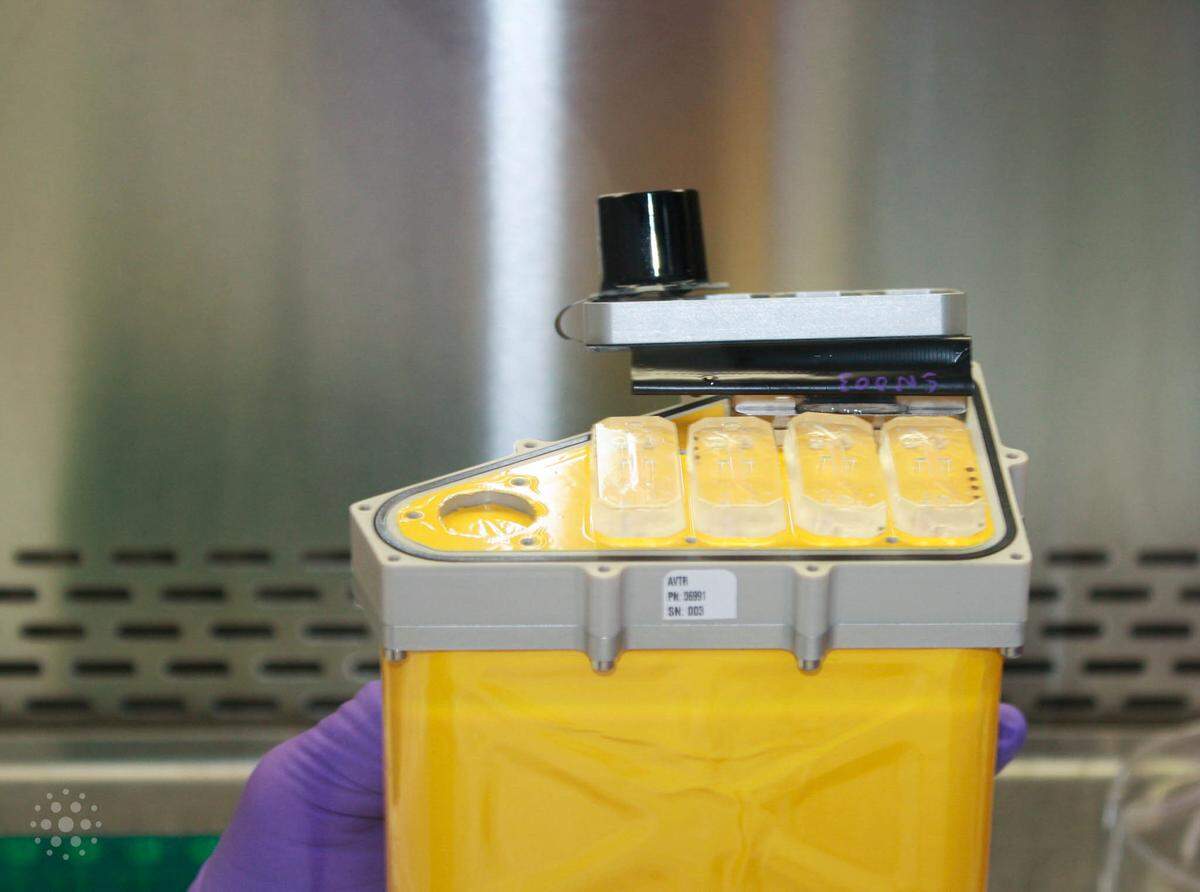
In designing the AVATAR, engineers had to fit the system into the constraints and restrictions of the rocket. That meant, said Mark Reeves, lead structural engineer on the project, fail safes had to be developed for the unlikely events of a battery malfunction or fire.
Reeves made and tested a method to conduct the experiment without power since AVATAR, which will sit next to Canadian astronaut Jeremy Hansen during launch, doesn’t have a plug-in spot on the rocket.
With no power allocation, AVATAR’s data is collected inside the system. Once daily, astronauts aboard Artemis II will press a button. A series of lights will flash that they will report back to the Space Tango team that will indicate if the experiment is performing the way it should.
Meeting the astronauts who will run the experiment on their own samples made the mission and the science more real, Rexroat said.
“We’re used to getting science and cells and it’s kind of nameless. … But to actually have astronaut samples on the mission and you’re sitting right next to them, it made it a lot more real,” Rexroat said. “Especially while we’re going through all the safety; like, these are the people we’re protecting.”
Once Artemis II returns, a Space Tango team will go to San Diego to retrieve AVATAR, extract the cells and hand them off to analyst partners to evaluate performance and begin to pull out data, Nienaber said.
The biological physical sciences section of NASA has a tagline, Rexroat said, that has inspired the project: “Know before you go.”
“The amount of research that we’ve done and that NASA has done so far is really just the tip of the iceberg in terms of all of the institutions, the universities, the hospitals. It’s just the tip of the iceberg of what they all envision and want to do in space,” Rexroat said.
This story was originally published February 26, 2026 at 5:00 AM.
.JPG)