
KY awards $10M in grants for nuclear energy development projects across state
Six organizations were awarded grants from the Nuclear Energy Development Grant Program to begin work on nuclear energy projects in Kentucky.
The Kentucky Nuclear Energy Development Authority announced the first grant awardees Thursday and said the selected projects include modular reactor siting, workforce training and identifying supply chain opportunities. The program was established last year in Sen. Danny Carroll’s Senate Bill 179 after the authority was created by the General Assembly in 2024.
The Paducah Republican has sponsored a number of policies related to nuclear energy, including the grant program meant to support the continued growth of the state’s nuclear ecosystem.
The selected organizations were give up to $2 million for their projects, although specific grant amounts were not listed. Here are the grant awardees and their projects.
American Electric Power
Grant funding will help the power company determine whether a location in its service area is suitable for more detailed studies and future permitting for small modular reactors. The project is intended to identify a site as well as complete initial surveying and environmental reviews.
Shaping Our Appalachian Region
Money received by the nonprofit will go toward expanding its nuclear energy workforce development and community readiness efforts across Eastern Kentucky.
“This initiative builds on existing efforts to support displaced workers, particularly those from extractive industries like coal, while increasing training capacity and establishing Nuclear Ready Communities across the region,” an explanation of the project said.
Western Kentucky Community and Technical College
The community college system will launch a regional hub for nuclear industry education and workforce development in the state’s far most western counties: Ballard, Calloway, Carlisle, Fulton, Graves, Hickman, Marshall and McCracken. Grant money will in part go toward the establishment of a dedicated classroom and lab with a nuclear control room simulator.
The money will also support community outreach, nuclear education and workforce workshops for K-12 teachers and other community leaders. The hub will be developed alongside the school’s new effort to examine the potential for certificates, diplomas, associate degrees and transfer pathways related to nuclear subjects.
Western Kentucky Educational Cooperative
As part of its Nuclear Energy Education & Workforce Plan, the cooperative will use its grant money to integrate science and technology curriculum with technical education pathways to bridge the gap between local talent and the nuclear industry.
“By investing in this workforce readiness today, we are not just teaching a curriculum; we are equipping the next generation to lead Kentucky’s energy future and securing long-term prosperity for our entire community,” an explanation of the project said.
Global Laser Enrichment
Global Laser Enrichment’s grant will support the development and launch of a new workforce training program. Participants will aid in the construction of the company’s planned Paducah Laser Enrichment Facility and help set the stage for the establishment of a talent pipeline.
General Matter
The California-based company will use its grant money to develop a potential statewide strategy for building a nuclear supply chain. The “roadmap” will outline various requirements, site readiness considerations and financing strategies that might let Kentucky play a role in the future of U.S.-made nuclear energy.
“The analysis will address critical supply chain risks in U.S. enrichment and fuel cycle capabilities, where more than 70% of subsystem components currently rely on foreign or capacity-constrained domestic suppliers,” an explanation of the project said.
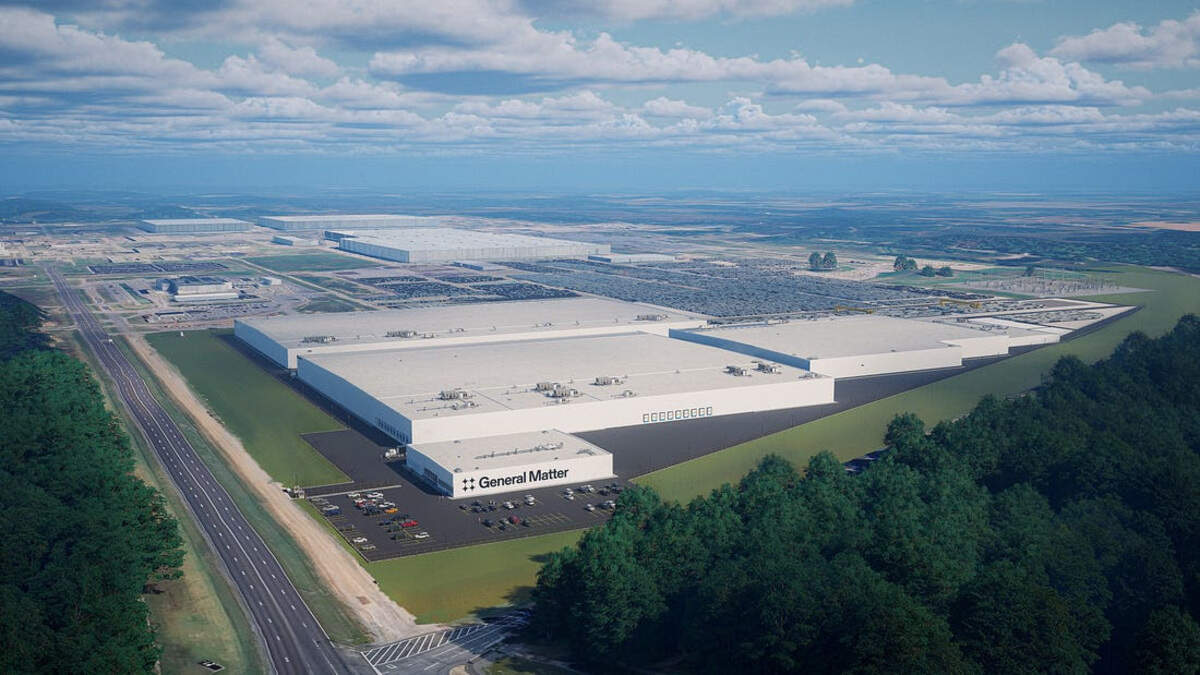
General Matter is building the country’s first U.S.-owned, privately developed uranium enrichment facility in Paducah. The $1.5 billion facility will employ 140 people once operational where the company will enrich uranium, a process that makes the heavy metal more concentrated to be a suitable form of fuel for nuclear power plants.
Nuclear ecosystem now
The Paducah senator is sponsoring Senate Bill 57 this session. It would create the Nuclear Reactor Site Readiness Program to ease the cost of applications and permitting with the federal government for nuclear energy facilities.
There are no nuclear power plants in the state, but momentum is building, Carroll said.
Legislators are eyeing nuclear energy as an economic development opportunity that would create jobs and add another power source that is reliable, produced with lower emissions and has high energy density.
Some Kentuckians however, still have concerns about timing, waste and security and are voicing their opinions to the Public Service Commission as the utility regulator tours the state seeking input on nuclear energy development.
In his weekly press conference March 5, Kentucky Gov. Andy Beshear said nuclear energy will be critical for the Bluegrass State to meet an exponentially growing demand for power.
He said the cost of any nuclear energy component is huge, and it’s likely the state sees small modular reactors rather than large power plants or other developments.
“I believe that the construction of (reactors) is likely going to be pushed by data centers,” Beshear said, adding that it should be the responsibility of any Kentucky data center to pay for its own power, pay its “fair share” of taxes and not hide behind a developer.
“So, I do believe that nuclear energy is going to be important,” Beshear said. “I look forward to working with legislators on how we build it out.”
.JPG)