Thousands of people infected as overcrowded KY jails create ‘reservoirs for COVID’
COVID-19 has infected more than 3,000 inmates and 500 employees in Kentucky’s local jails since the pandemic began 10 months ago, according to a state public health database obtained by the Herald-Leader.
One of them is Angela Graham’s cousin. He has spent the last two months in the overcrowded Madison County Detention Center in Richmond, waiting to be indicted on a drug trafficking charge. Madison County’s grand jury — like many other court operations around the state — is suspended because of social distancing restrictions.
Graham said her cousin recovered from the virus after symptoms that included “lungs feeling like they were on fire.” But when any of his cellmates display their own symptoms, such as a cough, fever and aches, it triggers fresh panic.
“There are people in there who don’t have COVID,” Graham said. “But they get left in the same cell with people who do, and there is no protection for them, there is no place to go. So if you go in, you know you’re gonna get exposed. Whether you actually get it, that’s just a matter of luck.”
Madison County’s jail has reported 60 inmate and 12 employee infections, according to the state database.
However, the full impact of the coronavirus on Kentucky’s 84 jails is likely greater than the state’s numbers suggest.
For one thing, no state agency is required to track COVID-19 infections or deaths inside the locally run detention centers that house 19,258 people either awaiting trial or serving sentences.
The Kentucky Department for Public Health records data from jails and other community institutions that local health departments forward to Frankfort.
But the database’s numbers can be delayed or even incomplete, overlooking some jails hit by the virus.
By comparison, COVID-19 numbers are updated online daily by the federal and state prison systems, where the coronavirus in Kentucky has killed 58 inmates and five prison employees and infected more than 9,500 more. In the state prison system, two of every five inmates have been infected.
Also, various jails have enacted their own different policies on testing, not all of them yielding equally useful infection numbers.
Some conduct mass testing of employees and inmates, uncovering viral spread, while others test only those who complain of symptoms of the virus. The largest recorded number of infections from any one jail so far is 493, at the Fayette County Detention Center in Lexington, which ordered facility-wide testing after outbreaks last fall.
‘It was like wildfire’
At the Campbell County Detention Center in Newport, 212 inmates and eight employees have been infected so far, Jailer Jim Daley said this week.
Despite its outbreaks, Daley’s jail was not included in the state database provided to the Herald-Leader.
“We didn’t have a COVID case in the jail that we knew of until a month ago. And then it was like the friggin’ floodgates opened,” said Daley, who is president of the Kentucky Jailers Association.
“We have four dorms that are 64-person dorms. Once it got in there, it was like wildfire. It went through that cell unabated,” Daley said. “We found out subsequently that one of the people working in the kitchen from outside had COVID, and they were touching every tray that went out. Now, we don’t know if that exacerbated it.”
At the other extreme, the Bell County Detention Center in Pineville reports no infections over the last 10 months, despite being the most overcrowded jail in the state, filled to 224 percent of capacity. In early January, the 59-bed jail held 132 inmates.
Bell County Jailer Gary Ferguson said the facility periodically tests inmates if they show symptoms of the virus, but no test has ever come back positive.
“The Lord has really blessed us,” Ferguson said. “We have had thousands of people come through our facility, and we’ve not had one case of COVID at all.”
State leadership missing on jails?
Two jail inmates and one jail employee have died from the virus, according to the state database, although that total is contested. Boyd County Jailer William Hensley said the database inaccurately attributes one inmate death from COVID-19 to his facility. The inmate died of a lung aneurysm, and he did not have the virus, Hensley said.
“It’s been a nightmare trying to get them to fix that,” Hensley said.
Critics say the state of Kentucky should have been assisting with regular testing for every jail inmate and employee and effective quarantine for those infected. Also, critics say, the state should publicly track jail infections and deaths in real time rather than rely on sporadic updates from local health departments.
Instead, elected jailers have been left to craft their own response plans.
“It’s very concerning that we don’t have — well, I was going to say a full picture of what’s going on inside our jails, but the truth is, in many cases, we don’t really know what’s happening at all because we get so little information,” said Ashley Spalding, who studies criminal justice reform for the Kentucky Center for Economic Policy in Berea.

Jails operate independently at the local level, said Susan Dunlap, spokeswoman for the Kentucky Cabinet for Health and Family Services. State agencies provide them with guidance as necessary, Dunlap said.
“When county jails report a significant COVID-19 outbreak among its inmate population to the local health department, the Department of Corrections, the Department for Public Health and the local health department meet virtually with local jails to discuss mitigation and testing strategies,” Dunlap said.
It’s not clear when, or if, Kentucky’s nearly 30,000 jail and prison inmates will be vaccinated. At least eight states specifically listed inmates as a priority for their first phase of vaccinations, but Kentucky does not have a plan for inmates, Gov. Andy Beshear said at his Jan. 21 news conference.
“We’re evaluating,” Beshear told reporters. “We haven’t made a decision there yet. Certainly prisoners won’t go before individuals over 70, won’t go before our K through 12 (school) personnel, certainly (not) people 65 and older and some essential workers in some key areas that are so critical.”
Overcrowded cells, easy targets
As a highly infectious airborne virus, COVID-19 finds jail inmates to be easy targets.
Roughly half of Kentucky’s jails are overcrowded despite initial efforts in 2020 by Beshear and some police and courts officials to reduce the inmate population through early releases, fewer arrests and bond reductions. After dropping by 28 percent last summer, from 23,706 to 17,080, the statewide jail population began to grow again toward the end of the year.
“The backsliding on jail reductions is worsening overcrowded and unsafe conditions at a time when COVID-19 cases continue to spiral across the state,” the nonprofit Vera Institute of Justice warned in a report it released this week.
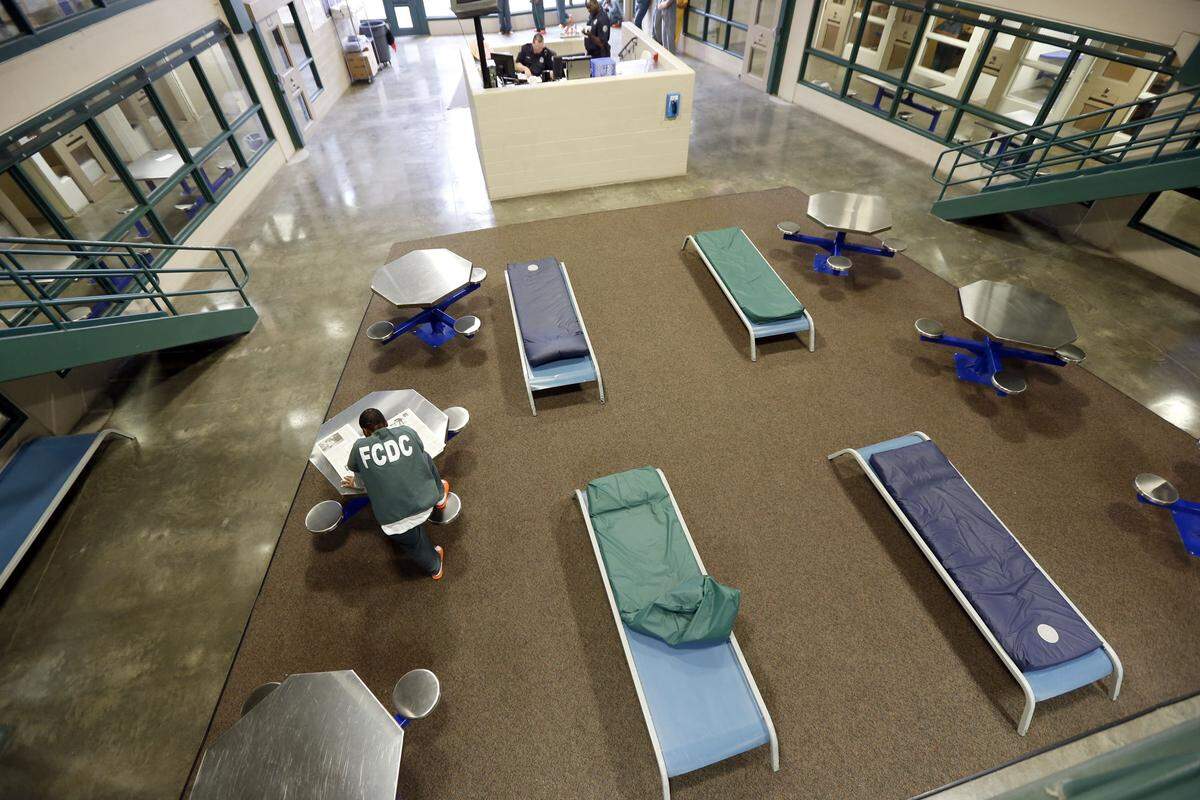
Where jails hold too many people, inmates are doubled up in small, poorly ventilated cells, often sleeping on the cement floors. If inmates are infected with COVID-19, the only place to segregate them from their cellmates might be the drunk tank.
“You take a room that’s designed for eight bunks and a combination sink-toilet,” said Jamestown lawyer Matthew DeHart. “Then you put 16 or 18 people in it. There’s no room left. They’re all right on top of each other, day after day after day.”
DeHart sent a letter to state and local officials in November to complain about conditions inside the Adair County Regional Jail, where several of his clients are held. The 51-bed jail is overloaded with 82 inmates, including nine Class D felons serving their state time at the jail rather than a state prison.
In his letter, DeHart said some inmates sick with COVID-like symptoms were not tested for the virus. Inmates were told that seeing a nurse at the jail for a medical complaint would cost them $10, which some cannot afford, DeHart wrote.
The Adair County jail so far reports 17 inmate and three staff infections, although DeHart said he believes the real numbers probably are larger.
“Based upon my limited information, it is my belief that this facility may be intentionally interfering with the medical care of their inmates and preventing COVID-19 diagnoses in order to conceal the spread of the disease through the detention center population,” the lawyer wrote.
‘Creating reservoirs for COVID’
In an interview, Adair County Jailer Joey White disputed some of DeHart’s criticism.
White said the jail has conducted about 40 tests on inmates showing virus symptoms. When tests show that inmates are infected, they are placed in the jail’s drunk tank or isolation cell to separate them from the general population, he said.
Also, he said, masks are offered to the inmates for their protection, and the jail has installed a disinfectant sprayer system to reduce the chances of the virus spreading in common areas. People might not realize the steps the jail is taking because outside visitors have been banned since last spring, he said.
“It’s kind of hard to tell what’s going on in a jail when you don’t come in here,” DeHart said.
In his own interview, DeHart said officials made some improvements after he sent his letter. Bonds were reduced so more inmates could await trial at home rather than behind bars, he said, although he has one client in the jail who is charged with wanton endangerment and faces a “ridiculous” $100,000 bond.
Until court proceedings resume, pre-trial inmates who can’t afford to pay their bonds will be stuck in crowded cells, he said.
“I’m a little disgusted, I will tell you,” DeHart said. “I think with these jails we’re essentially creating reservoirs for COVID. And as some of these individuals are released, they’ll bring the virus with them, they’ll infect the general public.”
Some reject the vaccine
The often explosive COVID-19 infection numbers seen in Kentucky’s state prisons show this is a vulnerable population that must be vaccinated as soon as possible, said Spalding, the analyst at the Kentucky Center for Economic Policy.
“We know from a public health point of view that you want to stop the virus in the institutional settings where the infections are happening in the greatest numbers, whether that’s in our long-term care facilities or our prisons or our jails,” Spalding said.
“With the jails, we have overcrowding, we have inconsistent testing and reporting, and the virus is spreading more or less unchecked,” she said. “This is an incredibly dangerous situation.”
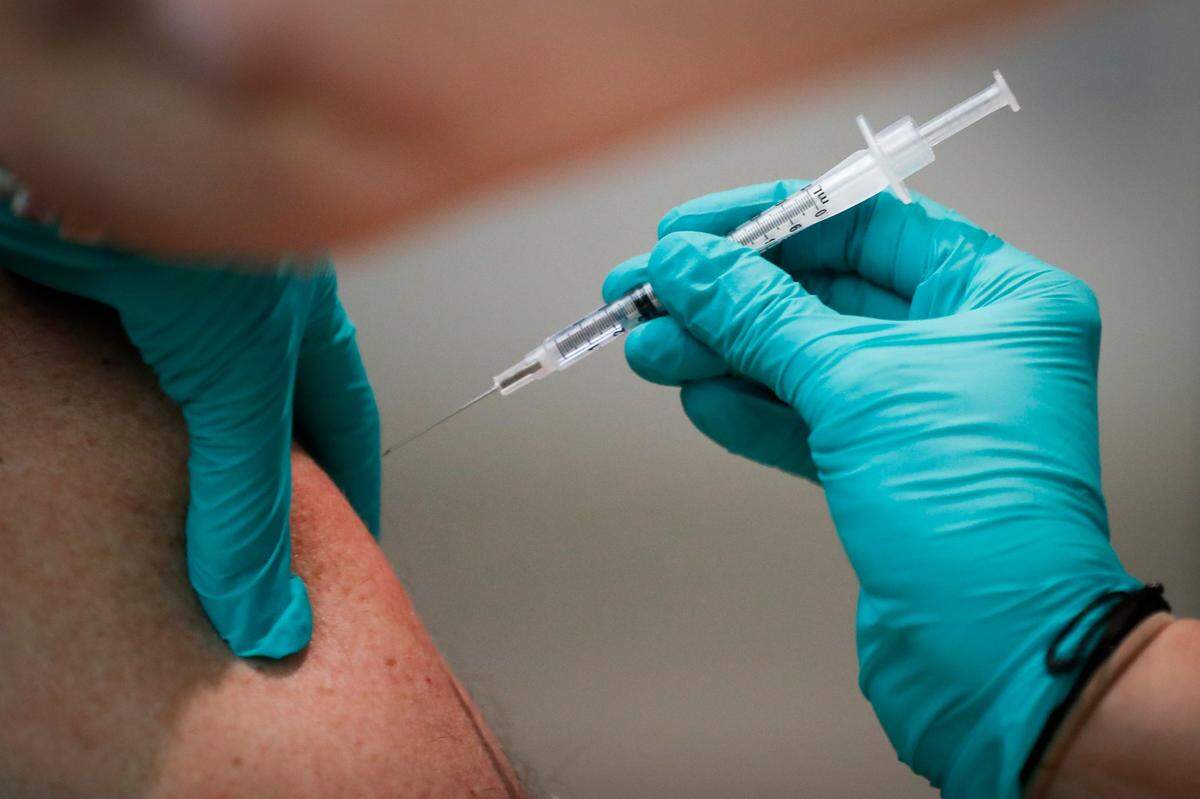
Likewise, Daley, the president of the Kentucky Jailers Association, said he wants jails to be able to vaccinate inmates.
“It’s a hotbed. It’s like a senior center or a nursing home,” Daley said. “So if we could give them inoculations, if we could move quickly on that while they’re here under our care and before they go back out into the community, I think that would be a great help.”
Unlike inmates, jail and prison employees are designated essential workers who have priority in Kentucky for the COVID-19 vaccine. However, in interviews, several jailers said a majority of their employees have been unwilling to get the shot, expressing skepticism about a need for the vaccine or concern about possible side effects.
Daley, who runs the Campbell County jail, said only 40 percent of his staff agreed to be vaccinated, including him.
“I am leaning toward saying that if you want a job, it’s mandatory,” Daley said. “If you want to keep your job, get it. I think it’s that important. I haven’t done that yet, but I can tell you, I’m certainly leaning in that direction.”
“I mean, I took it so that I could get back into the jail. My command staff has all taken it. We’re getting ready for our second dose,” he said. “It’s hell to try to run a jail when you can’t move freely through it. I’m one of those jailers who likes to get in there and see what’s going on, and I don’t want to die from COVID.”