
Who is the Kentucky cloning advocate accused of using his sperm in patient’s IVF?
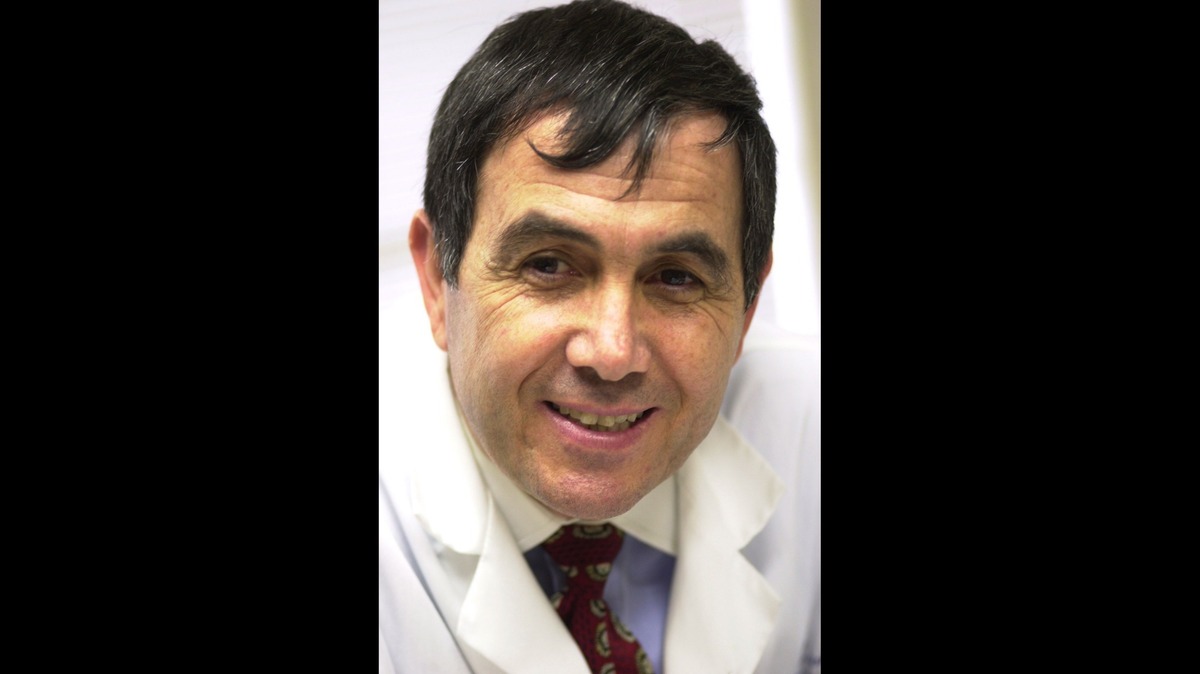
Panayiotis M. Zavos has been sued by a Paris woman who alleges he used his sperm — rather than a donor’s as pledged — to get her pregnant via in vitro fertilization.
A reproductive physiologist reportedly in his late 70s, Zavos was a University of Kentucky professor for more than two decades, he told Kentucky Educational Television. He taught animal-science classes and researched animal reproduction, according to previous reports, and focused on reproductive research and work after he left UK.
Zavos has a long, controversial history tied to Lexington and various international cities, where he has repeatedly claimed to have cloned a human and implanted the embryos in women.
Websites, services with links to Zavos
Zavos is still tied to Andrology Institute of America, which has operated in Lexington for years and says it offers gender selection, semen analysis and surrogacy services, according to its website. The site says Zavos is available for second opinions and consultations for infertility and related concerns.
“His qualities and abilities to review one’s medical history concerning any reproductive procedure employed and detect, diagnose and make the appropriate prognosis for better treatment modalities is one of a kind! He is definitely the man to visit with and get the best advise for better prospects towards a most successful treatment for reproductive difficulties,” the website states.
Payment is required in advance, the website states.
An affiliated Lexington company called Fertility Technologies International prominently features Zavos and offers a number of items for sale, from home gender selection kits to an “infrared energy mask” advertised as “the ultimate weapon against the Covid virus.”
Similar products, including home semen analysis kits, are sold on a partner website called Fertmart, billed as “the Walmart of reproductive products,” which also features information on Zavos.
And another website affiliated with Zavos, Thera Stem Cells, advertises a procedure using stem cells on its website.
Zavos is not a licensed physician in Kentucky, according to the Kentucky Board of Medical Licensure website.
Key points in Zavos’ history:
2021: Zavos is sued in Fayette County court by a woman who accuses him of fathering her daughter without her consent.
2014: Zavos pleads guilty in federal court to shipping unapproved home-conception aides or kits. He admits to a misdemeanor count of introducing misbranded medical devices into interstate commerce. His company, Zavos Diagnositic Laboratories, also pleads guilty. The period covered in the charges is from June 2009 to April 2010. Zavos agrees to close or sell his lab and never again sell medical devices within the United States. He is sentenced to three years’ probation, including 160 hours of community service. Zavos Diagnostic Laboratories is fined $150,000, court documents show.
2009: Zavos says he has implanted 11 cloned human embryos into the wombs of four women, though none of the attempts resulted in a live birth. Zavos works with a documentary, “Human Cloning,” and appears on KET to address it and complaints. “I am not God; I just only do God’s work.”
2004: Zavos is criticized for selling a $975 sperm collection and artificial insemination kit on the internet. After the packages were returned to Zavos’ lab, he used a “sedimentation method” to separate female and male sperm to help select a boy or girl before the specimen is returned to the customer, according to his statement to the Associated Press.
2004: In London, Zavos says he implanted a cloned human embryo in a 35-year-old woman. Scientists are skeptical.
2001: Zavos retires from his position at UK over his participation in a plan to try human cloning. “My life is too colorful for the university to handle, so we have severed our relationship.” Zavos says in a Herald-Leader interview, “We did it mutually. Everybody’s happy; life goes on.” News agencies all over the world report that Zavos and a colleague in Rome, Dr. Severino Antinori, want to attempt to clone humans.
1994: The University of Kentucky investigates allegations that Zavos used human sperm samples in research at UK without patient consent, according to a Herald-Leader article published in 2001.
1979: Zavos comes to the University of Kentucky to work on a project in the UK College of Agriculture. He works on developing a technique that could allow farmers to choose the sex of calves during artificial insemination procedures, Herald-Leader archives state.
1978: Zavos earns a Ph.D. degree in reproductive physiology, biochemistry and statistics from the University of Minnesota, according to court records.
1972: Zavos earns a master’s degree in biology from Emporia State University in Kansas, court records indicate.
This story was originally published July 14, 2021 at 12:22 PM.