
From a radio sportscaster at UK to being one of America’s most notable horse experts
Editor’s Note: As Lexington celebrates the 250th anniversary of its founding, the Herald-Leader and kentucky.com each day throughout 2025 will share interesting facts about our hometown. Compiled by Liz Carey, all are notable moments in the city’s history - some funny, some sad, others heartbreaking or celebratory, and some just downright strange.
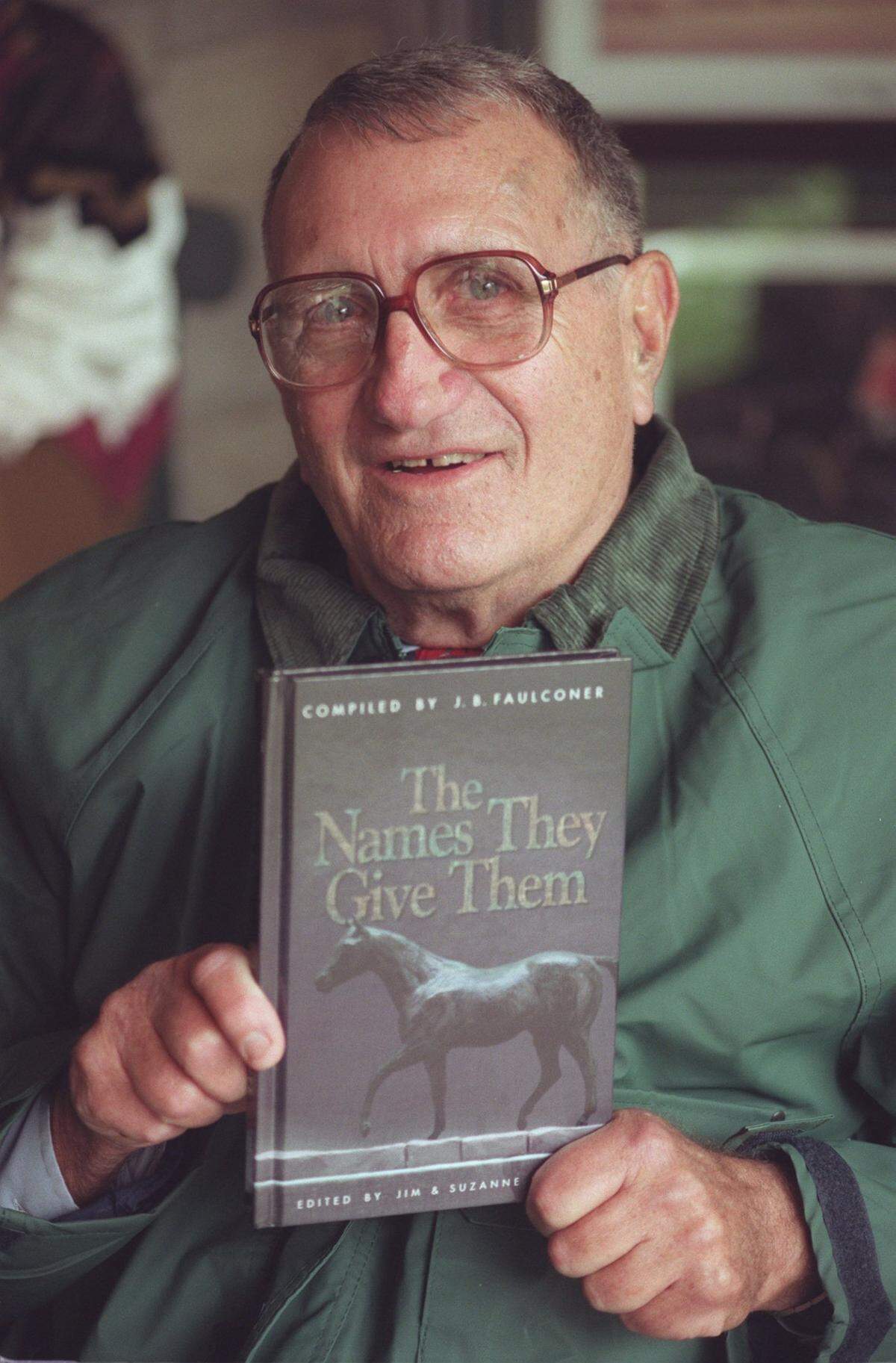
Feb. 1, 1919 - James Baily “JB” Faulconer — sports broadcaster, horseman and father of the Eclipse Award — is born.
JB Faulconer started his career in 1940 as a radio sports announced on WLAP in Lexington. After graduating from the University of Kentucky, he worked at the station and was part of the team broadcasting UK football and basketball games that became the South’s largest regional sports network.
In 1955, Faulconer became the regional public relations director for the Keeneland Association. According to ESPN, in 1970, it “bugged Faulconer to no end” that racing had two winners for horse of the year that year — Fort Marcy, anointed by the Daily Racing Form, and Personality, selected by the racing secretaries at the Thoroughbred Racing Association.
So, in 1971, Faulconer brought the two organizations together to come up with a unified set of awards. That compromise resulted in the Eclipse Awards, named after the 18th-century British racehorse Eclipse.
Although not official national awards, the Eclipse Awards are widely viewed as the national standard. Horses are selected for the awards by the National Thoroughbred Racing Association, the Daily Racing Form and the National Turf Writers Association. Winners of the awards are announced in January of the year following the votes.
For all his efforts, Faulconer was awarded some five years later with a position at the Thoroughbred Racing Association as executive vice president.
Faulconer said his time in the military helped him manage the splintered interests of racetracks and their owners.
During World War II, Faulconer served in the U.S. Army as infantry commander. He received a battlefield promotion at 26, making him the youngest lieutenant colonel in the infantry. He was also awarded the Legion of Merit and the Bronze Star for Valor.
After the war, he continued in the U.S. Army Reserve, serving as the commanding general of the 100th Division between 1970 and 1973 and retiring as a major general.
After leaving Keeneland, he served as the executive vice president of the Thoroughbred Racing Associations of North America from 1976 to 1988. Faulconer is also credited with writing, “The Names They Give Them,” which details the origins of names given to more than 1,000 thoroughbreds; and “The Keeneland Story: Racing in the Finest Tradition,” a history of the Keeneland racetrack published by The Thoroughbred Press in 1960.
Faulconer died at his home in Vero Beach, Florida, on Dec. 5, 2000.
Have a question about Lexington’s history? Have a suggestion for our Lexington 250 series? Contact us at 250LexKy@gmail.com
This story was originally published February 2, 2025 at 12:07 PM.