
Born a slave, Isaac Murphy became one of history’s greatest jockeys
Editor’s Note: As Lexington celebrates the 250th anniversary of its founding, the Herald-Leader and kentucky.com each day throughout 2025 will share interesting facts about our hometown. Compiled by Liz Carey, all are notable moments in the city’s history — some funny, some sad, others heartbreaking or celebratory, and some just downright strange.
Lexington’s Isaac Burns Murphy was considered one of the greatest jockeys in thoroughbred history.
He was born enslaved, but he found freedom on the back of a horse.
Murphy, who would become an American Hall of Fame jockey, was born in Clark County in 1861. Over the course of his 35-year life, he became one of the most famous jockeys of the 19th century and arguably one of the best of all time.
While his mother America had been a slave at the time of his birth, his parents were able to run to their freedom. Murphy’s father, Jerry, escaped slavery and enlisted in the 114th US Colored Troops at Camp Nelson in the summer of 1864.
America and Isaac moved to Camp Nelson and were considered refugees of the Union Army there, where America worked and raised Isaac at the camp. Jerry, however, died at a confederate prisoner of war camp.
In 1875, Murphy began his riding career riding for Williams and Owings Stables in Lexington, after befriending Eli Jordan, a prominent horse trainer at the stables. He was just 14 when he started racing.
Over the course of his career, Murphy rode in 11 Kentucky Derbies, winning three of them. Murphy is the only jockey to win the Kentucky Derby, the Kentucky Oaks and the Clark Handicap in the same year, 1884. He became one of the highest-paid athletes, and among the most famous Black men in America.
One of his most famous races over his career was in 1890, when he rode Salvator to a victory over Tenny ridden by rival white jockey Edward “Snapper” Garrison. It was considered to be one of the most thrilling races of all time, with the country’s leading Black jockey squaring off against the country’s leading white jockey.
Murphy bested Garrison by half a head, a race that ended with the first-ever photo finish.
In 1890, Murphy fell off his mount, Firenzi, after crossing the finish line in last place. The presumed favorites in the race, stories began to swirl that Murphy had been drunk during the race. Murphy was suspended pending an investigation.
The jockey maintained that he’d been drugged. Scandal deepened even more when it was noticed that bettors had uncharacteristically wagered heavily against Murphy and Firenzi. Although Murphy vowed he had been poisoned, the accusation would follow him for the rest of his career.
Murphy calculated that he had won 628 races out of the 1,412 times he’d started, a 44% win rate that still stands. Hall of Fame Jockey Eddie Arcaro said in a 1967 Lexington Herald-Leader article about Murphy said, “There is no chance that his record of winning will ever be surpassed.”
An independent calculation of records found that he had 530 wins in 1,538 rides, putting his win rate at 34%, a still impressive total.
He was the first jockey to be inducted into the National Museum of Racing and Hall of Fame at its creation in 1955. Since 1995, the National Turf Writers Association has given the Isaac Murphy Award to the jockey with the highest winning percentage for the year.
Murphy died of heart failure in Lexington on Feb. 16, 1896. He was buried in African Cemetery No. 2. During the 1960s, his unmarked grave was forgotten until it was found by University of Kentucky press specialist Frank B. Borries, Jr.
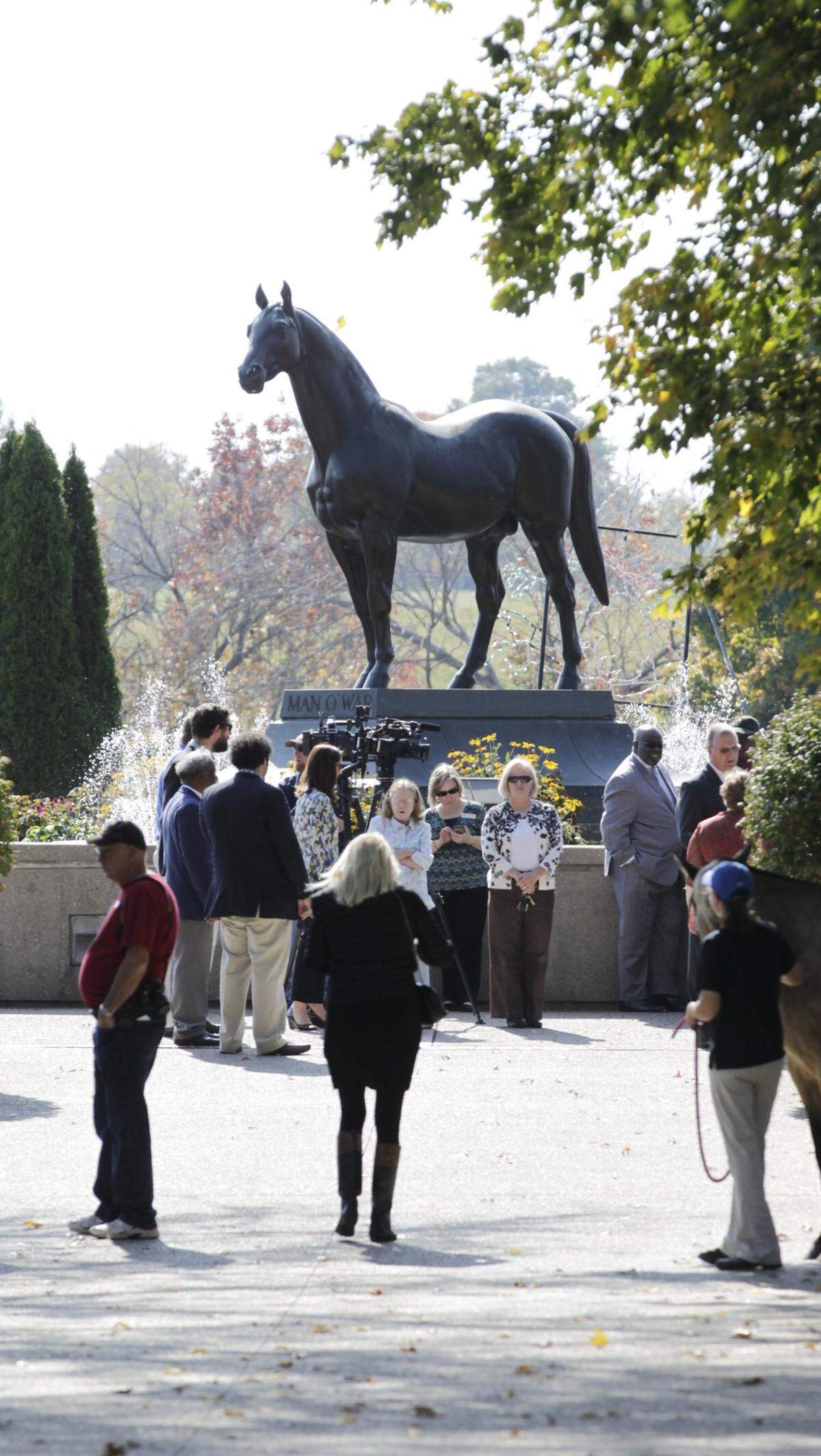
Murphy was reinterred at the old Man o’ War burial site, and when the Kentucky Horse Park was built, his remains and the horse’s, were moved again to be buried at the park’s entrance.
Have a question or story idea related to Lexington’s 250-year history? Let us know at 250LexKy@gmail.com.