
The search for Lexington’s famous condiment, ‘the best mustard in existence’
This is the July 24, 2025 edition of the Kentucky Fried History, the commonwealth’s premiere history-focused newsletter that takes you through the ink-stained pages of the Lexington Herald-Leader. Signup here for this free newsletter to get stories like this delivered exclusively to your inbox.
Lexington, Kentucky is home to basketball, bourbon and breeding horses.
It was also once home to a world-famous, royally-recognized mustard.
Last week, I was editing a story on Lexington’s culinary history when something stuck out to me: Burrowes’ Lexington Mustard was internationally known and was enjoyed by Queen Victoria. At one point, Burrowes’ founder was named the “mustard-maker to Her Royal Highness,” according to Herald-Leader archives.
I’ve lived in Kentucky for most of my life, and in Lexington for four years, and had never heard of our famous condiment.
Dear reader, allow me to regale you with the tale of Burrowes’ Lexington Mustard.
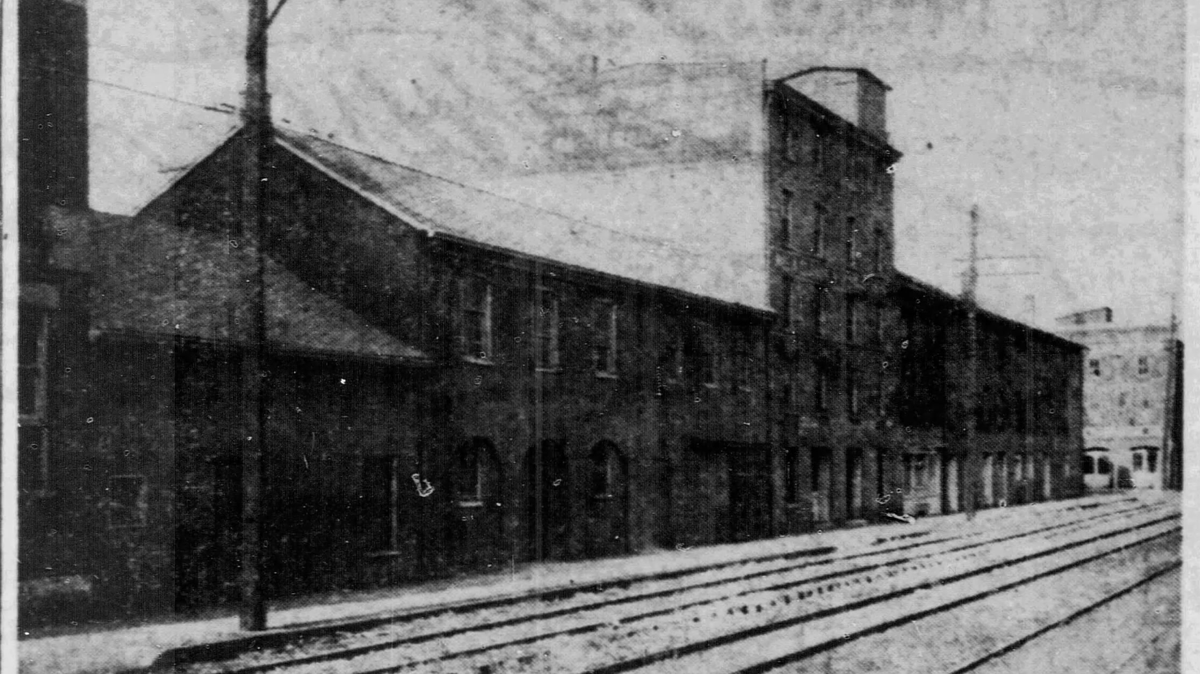
Nathan Burrowes was an early settler in Lexington, coming to Kentucky from Pennsylvania in the 1780s. He created a machine that would strip leaves and debris from hemp stalks, but it was copied by others, and Burrowes suffered financially. He used the same principles to pivot to mustard.
By 1810, he had perfected a recipe for table mustard. The company was taken over by Samuel McCullough in 1841 after Burrowes’ death. McCullough had been like a son to Burrowes and inherited the recipe.
The mustard recipe started gaining attention, winning an award at the 1851 World’s Exposition, a series of world’s fairs that took place before the big World’s Fairs, which my coworker Andrew Henderson confirmed by finding the exhibition catalog from that year. It was around this time the company also claimed Queen Victoria was a fan.
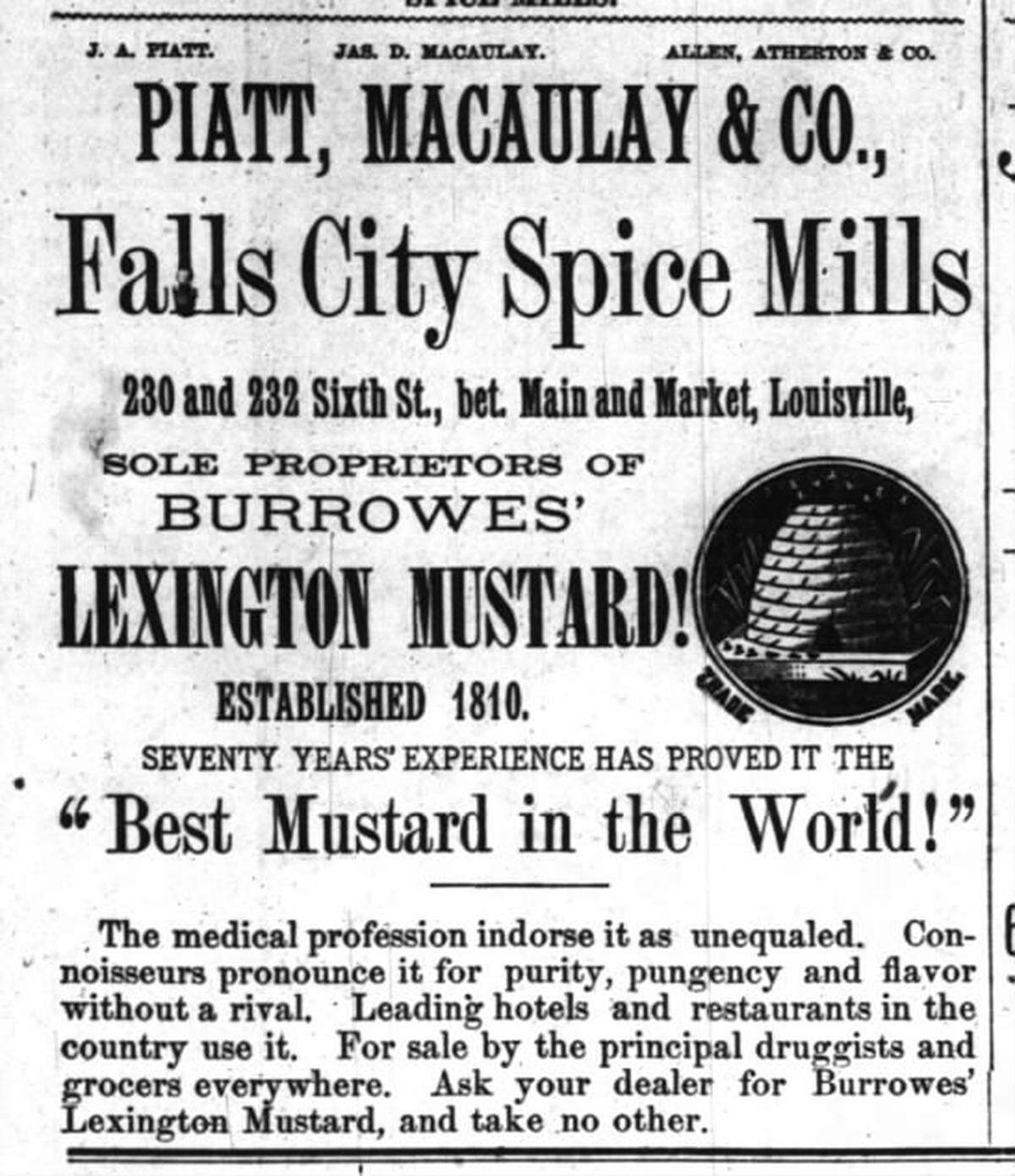
The company was sold to John Brand in 1869, who moved the operation to Louisville, and later involved in a copyright lawsuit as other mustard manufacturers tried to claim they were the original Lexington mustard.
Burrowes’ Lexington Mustard appears to have gone out of production by 1893.
After a few Google searches, I admit I became a bit obsessed with learning more about Lexington Mustard.
Wouldn’t it be fun, I thought, if we could find the original recipe? I could make a batch, bring it to the Herald-Leader office and have everyone test it out.
I told my coworkers about it and everyone agreed. We needed to know more about the mustard.
I started by reaching out to the Lexington History Museum. In my initial searches, the most comprehensive information came from a Lexington History Museum publication from 2022, which outlined the history and copyright battle over Burrowes’ mustard.
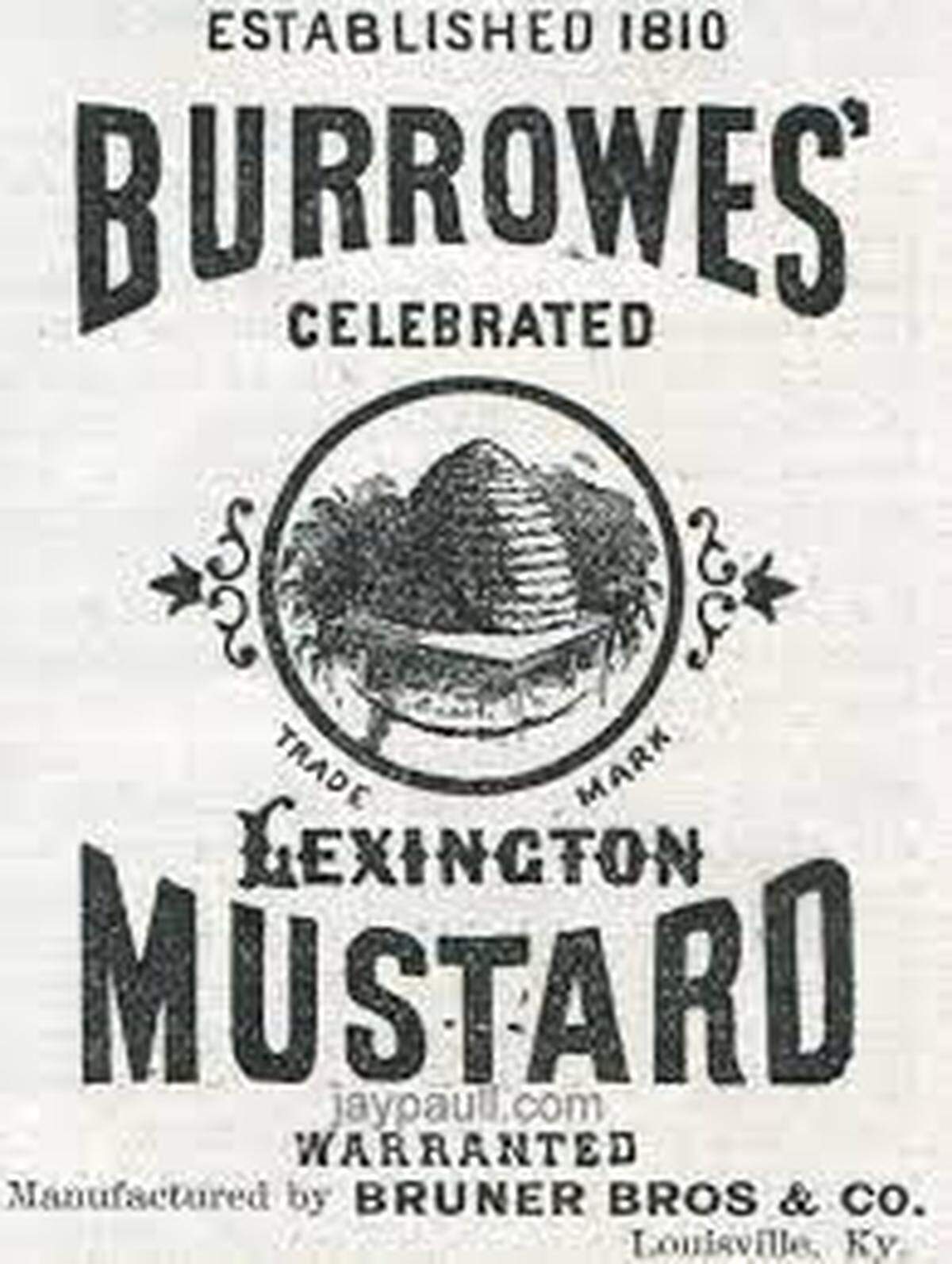
The museum sent over a ton of information – including an image of what a tin looked like — but they didn’t have the recipe. Signs all point to it being sold in a powder form, but that’s about as much as we know.
“Before the days of commercially available prepared mustard became commonplace, mustard was sold in dried seed or powdered form (still available that way today) and mixed before use with water, vinegar or even gin and other ingredients,” Kelly Johns from the museum said. “Recipes abound on the internet, but finding an exact recipe for Burrowes’ is elusive.”
“Likewise, the proprietary method Nathan Burrowes used to produce his mustard is not known to us,” Johns said.
The next logical step, of course, we all guessed it, was to call the National Mustard Museum in Middleton, Wisconsin. I spoke briefly with Barry Levenson, the founder and curator of the museum, who said while they had thousands of mustards in their collection, Lexington Mustard was seemingly not among them.
Levenson promised to search their archives for information, but didn’t find anything.
Similarly, Andrew reached out to Colman’s Mustard Shop & Museum in England to see if they had any information, but we didn’t hear back from them.
I went back to the drawing board, also known as the information sent to me by the Lexington History Museum, which led me to a book in the Library of Congress on Lexington’s history.
It was there I accepted that my search might not end with a recipe and taste-test. An 1872 book titled “History of Lexington, Kentucky: Its Early Annals and Recent Progress,” by George Washington Ranck did not mince words. The recipe was top-secret, “sacredly transmitted unrevealed” even when the company changed ownership.
It also notes that Burrowes’ mustard “has no equal in quality in existence.”
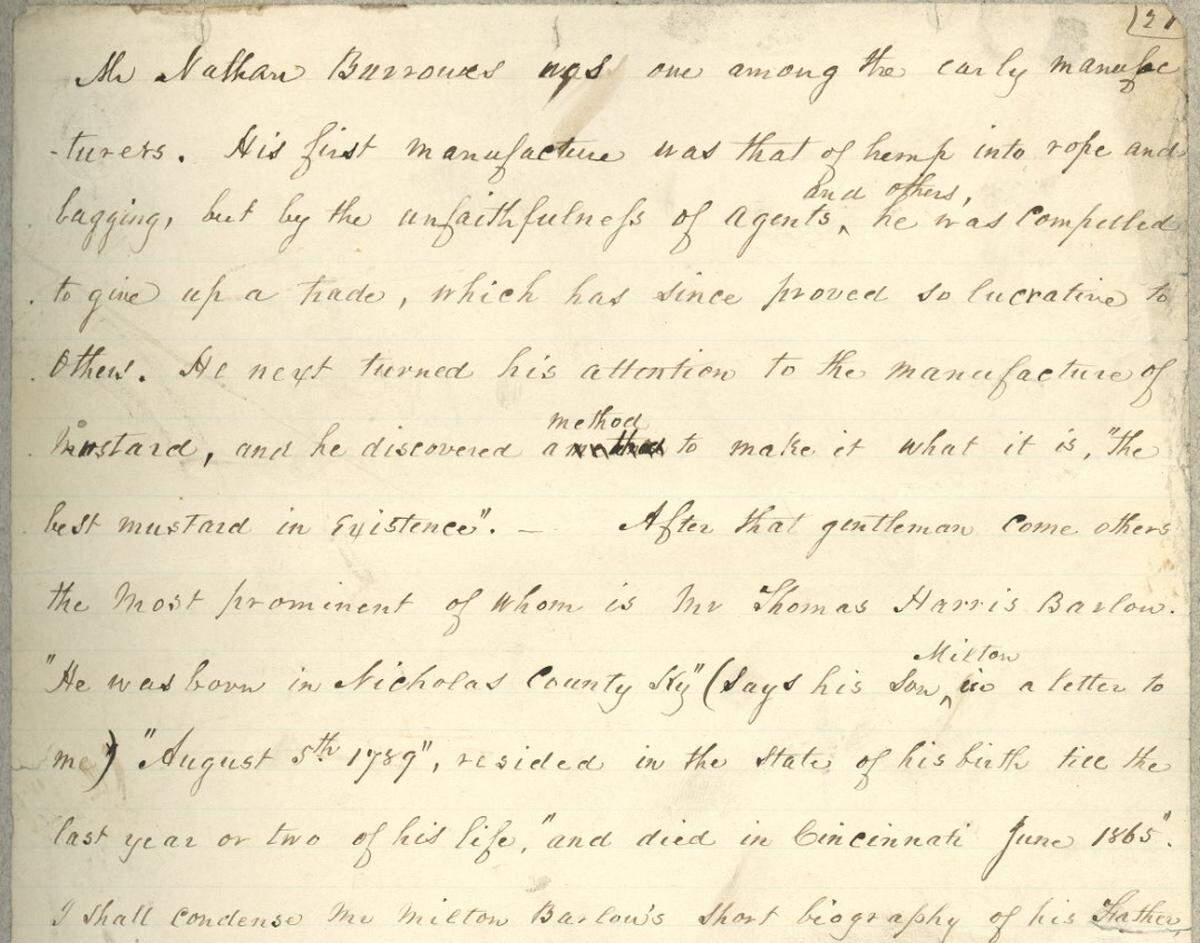
Another article, published by the Register of Kentucky State Historical Society in 1929 which quoted McCullough, described it as “the best mustard the world has ever seen” and further, “the best mustard in existence.”
It’s hard to know if Lexington Mustard was as famous or delicious as it seems — we’ll likely never know if it was world-renowned or if the queen actually was a fan all those years ago. Turns out, mustard documentation from 150 years ago is few and far between. In our research, we found four different spellings of Burrowes’ last name, including Burrowes, Burrows, Burrow and Burroughs.
We’ve chosen to go with Burrowes, which is pictured on the mustard’s packaging.
Short of finding a descendant of Nathan Burrowes or Samuel McCullough who might have a copy of the recipe (which, I admit, we did consider but I do have to get back to my real job soon), it seems like the recipe will remain a secret.
One of my favorite things about being a journalist is being able to be nosy and curious. It’s a job that allows you to occasionally take a detour and ask a million questions, even about something like a centuries-old mustard recipe, and a job where you genuinely learn something new every day.
It also allows you to talk to wonderful people, like Kelly at the History Museum and Barry at the Mustard Museum, who will take time out of their day and try their best to find a bit of history to share with you.
It doesn’t always end with a huge story, or uncovering a historic recipe. Sometimes it’s about connecting with your community and learning more about the place you call home.
Maybe the real Lexington mustard recipe is the friends we made along the way.
(In all seriousness, if you have any information about Lexington Mustard, or any other famous condiments from Central Kentucky, my email is mkast@herald-leader.com and I would love to chat.)
This story was originally published July 31, 2025 at 7:00 AM with the headline "The search for Lexington’s famous condiment, ‘the best mustard in existence’."