
Not a rock, not a baked potato. Rare salamander spotted in Eastern Kentucky
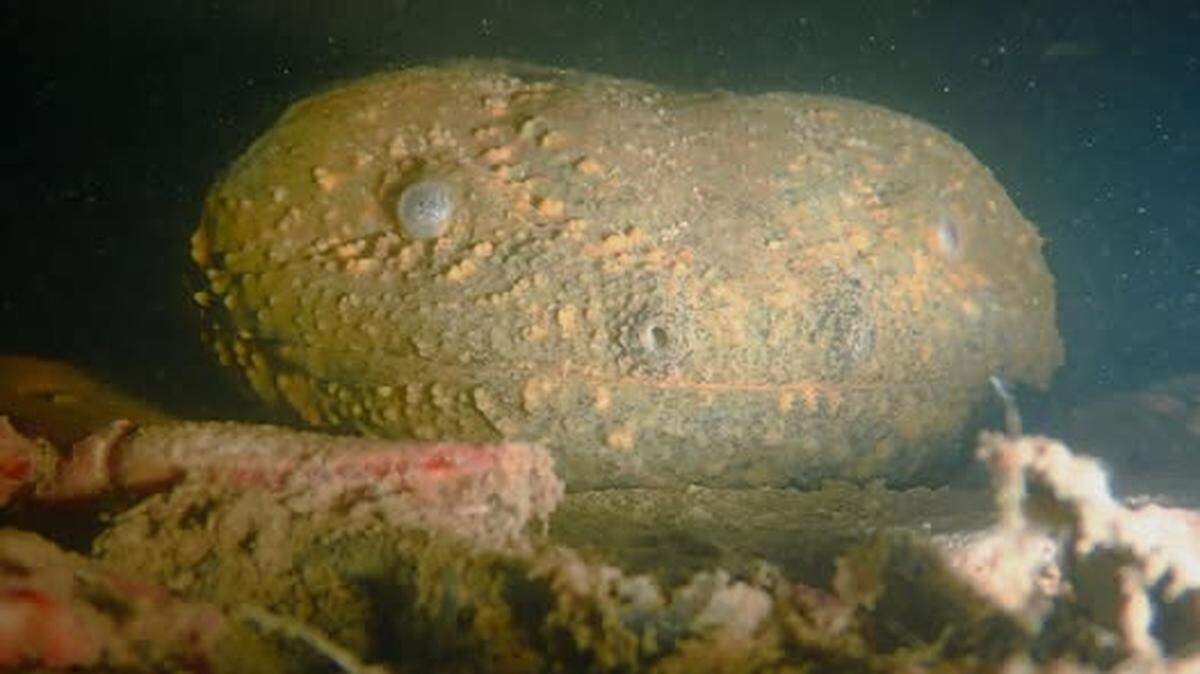
No, that’s not a rock — it’s a rare giant salamander, recently spotted in Eastern Kentucky.
The eastern hellbender spends most of its life under large, flat rocks in fast-flowing streams, which can make them difficult to find. Hellbenders are salamanders whose population is declining and rarely seen in the wild, and especially rare in Kentucky, the state Department of Fish and Wildlife said in a Facebook post.
One was recently spotted in an Eastern Kentucky stream, which is a good indicator of a healthy environment.
“Hellbenders are often called the ‘canary in the coal mine’ for stream health,” the department said. “Because they require clean water and stable habitat, their presence can signal a healthy ecosystem — and their decline can be an early warning sign of environmental problems.”
Eastern hellbenders live in 15 states, including Kentucky. The amphibian has a flattened body with a large tail and tiny eyes and spends its entire life in water, according to the U.S. Fish and Wildlife Service.
“Cool and clear water is important because hellbenders breathe entirely through their skin, which contains numerous folds to increase oxygen absorption,” the service said.
“Adult eastern hellbenders spend most of their life under large, flat rocks that shelter them; whereas larval and juvenile hellbenders hide beneath large rocks and under small stones in gravel beds.”
However, the number of the salamanders are declining.
In 2024, the U.S. Fish and Wildlife Service proposed designating the eastern hellbender as endangered due to multiple threats, including habitat destruction and water quality degradation.
Of the 626 known populations of eastern hellbenders, 41% are “extirpated,” or completely destroyed, and another 36% are declining, according to the organization.
This story was originally published July 31, 2025 at 11:56 AM.