
How Lexington became the ‘horse capital of the world’ nearly 200 years ago
AI-generated summary reviewed by our newsroom.
- Lexington's horse racing roots trace to 1826 with the Kentucky Association's founding.
- Black jockeys played a key role in horse racing, winning 15 Kentucky Derbies by 1902.
- Keeneland replaced the historic Kentucky Association track after its 1933 closure.
Editor’s Note: As Lexington celebrates the 250th anniversary of its founding, the Herald-Leader and kentucky.com each day throughout 2025 will share interesting facts about our hometown. Compiled by Liz Carey, all are notable moments in the city’s history — some funny, some sad, others heartbreaking or celebratory, and some just downright strange.
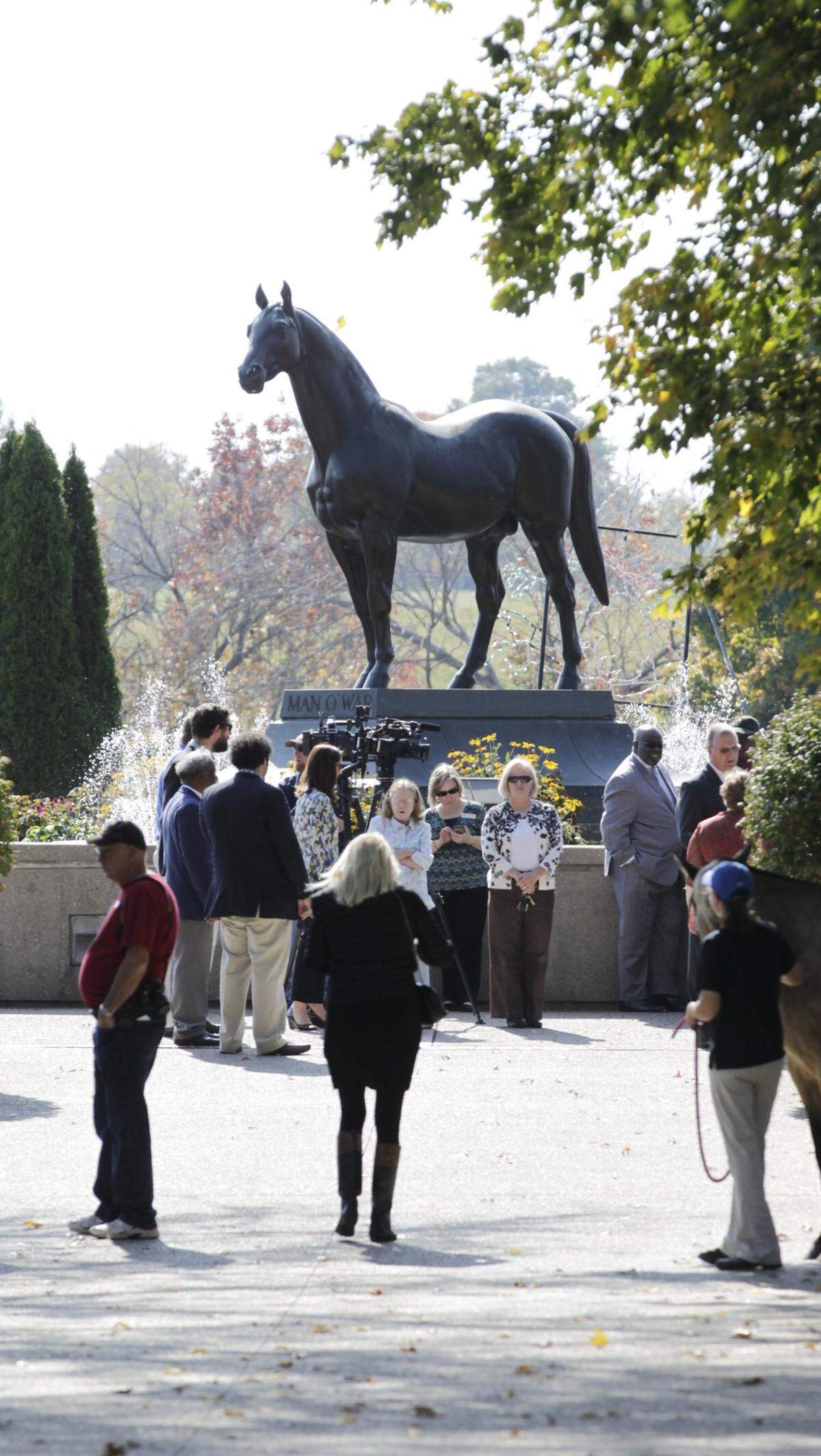
Horse racing was part of Lexington since its founding 250 years ago, and in 1826, it officially became part of the city’s culture.
That year, a group of 50 Lexington residents led by prominent citizens like Henry Clay, Jesse Bledsoe and Dr. Elisha Warfield met at Mrs. Keen’s Inn and formed the Kentucky Association for the Improvement of the Breeds of Stock. The goal of the group, also called the Kentucky Association or the Kentucky Racing Association, was “to improve the breed of horses by encouraging the sports of the turf.”
Over the next 10 years, the association purchased land in what is now the east end of 5th Street and Race Street to establish the Lexington Race Course — a one-mile dirt track for thoroughbred racing, complete with a grandstand and stables. The group’s actions solidified Lexington as the “horse capital of the world.”
Since the city was founded, thoroughbred owners entrusted the care, training and racing of their horses to Black slaves.
When the Civil War ended those men, now freed, remained in the industry and used their skills and familiarity with the horses to create opportunities for themselves at what had become the Kentucky Association Race Track. Isaac Burns Murphy, who is considered one of the greatest jockeys in thoroughbred racing history, won his first race at the track.
Between 1875 and 1902, Black jockeys like Oliver Lewis, Murphy and Jimmy Winkfield won the Kentucky Derby 15 times. Lewis won the first Kentucky Derby; Murphy won three times, in 1884, 1890 and 1891; and Winkfield won back-to-back races in 1901 and 1902.
In 1897, the Lexington Race Course began to have financial difficulties, and in 1901 it was purchased by Charles Green of St. Louis for $1.
During 1918 and 1919, the Kentucky Jockey Club was created and took over the operation of four racetracks across the state: the Lexington Race Course, Churchill Downs, Latonia Race Track and the Douglas Park Racetrack.
The Kentucky Association closed its racetrack in the spring of 1933. That same year, the articles of incorporation were filed for the Keeneland Association.
Two years later, the buildings at the Kentucky Association’s racetrack were torn down as Keeneland’s opened up. The gates for the Kentucky Association racetrack, a symbol of horse racing in Lexington in the 19th and early 20th century, were replicated at Keeneland Race Course.
Have a question or story idea related to Lexington’s 250-year history? Let us know at 250LexKy@gmail.com.