
Remembering Comair Flight 5191, 19 years after deadly Lexington crash
Editor’s Note: As Lexington celebrates the 250th anniversary of its founding, the Herald-Leader and kentucky.com each day throughout 2025 will share interesting facts about our hometown. Compiled by Liz Carey, all are notable moments in the city’s history — some funny, some sad, others heartbreaking or celebratory, and some just downright strange.
On August 27, 2006, Comair Flight 5191 was scheduled to fly from Lexington’s Blue Grass Airport to Atlanta.
Around 6 a.m., the plane started its taxi down the runway, but overran it before it could become airborne. It crashed just past the end of runway 26, killing all 47 passengers and two of the three crew members.
According to a crash analysis, the plane was cleared for takeoff from runway 22, a 7,000-foot runway used by most airline traffic at the time. However, the main pilot, 35-year-old Jeffrey Clay, took runway 26 which was only 3,500 feet long, unlit and unauthorized for use.
Clay then turned the controls over to 44-year-old first officer James Polehinke.
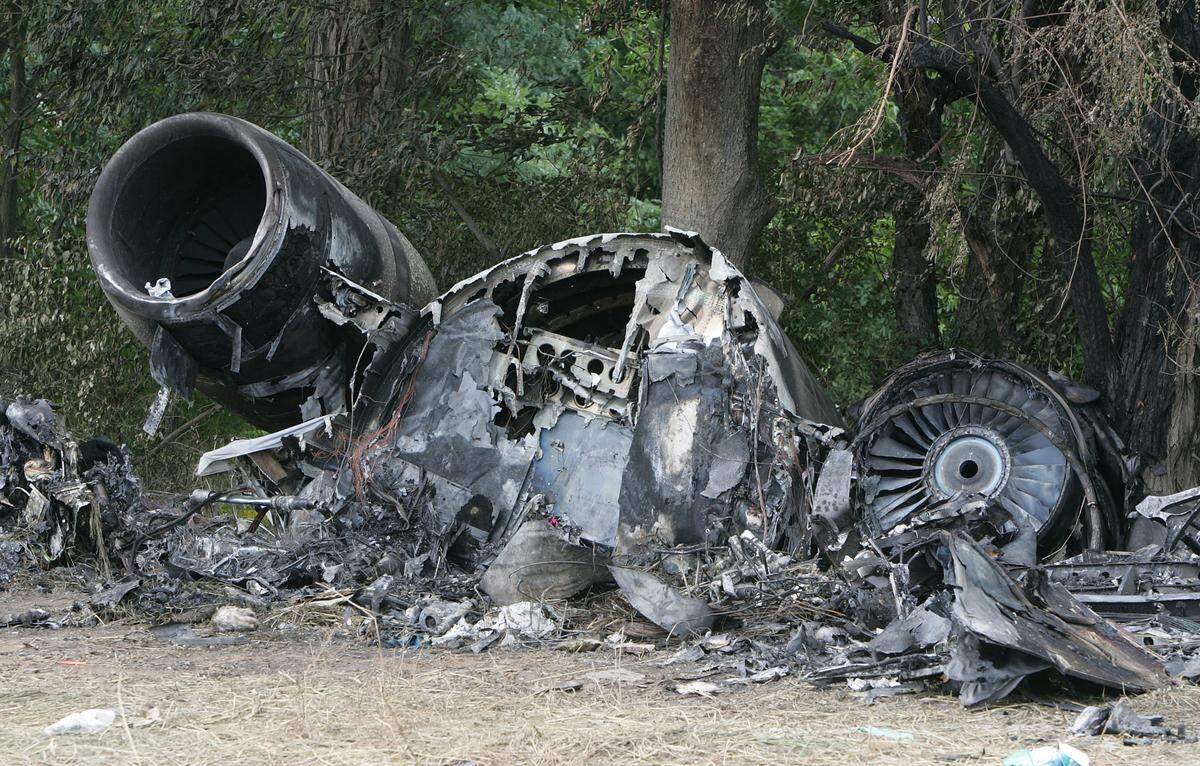
Voice flight recorder data indicated Polehinke noticed the runway had no lights, but neither pilot tried to abort the takeoff as the plane sped up. The plane ran off the shorter runway, ran into a berm, clipped some trees, then crashed into a field and burst into flames.
All 47 passengers aboard the plane died, including three passengers from Canada and two from Japan. Passengers ranged in age from 16 to 72, including a young couple who had been married the previous day and were flying to their honeymoon.
Another couple, Bobbie Sue Demrow Benton and her husband, Jesse Clark Benton, were on their way to Aruba to celebrate Bobbie Sue’s 50th birthday. Her brother, Bill Demrow, was a coroner called to the scene to help retrieve victim bodies.
Polehinke was the sole survivor. He had multiple broken bones, a collapsed lung and severe bleeding. But after several surgeries, including the amputation of his left leg, he survived.
Doctors would later determine that the crash left him with severe brain damage, and no memory of the crash or any of the events that led up to it.
The Federal Aviation Administration’s investigation into the crash found that low staffing levels in the air traffic control tower had a hand in the crash. The one controller on duty was responsible for both radar and tower duties, and had only two hours of sleep the night before the crash. He’d worked from 6:30 a.m. Saturday morning until 2:30 p.m., and returned to work at 11:30 p.m. that night.
He was scheduled to work until 8 a.m. the morning of the crash. The investigation also found that pilots were using an outdated map that didn’t show changes to the airport due to construction, though the National Transportation Safety Board said this didn’t contribute to the accident, and a second air traffic controller might not have prevented the accident either.
Ultimately, the NTSB ultimately found that the pilots were in error.
They said the flight crew members failed to use the available cues to tell them they were on the wrong runway and never checked with the tower to confirm their position.
After the crash, the Federal Aviation Administration issued a safety notice that required pilots to positively confirm their position before getting on the runway and again when initiating takeoff. In addition, the board made recommendations on avoiding fatigue in air traffic controllers and preventing air traffic controllers from taking care of administrative tasks while aircraft are taxiing down the runway.
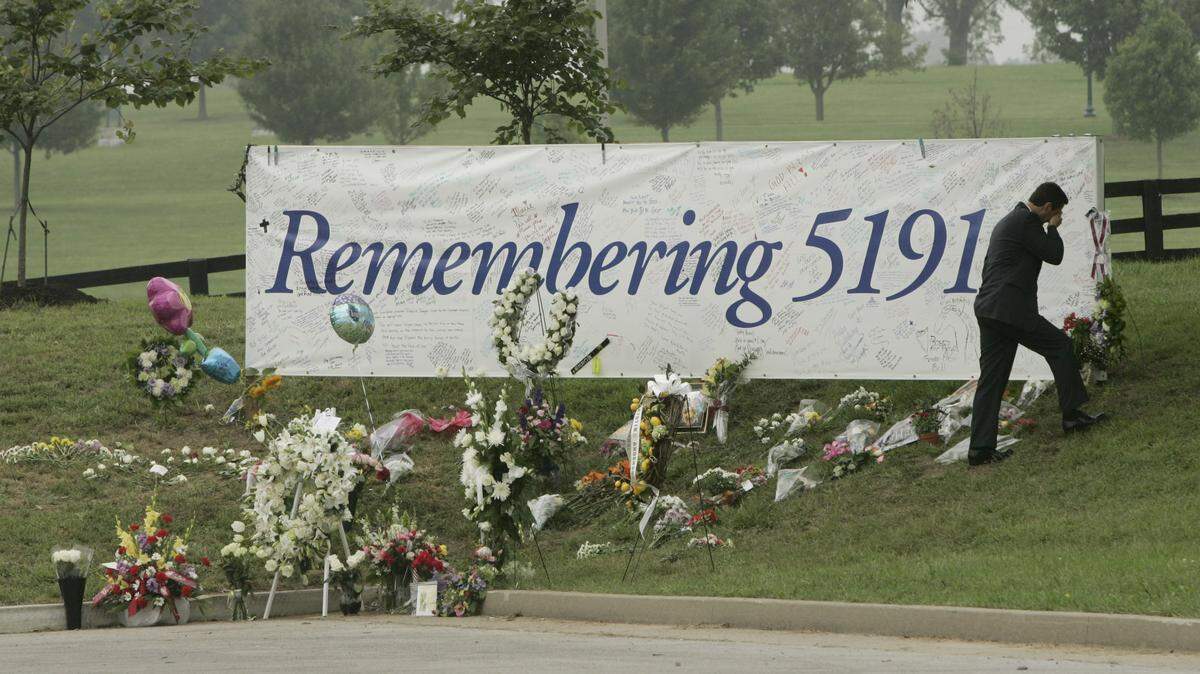
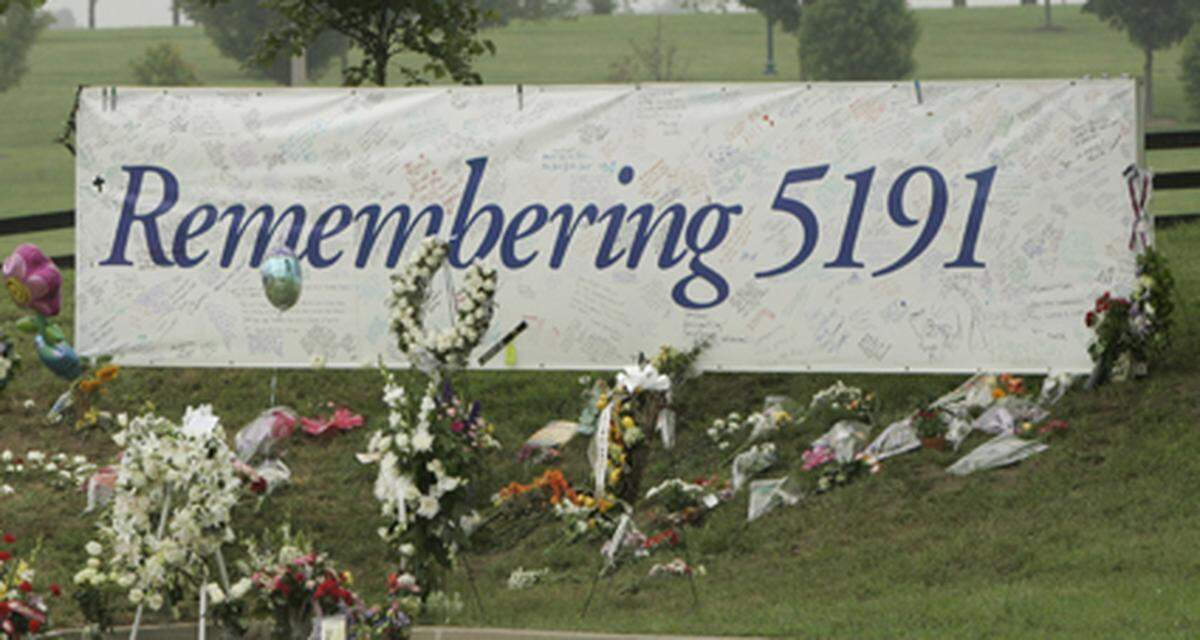
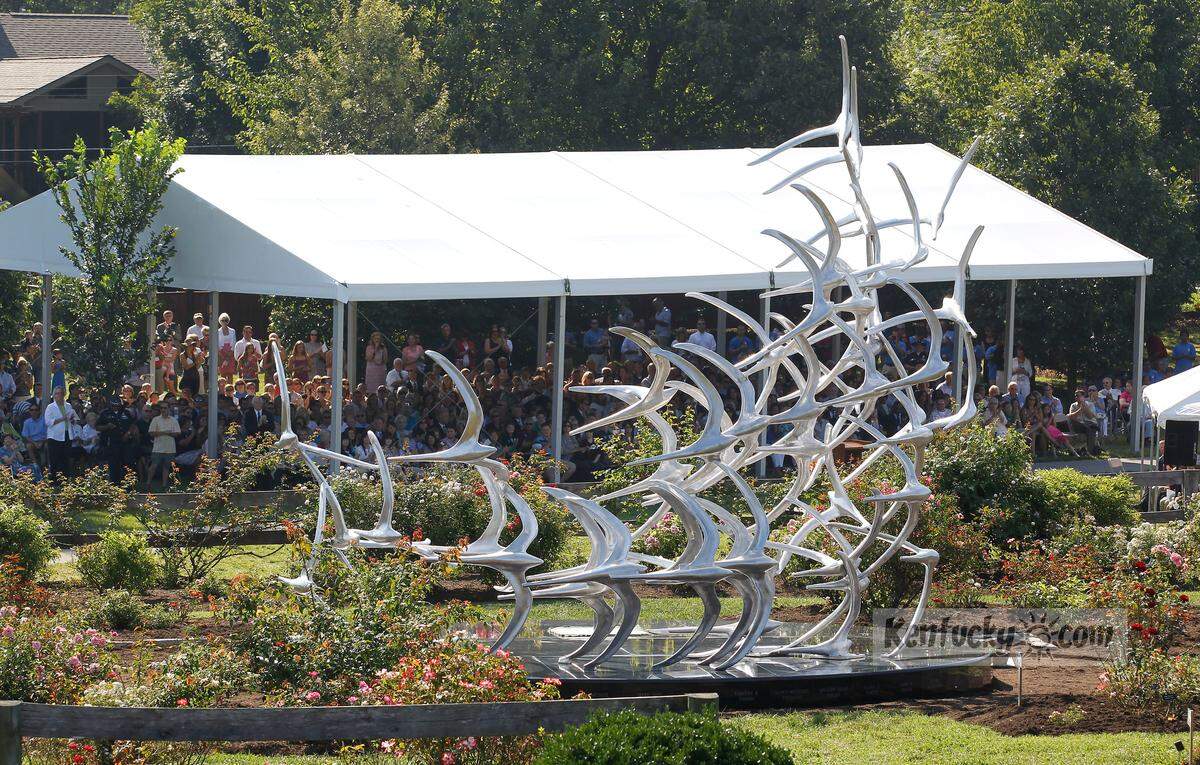
Following the accident, memorial services were held at the Lexington Opera House and Rupp Arena. The Flight 5191 Memorial consisting of 49 stainless steel birds in flight was installed at the University of Kentucky Arboretum.
While there were numerous lawsuits, ultimately the trial between the families and Comair was postponed after a settlement was reached. Comair sued the airport authority over the runway signs and markings, and sued the FAA for only having one air traffic controller on duty.
The case against the airport authority was dismissed and Comair’s case against the United States resulted in the government agreeing to pay 22% of the liability for the crash while Comair agreed to pay the rest.
All but one of the passengers’ families settled their cases. The estate and daughters of 39-year-old victim Bryan Woodward were awarded $7.1 million.
Have a question or story idea related to Lexington’s 250-year history? Let us know at 250LexKy@gmail.com.