
Palmer Pharmacy was a lucrative Black-owned Lexington business. The KKK bombed it
Editor’s Note: As Lexington celebrates the 250th anniversary of its founding, the Herald-Leader and kentucky.com each day throughout 2025 will share interesting facts about our hometown. Compiled by Liz Carey, all are notable moments in the city’s history — some funny, some sad, others heartbreaking or celebratory, and some just downright strange.
One of Lexington’s most successful Black entrepreneurs built a health care legacy in town — but left business behind when his pharmacy was bombed by the Ku Klux Klan in 1968.
Zirl Palmer was born in Bluefield, West Virginia, in 1919. After graduating from high school, he attended Bluefield State College and Howard University. At the time, Black people were barred from attending West Virginia professional schools, so Palmer went to Xavier University of Louisiana’s College of Pharmacy in New Orleans, getting train fare and part of his tuition paid by his home state.
In 1952, Palmer and his family moved to Lexington, where he started his own pharmacy. At the time, Lexington had established a group of Black professionals, including nine medical doctors and four dentists.
Palmer knew that if he opened his own pharmacy in Lexington, he’d be the only pharmacist for the growing Black neighborhood in the East End. He opened Palmer Pharmacy on the corner of Fifth and Race streets.
His business plan centered on being accepted by the Black community, but it didn’t work out right away.
People thought Palmer was too young, and they’d never seen a Black pharmacist before. Despite his training, the community — including some of the local physicians — didn’t readily accept him.
But with patience and a commitment to professionalism, he was able to work his way into Lexington’s Black community.
The city had segregated soda fountains at the time, which Palmer decided to address. Although many ice cream companies wouldn’t do business with a Black man, he was able to secure a contract with Dixie Ice Cream Co. and was able to open a soda fountain luncheonette for Black people in the city.
The pharmacy was already a gathering place for the neighborhood. With the addition of the luncheonette, it became one of the few places where Black residents could come and sit and drink a soda.
The plan worked out for Dixie Ice Cream too. Harold Brookings, the salesperson from Dixie Ice Cream, won every sales contest in the Lexington area because of his account with Palmer’s. In the first year of business alone, Palmer’s Luncheonette sold more than 5,000 gallons of ice creams.
But Palmer knew he needed more than just the profit margins from medications and the soda fountain. He decided to create an annual calendar with photographs of the local Black community to help advertise his store, which became popular.
In 1961, Palmer built an office building at East Fifth and Chestnut streets, with offices for two doctors and a lawyer for Palmer’s Pharmacy, Luncheonette and Doctor’s Office. As the first Black-owned franchise of a Rexall pharmacy in the country, Palmer Pharmacy’s opening was covered in Jet Magazine.
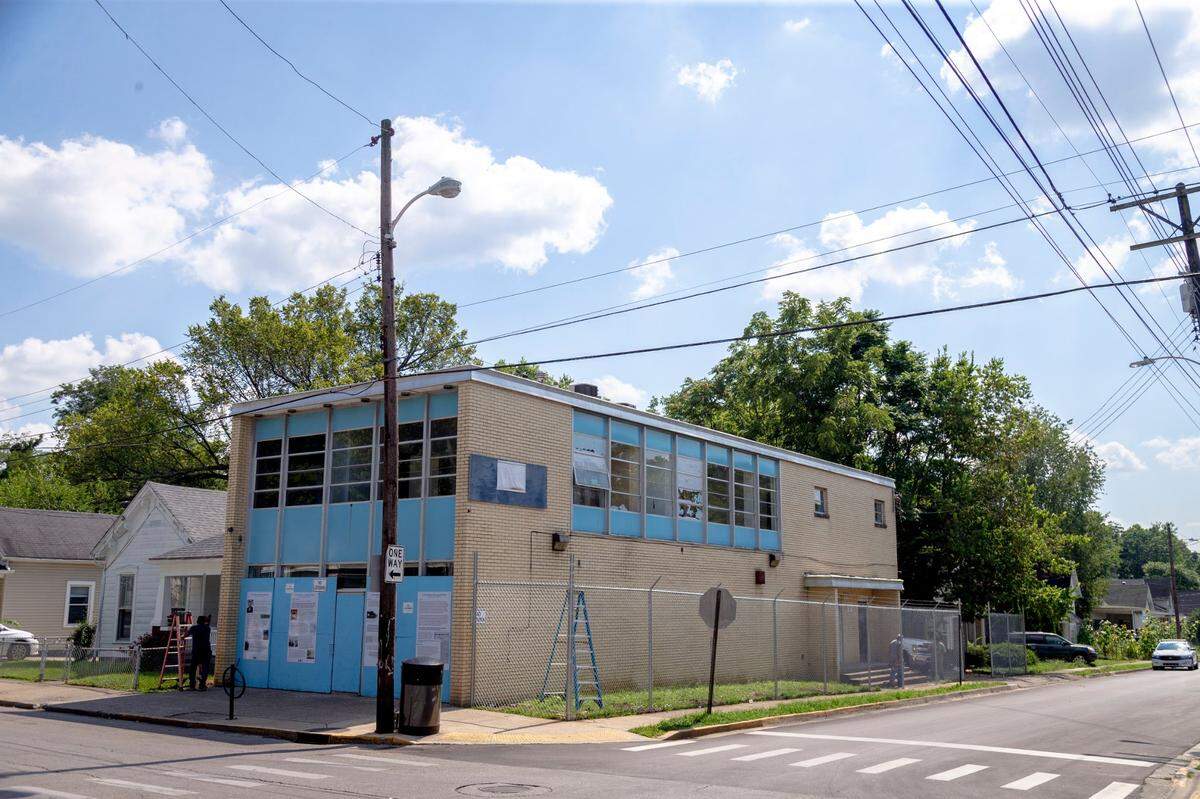
The business was successful enough that he opened a second pharmacy on Georgetown Street.
Palmer not only served as a role model for the Black community, but he also became an important part of Lexington. His community involvement included the NAACP, the Chamber of Commerce and Planned Parenthood.
He founded a health care program at his church, Main Street Baptist, and he was the first Black member of the Optimist Club and Big Brothers in Lexington. He was also one of the first members of the Kentucky Commission on Human Rights, and the first Black member of the University of Kentucky Board of Trustees.
But all that success made him a target.
On Sept. 4, 1968, Palmer Pharmacy on Georgetown Street was bombed. The blast destroyed the store and damaged three others in the West End Plaza.
Eight people were injured in the bombing, including Palmer, his wife Marian and his four-year-old daughter Andrea. Palmer and his family were trapped under the rubble for hours after the blast.
Years later, Palmer said he thought the bombing was related to a shootout in Berea the day before.
“Well, the only thing I can say, Labor Day, prior to the bombing, there was a shootout in Berea,” Palmer said in a 1978 interview for the Louie B. Nunn Center for Oral History at the University of Kentucky. “This is what the FBI told me. I don’t know. Big man of the Klan in Lexington was killed there, so supposedly the Klan said, ‘We’re going to kill the biggest Black guy in Lexington.’”
The shootout he referenced was a 10-minute battle on the streets of Berea after an anti-Catholic, anti-Semitic, anti-Black National States Rights Party rally. It resulted in the death of two and wounded five.
Fourteen men were charged in the shootout. Three days later, the Ku Klux Klan bombed Georgetown pharmacy.
In 1970, Phillip Campbell of New Albany, Indiana, the grand dragon of the Ku Klux Klan, was convicted of the bombing. The all-white, all-male jury took 90-minutes to deliberate. Campbell was sentenced to 21 years in prison. Campbell also pleaded guilty to a car bombing in Louisville.
After the bombing, Palmer never reopened the pharmacy. He sold the Fifth Street pharmacy and retired to protect his family. The building was eventually turned into the Marksbury Family WayPoint Center.
But his legacy lived on. Palmer never set out to be the city’s most prominent Black businessman, but he became a central figure in the city’s Black community until his death in 1982.
Have a question or story idea related to Lexington’s 250-year history? Let us know at 250LexKy@gmail.com.
This story was originally published September 12, 2025 at 10:08 AM.