
World-famous pilot Charles Lindbergh flew into Lexington’s first airport
Editor’s Note: As Lexington celebrates the 250th anniversary of its founding, the Herald-Leader and kentucky.com each day throughout 2025 will share interesting facts about our hometown. Compiled by Liz Carey, all are notable moments in the city’s history — some funny, some sad, others heartbreaking or celebratory, and some just downright strange.
When the world’s most celebrated aviation pilot landed in Lexington, it was a complete secret — but not for long.
Back in the 1920s, flying in airplanes was expensive, noisy and uncomfortable, and mostly reserved for the wealthy and business people. Planes flew low. Cabins weren’t pressurized and were slower than trains. Passengers often faced cold temperatures, and constant turbulence leading to airsickness and the need for cotton in their ears to block out the deafening noise of the engines.
In 1927, when Charles Lindbergh flew nonstop from New York to Paris, it was quite a feat.
At the time, aviation was gaining traction across the country. In 1929, only 6,000 people traveled by airplanes. By 1934, that number had grown to more than 450,000, and by 1938 to 1.2 million.
Air fields and airports started popping up all over the country. True to its rural beginnings, Lexington’s first airfield was located on a stock farm.
Meadowthorpe Farm was originally owned by Jacob Hostetter. Located near Leestown Road, the house on the farm was built in 1849. When Hostetter died in 1886, the farm was sold to a well-known bookmaker in town, who later sold it to Col. James Pepper, owner of Pepper Distillery, to pay off a debt.
After Pepper’s death in 1906, Meadowthorpe was purchased by Dr. Samuel Halley, president of Fayette Tobacco Warehouse.
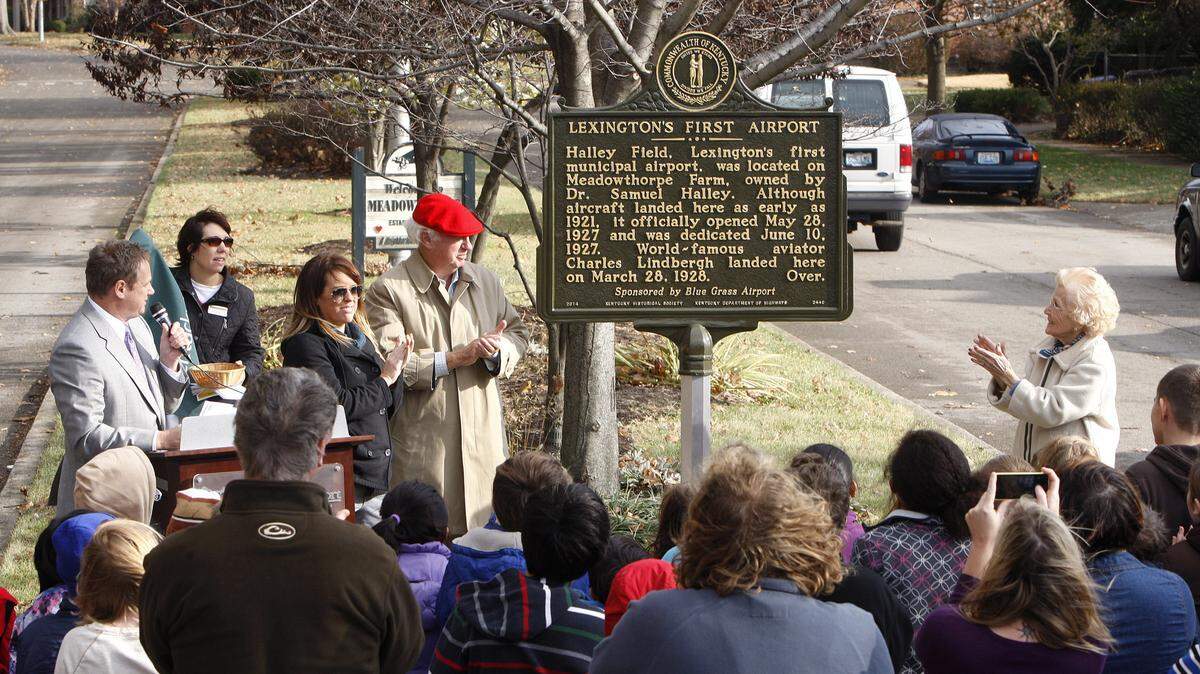
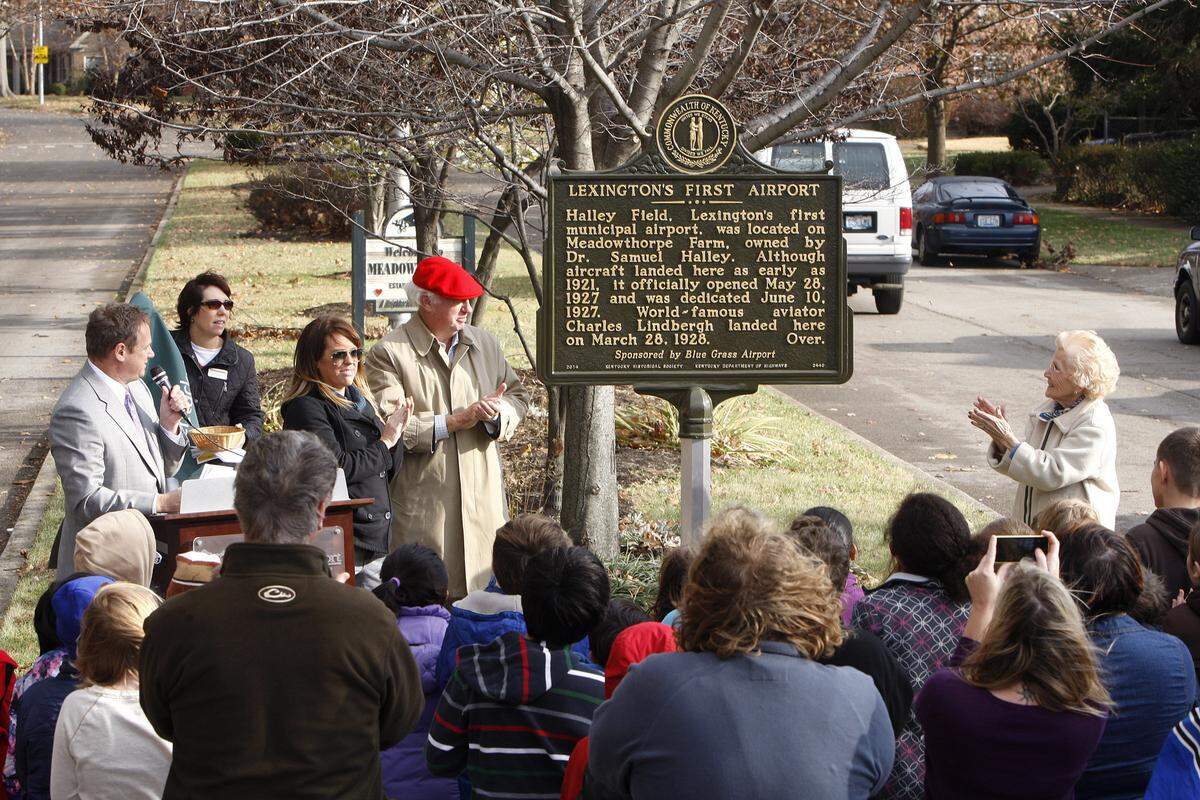
A field on the property served as Lexington’s airport in 1927, called Halley Field. A marker on Leestown Road and Boiling Springs Road marks where the airport’s landing strip might have been. That first year, World War I flying ace Ted Kincannon served as the airport’s manager.
In March of the following year, Lindbergh reached out to Kincannon to make arrangements to land there. There was just one condition: The celebrity pilot wanted his visit to Lexington to be a secret.
Kincannon recruited 17-year-old Melvin Rhorer to mark the field and secure the plane by spending the night in it. Lindbergh flew in and took off to visit his friend, Lexington’s Dr. Scott Breckinridge.
The secret worked, and Lindbergh flew in unnoticed. By morning, the whole town knew his secret. When it was time for him to leave, thousands of people showed up to see the plane and its famous pilot take off.
Helen Evans told the Herald-Leader in 2014 she remembered Lindbergh’s visit. He was flying a replica of the plane he’d flown across the Atlantic to Paris.
“I really don’t remember much about Mr. Lindbergh,” Evans admitted. “I do remember seeing the plane and thinking it was hard to believe that anything so small and fragile looking could have flown all that distance.”
Lindbergh was only here for a day. Halley Field didn’t last much longer.
While the air field hosted air shows, air circuses, flight training and sightseeing tours, it wasn’t much more than a pasture surrounded by trees and telephone wires. In fact, some of those who showed up that day in 1929 to see Lindbergh off were concerned he would crash into the trees at the end of the “runway.”
In 1930, a new municipal airport was built on Newtown Pike. Halley Field was abandoned by 1934. Meadowthorpe Farm where it sat was later sold and reverted by to farmland, but by 1949, the land had been split up into building lots.
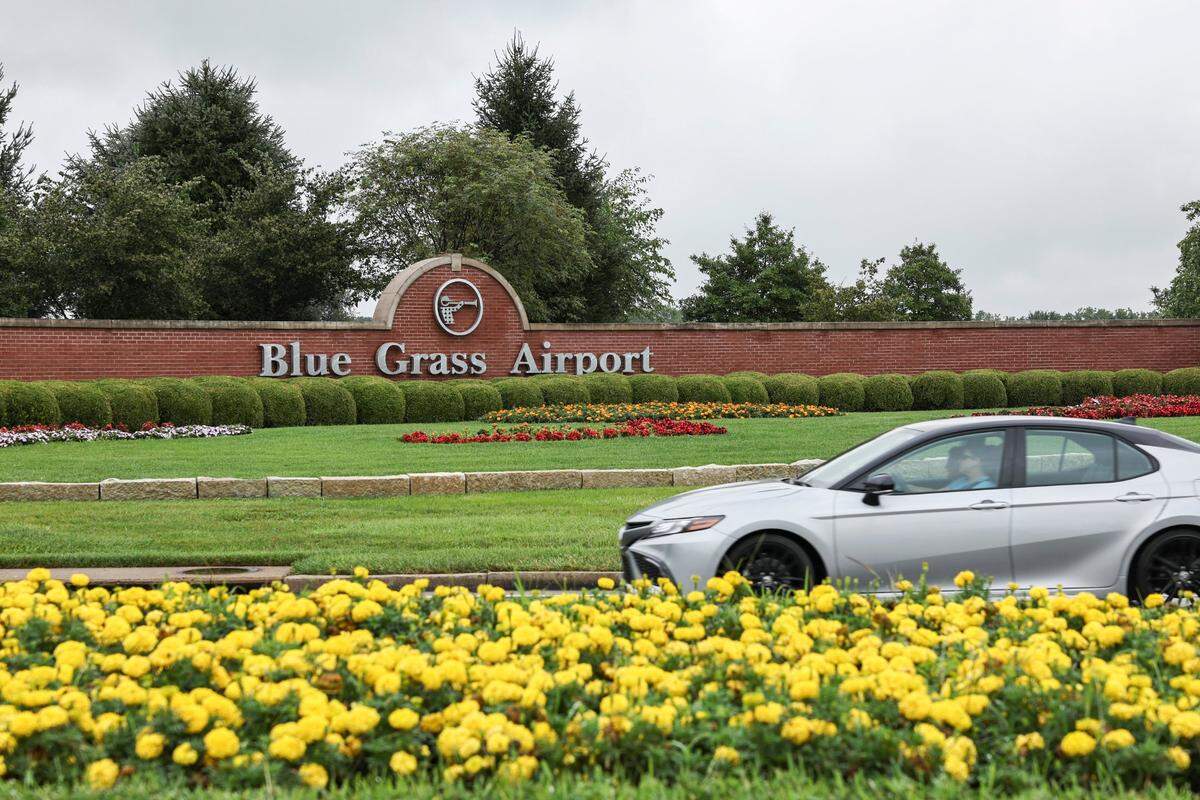
Blue Grass Airport opened in 1946.
After the publication of “Blue Grass Airport: An American Aviation Story,” about the history of aviation in Lexington, the idea to commemorate the site of the city’s first airport was born. From that, the marker at Boiling Springs Road and Leestown Pike was installed to show where the airport had been.
Have a question or story idea related to Lexington’s 250-year history? Let us know at 250LexKy@gmail.com.