
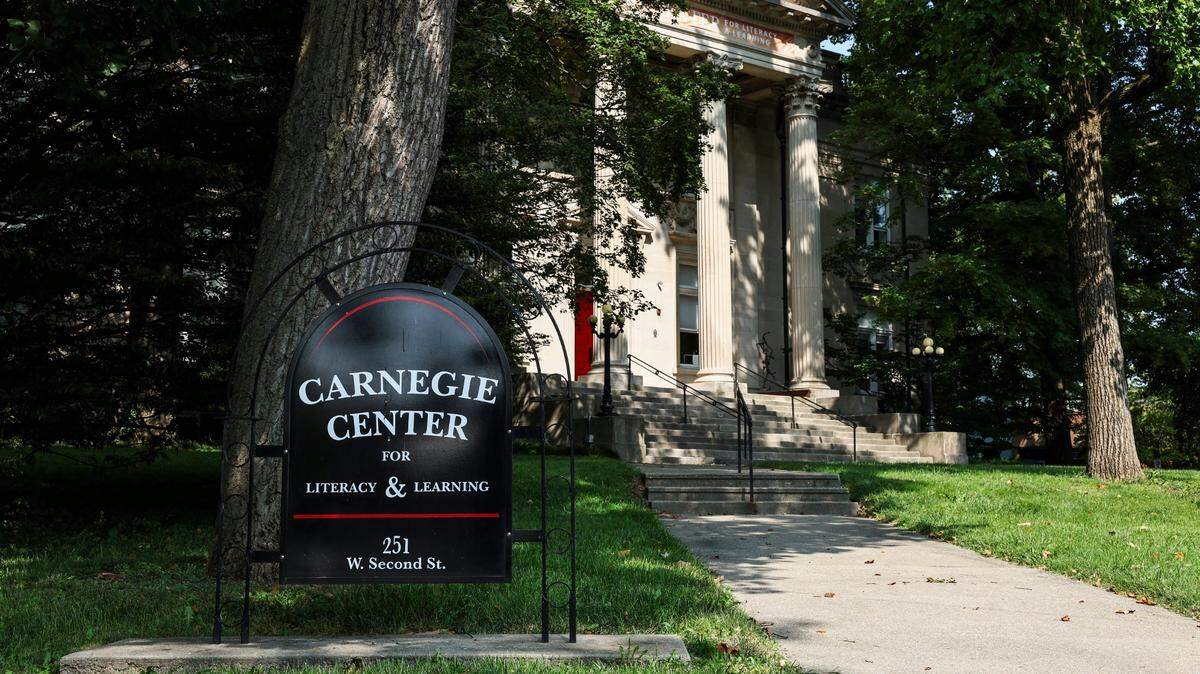
For 120 years, Lexington’s Carnegie Center has been devoted to books, learning
AI-generated summary reviewed by our newsroom.
- Andrew Carnegie funded Lexington’s public library with a $60,000 donation in 1902.
- The original 1905 library building reopened in 1992 as a learning and arts center.
- The Carnegie Center now hosts tutoring, writing classes and the Writers’ Hall of Fame.
Editor’s Note: As Lexington celebrates the 250th anniversary of its founding, the Herald-Leader and kentucky.com each day throughout 2025 will share interesting facts about our hometown. Compiled by Liz Carey, all are notable moments in the city’s history — some funny, some sad, others heartbreaking or celebratory, and some just downright strange.
For more than 120 years, the Carnegie Center for Literacy and Learning has been a place devoted to books and learning.
Lexington’s first library started in 1795 as a subscription service and was the first library west of the Allegheny Mountains. In the late 1800s, the Women’s Club of Central Kentucky worked to open a free public library, and in 1902 secured funding from Andrew Carnegie to build one.
Carnegie had made his money from U.S. steel, among other things, and spent the last years of his life as a philanthropist. At the peak of his career in 1901, he was estimated to be worth around $380 million, about $99 billion in today’s dollars. After he sold his Carnegie Steel Company, he decided to dedicate the rest of his life to philanthropy and donated almost 90% of his fortune to causes like education and science.
When he died in 1919, his estate was worth $30 million.
During the end of the 19th century, a fervor for public libraries spread across the country. The idea was that making libraries free across the country would help citizens educate themselves and become a more informed and engaged public. Between 1883 and 1929, more than 2,500 libraries were built around the world with money donated by Carnegie.
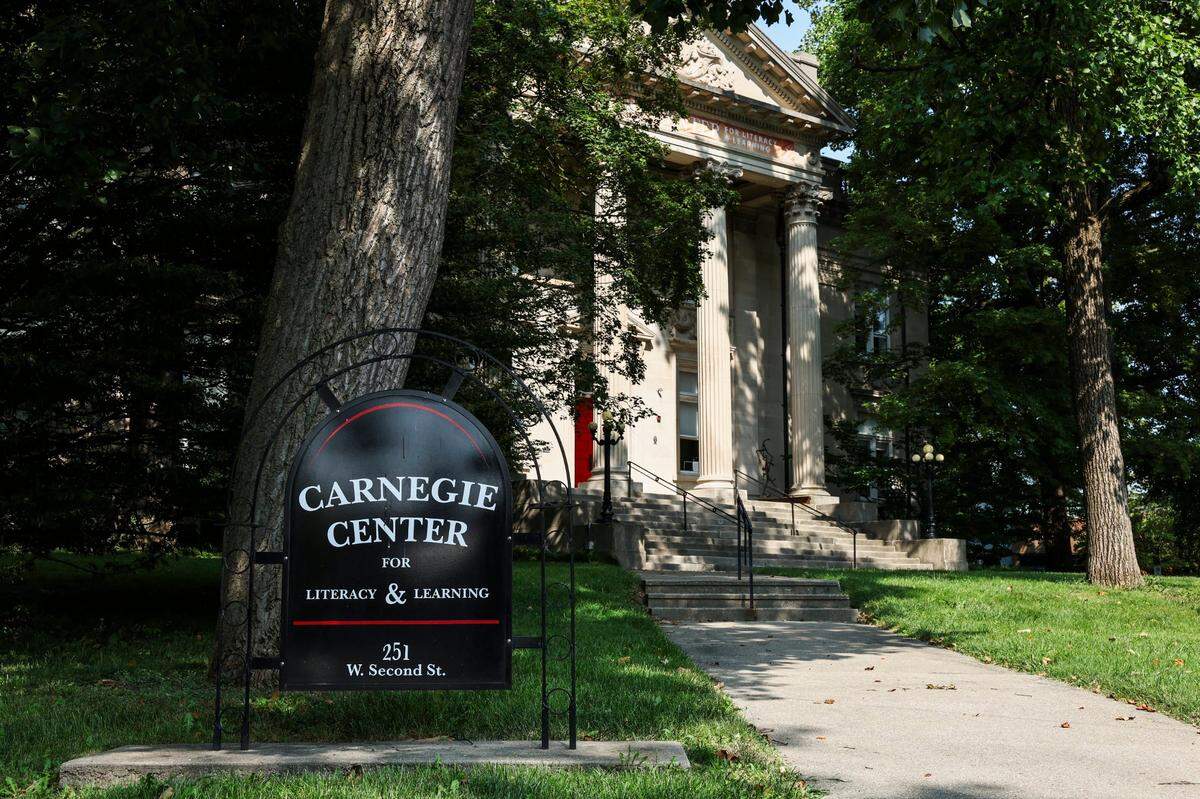
In Lexington, Carnegie gave $60,000 to build the Lexington Public Library. Built at a cost of $75,000, the building was designed by architect Herman L. Rowe with a tetrastyle portico and constructed from Bedford limestone. According to the Carnegie Center, the cornerstone of the building was laid in 1902, and the building was opened to the public in 1905.
Today, the building is one of 29 sites on the National Park Service’s recommended places to visit in Lexington, one of the 18 buildings in Gratz Park Historic District and is listed on the National Register of Historic Places.
In 1989, the Lexington Public Library moved to its larger location downtown. Once the books and people left, the building that had been Lexington’s library began to deteriorate. While some wanted to see it or the land it sat on converted into something else, Mayor Scotty Baesler wanted to see the building remain a center for learning.
In 1988, he created a 19-member committee to find a new use for the building. In April 1989, the committee recommended the building be turned into a community learning and arts center.
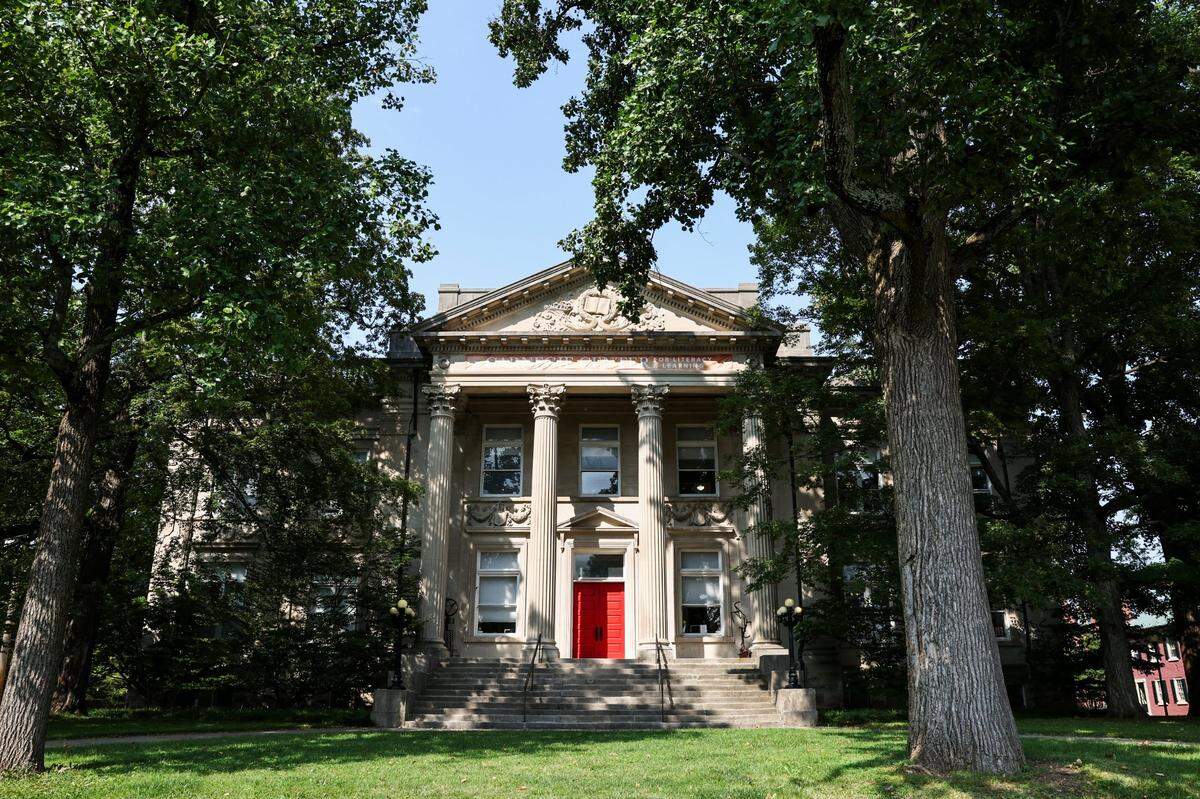
After a renovation, the building re-opened in 1992 with First Lady Barbara Bush as the guest speaker.
“This center is going to reach out to everyone — families, workers, students, and teachers,” she said. “And that’s what communities throughout the nation need to learn to do.”
The center now serves as a home to tutoring, writing classes, events, poetry slams and more. Every year, the center hosts Carnegie Classics, a fundraiser centered around a classic piece of literature — this year’s theme is The Wizard of Oz.
The center is also home to the Kentucky Writers’ Hall of Fame, featuring some of the best writers in the country who came from Kentucky — from Sue Grafton and Hunter S. Thompson to bell hooks and Frank X Walker.
Have a question or story idea related to Lexington’s 250-year history? Let us know at 250LexKy@gmail.com.