
Lexington’s camel statue served as a celebration of highways, marker for travelers
Editor’s Note: As Lexington celebrates the 250th anniversary of its founding, the Herald-Leader and kentucky.com each day throughout 2025 will share interesting facts about our hometown. Compiled by Liz Carey, all are notable moments in the city’s history — some funny, some sad, others heartbreaking or celebratory, and some just downright strange.
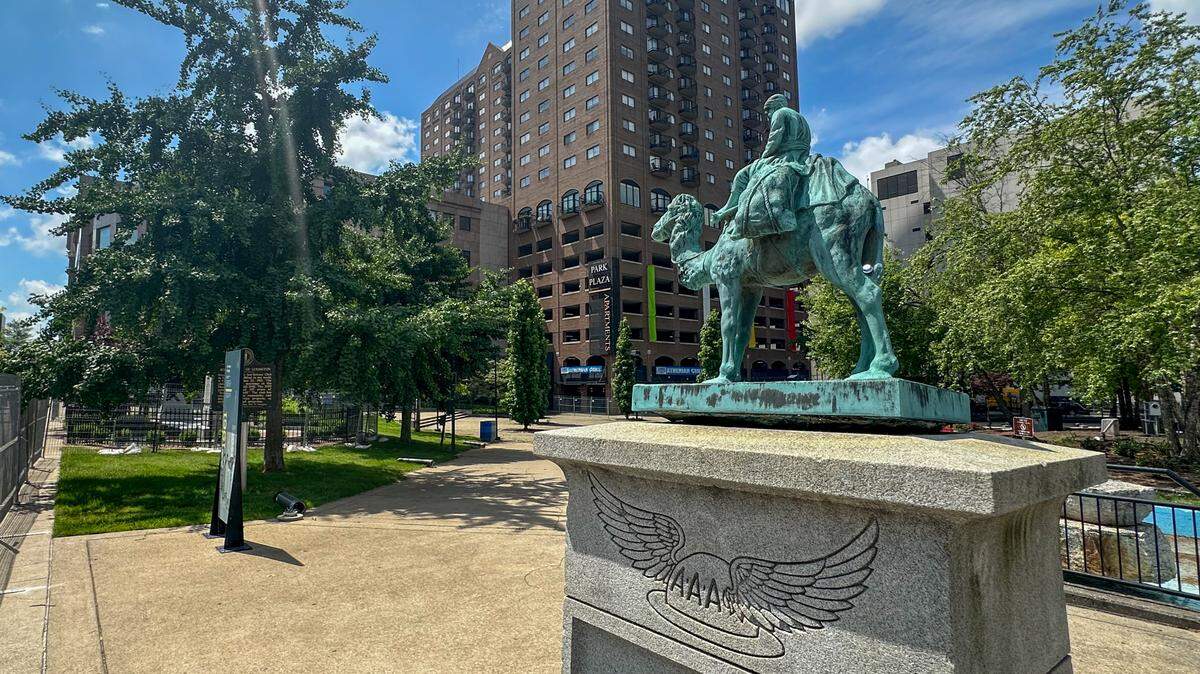
Walking down Main Street in Lexington you might miss it, but if you see it, you’ll probably want to know — why is there a statue of a camel near Phoenix Park?
The truth of the matter is that it’s been here for nearly a century to commemorate highways.
Walking down Main Street from The Kentucky Theater to Triangle Park, you pass by Phoenix Park. The statue is at the southeast corner. It’s not huge, but it’s right there on the corner of Main Street and Limestone.
The camel itself is pretty tiny, as far as statues go.
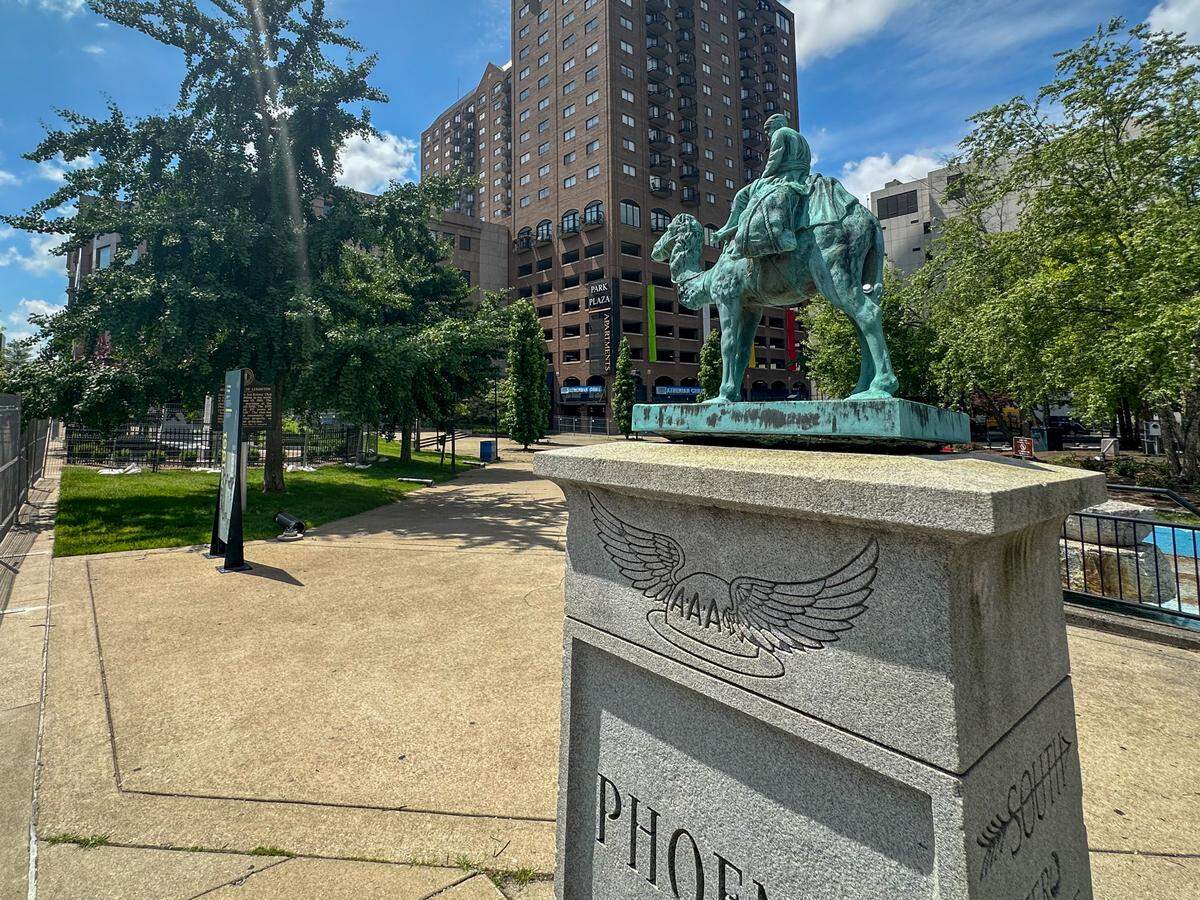
It’s called the Zero Milestone Camel, and it was a gift to the Lexington Automobile Club from William Ingram, a local business executive. Ingram gave the statue to the club on Nov. 20, 1926, to commemorate the city getting U.S. Highways 25 and 60 to run through downtown.
“I used the concept of Egyptian architecture, one of the oldest types,” Ingram told a Herald-Leader reporter in 1951.
The symbol of the American Automobile Association — with wings symbolizing flight — is chiseled into the top of the monolith upon which the camel sits. The statute was modeled after the Zero Milestone in Washington, D.C., and signifies the location where the two highways originate.
Ingram, who had owned the Lexington Granite Co., had the base made from South Carolinian granite.
“That will resist the elements of the weather for thousands of years. The lines are Egyptian in keeping with the ancient yet modern milestone,” Ingram said according to previous Herald-Leader reporting.
The camel was chosen, he said, because it is one of the oldest methods of long-distance transportation. Cast in bronze in Cincinnati, the camel is facing east and represents travelers. Originally, it served as a marker for where all roads leading out of Lexington began.
“Somebody would tell you they’re 2.5 miles out of one of the major entranceways in and out of town,” Bettie Kerr, Lexington director of historical preservation, told the Herald-Leader. “When they say, ‘I’m two miles out,’ the reference was that they were two miles from the mile marker.”
One side of the marker was the “starting point from Lexington on all highways.” The camel had previously been in front of the Union Station train station on East Main. When the train station closed and the building was demolished, the statue was moved to the old Fayette County Courthouse lawn.
In the early 1990s, it was moved to its current location.
Like so many others in Lexington, Ingram would go on to catch horse fever and begin breeding, raising, training and racing horses. His best horse, a gray colt named Scotland, won four consecutive campaigns from 1958 to 1961.
So, why didn’t Ingram put up a statue of a horse instead?
Because he’d already built and dedicated the camel by the time he fell in love with horses.
Have a question or story idea related to Lexington’s 250-year history? Let us know at 250LexKy@gmail.com.