
In 1973, UK played — and won — the first game in Commonwealth Stadium
Editor’s Note: As Lexington celebrates the 250th anniversary of its founding, the Herald-Leader and kentucky.com each day throughout 2025 will share interesting facts about our hometown. Compiled by Liz Carey, all are notable moments in the city’s history — some funny, some sad, others heartbreaking or celebratory, and some just downright strange.
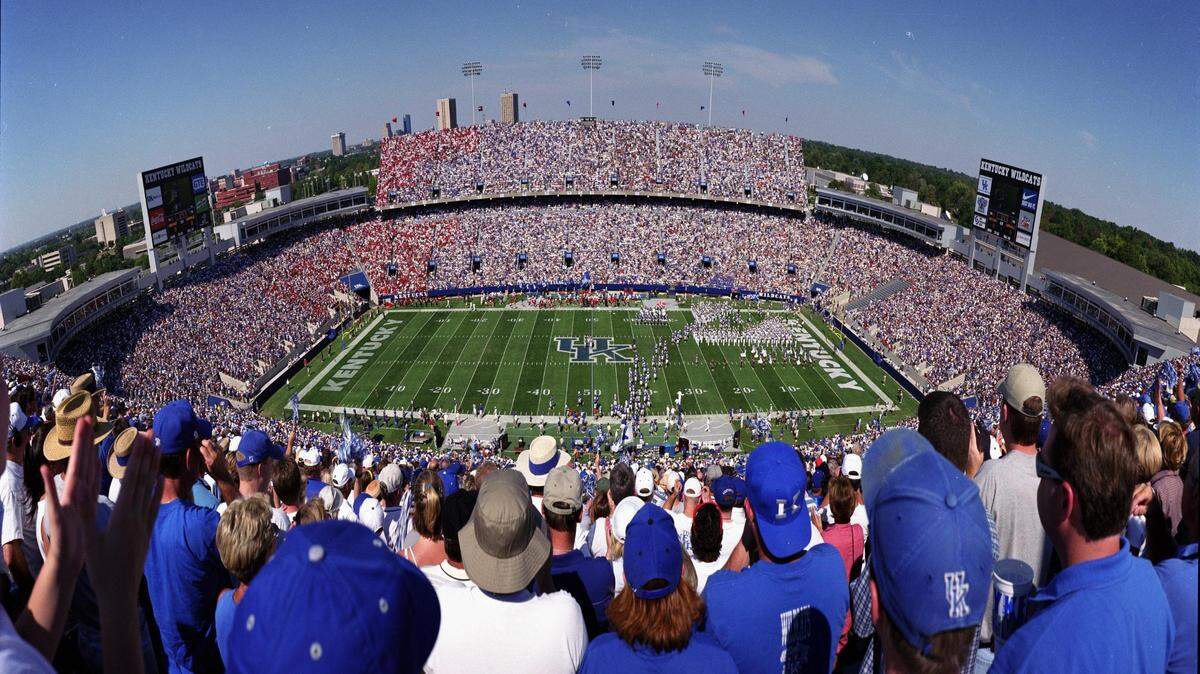
It was an appropriate win to open the University of Kentucky’s new football stadium.
On Sept. 15, 1973, the Wildcats met the Virginia Tech Hokies and played the first game in Commonwealth Stadium.
It wasn’t the first time the teams had met. For nearly 50 years, the Wildcats had played at Stoll Field/McLean Stadium across from Memorial Coliseum. But at the opening game of the 1973 season, it was a new day in Kentucky football, with a new stadium and a new coach, Fran Curci.
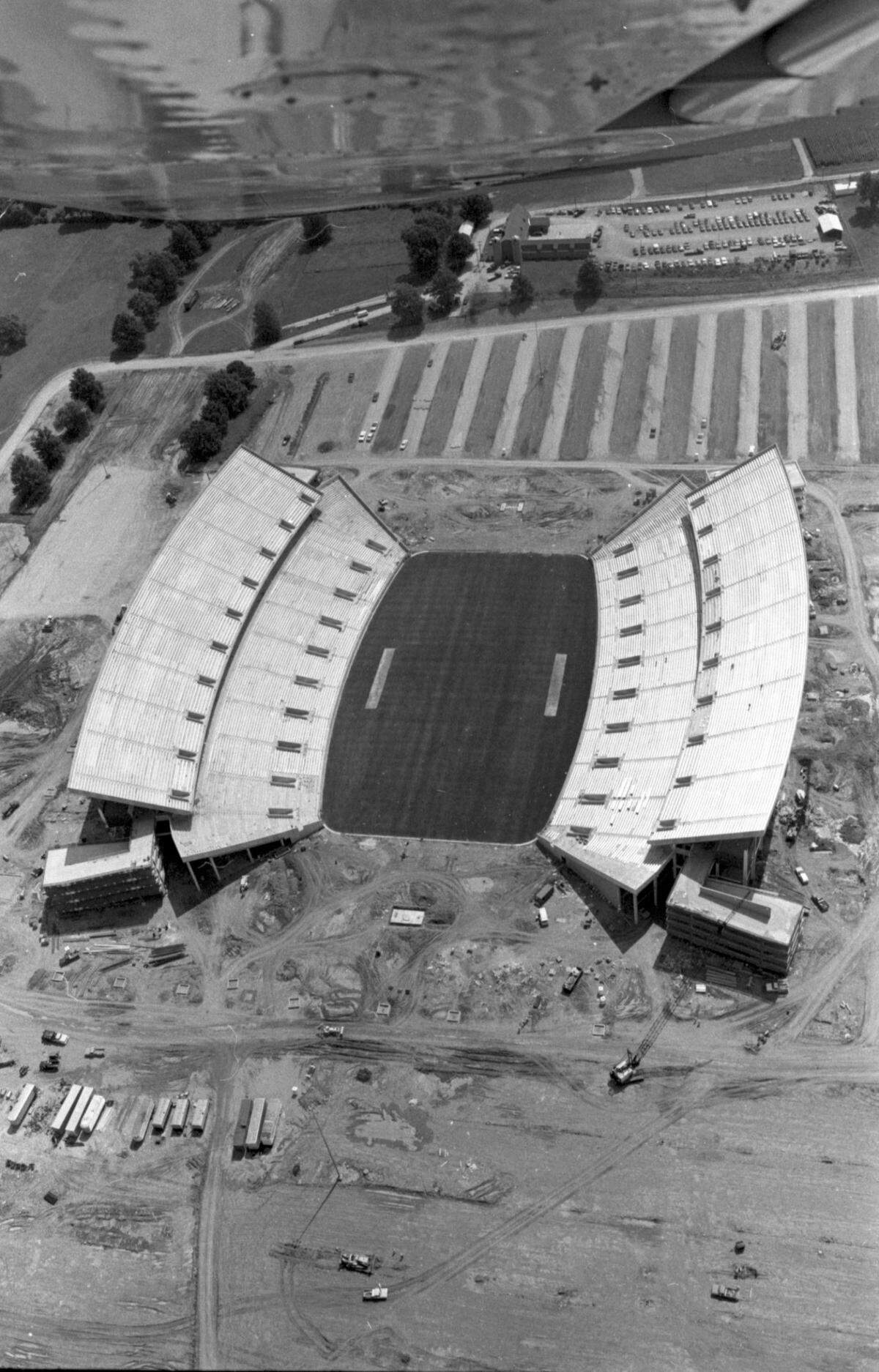
Built for $12 million (about $87.5 million in 2025), the stadium originally had a capacity of 57,800. The facility and parking lots sat on an 86-acre plot that once was part of the UK Experimental Station Farm Grounds.
Despite not being 100% complete — workers were cleaning off debris left by construction workers right up until fans arrived — and long lines of traffic to get in, the stadium was met with admiration from fans.
“This stadium looks awful good,” Jim Rees told Lexington Herald reporters on opening day.
“Yeah, it’s real pretty,” his friend chimed in. “Now if they can just get a basketball coliseum big enough so we don’t have to buy scalped tickets …”
Rees and his family traveled from Racine, Ohio, to see the game with friends from Maysville.
“This should really help Kentucky with its recruiting,” Rees’ friend Raymond Lambert said.
That day, UK defeated Virginia Tech 31-26, with quarterback Ernie Lewis running for two touchdowns and throwing another to win the game.
UK president Otis Singletary said opening the stadium was a good start to something new.
“I’m very pleased the people have understood that the stadium is not completely ready. I’ve done all I can do. It’s up to Coach Curci now,” Singletary said.
Curci and his Wildcats responded with a victory, dedicating the game ball to the stadium and the people of Kentucky because “they’ve supported us,” as the new coach said.
“I hope this is the start of something,” Curci said.
Since then, the stadium has undergone many changes, including:
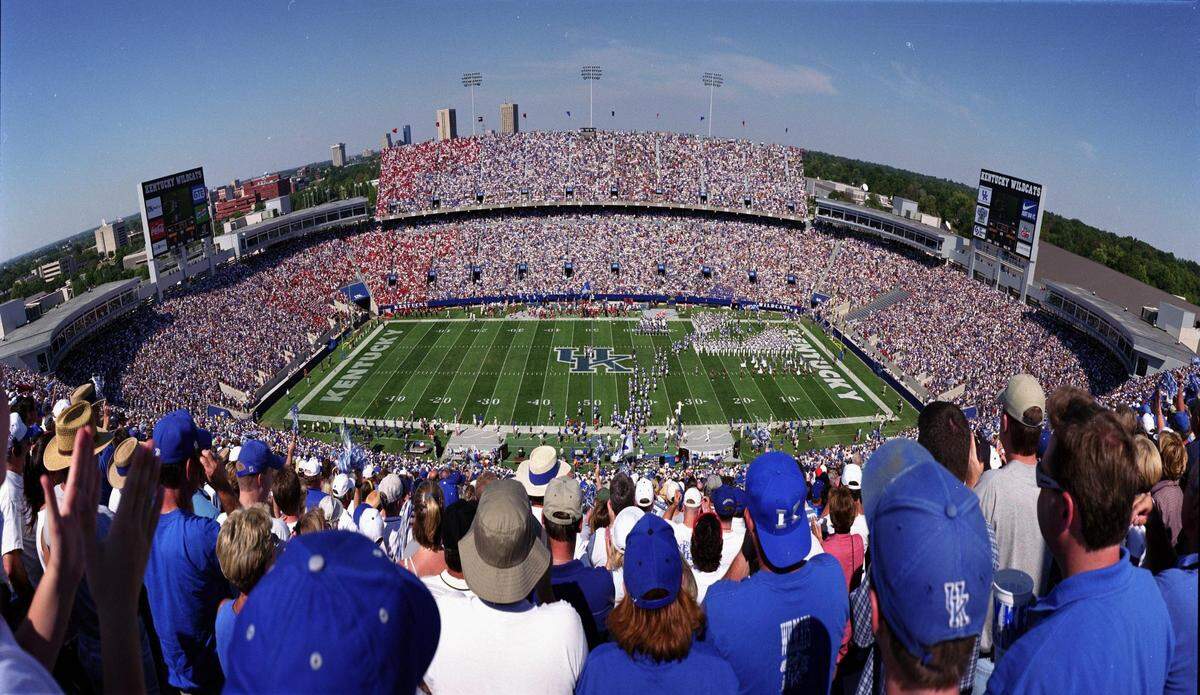
- The enclosure of both ends in 1999 to add 40 suites, and bring the total number of seats to 67,606.
- The switch to Bermuda grass in 2005.
- An audio and video upgrade, including two LED video boards in 2011 that made the display the 20th largest in the country.
- A $126 million renovation in 2015 that included a new press box, loge box seats, club seats, recruiting room, suites, concourses, bathrooms, lights and exterior façade.
In 2017, the stadium was renamed Kroger Field.
UK averages around 56,000 fans per game. More than 12 million spectators have watched a UK football game at Kroger Field — roughly the equivalent of three times the population of the state of Kentucky.
On Oct. 3, 1987, Jack Crowe became the fifth millionth person to attend a game at Kroger Field. The 10 million person walked into the stadium in 2002 during the Cats season opener against Texas-El Paso.
Have a question or story idea related to Lexington’s 250-year history? Let us know at 250LexKy@gmail.com.