
Greg Page helped desegregate SEC football, but died before he got to play for UK
Editor’s Note: As Lexington celebrates the 250th anniversary of its founding, the Herald-Leader and kentucky.com each day throughout 2025 will share interesting facts about our hometown. Compiled by Liz Carey, all are notable moments in the city’s history — some funny, some sad, others heartbreaking or celebratory, and some just downright strange.
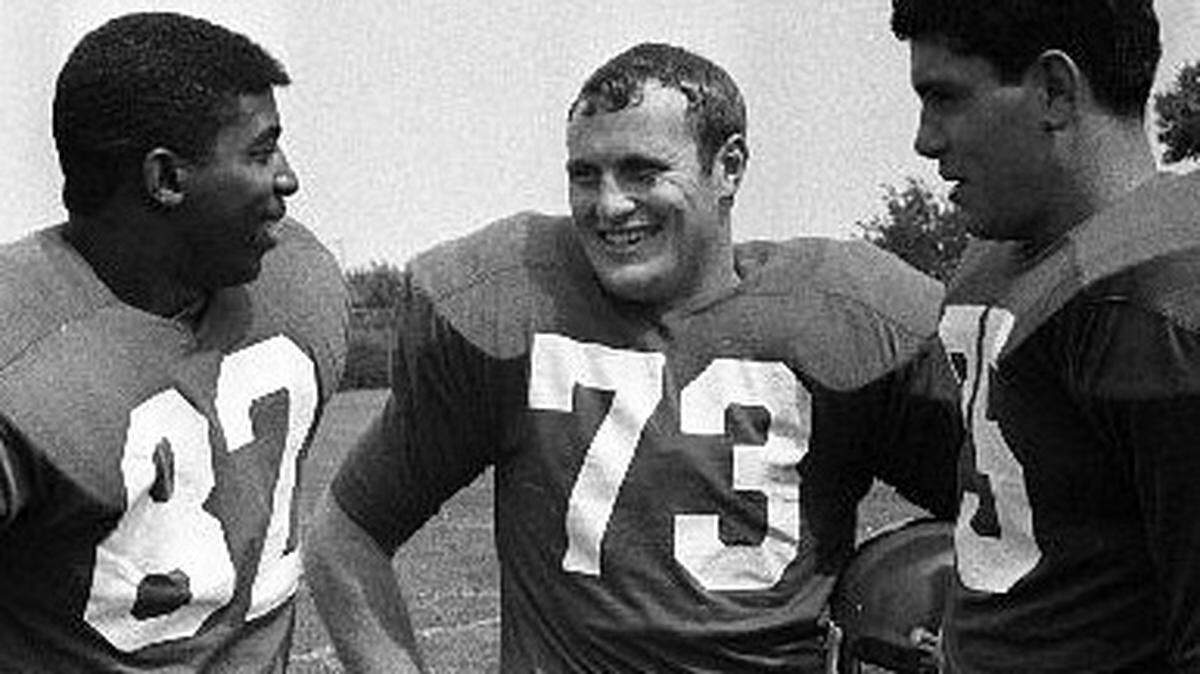
Greg Page came to the University of Kentucky to make history with the Wildcats, but died before he played in a game.
Page, along with Nate Northington, was one of the first two Black football players to sign with a Southeastern Conference school. The two were on their way to desegregating SEC football.
But before he could take the field, Page suffered a neck injury during practice and died six weeks later.
Originally from Bell County, Page was a standout athlete at Middleboro High School, where he led his team to the 1965 2A Kentucky Finals and was named to the 1965 All-State Team. During his junior year, Page received a scholarship to play football at UK.
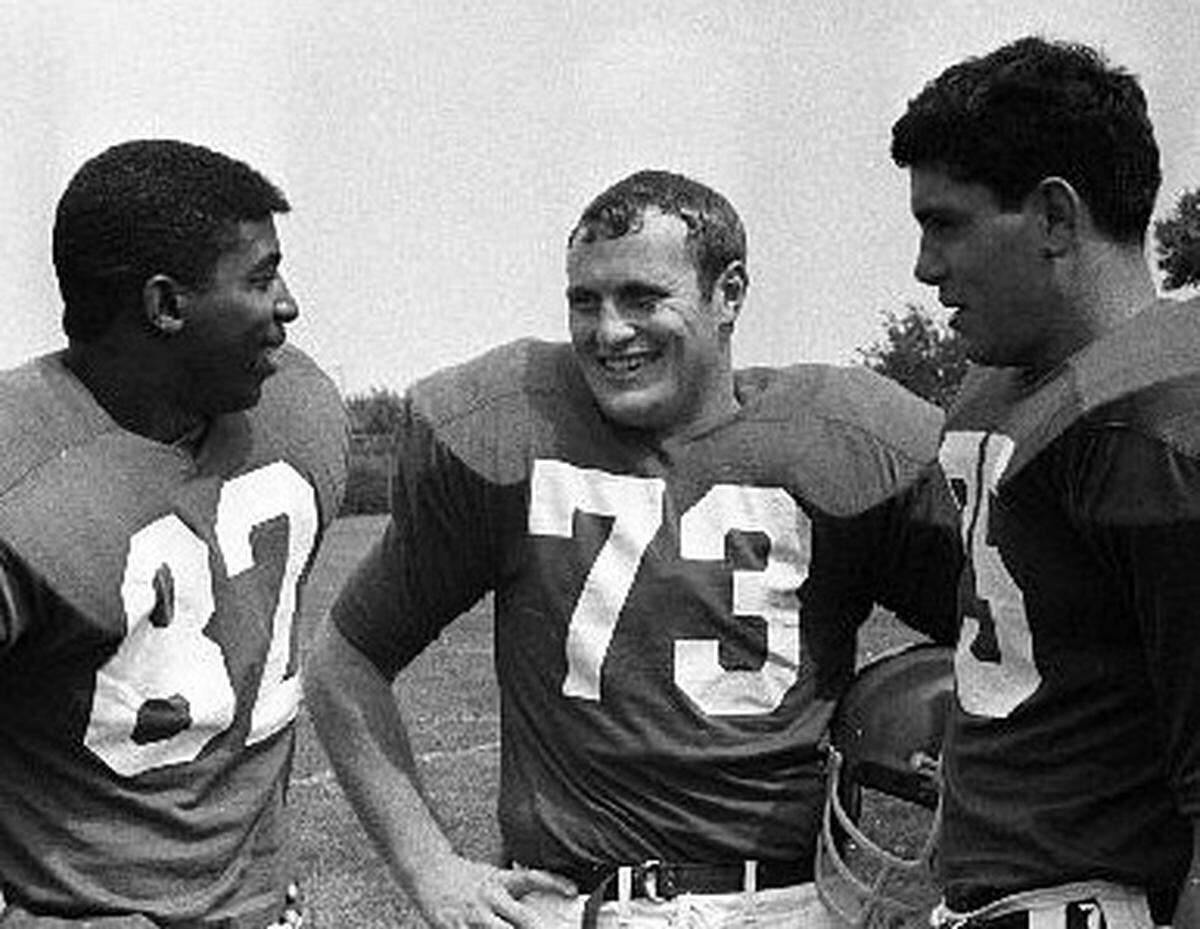
Both Page and Northington were recruited by then-Kentucky Gov. Edward Breathitt and UK President John Oswald, and they joined the team as freshmen during the 1966 season, though freshmen weren’t allowed to play in SEC games.
On Aug. 22, 1967, Page was injured during a practice during his sophomore season. According to the Lexington Leader, Page didn’t get up after a pileup on the field.
He was given mouth-to-mouth resuscitation and taken to the emergency room. Once there, Page was given a tracheotomy to make breathing easier.
Doctors said Page was paralyzed from the neck down. He died 38 days later. Northington was the only player from the team permitted to see him in the hospital.
Northington would go on to desegregate SEC varsity football by playing in the Sept. 20, 1967, UK game against the University of Mississippi.
Northington would later transfer to Western Kentucky University. Before he left, he met with UK’s two Black freshmen — Wilbur Hackett and Houston Hogg — to explain his decision to leave, as well as share his encouragement for them to stay and finish the work he and Page had begun.
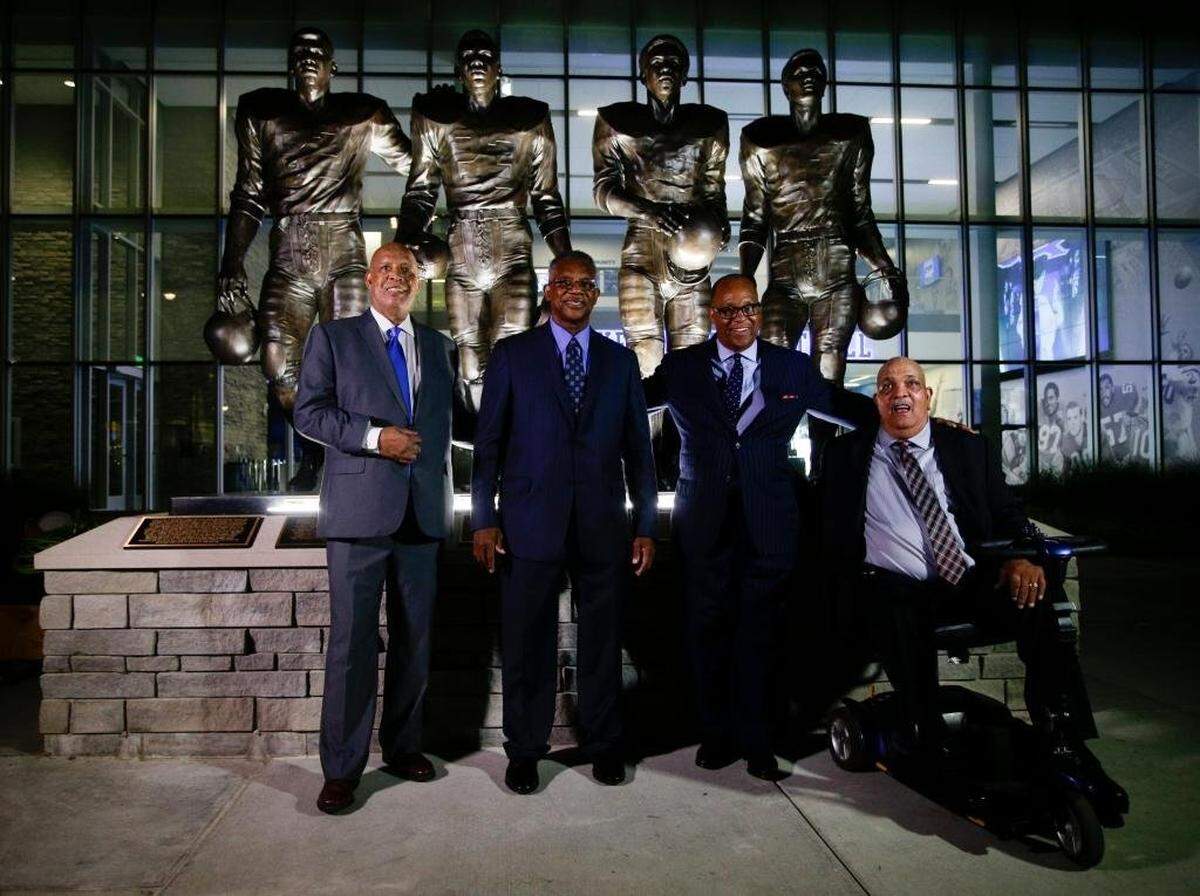
Page, Northington, Hogg and Hackett were known as the Valiant Four — all Kentucky-born players who desegregated SEC football — and a statue of them stands, helmets in hand, near Gate 12 of Kroger Field. Page is second from the left, Northington is on the far left with his right hand on Page’s shoulder.
Almost immediately after his death, a scholarship fund was created to help a student from any high school in Bell County who attends UK. In February 1968, a benefit basketball game was played in the Middlesboro gym between the UK and Tennessee freshmen basketball teams.
“The place was packed, with 3,000 to 4,000 fans and proceeds went to the scholarship,” Dana Greene, a Page family friend who grew up across the street from the Page family, said in an interview with UK Alumni blog News From the Blue. “This scholarship has obviously involved UK from a lot of levels from the beginning. An important part of the original funding came from a UK athletic event. I was there; it was a moving event.”
In 2020, the scholarship was endowed and management of it turned over to the university, which will enable it to serve other students in Bell County for generations to come, officials said.
Have a question or story idea related to Lexington’s 250-year history? Let us know at 250LexKy@gmail.com.