
Lexington native, UK graduate won a 1976 Nobel Prize in chemistry
Editor’s Note: As Lexington celebrates the 250th anniversary of its founding, the Herald-Leader and kentucky.com each day throughout 2025 will share interesting facts about our hometown. Compiled by Liz Carey, all are notable moments in the city’s history — some funny, some sad, others heartbreaking or celebratory, and some just downright strange.
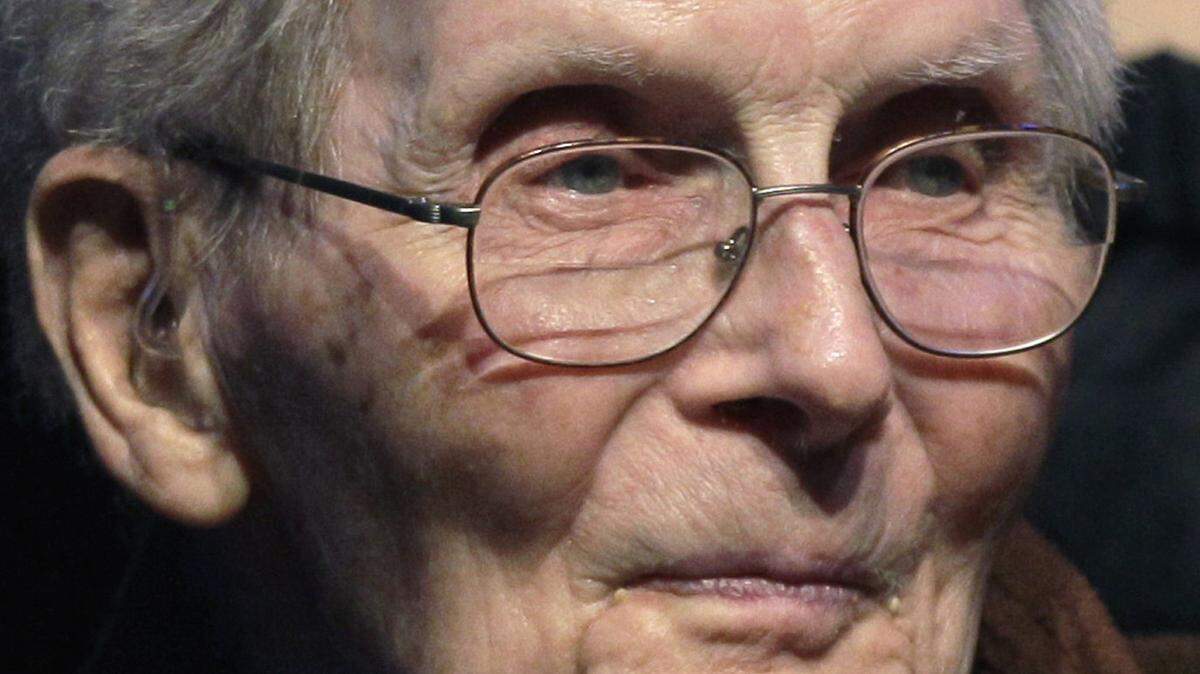
Lexingtonian William Lipscomb was awarded the Nobel Prize in chemistry for his work that helped chemists better understand how atoms bind together within molecules.
Lipscomb was born in Cleveland, Ohio on Dec. 9, 1919. A year later, his family moved to Lexington, where he received his first chemistry set at age 11. He lived here until 1941, when he received his bachelor’s degree in chemistry from the University of Kentucky. He attended college on a music scholarship and played clarinet in the UK band.
Lipscomb went on to earn his doctorate in chemistry from the California Institute of Technology in 1946.
Lipscomb taught at the University of Minnesota before moving to Harvard University, where he taught until 1990. He worked in three main areas: nuclear magnetic resonance and the chemical shift, boron chemistry and the nature of the chemical bond, and large biochemical molecules.
His students often called him “The Colonel,” a nod to his Kentucky roots and an informal way to bond with his students, a friend told the Associated Press after Lipscomb’s death. Lipscomb was made a Kentucky Colonel in 1973.
Beginning in the 1950s, Lipscomb used x-rays to map the structure of chemical compounds made from boron and hydrogen to study their structure. Through his work and using quantum mechanical calculations, Lipscomb was able to predict how boranes — a chemical compound made of boron and hydrogen atoms — would react with other compounds that helped chemists understand how atoms connect within molecules.
He was awarded the Nobel Prize in Chemistry in 1976.
Later, Lipscomb studied the atomic structure of proteins, and how enzymes work. He lived in Cambridge, Massachusetts, until his death in 2011 from pneumonia.
Have a question or story idea related to Lexington’s 250-year history? Let us know at 250LexKy@gmail.com.