
What can be done to fix Lexington’s traffic? Here’s what the mayoral candidates say.
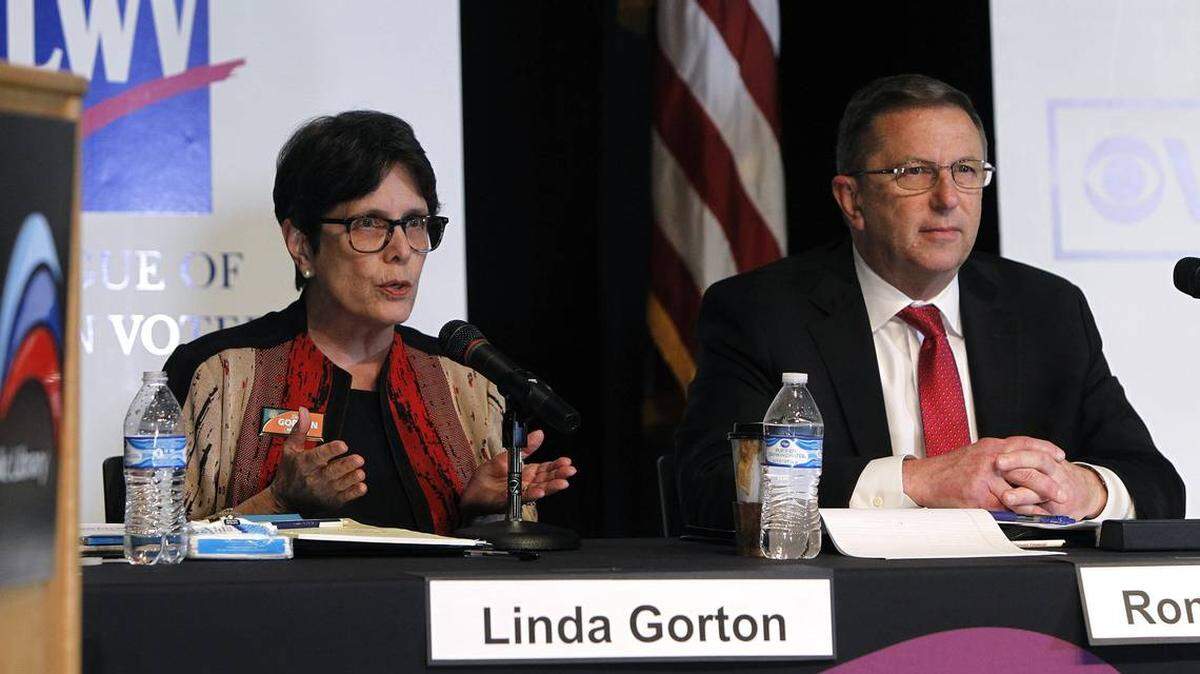
Lexington mayoral candidate Ronnie Bastin promised decisive action Monday to fix Lexington’s traffic problems.
If elected, Bastin told a group of hospitality professionals he would demand improvements from the city’s traffic engineers on his first day in office.
“We will figure out a plan to get this traffic moving better than we have. And if we don’t, then we will bring someone in who can,” Bastin said. “Other folks have found other solutions that we have not been interested in. It’s not acceptable.”
Linda Gorton, Bastin’s opponent in the November general election, gave the group a more nuanced answer, saying Lexington needs to explore newer technologies that can help manage its traffic signal system.
“There are now intelligent traffic systems out there,” Gorton said. “They gauge the traffic, the number of cars, the number of pedestrians, and they can change the light patterns.”
Those systems, though, will cost money, she warned. “We will have to make sure that they are monetarily and fiscally responsible investments,” said Gorton, a former vice mayor and council member.
Bastin, a former Lexington police chief and public safety commissioner, responded by saying the city already has some of the smart technology for traffic lights that Gorton referenced but could not afford to pay for the software that collects data from them. He said many of the city’s traffic signals have not been reprogrammed for years.
The question about traffic came up during a mayoral candidate forum sponsored by the Bluegrass Hospitality Association, a professional organization for hotel, restaurant and other tourism professionals.
Gorton and Bastin have already spoken at four candidate forums and have nearly a dozen more scheduled before the Nov. 6 election.
Gorton finished first in the seven-way, nonpartisian mayoral primary on May 22. She received 40 percent of the vote, compared to 25 percent for Bastin. He leads in fundaraising, collecting nearly three times what Gorton has since the May primary.
As they have throughout the campaign, Gorton and Bastin agreed on many things during Monday’s forum.
Both think the city should keep its current growth boundary and focus on infill and development. They also said fighting substance abuse is a top priority.
Bastin wants to appoint a “czar” who will help oversee drug enforcement efforts and push for more drug treatment beds in the city. Gorton said she would put together a comprehensive group of alcohol and drug counselors, nonprofits, first responders, and researchers at the University of Kentucky to develop evidence-based guidelines for the city’s response to the problem.
Gorton and Bastin differ on how to deal with the city’s homeless population. Some members of the hospitality group said aggressive panhandlers have kept people away from their businesses or restaurants downtown.
Bastin said he would explore ordinances or policies that prohibit certain behaviors in parks and other public spaces, giving police another tool to help remove people who act aggressively or threaten others. He cautioned, though, that there could be legal challenges to such efforts.
“We have to deal with aggressive panhandlers and we have to focus on behaviors that threaten other people,” Bastin said.
City ordinances that discriminate based on housing status — such as homelessness — have been thrown out by the courts as discriminatory. Most recently, the Kentucky Supreme Court ruled in February 2017 that a Lexington ordinance banning panhandling was unconstitutional because it ran afoul of the First Amendment.
Gorton said she was on the council when the city started the Office of Homelessness Prevention and Intervention, which has started several programs to address homelessness. Some of those programs, such as Housing First, which gives someone a place to live without requiring them to first stay in a shelter, have shown promise, she said.
“We have several places that we need to focus on, including mental health and housing,” Gorton said.