Lexington history mystery: Bone lice combs, 1863 coin and more found under Vine Street
The corner of Vine Street and South Limestone has been the center of a lot of construction over the past several decades — from utility work, road repaving projects to the construction of new buildings.
That’s why Pace Contracting crews working on the new Town Branch Commons trail along Vine Street were surprised when they hit an intact likely centuries-old brick wall under the now torn apart sidewalk in front of the Lexington-Fayette Urban County Government’s Phoenix building just a few days before Christmas. The ground in that area had been disturbed repeatedly, anything of historical significance should have long been destroyed.
Pace crews summoned Jason Flay, president of Paris-based Acheulean Consulting, the Town Branch Commons trail project’s archaeologist.
Flay and his team were still busy sorting, identifying and cataloging thousands of objects — stone tools, bones, china, glass — found during construction of the Town Branch trail in Triangle Park in early November.
At the corner of South Limestone and Vine Street, Flay and his crews dug down and were met with a mystery. There was a brick wall that further investigation showed faced Limestone. But along Vine Street was another wall made of limestone.
Maps of downtown Lexington from the late 19th century helped solve part of that riddle, Flay said.
In 1857, a map of the site showed a several-story building and what appears to be several additions added to it. By 1871, there are dramatic changes in the area, including the building of a railroad depot.
It’s likely the brick walls — which in some places also had limestone underneath — were the original building. The full limestone walls were likely the additions that faced Vine Street.
Home, restaurant, tavern or both?
Inside those walls, Flay’s crew found an assortment of intact and partially intact items:
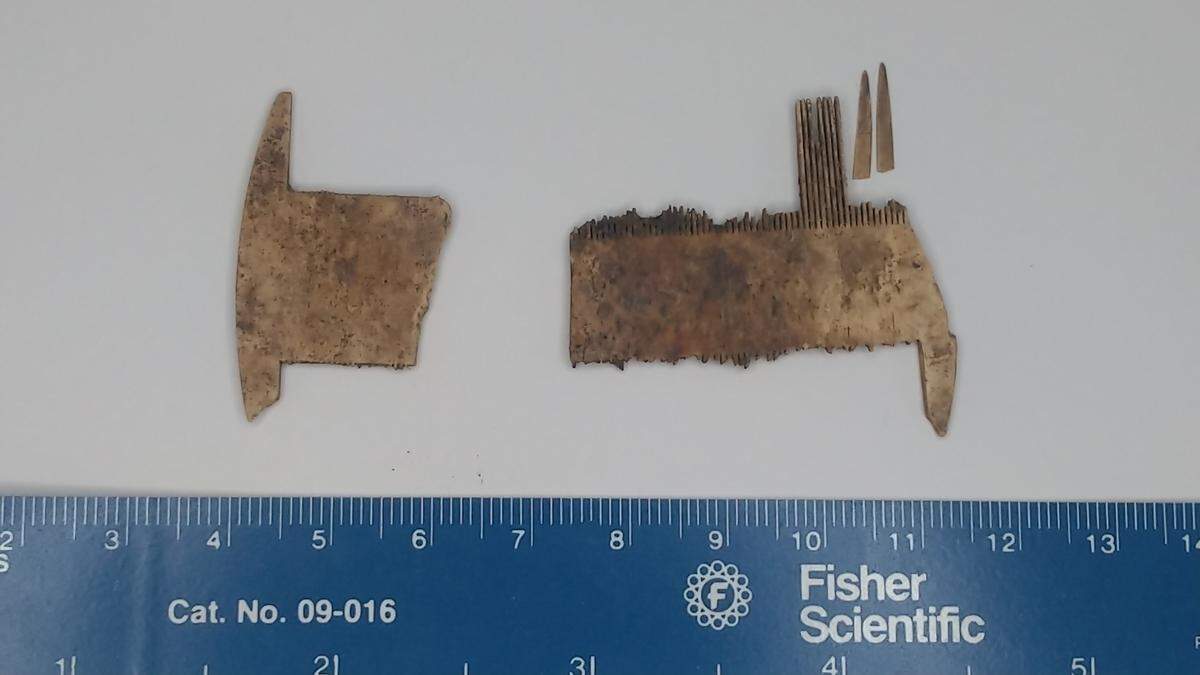
- Stone combs that were likely used as lice nit picks
- Flat metal buttons that were used in the early 1800s
- “Yellow ware” a type of kitchenware used in the mid-1800s
- An Indian head penny from 1863
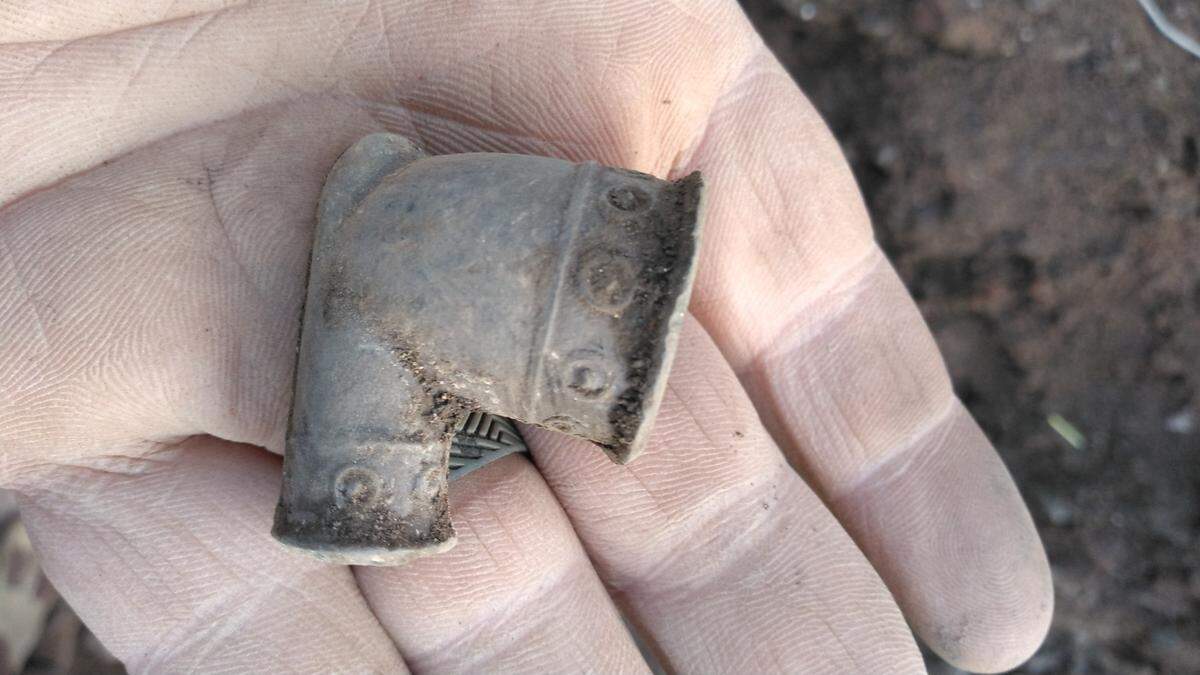
- An intact clay pipe bowl, likely Welsh or Scottish, based on its decorations
Those artifacts indicate the building was likely a middle or working-class home.
But Flay’s team found more.
Like the curious case of the intact, decorated ceramic chicken head.
“It’s my favorite artifact from the site,” Flay said.
That decorated chicken head was likely part of a serving pitcher or other ornate serving ware. Decorated ceramic serving ware was not typically found in working-class homes in the 1800s.
Flay’s team also found a bone or ivory domino and copper chains, also not typical for homes during that time period. They also found intact ginger beer bottles.
“It could be that this was at one time a restaurant or a tavern,” Flay said. That would explain both the high-end and common kitchenware found on the site. Or it was a house at one time and later switched to a commercial property.
The building was demolished by the late 1870s, maps of the city show. The Palace Hotel, which was later known as the Ritz, was likely built on top of the remains of the building. The Ritz was a tongue-in-cheek moniker. It was actually the cheaper, poorer cousin to the upscale Phoenix Hotel, which was located in what is now Phoenix Park, Flay said. Both hotels served travelers of the nearby railroad depot, which was on Water Street. It’s also possible the building was razed to make room for the railroad depot.
“The demolition of the building and the building of the Palace Hotel on top actually preserved the site,” Flay said.
Town Branch Commons, a rare opportunity to unearth history
The $39.5 million 2-mile section of the Town Branch Commons trail through downtown was paid for in part using federal funding. Federal funding requires an archaeologist be on site. Transportation and other major construction projects with no federal funding do not have to employ archaeologists. On those jobs, if contractors find a foundation from the 1800s or stoneware from the 1700s, they can demolish it.
The construction of the Town Branch Commons — from Central Bank Center to Midland Avenue and Third Street — is a unique opportunity to uncover and study the city’s early days and its earliest settlers, Flay said. Construction of the trail — which will include bike and pedestrian lanes —will continue throughout 2021 into 2022.
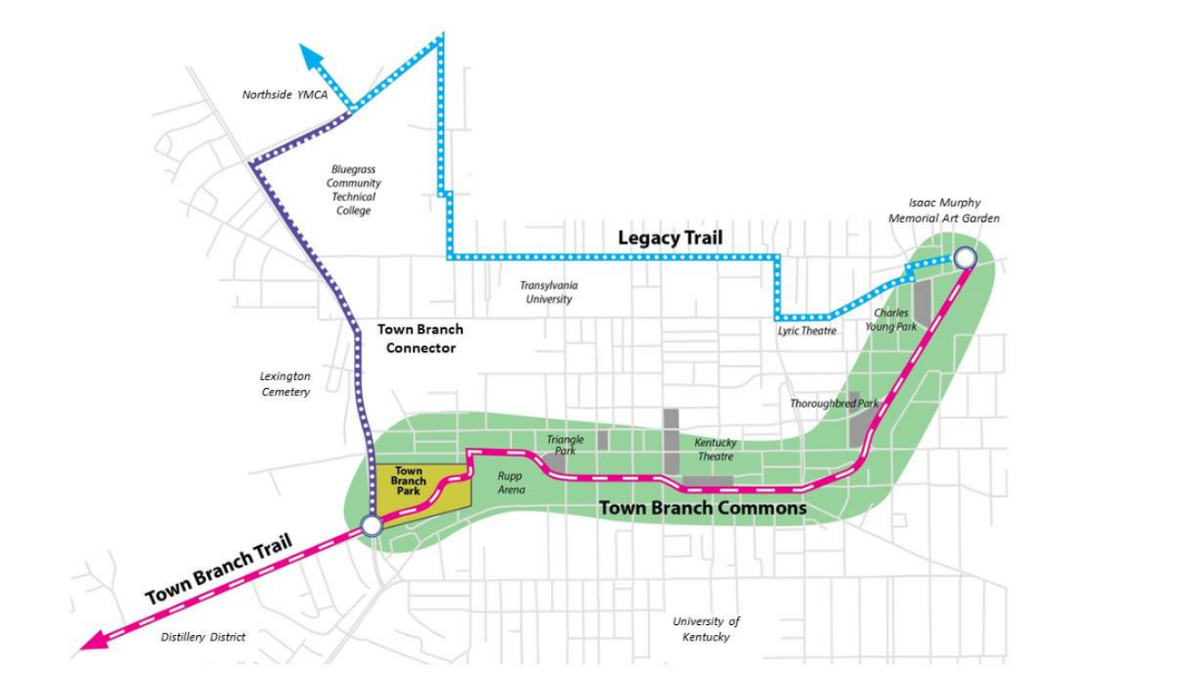
Vine Street roughly follows the path of the now buried Town Branch, where Lexington’s earliest white settlers lived. The dig at Triangle Park unearthed thousands and thousands of archaeological finds because it is where Lexington began in 1775. The first stockade or fort in Lexington was believed to be across the street near the intersection of Broadway and Vine streets.
It will take months to clean, identify and date everything found at the two sites, Flay said.
Flay will have to call in specialists who can date some of the material found. For example, he will need an archaeologist specializing in bones to examine and identify all the animal bones found.
“It’s not about what’s there; it’s about what we don’t expect to find,” Flay said. At Triangle Park, for example, they found deer bones and beaver skeletons.
“In the late 1770s, Lexington was the very edge of the frontier,” Flay said. “They were living off the land, and they were still relying on wild game to supplement their diet.”
Flay and city officials don’t think the Vine and Limestone site will be the last archaeological dig on the project. It’s likely that as crews move up Vine Street to Main and Midland Avenue, more of Lexington’s long-buried history will be unearthed.
Where will the artifacts go?
So what happens to everything Flay has found?
State transportation officials, who manage federal transportation funding, oversee or manage archaeological finds. The city has no place to store them. Artifacts are typically sent to the Office of State Archaeology at the University of Kentucky.
Sending these archaeological finds to a warehouse is a waste, Flay said.
“These artifacts belong to the people of Lexington,” Flay said. Flay hopes if funding can be secured, small, pocket exhibits of what was found during the construction of the Town Branch Commons could eventually be added along the two-mile stretch. When completed, Town Branch Trail Commons will connect the Town Branch Trail to the Legacy Trail.
Brandi Peacher, project manager for the Town Branch Commons, said the city has not yet decided what will happen with the artifacts. There is still more than 12 months left of construction of the trial.
“I do think we will look for opportunities to share the findings with the community once the project has been completed,” Peacher said.
Flay hopes so.
“This material does not do anyone any good sitting in a dusty archive,” Flay said. “People need to see it and to realize that Lexington has a very rich history, and it’s right underneath our feet.”
This story was originally published January 6, 2021 at 1:46 PM.