As housing costs heat up, so does growth debate. What Lexington mayoral candidates say.
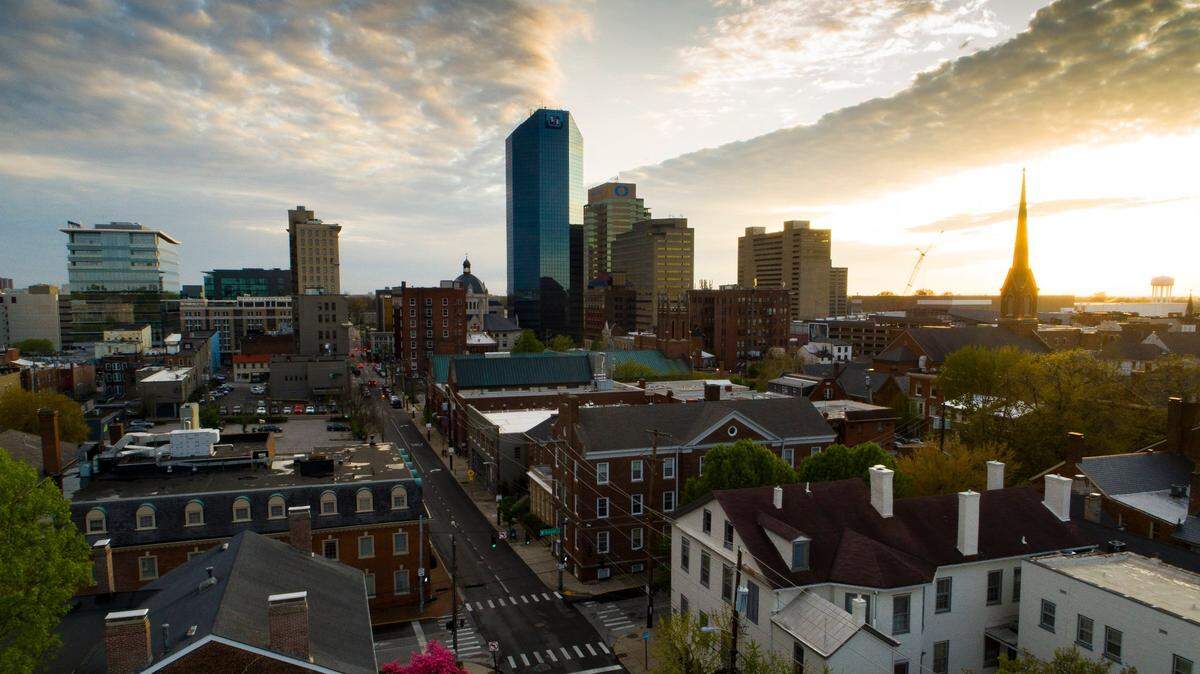
As housing costs in Lexington and Central Kentucky rise, growth and housing affordability have moved to the top of the debate in the Lexington mayor’s race.
Here’s what the candidates had to say on affordable housing, growth and the debate over expanding the city’s urban growth boundary:
Gorton: Not the time to expand urban boundary
Mayor Linda Gorton said she has invested heavily in affordable housing. She recommended and the Lexington-Fayette Urban County council later approved putting $10 million in American Rescue Plan Act funding into the city’s affordable housing fund in addition to the $2 million that was in her proposed budget for the fiscal year that begins July 1.
She also put money toward three new programs : $1 million toward a program that would allow nonprofits to fix abandonded and dilapated property and turn it into affordable housing; $3 million toward an infill and redevelopment fund that would give zero-interest loans to developers to help offset the cost of infill redevelopment and $200,000 to help people who have code violations but no money to make repairs.. The council is still debating Gorton’s budget proposal.
Gorton said it’s not time to expand the urban service area. She said there is still land available in the city’s urban service boundary.
“Nearly half of the land in the expansion area has not been developed,” Gorton said. Expanding the city’s growth boundary also does not mean more affordable housing will be built. “That didn’t happen,” Gorton said of the last expansion in 1996, which added 5,000 acres.
Plus, the city still needs to plan for an expansion. A sustainable growth study —which uses data to show how much land Lexington needs to grow — has just been approved. Vice Mayor Steve Kay has also just recently appointed a committee to look at where Lexington should expand if an expansion goes through.
“We have 200 acres of undeveloped land that will come online in July,” Gorton said, referring to 200 acres off of Georgetown Road that the University of Kentucky agreed to give the city in a land swap in 2018. Gorton said she’s not a “never expand” politician. But the city still has work to do before it expands the boundary.
“But it’s very expensive to do,” Gorton said. “We have to be very intentional about this going forward.”
Wallace: Too many people being priced out of Lexington
Candidate Adrian Wallace said the city is set to receive $121 million in American Rescue Plan Act funding but only put $10 million toward affordable housing —one of the city’s most pressing needs, he said.
“It’s too little, too late.”
Wallace, who has a development company, serves on an advisory committee for the Homeless Prevention and Intervention board. The city should put more money into that program and also better track how affordable housing money is spent.
“We need to make sure that they are truly affordable housing,” Wallace said.
The city also needs to look at land trusts and programs that help preserve lower-income housing and protect against displacement.
“We have to have private sector investment but government has to lead the way,” Wallace said.
Wallace said he has heard from many people who are open to expanding the urban service boundary. During his 2018 at-large campaign, people were opposed to expansion
“Lexington should expand its urban service boundary but we have to do it in a way that’s equitable,” Williams said. When the triggers to expand are met, both rural interests and those that want infill development should be at the table “to make sure we have a comprehensive plan with strategies in place to make sure we protect our horse farms but also protect all those that live in Lexington to make sure they can all afford to live, work and play in our city.”
Wallace said too many people are being priced out of Lexington.
“I have a family of seven,” Wallace said. “I’m afraid that we will not be able to afford Lexington in a few years.”
Kloiber: Grow, but don’t threaten farmland
Councilman David Kloiber said in addition to the $10 million in federal coronavirus relief money for affordable housing, he would also develop revenue streams that would go back into affordable housing and encourage infill development. Kloiber said he was not ready to identify those revenue streams or how those streams would work.
Kloiber, who runs his family foundation, said he would also like the city to explore areas where it could expand its growth boundary that would have minimal costs that doesn’t threaten farmland.
“Those are prime locations for the city to have growth with minimal costs,” Kloiber said, who was first elected to the council in 2020. There are areas close to Interstate 75 and Interstate 64 that would also be ripe for both economic development and housing, he said. Those interstates are not near agricultural land the city has long protected.
The 1996 expansion of more than 5,000 acres did not generate the type of growth Lexington needed at the time, he said.
“We only saw a single year of decline in property costs,” Kloiber said. “It wasn’t intentional. It could have been leveraged for so much more.”
This story was originally published May 12, 2022 at 10:29 AM.