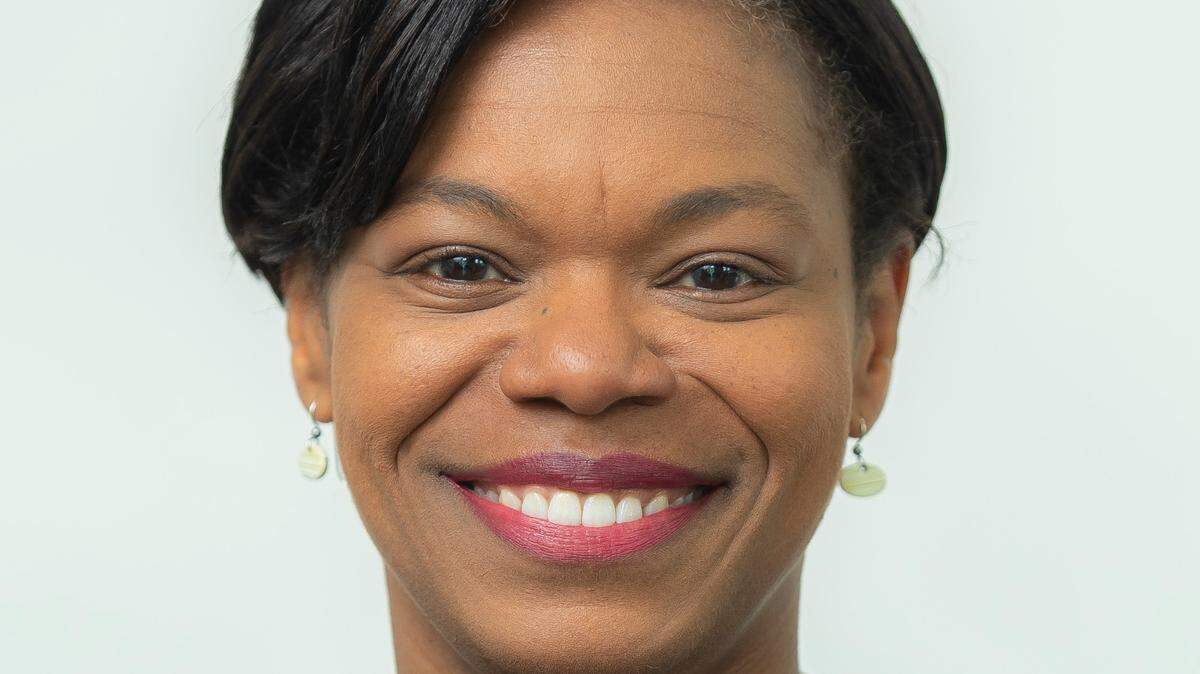
Lexington mayor’s race: Gorton’s opponents focus on her record on crime, housing
READ MORE
May 2022 Kentucky Primary Election
May 17 is approaching and Fayette County voters soon will head to the polls and choose the next people to represent them, their needs and wants. Below you’ll find stories explaining voting, explanations of the major local races and candidates, and who the Herald-Leader editorial board is endorsing in city-wide seats.
Expand All
Before Mayor Linda Gorton leaves her office at the Lexington city government center, long-time executive assistant Maureen Watson often gives her a warning: Don’t stop and talk to anyone.
As COVID-19 numbers have finally dipped and meetings and activities resume, the mayor’s calendar, which Watson manages, is packed. One recent Saturday in late April she had six events to make in eight hours. Stopping to chat, which Gorton does often, can derail her schedule.
“I love it,” Gorton said. “If government is not about people, then you’ve lost your way.”
Gorton, a registered nurse who spent 16 years on the Lexington-Fayette Urban County Council prior to being elected mayor in 2018, has served as Lexington’s top elected official during a tumultuous three and a half years in the city’s history — a once-in-a-lifetime global pandemic followed by a steep drop in city revenues, social unrest sparked weeks of marches in 2020 to protest racial injustice, rising housing costs and a spike in violent crime.
“We have met every challenge head on,” Gorton said.
The two men vying for Gorton’s job said she has not done enough to address housing, crime and poverty.
“She’s not leading in any of these areas,” said Adrian Wallace, who runs a development company and has served on various boards including the local and state NAACP.
Lexington-Fayette Urban County Councilman David Kloiber said Gorton hasn’t moved fast enough to address long-simmering problems.
“There are problems that have not been addressed or have been addressed in half measures,” Kloiber said. “Some of these problems have been around since I was a kid and I don’t want them to be around for my kids.”
Gorton said Kloiber and Wallace don’t have the experience or knowledge of government to tackle thorny, long-standing issues facing Kentucky’s second-largest city.
“If you don’t have patience, you should not be mayor,” Gorton said. “I’ve lead this city through a pandemic and tumultuous economic times. Our economy is rebounding. Our revenues are improving. We came through this with a plan to get to a better place.”
The top two vote-getters on May 17 will move on to the general election in November. The race is non-partisan. Also in the race is William Weyman, who could not be reached for comment.
Kloiber has raised more money than Gorton and Wallace, thanks largely to a hefty $275,000 personal loan to his campaign, Kentucky Registry of Election Finance reports show. Kloiber has raised $308,740 to date. He has spent the bulk of that on television advertisements. Gorton has raised $164,572 and has not loaned her campaign any money. Wallace has raised $6,960. Gorton has the most money heading into the May 17 primary with $45,179 left in her campaign kitty, according to campaign finance reports filed May 4.
Gorton: ‘I still have work to do’
An Ohio native, Gorton, 73, moved to Lexington to attend the University of Kentucky to get a degree in nursing. She met her husband, Charlie, a Lexington native, while at UK. The two married. They spent the next several years after graduation moving from place to place including Germany and Korea for Charlie Gorton’s job in the U.S. Army.
The Gortons returned to Lexington after Charlie Gorton retired and joined the U.S. Army Reserve. Linda Gorton worked as a registered nurse and also served in various community organizations including the Fayette County Public Schools Equity Council, the Glendover Elementary school PTA.
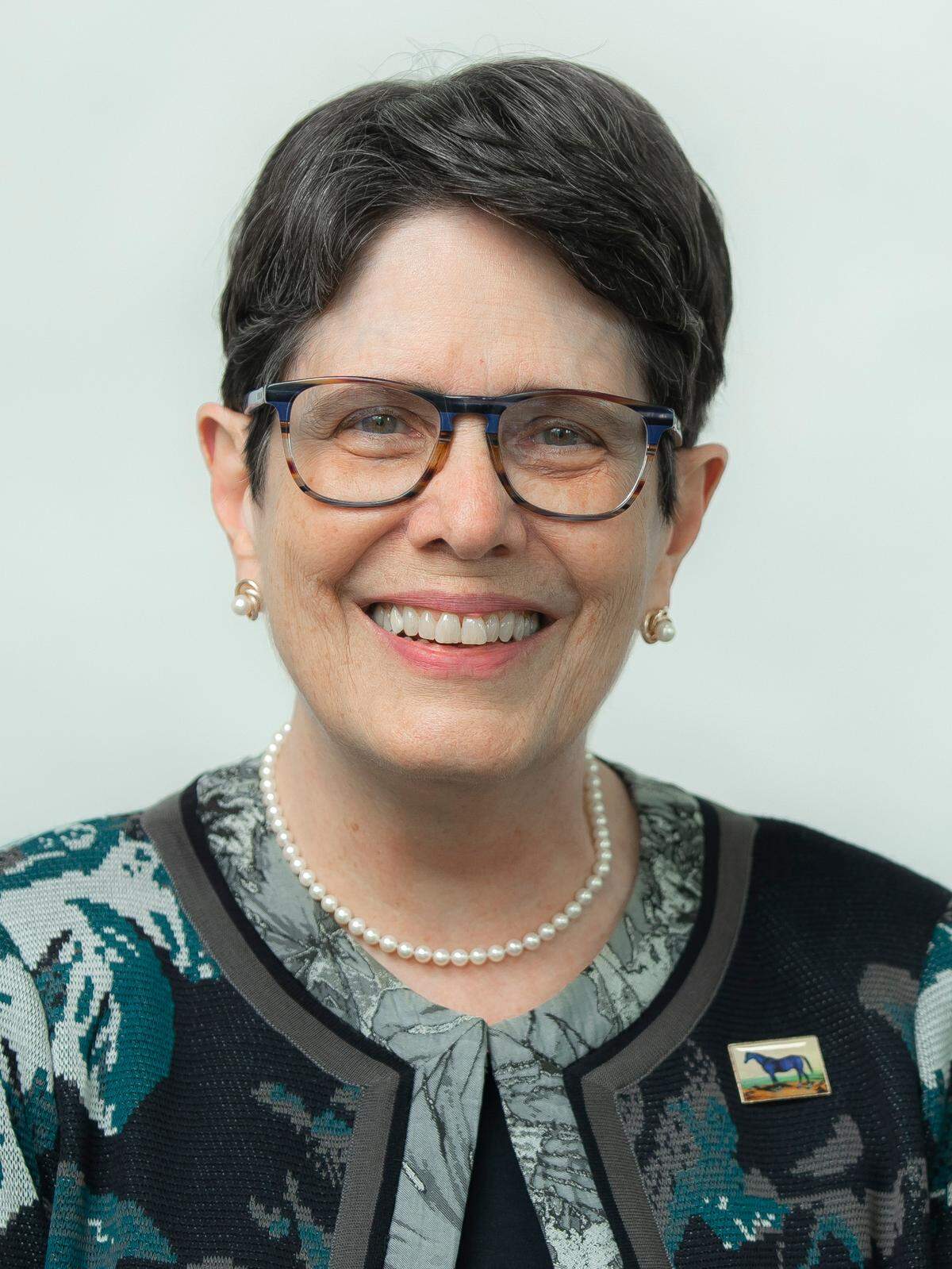
She was first elected to council in 1999 and served for 16 years, the last four as vice mayor. She stepped down in 2014 as the city’s longest-serving council member. She then ran successfully for mayor in 2018, beating challenger Ronnie Bastin, a former police chief, earning 63 percent of the vote. She has two children and five grandchildren.
“This has been a great fit for me and I still have work to do,” Gorton said of Lexington’s top job.
Throughout the pandemic and the economic turmoil that followed, Gorton said she has led with calm, followed science and steered the city back to economic health. Unemployment, which was at a record 14 percent in April 2020, is now down to 3.6 percent in March, below pre-pandemic levels.
City revenues are up. The city had a $28.1 surplus last fiscal year and is on track to have surpluses this fiscal year, which closes June 30.
The city also put millions of federal coronavirus relief money and city money into eviction prevention and housing programs, averting a would-be housing crisis during the worst months of the coronavirus pandemic, Gorton said. The council also gave one-time grants or loans to hundreds of Fayette County businesses that were struggling during the pandemic with more than half of those grants or loans going to minority-owned businesses, she said.
During the summer of 2020, racial justice protesters marched on Lexington streets demanding more police accountability in the wake of the police killings of George Floyd in Minneapolis and Breonna Taylor in Louisville.
In response, Gorton set up a Commission on Racial Justice and Equality that issued 54 recommendations in October 2020. Some of those recommendations included adding civilians to an internal police disciplinary board, creating a separate division for housing, making sure all police officers had body-worn cameras.
Gorton said those recommendations have been implemented. She created a full-time position to implement other recommendations of the task force that are more complex. The commission is now permanent with the goal of holding the city accountable for the group’s original recommendations and to address other inequalities, she said.
“Some of these recommendations take time to implement,” Gorton said. “The ones that we could do quickly, we did.”
Gorton backed Lexington police who pushed for the limited use of no-knock warrants, despite calls to ban the practice. The council voted 10-5 in June 2021 to ban no-knock warrants-- which allows police to enter homes without announcing their presence. Taylor was killed during the botched execution of a no-knock warrant in March 2020.
Gorton did not veto the ordinance.
“I think we ended up in the right place,” Gorton said of the long simmering fight over the use of no-knock warrants. The Fraternal Order of Police Bluegrass Lodge filed a lawsuit challenging the city’s authority to implement a ban. A Fayette Circuit judge ruled in favor of the city. The FOP has appealed that decision to the state Court of Appeals.
Kloiber voted for the ban on no-knock warrants in June 2021.
“It was a policy decision,” Kloiber said. “We don’t need to be putting our officers or the public into those situations.”
The federal government still has the option of using a no-knock warrant if such a situation arose, he said.
Wallace said he would have voted in favor of the ban on no-knock warrants.
Controversy over crime, cameras
Shootings and homicides started to tick up in 2020 and 2021. Cities across the country saw similar spikes. In 2020, there were 34 homicides. In 2021, there were 37 homicides, a record.
In June 2021, Gorton hired Devine Carama, a community activist who has worked with youth programs and violence intervention, to head One Lexington, the city’s crime prevention office. In 10 months, Carama started mentoring groups for teens in seven schools, collaborated with the University of Kentucky to bring violence intervention services to gunshot victims in the hospital, held weekly meetings with prosecutors, police and community agencies to discuss recent acts of violence and how to address those violence acts.
Carama looked at other cities that were seeing drops in homicides and violent crimes and adopted a model called PIER -- prevention, intervention, enforcement and re-entry.
The city has seen a dip in the number of homicides in the first several months of 2022 compared to the same period in 2021, city officials have said.
“We are seeing a decline,” Gorton said. When she hired Carama some people criticized the hire, saying Carama did not have the right credentials. “What we were doing before was not working,” she said.
Still, a coalition of churches called BUILD, which stands for Building a United Interfaith Lexington through Direct Action, has pushed the city for years to adopt group violence intervention strategies, which targets groups that participate in violent crime.
Gorton said she talked to the leaders of BUILD when she was elected to office. She and her staff looked closely at the group violence intervention model. They had concerns. The practice largely targeted Black and other marginalized communities. Moreover, it costs upwards of $200,000 to implement and manage. Some cities of similar size to Lexington that implemented group violence intervention had not seen a drops in violent crimes. Some saw a rise in crime.
“There were no carrots. It’s all sticks,” Gorton said. The city felt that intervention that directed services to people involved in violent crime was a better tactic than targeting groups of people that may or may not have been involved in a violent crime.
“We wanted a Lexington solution based on evidence-based practices,” she said.
Wallace said One Lexington is a “joke” and the program has not been given enough funding. Gorton’s proposed budget includes a $350,000 increase to expand One Lexington programming.
Wallace said that the city should consider group violence intervention pushed by BUILD.
“I say, Why not?” Wallace said. “That’s just one piece of the puzzle. We need a comprehensive plan that involves the entire community. Bottom line: We don’t have the resources in place to address the issue properly.”
Wallace said much of the gun violence is taking place in minority neighborhoods. That’s why group violence intervention targets those areas.
Kloiber said Gorton should also listen to BUILD and look at group violence intervention strategies. In a television advertisement, Kloiber said the city was “clueless” on how to stop violent crime.
“She has refused to work with community organizations like BUILD,” Kloiber said. “I would reach out to these national programs that have proven experience across the board to show reductions between 30 and 60 percent. I would look to implement those programs.”
The city has also faced criticism for the installation of Flock Safety cameras, or license plate reader cameras. It’s a pilot project that will place 25 cameras across Lexington. Citing safety concerns, Lexington police have not released the location of those cameras. Gorton has proposed $275,000 for 75 additional cameras in her proposed budget.
But several groups, including the American Civil Liberties Union and the NAACP, have concerns the cameras will largely be placed in minority neighborhoods, which have traditionally been over-policed.
Gorton said the cameras have already helped police solve multiple crimes and has led to arrests for assault, stolen vehicles and animal cruelty.
“It’s not surveillance,” Gorton said. The cameras take still pictures of license plates and then run those license plates against various lists including databases of stolen cars, Amber alerts and license plates associated with other crimes.
Gorton said she understands the concern about where the cameras are placed.
“Police don’t get to decide where they go,” Gorton said. Flock Safety helps makes that decision. Gorton said she is talking to police to see if it’s possible to tell people what neighborhoods the cameras are in.
Kloiber said he’s not convinced that the cameras lead to overall reductions in crime over time.
“Anecdotal evidence is not direct causation or correlation,” Kloiber said. There are real concerns that it will be the kind of measure that does over-police certain areas.”
The use of automated license plate readers or Flock Safety cameras is problematic, Wallace said.
“There is not enough transparency,” he said. “What are they? What are they being used for?”
Kloiber: Gorton hasn’t followed through on promises
Kloiber, 39, attended school in Lexington. He graduated from Lexington Catholic High School and the University of Kentucky. He eventually moved to Florida, where he met his wife. He has two kids.
Kloiber’s father started a successful software company. Eventually his father sold that company. His father wanted to retire so Kloiber stepped in to help manage the Kloiber Foundation, of which he is president, starting in 2008. The Kloiber Foundation focuses on technology and education issues.
He moved back to Lexington about a decade ago. He ran successfully for an open Lexington-Fayette Urban County Council seat in 2020 representing the 6th Council District, which includes neighborhoods in the Hamburg area.
Kloiber said during his freshmen term on council, he has has seen too many problems and not enough comprehensive solutions.
“With all the problems that have not been addressed, I felt like the city needed someone to step in,” Kloiber said of his decision to enter the race.
Kloiber said Gorton has not followed through on campaign promises — including to make opioid addiction a top priority. Gorton promised a task force to come up with Lexington-based solutions to address opioid addiction in 2018.
“It was started, didn’t accomplish anything and disappeared,” Kloiber said.
Gorton said the task force is still meeting and it is currently debating what types of programs the city should fund from proceeds from lawsuits against opioid drug makers.
Kloiber also said Gorton didn’t act fast enough to address Kentucky Utilities’ clear cutting of trees over certain heights. KU began axing trees under transmission lines in 2020.
“It wasn’t until residents let themselves be arrested that she took action,” Kloiber said, referring to the arrest of a protester on Lansdowne Drive in the fall of 2021. Kloiber said the city should have threatened to sue KU and require it to bury its transmission lines if it did not change its stance on clear-cutting trees.
Gorton said the city was working with KU on the tree cutting issue. However, KU had several changes in leadership, including a new chief executive officer, while the city was trying to negotiate with KU. The city eventually filed a lawsuit which it stayed while the two sides negotiated. KU agreed to a moratorium, which is still in place, she said.
“We are still working and talking with them,” Gorton said. “These things take time. You have to talk to the CEO and the CEO changed.”
Wallace: ‘People are hurting,’ city should do more
Wallace, a Democrat, runs a community development corporation The Bishop and Chase. He has also worked at Employment Solutions, a nonprofit that helps individuals with disabilities find employment. He has also worked at Community Ventures, a nonprofit that focuses on community development.
An Army Veteran who served an Iraq, Wallace, 36, also attended Kentucky State University and Asbury University. He is also a minister who serves as community chaplain for the Lexington police. He has served on a multitude of boards including the city’s Homeless Prevention and Intervention advisory board, Arbor Youth Services, the Mayor’s International Affairs Advisory Committee and groups focusing on alternatives to youth detention. He has also held leadership positions in the local and state chapters of the NAACP.
He and his wife Jennifer have five kids. Wallace ran unsuccessfully in the 2018 at-large council race.
Wallace said he’s running because Gorton hasn’t done enough to address housing affordability, crime and growth.
“Linda has done nothing for the city,” Wallace said. “People are hurting.”
Wallace said he would have also directed more coronavirus relief money to essential workers outside of government -- such as grocery clerks and nurses. Wallace has also had his own financial struggles. Several notices of eviction have been filed against him, according to court records. Wallace has previously said that he has never been evicted and all back rent had been paid.
Wallace said Kloiber has not been an effective council member.
Kloiber tried to push through an ordinance regulating rogue shopping carts but due to questions about the ordinance, it failed to get enough votes in a council committee to pass. It is rare for an ordinance not to pass out of committee. Kloiber eventually returned with a resolution asking the administration to work with retailers to develop a plan to get shopping carts left on roadways back to retailers.
“Not many people know him. The people who do know him don’t like him,” Wallace said.
Kloiber countered he is not afraid of failing.
“If you are interested in making a positive impact you cannot be afraid to fail. In office I have pushed for a wide array of legislation to make our city better, the vast majority of which had the overwhelming support of council,” he said. “ On the rare occasion that my colleagues have not supported an item I presented, I have taken their feedback to heart and worked diligently to address concerns, before ultimately gaining their support.”
Kloiber’s mother donated to Gorton’s campaign, according to Kentucky Registry of Campaign Finance Reports.
Kloiber said his mother is more conservative than he is. Kloiber is a Democrat. Gorton is a Republican.
“The only candidates my mother has donated to in state elections are Mayor Gorton and Matt Bevin, so you can see that our political philosophies do not particularly align,” he said.
This story was originally published May 12, 2022 at 10:14 AM.


.png)
.png)
.png)
.png)
.jpg)
.png)
.png)