Why doesn’t the City of Lexington have rules regarding harassment by elected officials?
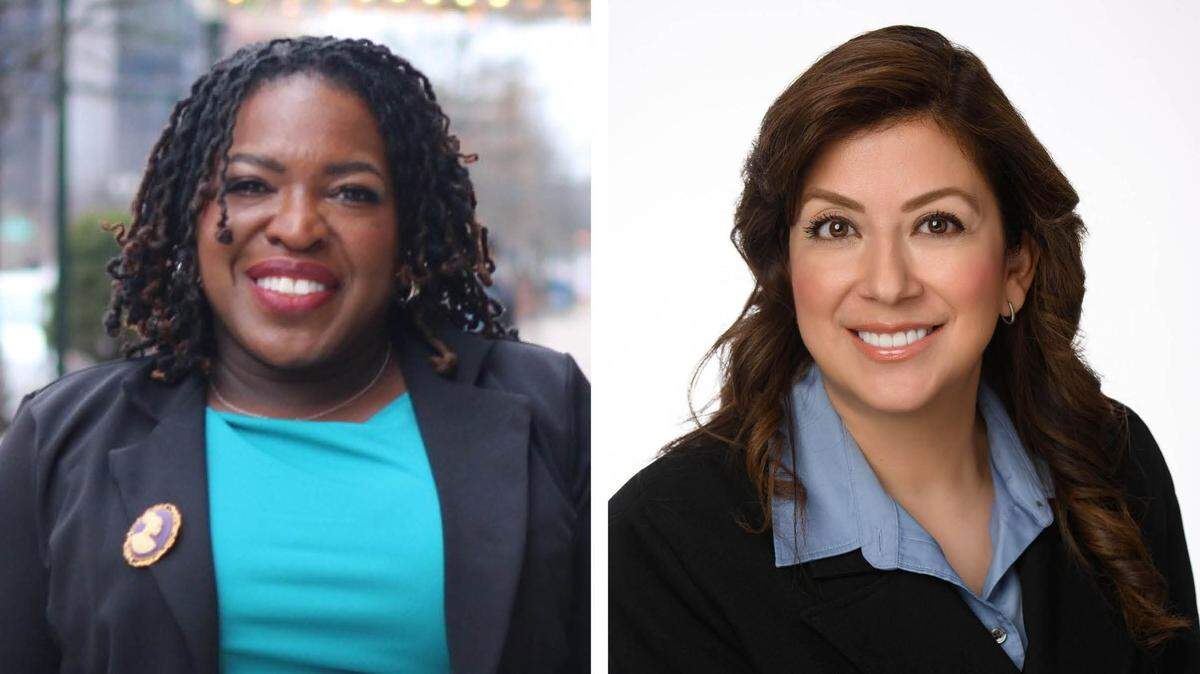
When Lexington-Fayette County Urban County Councilwoman Denise Gray was having problems with a fellow councilwoman she alleges sexually harassed her, she went to the city’s human resources department.
Department officials told her they couldn’t help her, according to a written complaint filed with her Aug. 8 petition for an emergency interpersonal protective order.
“I spoke with HR and was informed council members are different and don’t have the same protections (as unelected city employees), Gray wrote in her complaint. “Meaning they could not protect me from her.”
According to city ethics codes and the city’s charter, that’s true.
In the Aug. 8 petition, Gray alleges Lexington-Fayette Urban County Councilwoman Brenda Monarrez tried to kiss her and grabbed her vagina after a dinner on Aug. 1.
Gray also alleges in October 2021, Monarrez offered to drive Gray home after Gray’s birthday party. Monarrez, Gray alleges, plied her with alcohol throughout the evening. Gray alleges she passed out and found Monarrez performing a sexual act on her.
No criminal charges have been filed, according to police and court records.
Gray has declined to comment. Monarrez has not returned phone calls and emails asking for comment. Both are first-term council members who were elected in 2022.
Monarrez represents the 4th Council District, which includes neighborhoods between Tates Creek and Nicholasville Roads. Gray represents the 6th Council District, which includes neighborhoods along the Winchester Road corridor.
No harassment policy for elected city officials
Although the city has harassment policies to protect city employees, those rules don’t apply to elected officials, Susan Straub, a spokeswoman for the city, told the Herald-Leader.
“There are no ordinances (including the Ethics Act) that expressly deal with harassment of a council member,” she said.
“There are federal and state laws, including criminal laws depending upon the severity of the act(s), that provide protection against sexual harassment, including against council members.”
The city’s ethics codes largely deal with issues of official misconduct, such as an elected official’s using their office for personal gain — getting a city contract for a family member — using city resources for personal benefit or failing to disclose or file financial disclosure forms.
State law also prohibits the removal of an elected official from public office when there are criminal charges pending.
Interpersonal protection orders are civil orders not criminal cases.
“Official misconduct (related to performance of job duties) is the only lawful basis for removal of a council member. This is based on state law, which would make it difficult to adopt something different at the local level that would be enforceable,” Straub said.
Moreover, the interpersonal protection order is an allegation of wrongdoing. It is a civil order that protects a victim from someone accused of abuse or harassment.
“There are always legal issues with taking significant punitive action against someone based merely upon allegations,” Straub said. “These issues are heightened when it involves an elected official who is representing a specific council district and the residents of that District. Those constituents would lose their ‘voice’ on council.”
Charges can also be dismissed.
Earlier this year, Councilwoman Tayna Fogle was charged with three misdemeanors after a disagreement at an AT&T store. But those charges were dismissed at the recommendation of a special prosecutor who was brought in to review the case because Fogle was an elected official.
A hearing on Gray’s protection order is scheduled for 8:30 a.m. Aug. 20. The first council meeting is set for 1 p.m. later that day. It is the first meeting since the 15-member council went on a five-week summer break.
What the judge decides may determine if Monarrez can attend council meetings or even come to her office. Right now there is a no-contact order between Gray and Monarrez.
“A judge will decide whether the order is to be modified on Aug. 20, hopefully before the first public meeting that afternoon which both the council members might choose to attend,” Straub said.
This story was originally published August 13, 2024 at 6:59 AM.