Lexington to spend $20 million surplus on city hall, employee bonuses & fire training center
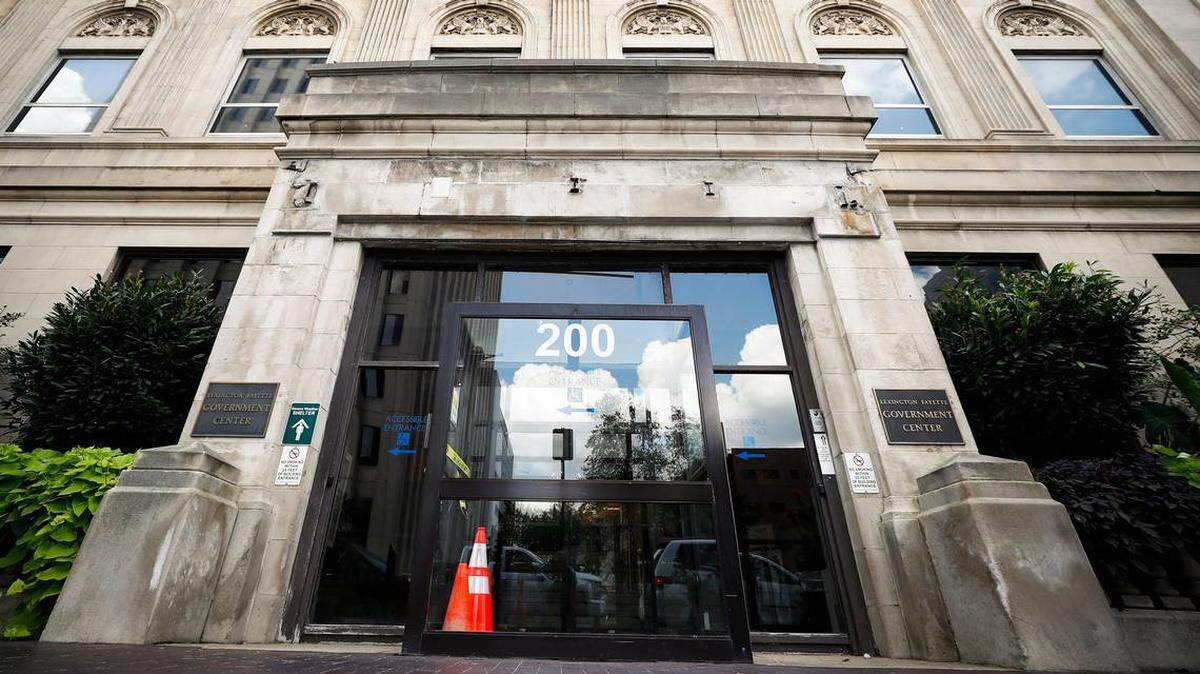
The Lexington council voted Tuesday to set aside $8.5 million for a new city hall, gave $1.5 million to the 15-member council for council projects and allocated $1 million for one-time bonuses for city employees out of a more than $20 million surplus
The Lexington-Fayette Urban County Council made the decisions on what to do with the $20.4 million surplus during a four-hour hearing Tuesday.
It also decided to use $1 million of interest earned on portions of the $121 million American Rescue Plan Act money to pay off medical debt for Fayette County residents in a partnership with Undue Medical Debt, a national nonprofit that pays off medical debt for low-income citizens.
Vice Mayor Dan Wu said the partnership will be able to draw down more than $100 million in funding that could potentially help tens of thousands of Fayette County residents with unpaid medical debt.
Wu said thousands of people struggle to pay off medical debt, which effects their credit history and can sometimes keep people from seeking medical attention. It also can lead to eviction and homelessness.
Other cities have also spent federal coronavirus relief money to pay off medical debt.
The city’s surplus for the fiscal year ending June 30 was more than $213 million, but much of that has already been allocated or spent, including $43 million for a city savings account and more than $84 million for capital projects.
The city has also obligated that money for other uses, such as $8 million for its health insurance reserve fund.
That left more than $20.4 million for the council and Mayor Linda Gorton to determine how to spend.
The council ultimately approved a host of different capital projects and programs to fund including:
- $8.5 million for a new city government center.
- $1.5 million to give to the 15-member council or $100,000 for each council member to use on projects in their districts.
- $1.1 million for one-time bonuses for employees not covered by union contracts.
- $2 million for paving.
- $3.1 million for improvements and updates to the Lexington Fire Department training center.
- $750,000 for a financial study on how to pay for infrastructure, other costs in 2,800 acre expansion area.
- $500,000 for a nonprofit capital grants program to help nonprofits pay for building and other capital improvements.
- $400,000 for an American with Disabilities Act study of public spaces to determine improvements and needed updates.
- $500,000 for a downtown master plan.
- $500,000 for an eviction prevention program that pays for lawyers and mediation to keep renters from being evicted.
- $141,211 to help NAMI, the National Alliance on Mental Illness, purchase a building it was in danger of losing.
$76,500 to the Lexington Children’s Museum.
- $45,000 to help pay for Lexington Philharmonic Festival for the city’s 250th anniversary.
- $100,000 to help implement strategies, programs recommended through a gun violence task force.
How to pay for new city hall
The city has been searching for a new home for the city’s government center for decades.
The city recently released a request for proposals to developers for a new city government center. Those proposals are due back Dec. 4. The request for proposals from developers allows them to use the city’s current Main Street property -- either to remodel or to tear down and rebuild.
How the city will finance the project has long been a stumbling block, as well as finding the right location in downtown Lexington.
The city could enter a public-private partnership or a P3 partnership, which the developer would front some of the costs and the city could make annual payments to the developers. The city could borrow or bond, use cash or apply for state and federal historic tax credits, said Wes Holbrook, the city’s director of revenue.
Gorton had requested $10 million to be placed in a reserve fund for long-term capital projects that includes a new city hall. That fund already has $25 million in it.
But some council members were hesitant to allocate too much money to the city government center given the unknowns. The city has stopped and started its search for a new home multiple times over the past decade.
Still, others said it was better to have more cash on hand to pay for a potential new government center.
“This will help us with negotiations,” said Councilman Preston Worley, if and when the city picks a third-party developer.
The more cash the city has up front, it will likely decrease the annual costs to the city and taxpayers, he added.
The council ultimately agreed to set aside $8.5 million. That money will be kept in a capital reserve account. It could be used for other projects if the city decides not to move forward with a city government center in the next two years.
One-time bonuses for city employees, money for council projects
Finance Commissioner Erin Hensley said the city also wanted to use some of the surplus to give one-time bonuses to employees not covered by union contracts -- employees outside police, fire and the detention center.
The proposal includes $1,000 one-time bonus for more than 1,000 employees that make less than $75,000. Employees who make between $75,000 and $100,000 will receive $750.
Those who make between $100,000 and $125,000 will make a one-time bonus of $500. Those making $125,000 and above will receive $250.
The council has given itself money out of city surpluses multiple times over the past several years. In 2015, the amount was much higher -- a total of $4 million with each council member getting $266,000 to spend. The bulk of those capital funds typically go to parks projects in council districts.
Another big-ticket item the council opted to fund was $3.1 million for various upgrades and changes at the Lexington Fire Department Training Center on Old Frankfort Pike.
Fire Chief Jason Wells said the updates to the fire training center -- which includes multiple renovations to the interior and exterior as well as installing new parking -- has been on the top of the department’s wish list for years.
The council also decided to continue to fund projects and programs started under the American Rescue Plan Act, or federal coronavirus relief funding. The city has used federal coronavirus relief money to help stop evictions by paying lawyers to represent tenants in eviction court.
It also has provided mediation services to any Lexington-Fayette County Housing Authority renter facing eviction, said Charlie Lanter, commissioner of housing advocacy and community development.
The council approved $500,000 to continue that program when those federal funds run out in December. The city also set aside $500,000 for a grant program for nonprofits, a program also started using federal COVID relief dollars. That program helps many smaller nonprofits with capital expenses.
Many parks projects out
Many council members proposed funding smaller projects in neighborhood parks, such as repaving walking trails, repaving parking lots and installing other parks equipment.
There was not enough money to fund all projects council members and Gorton proposed. There was only $20 million in surplus funds available. There was more than $47 million in requests.
The public will vote Nov. 5 on whether to fund a separate parks tax that could generate $8 million a year for capital parks projects. Many council members said Tuesday it was better to wait and see if the tax passed before funding some of those capital improvements.
Moreover, many parks projects can be funded through a combination of private donations and city money, lowering the cost to taxpayers, said Councilman Fred Brown.
This story was originally published October 30, 2024 at 5:00 AM.