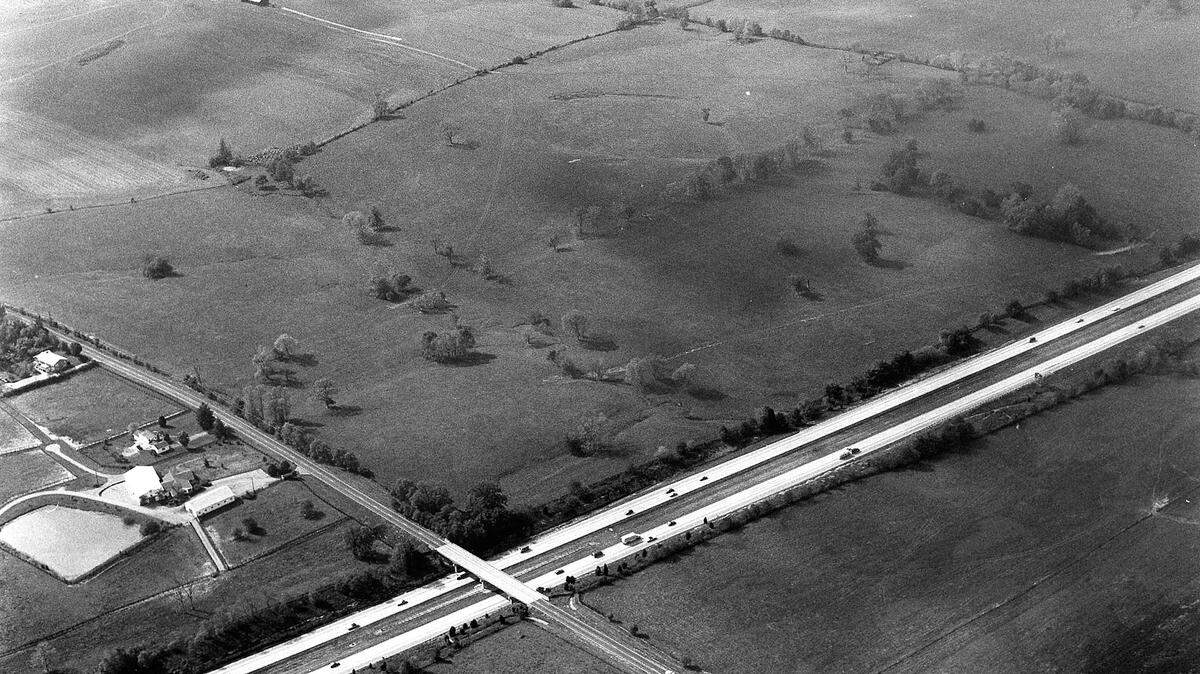
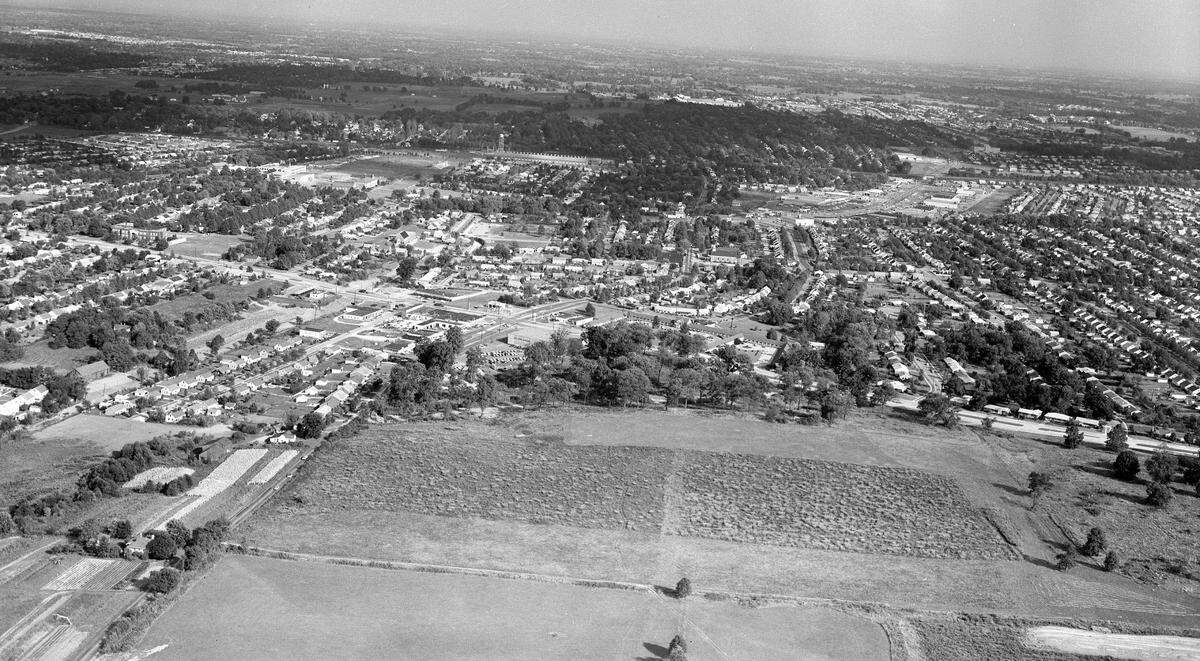
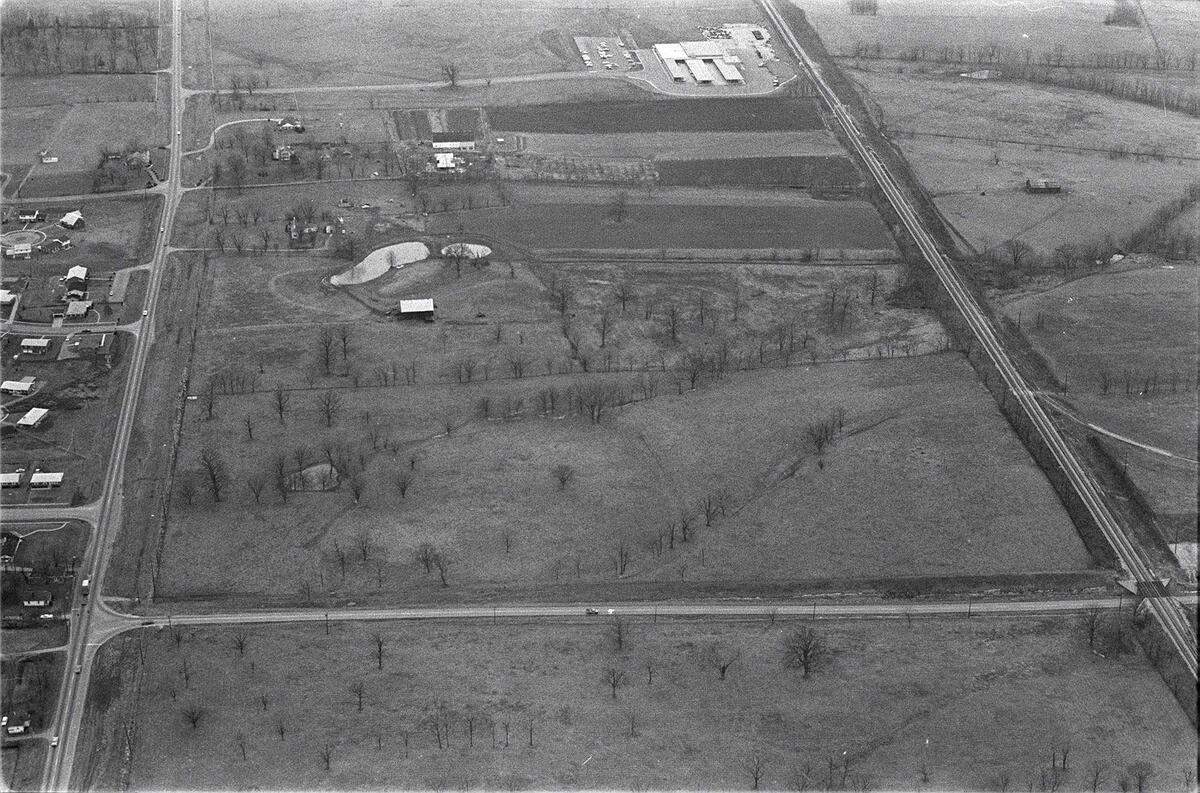
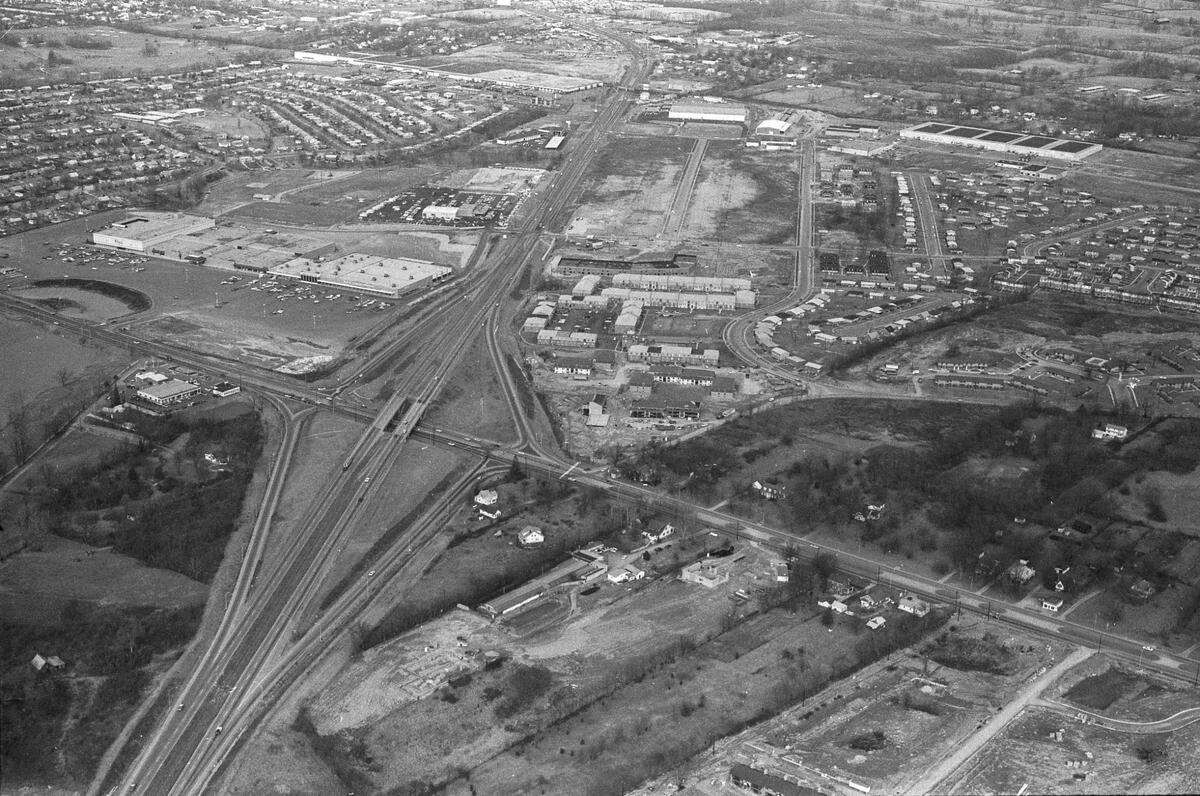
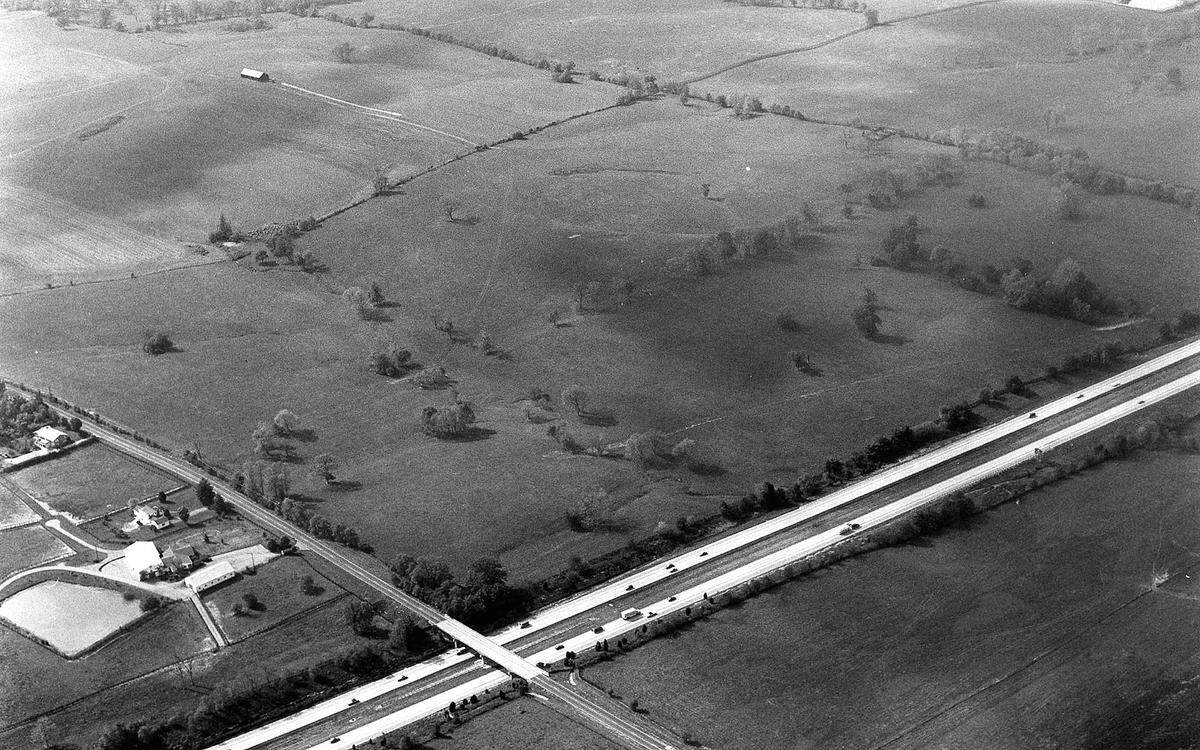
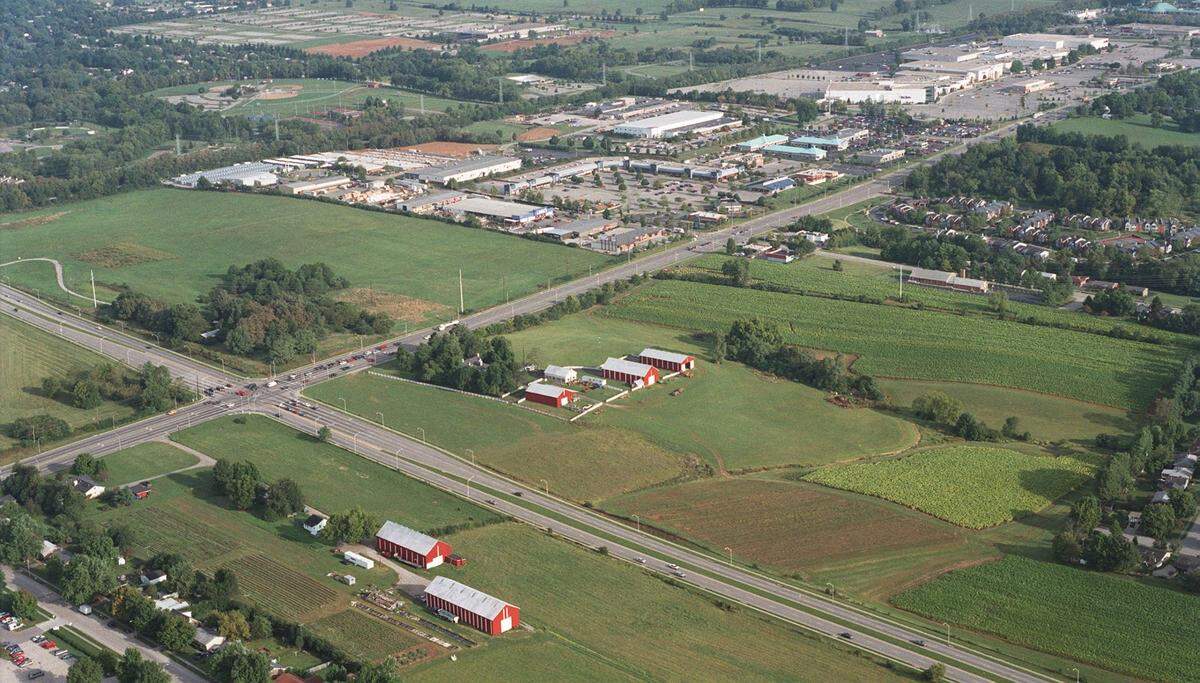
An aerial picture of Hamburg Place horse farm in eastern Fayette County, Oct. 17, 1986. During the 1990s, part of the farm would be developed to become Hamburg Pavilion, one of the Kentucky’s largest shopping centers. In the photo, Interstate 75 runs from left to right across the bottom. Intersecting with it is Bryant Road, which would later become part of the Man o’ War Boulevard extension that took place in 1988. Today, Target, Old Navy and Dick’s Sporting Goods are some of the retail stores that line I-75 on the west side. On the east is Costco and Cabela’s.
Charles Bertram
1986 Herald-Leader staff file photo
READ MORE
More photos from the Herald-Leader archive
See photos from our archives of Rupp Arena, Fayette Mall, Keeneland and more.
Expand All
Lexington has seen many stores — and even a couple of malls — come and go through the years.
Shopping destinations open, they close, and sometimes plans fall through. That was the case in the 1980s for a University of Kentucky-backed mall in the northwest corner of Coldstream Park (politics and an interstate interchange killed the project.)
Over the years, Lexington has seen many stores come and go. Shillito’s, McAlpin’s and Sears used to be destination stores – the downtown Sears store was one of the first national sites for the brand.
Times change, and so do habits. Shillito’s, McAlpin’s and Sears used to be destination stores in Lexington — the downtown Sears store was one of the first national sites for the brand. Gone are the days of people window shopping downtown. First, there was migration to suburban malls and an upscale shopping center. Now they are slowly being replaced by online purchasing.
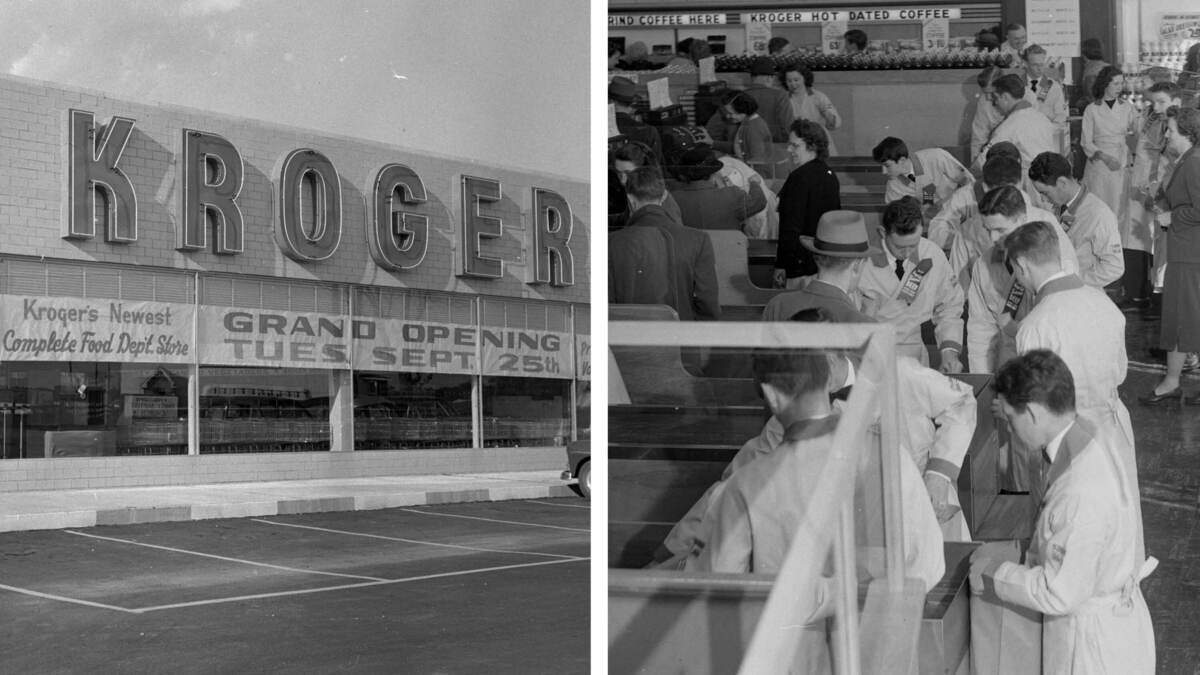
While today we yearn for a downtown Lexington grocery store, it’s hard to picture years ago it being commonplace. There was a Piggly Wiggly at Broadway and Short Street in 1941 that later became a one-story Kroger supermarket with a new style of checkout counters: In each of the three checkout lanes, the carts were rolled inside the checking counter so they could be easily reached by the clerks and out of the way of customers.
Historical photos show how Lexington’s shopping habits have changed, leaving downtown for five major shopping areas, some of which are no longer open: Turfland Mall , Lexington Mall, Fayette Mall, Hamburg Pavilion and The Summit at Fritz Farm.
Shopping downtown: Excellent service,live Santa Claus and strolling carolers
There was a time in Lexington when if you had to do any kind of shopping, it meant you had to go downtown.
Department, five-and-dime, grocery, general and other retail stores littered Main Street starting in the late 1800s. Names like Purcell’s, B.B. Smith and Company, F.W. Woolworth Store, S.S. Kresge Store, Sears, Ben Snyder’s and more would become legendary in the history of downtown Lexington. In its heyday during the 1940s and 1950s, downtown Lexington saw hordes of shoppers fill the streets during the holiday season and 100,000 people for the Christmas Parade.
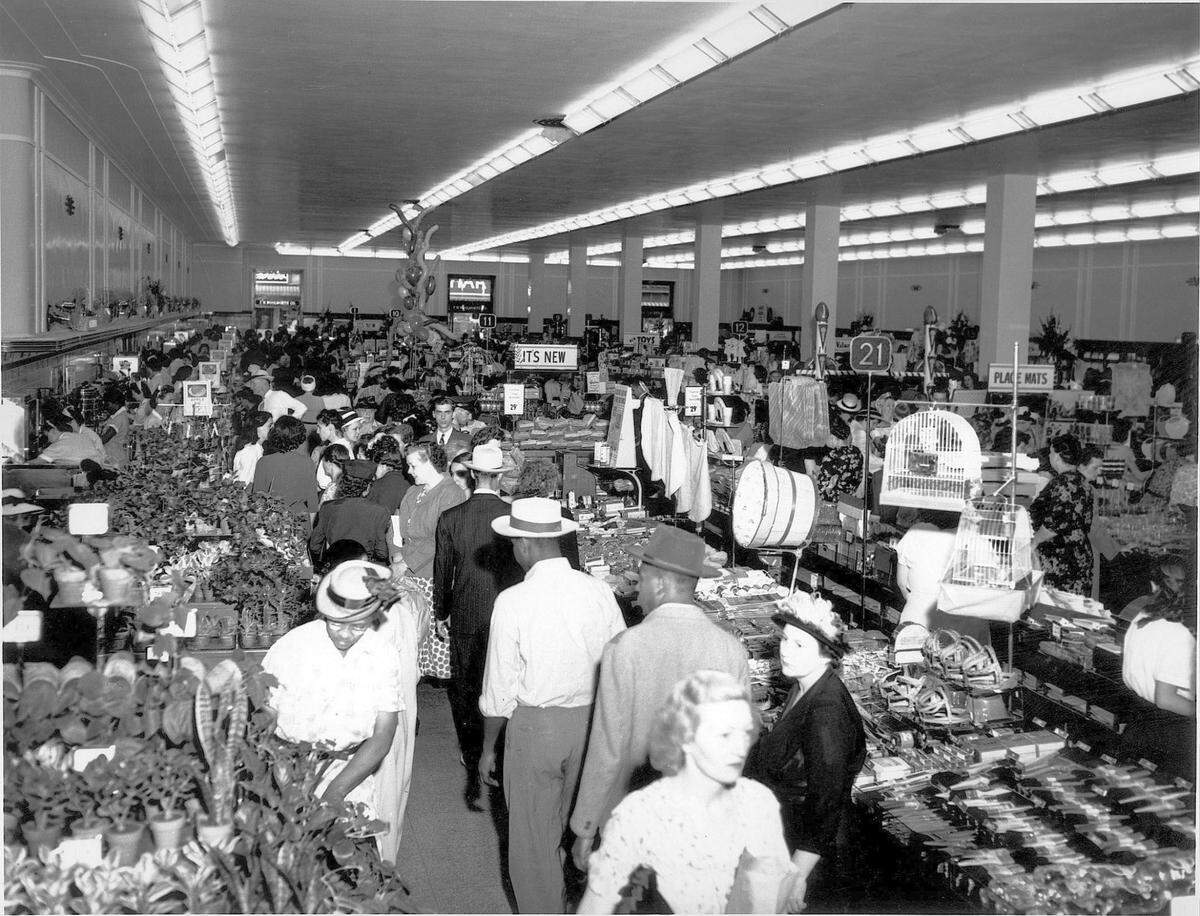
Lexington shoppers crowd the F.W. Woolworth Store on opening day, Sept. 9, 1948. The new downtown five-and-dime store was located at 106 W. Main St. Woolworth opened its first Lexington store in 1901 and the chain became a fixture in downtowns across the country. But the trend toward suburban malls and competition from discounters, including Kmart and Wal-Mart, began to undercut the company by the 1960s. The company had signed a 40-year lease that was credited with keeping the store open during the 1960s and 1970s, when other retailers were forced to leave downtown Lexington. The store closed in 1990 the building become one of Lexington’s most notorious eyesores, sitting empty for more than a decade before being torn down in 2004. The other buildings on that block were razed in 2008 to make way for the CentrePointe development, today known as City Center. 1948 Herald-Leader staff file photo
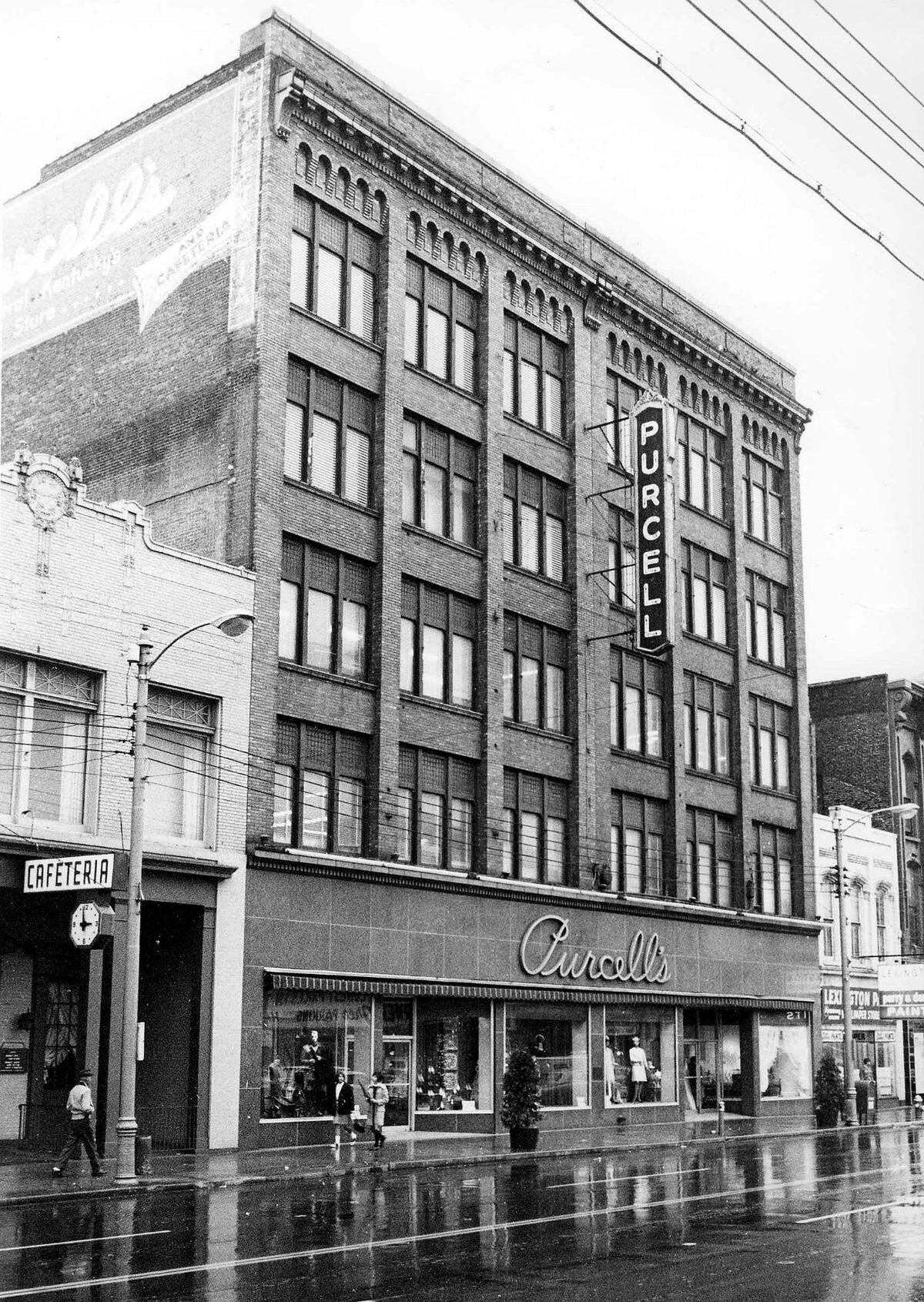
Purcell’s department store in downtown Lexington at 320 W. Main St., Nov. 5, 1967. Purcell’s, which opened in 1887 as a 5-and-10 called the Racket Store, originally was located on the north side of West Main Street. In 1923, its founder, Jefferson Davis Purcell, bought property on the south side at this location and it was later enlarged. In its heyday, during the 1940s and ’50s, Purcell’s was not only one of Lexington’s busiest, but one of its most colorful department stores. Customers often bypassed the crowded elevator so they would not miss anything on display in the store’s 22 departments. It was one of the first in the city to have a live Santa Claus and strolling carolers at Christmas. At one time, the store carried 75,000 charge accounts, said Stanhope Wiedemann, president and CEO of the department store his grandfather founded. Among the many promotions it sponsored were embroidery and meat-carving schools and a table-setting contest. In 1951, at the request of a Lexington man, employees boxed the man up in a crate and delivered him, engagement ring in hand, to his girlfriend’s home. Yes, she accepted his proposal. In 1970, after several stores left downtown, Purcell’s closed. The building was razed in 1980 to make way for the $50 million Vine Plaza, which today includes the Hilton Lexington Downtown Hotel and parking garage. 1976 Herald-Leader staff photo
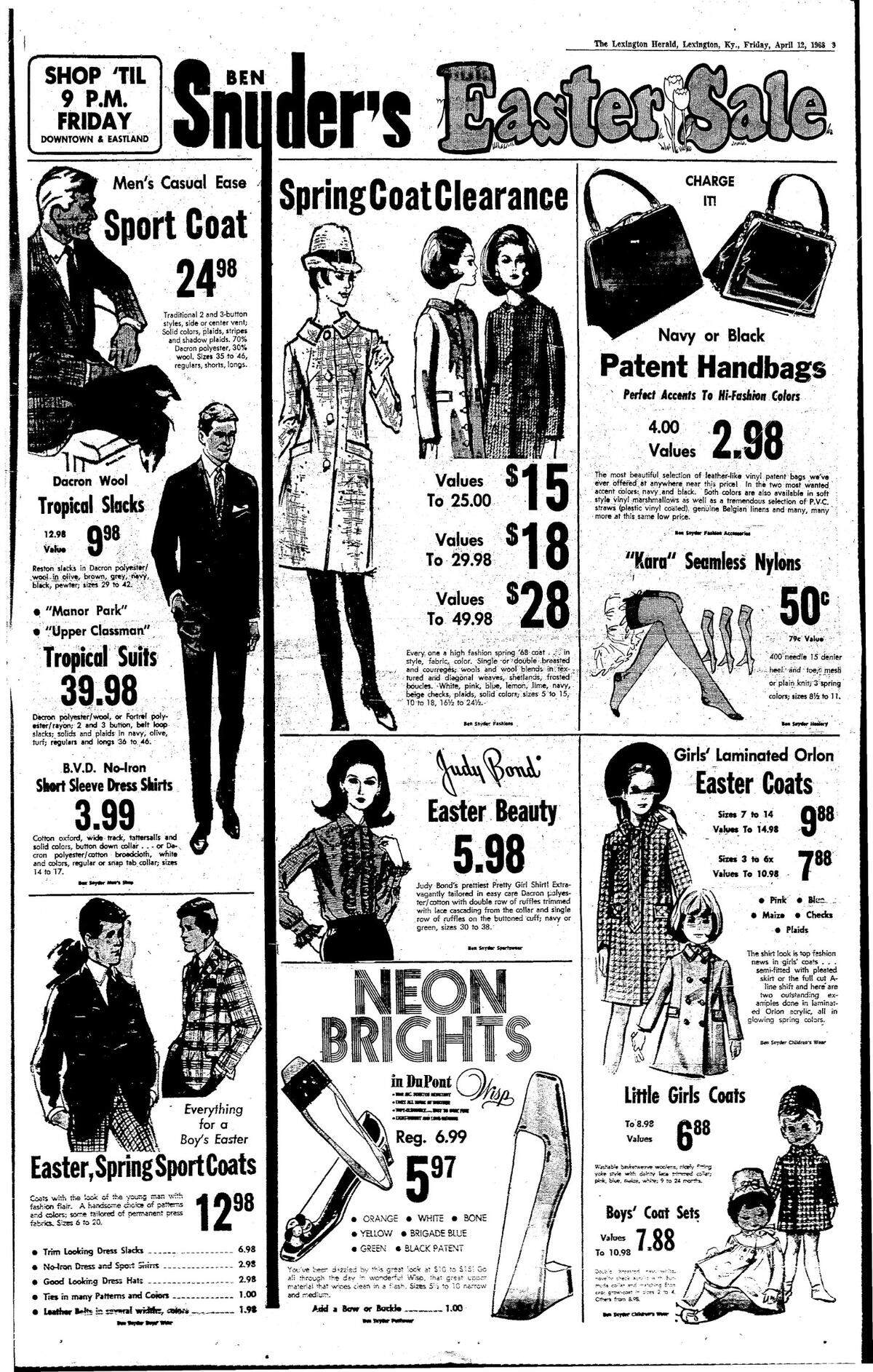
Full-page advertisement in the April 12, 1968, Lexington Herald for an Easter sale at the Ben Snyder department store. At this time Lexington had two Snyder’s locations; one downtown and the other at Eastland, the city’s first shopping center. Some of the items promoted in the ad include a boys’ Easter sport coat for $12.98, girls’ laminated Orlon Easter coats starting at $7.88 and and women’s shoes available in seven neon colors to choose from for $5.97. If you are familiar with the popular book and Netflix show, “The Queen’s Gambit,” Ben Snyder’s is where Beth Harmon would shop. The downtown store was at 113 East Main St., now the site of the Fayette County courthouse plaza. It operated there from 1935 until 1980, leaving Wolf Wile as the only downtown department store. The Eastland location opened in 1964 and closed in 1985. The store was founded in 1913 and had locations in Louisville, Paducah, Elizabethtown, Bowling Green and southern Indiana. In 1987, Hess’s Department Stores bought the remaining Ben Snyder Department Store.
The aisles of Wolf Wile’s department store were filled April 7, 1992 with shoppers looking for going-out-of-business bargains. Sixteen days later on April 23, downtown Lexington’s last department store closed its doors after 103 years. Wolf Wile’s was known to generations of Lexingtonians for its sophisticated decor, personal service and lively window displays. Wolf Wile’s specialized in women’s apparel and accessories, but also sold men’s clothing, household goods and other merchandise. But the store became less of a force in Lexington retailing as suburban malls, round-the-clock mail order and bargain outlets became popular with time-pressed consumers. “I’ve traded with this store for 60 years,” said Virginia Williams of Morehead on one of the last days of the store. “I used to come here when I was a teenager. I hate to see it go. It really breaks my heart.” In the days leading up to the closing, shoppers said they would miss the quality of Wolf Wile’s merchandise, the exemplary service of the sales clerks and the excitement of the days when downtown hummed with retail activity. The store was at 244 E Main St. since 1950. Wolf Wile’s had been the only department store downtown since 1980, when Ben Snyder’s closed the store it had operated on East Main Street since 1935. Earlier downtown closings included Purcell’s in 1970, Stewart’s in 1979, Hymson’s in 1981, Embry’s in 1981 and Woolworth’s in 1990. Family owned, Wolf Wile’s attributed its survival to conservative management and low overhead – the company owned its East Main Street building. Today it is the offices for Gray Construction. Tim Sharp 1992 Herald-Leader staff file photo
Turfland Mall: ‘A Wonderful World of Stores Without Doors’
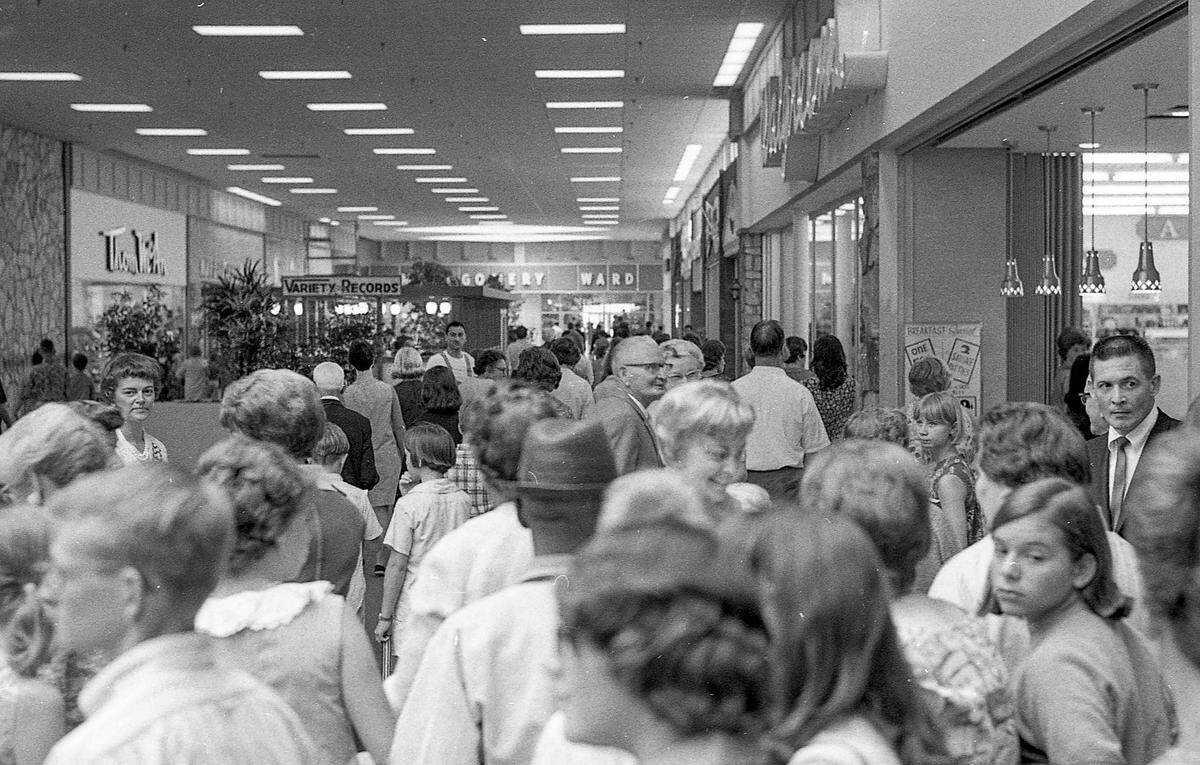
Rain didn’t discourage a horde of shoppers on opening day of Lexington’s first indoor mall, Turfland Mall, on Aug. 24, 1967.
Many were there for the much-hyped enclosed, air-conditioned and carpeted shopping billed as a “dream come true!” and “A Wonderful World of Stores Without Doors.” Then Kentucky’s largest shopping center, Turfland Mall had 560,000 square feet and 45 stores, including major tenants McAlpin’s and Montgomery Ward. Plus parking for 3,200 cars on the 43-acre property off Harrodsburg Road.
Stores, restaurants and businesses inside included Bank of Lexington, Big “B” Cleaners, Blue Boar Cafeteria, Fayette Cigar Store and Hallmark House, Graves-Cox, Kinney Shoes, Russell Stover Candies, Spencer Gifts, Thornbury’s Toys, Turfland Cinema and Winn-Dixie.
As the years went by, the mall found itself trying to keep up with the much-bigger Fayette Mall, which opened four years after Turfland, and later with Hamburg Pavilion. In July 1998, the Turfland Mall underwent its first changes in 10 years. The major $5 million renovations came four years after JCPenney JCPenny left for Fayette Mall and included removing the green-and-black speckled tile floor from the 1960s. At the time, the mall said they were courting clothier The Gap, but they never came. During the renovations, new restaurants O’Charley’s and The Cooker Bar & Grille were added in front of the mall.
Unfortunately, the changes didn’t help. In 2007, a rash of stores left, including Fashion Shop, Waldenbooks, Foot Locker, Rainbow and Cinema 99 movie theater. In 2008, anchor stores Dillard’s and Dillard’s Home announced their closures, putting the final nails in the coffin of the city’s first mall.
Parts of Turfland Mall were later demolished or broken up and converted into a Home Depot and a UKHealthCare health center.
A farm at what would become Lexington’s first mall, Turfland Mall, Jan. 14, 1962. Harrodsburg Road runs from left to right across the middle of the image. Lane Allen Road runs up from the lower left corner, headed toward Picadome and Southland neighborhoods. The Springs Motel can be seen in the center of the image. The motel opened in 1948 with 68 rooms and was a popular Lexington resting stop because of its proximity to Keeneland. The dining room was popular for its Hot Browns, prime rib, fried chicken and Southern-style green beans. It was renamed the Springs Inn in the 1980s, and it closed on Nov. 23, 2008. The landmark motel was razed the next year. A CVS drugstore, a McDonald’s and a Raising Cane’s Chicken Fingers restaurant were built on the site. 1962 Herald-Leader staff file photo
Shoppers crowd the inside of Turfland Mall on opening day, Aug. 24, 1967. Lexington’s first mall opened with 35 stores, including major tenants McAlpin’s and Montgomery Ward, seen in the back of the image. At right is Walgreen’s, which had a lunch counter, and to the left is Thom McAn Shoes. A Variety Records kiosk is in the middle of the picture. The mall had fountains, floral displays, animal sculptures, a movie theater and giant skylights to let in natural light. There was also a 150-seat auditorium that was used by local organizations, free of charge. 1967 Herald-Leader staff file photo
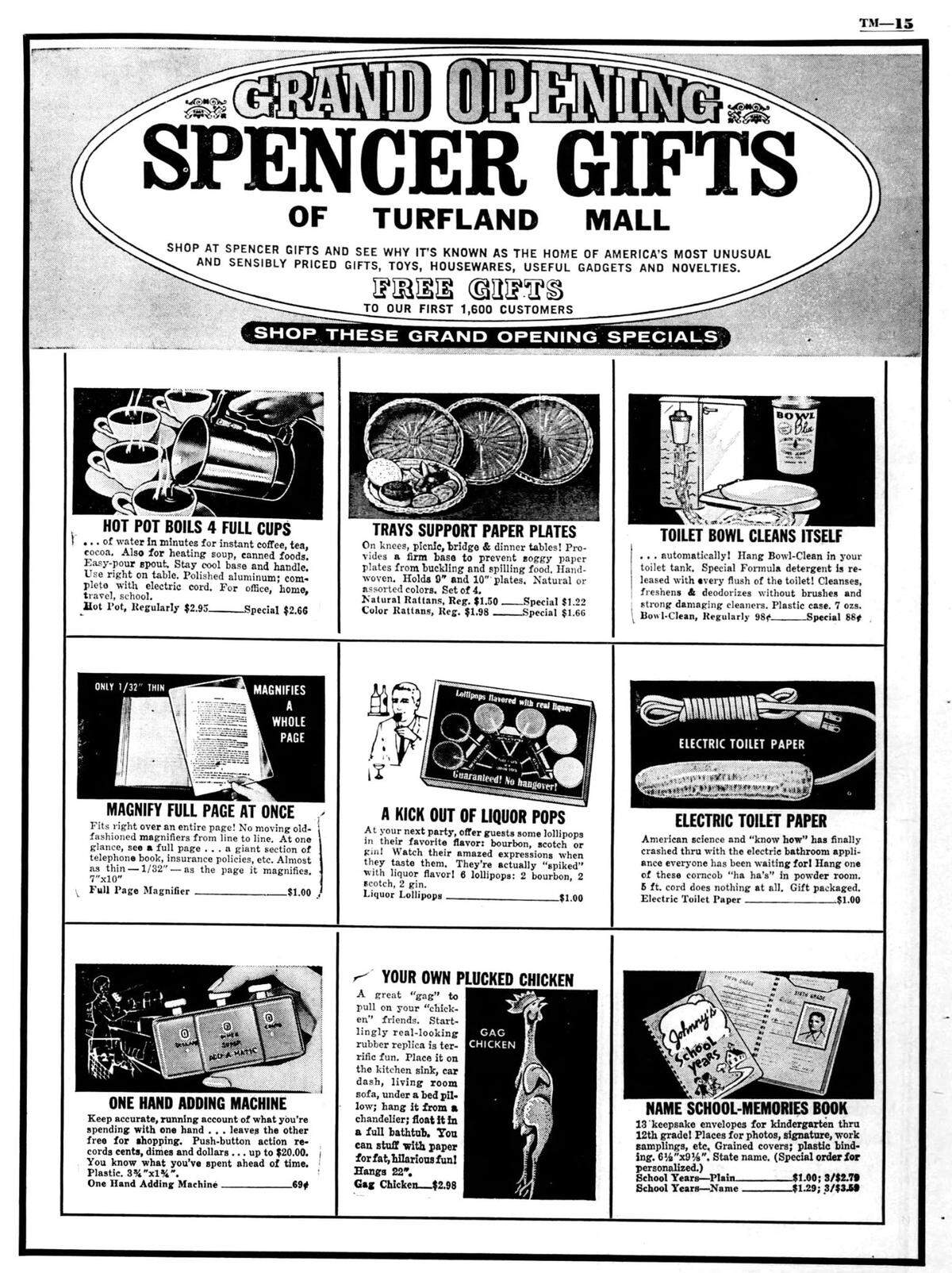
An advertisement for Spencer Gifts in the Wednesday, Aug. 23, 1967, Lexington Leader highlighting grand opening specials at the store, which opened on the same day as the mall. Among some of the items advertised is a gag gift electric toilet paper roll, liquor lollipops and a rubber chicken.
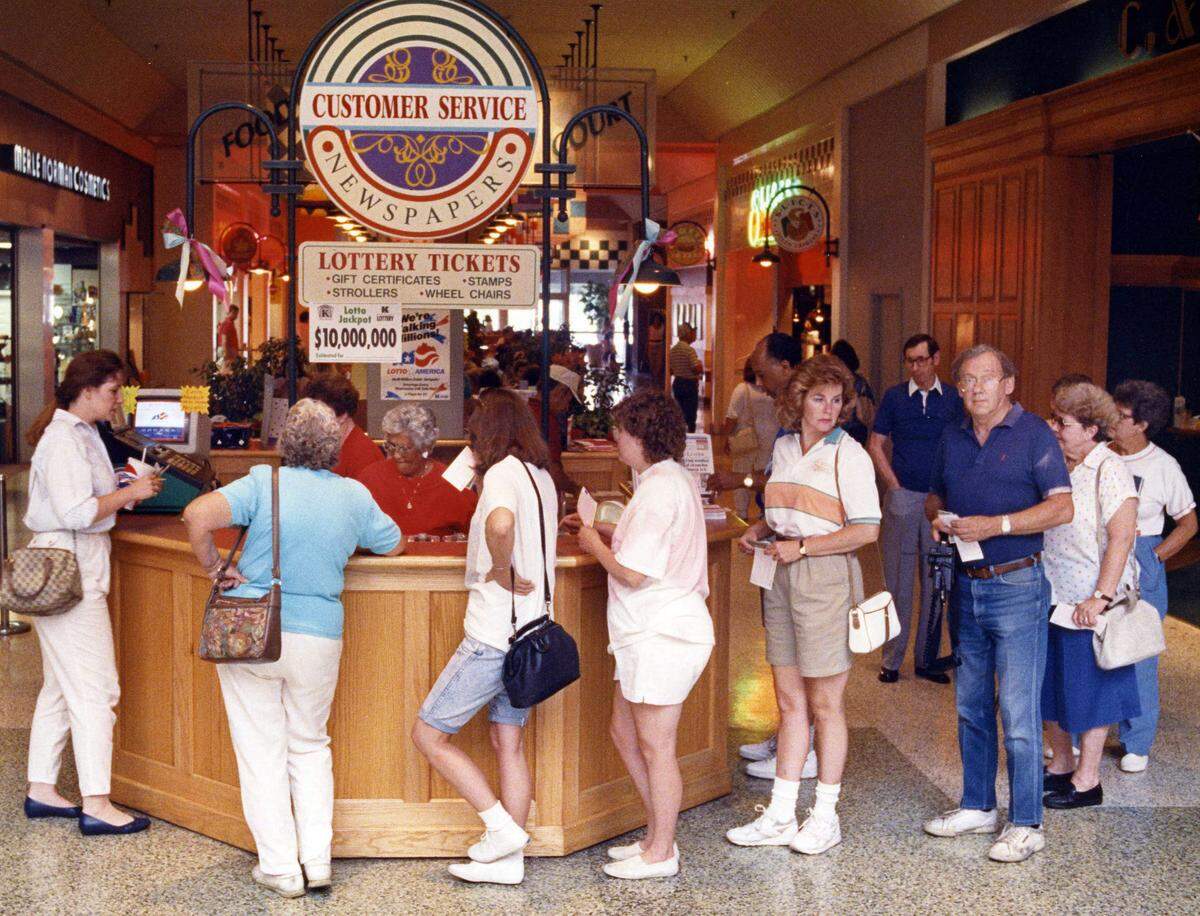
People waited in line June 29, 1991, at a lottery kiosk in front of Lexington’s Turfland Mall’s Food Court to buy tickets for what was then a record Lotto Kentucky $10 million jackpot. There were record sales for Lotto Kentucky leading up to the Saturday drawing. Stores and restaurants in Turfland Mall at this time included Kenny Rogers Roasters, Merle Norman Cosmetics, I Can’t Believe It’s Yogurt!, T.J. Cinnamon’s, JCPenney, Montgomery Ward, and McAlpin’s. Janet Worne 1991 Herald-Leader staff file photo
Fayette Mall, now the largest mall in Kentucky
When Fayette Mall opened in 1971 with 800,000 square feet of retail space, it became Central Kentucky’s largest enclosed shopping center. The new mall featured live palm trees imported from Florida, wide terrazzo walkways with garden areas, rock formations, ample skylights and four fountains, one costing $55,000.
There were even sitting areas meant to feel like a tropical garden oasis. Larger ones, recessed into the floor, were described in a an Oct. 10, 1971, article with pictures in the Sunday Herald-Leader showing “tired shoppers and husbands bored with their wives’ shopping spree a place to sit down for a while out of the pattern of mall traffic.“
The mall opened with 65 stores, including three main tenants — Shillito’s, Stewart’s Department Store and Sears. A 1993 expansion made Fayette Mall the largest in Kentucky and took a lot of shoppers from Turfland Mall and Lexington Mall, contributing to their demiseend.
This aerial view shows the site of the future Fayette Mall on Jan. 19, 1967. Sixty acres with frontage on Nicholasville Road, left, and Reynolds Road, near the bottom of the photo, was the John Shillito Co.’s selection for the site of its first Kentucky department store. Today it’s where Macy’s is at Fayette Mall. 1967 Herald-Leader staff file photo
One of the four fountains and metal sculptures inside the new Fayette Mall, taken days before it opened on Oct. 11, 1971, in Lexington, Ky. This fountain, located in the center of the mall was constructed at a cost of $55,000 in 1971. Adjusted for inflation, that would be $424,000 today. The kids’ play area is located there today. Tom Woods 1971 Herald-Leader staff file photo
The intersection of New Circle, running across the bottom of the photo, and Nicholasville roads, in late January, 1976 in Lexington, Ky. The South Park Shopping Center is on the left side of the image. Stores there included Mac Donald Sales Center, Kroger, Hills Department Stores and Super-X store as construction continued with developers scraping plans for a 99-room hotel. On the right side of the image, the farmland, is the site of what would later become Lexington Green shopping center, it opened in 1986. Just above it is the beginning construction of Gold Circle Department Store, which today is Target. And above that, in the upper right corner of the image, is Fayette Mall, which opened in 1971. At the time of this image, traffic was becoming a major concern at what would eventually become one of Lexington’s busiest intersections. Ron Garrison 1976 Herald-Leader staff file photo
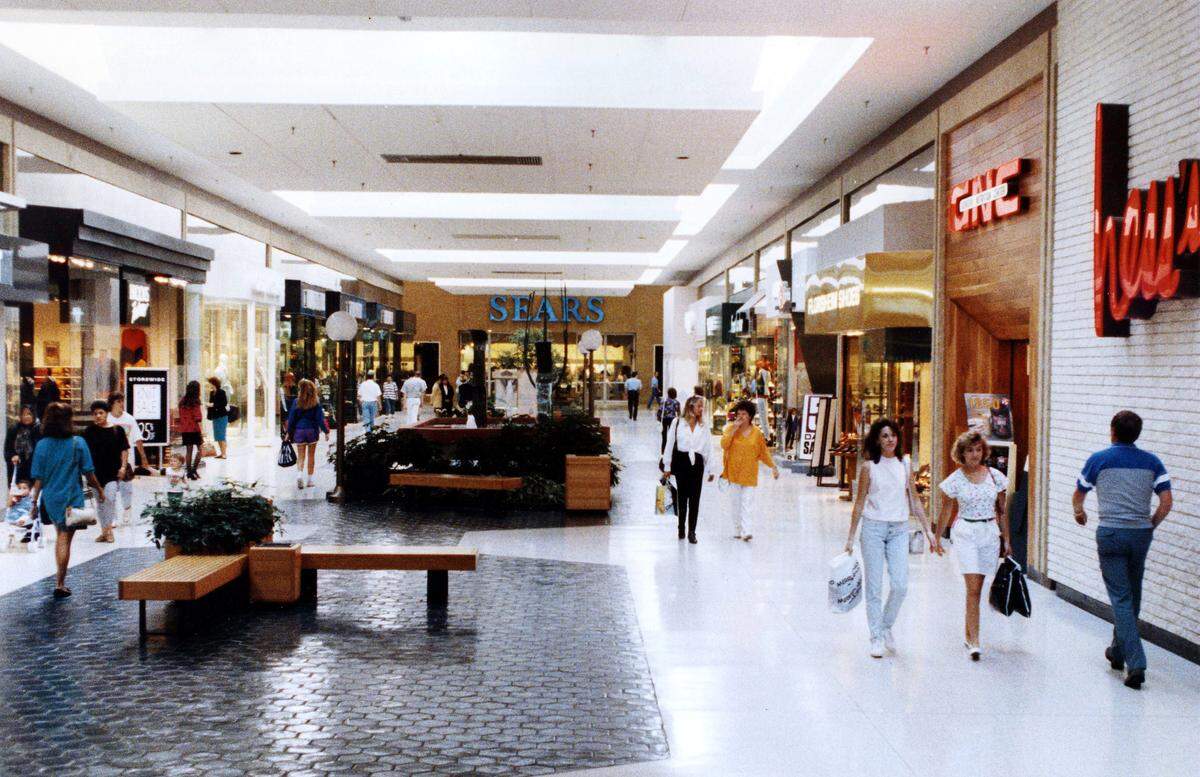
Inside Fayette Mall, looking toward anchor store Sears, Sept. 17, 1992. The Hess’s department store at right is where the JCPenney is today. The following year in May, the mall expanded, adding nearly two dozen businesses in a new south wing that was accessed through Sears. The expansion made it Kentucky’s largest mall. Note the women in the orange shirt walking towards the camera is smoking and one of the original fountains and sculptures from when the mall opened in 1971 is in the middle. Other stores at this time included main tenant Lazarus, the arcade Aladdin’s Castle, shoe store Stride Rite, Chestnut Street Gallery, The Bombay Company, Camelot Music and a Chick-fil-A restaurant, which was not in the food court. What was in the food court? Arby’s, Burger King, Chao Praya, Frank & Stein, Freshen’s Yogurt, Gold Star Chili, Manhattan Bagel Co., Sbarro’s, Subway, Tumbleweed and Great Steak & Fry. Frank Anderson 1992 Herald-Leader staff file photo
Lexington Mall: Slow death of a once-popular mall
When the shopping center at New Circle and Richmond roads officially opened in September 1975, it was after years of on-and-off construction due to bankruptcy by the mall’s original owners, John W. Waites Associates.
Saul Subsidiary I, the chief lender on the mall project, bought the mall in bankruptcy proceedings, finished the construction and opened the mall. At least two stores, Shoppers Choice Supermarket and McAlpin’s, had already been open for four years. When the mall opened with its center court fountain, its 48 stores were fully leased and drew crowds of shoppers.
Despite its rocky beginning, the mall prospered for years. Still, the expansion of Fayette Mall in 1993 hurt the shopping center. Over the next several years many stores either closed or relocated as Lexington Mall attendance declined. Among them: Schwab’s Pipes & Such; Phillip Gall’s Outdoor & Ski; Bookland; Knott Shoes; For Friends and gift shops For Friends Too and women’s clothing store Marshae’s; Dawahare’s; Home Accents; The County Market; two screens at Sony Theaters and Consolidated Sales Co.
By the late 1990s, Dillard’s was the mall’s biggest tenant and only anchor store. In 2005, they were the last store to leave. Southland Christian Church bought the property in 2010, opening a church in 2013.
Aerial view of the Richmond and New Circle road intersection in January 1973. Richmond Road runs right to left and New Circle runs diagonally top to bottom. Lexington Mall is at the middle left. At the time of this photo, the mall had only 278,000 square feet of leasable space and only three tenants, McAlpin’s, Shoppers Choice Supermarket and discount store Consolidated Shoppers Choice (CSC). John C. Wyatt 1973 Herald-Leader staff file photo
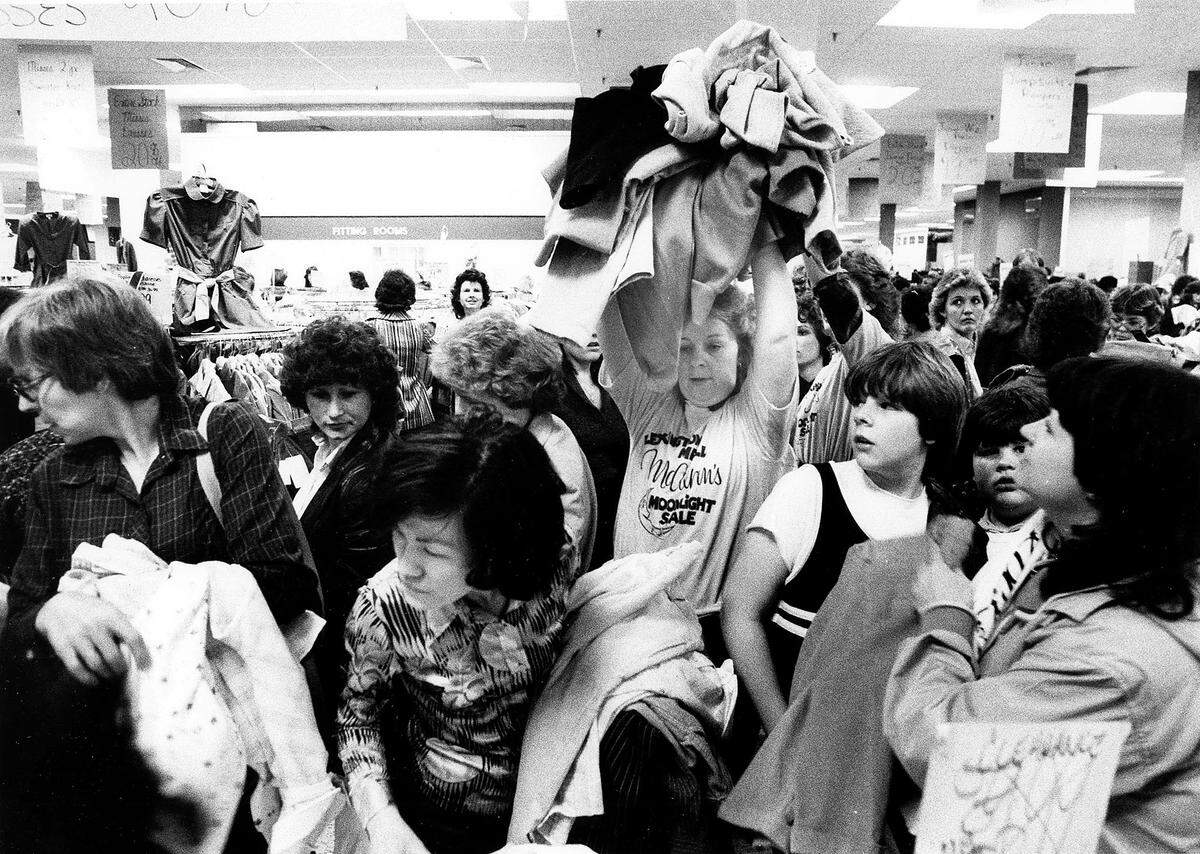
When the crowd at Lexington Mall’s McAlpin’s hollered during a Moonlight Madness sale for more clothes at discount prices of $1 and $2, Lolene Dawkins came to the rescue April 10, 1984. She would take clothes from another table and throw them over the heads of unsuspecting shoppers. The spring Moonlight Madness sale was the second-highest day in volume for the Lexington Mall and Turfland Mall McAlpin’s stores – the fall Madness sales produced the highest volume. McAlpin’s theory behind the “Madness”? Low prices bring high sales volume, and hence profits. In 1998, Dillard’s bought McAlpin’s. Steven R. Nickerson 1984 Herald-Leader staff file photo
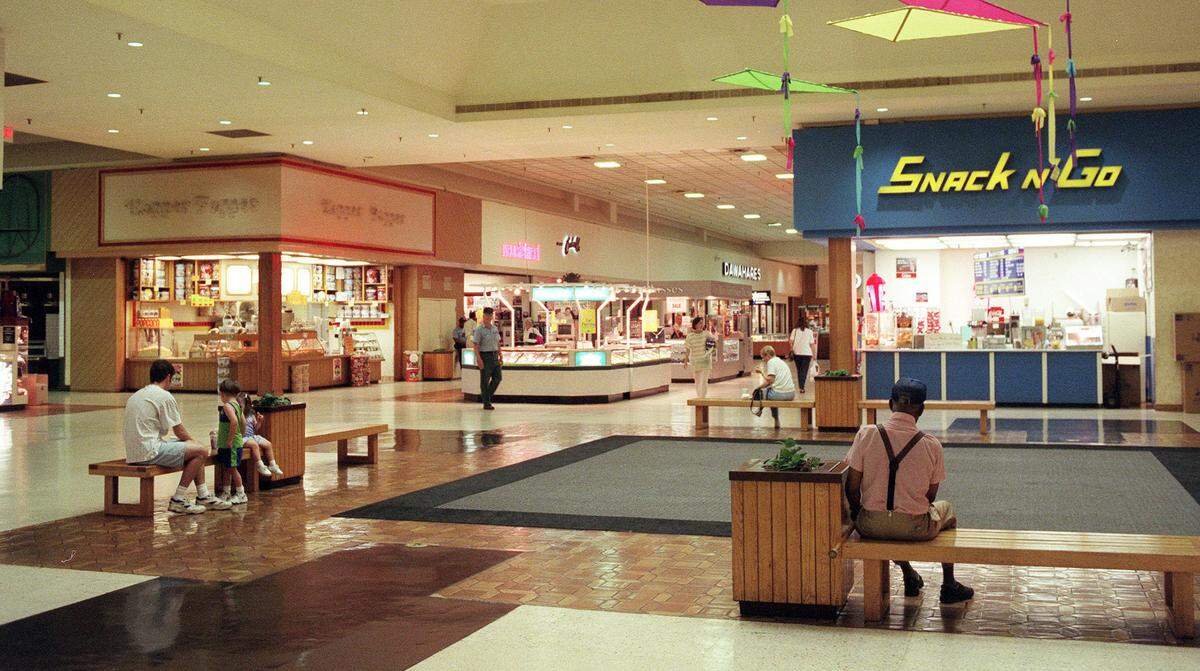
Shoppers rest on benches the afternoon of May 12, 1999, at Lexington Mall. At the time of this photo, the mall was struggling to compete with the larger Fayette Mall, which expanded in May 1993, a renovated Turfland Mall and Lexington’s newest shopping center, Hamburg Pavilion. And so tenants started to leave or were thinking of doing so after failed renovation and expansion promises from the mall. David Stephenson 1999 Herald-Leader staff file photo
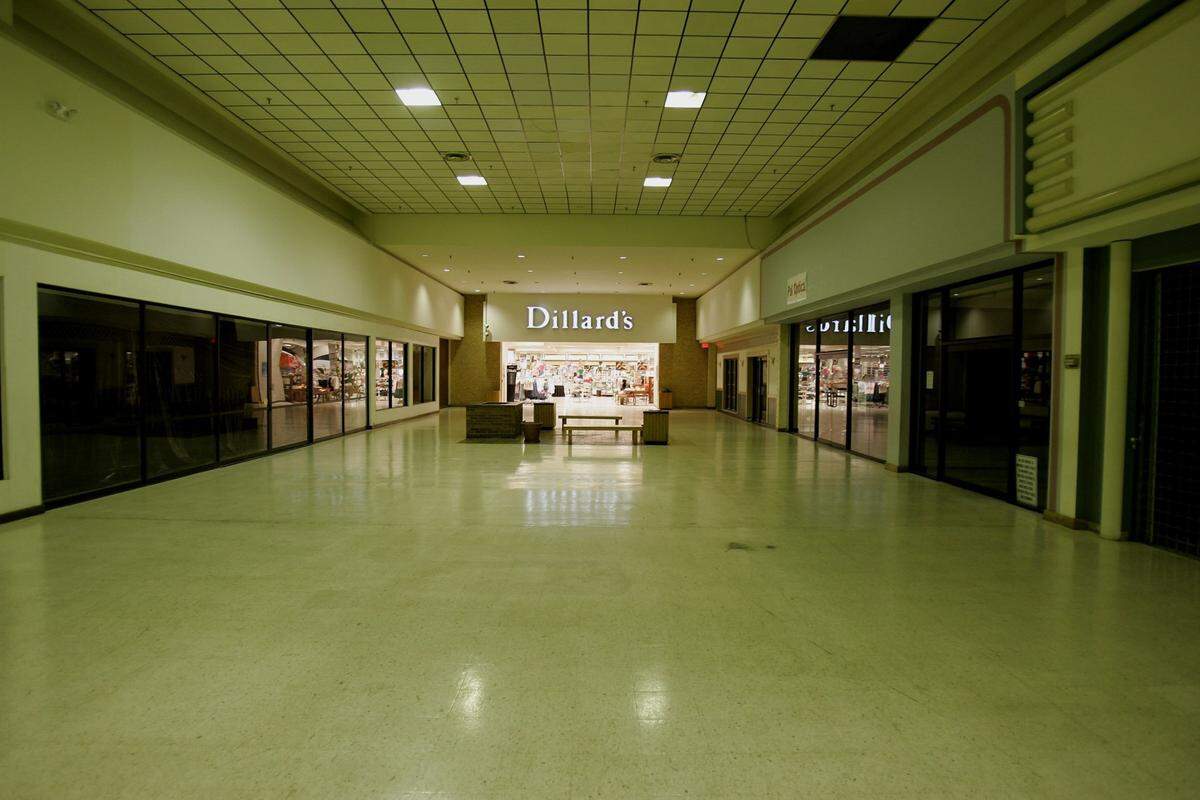
Dillard’s, Lexington Mall’s last remaining open store, on Friday, July 8, 2005, the day it announced it would be closing the location later that year. Dillard’s, which had two other Lexington locations, one in Turfland Mall and the other in Fayette Mall, cited lack of sales and the frustrating situation with the mall as the main reasons for closing. Many retailers had been leaving the mall and were not replaced. Charles Bertram 2005 Herald-Leader staff file photo
Hamburg Pavilion was originally going to be an upscale, enclosed mall
You could say the development of Hamburg Place began in 1964 when I-75 bisected the 2,000-acre horse farm that produced five Kentucky Derby winners. But commercial and retail development planning came in the late 1980s and early ’90s.
Hamburg Pavilion was originally set to be developed as an upscale, enclosed mall, according to September 1997 news stories. But at the time, the shopping center was redesigned to accommodate nearly 1 million square feet of big-box stores.
At the time of development, Patrick Madden, whose family owns the Hamburg property, said major chains like Meijer, Wal-Mart and Target wouldn’t invest in Lexington without being confident of success. Retail analysts back then also said Lexington was underdeveloped for retail in the ’70s and ’80s. Hamburg helped Lexington catch up by bringing in with hot names like PetSmart.
Today, half of the former farm has been developed with more than 2 million square feet of retail space, 160 acres of professional offices and 1,000 acres of residential housing.
An aerial picture of Hamburg Place horse farm in eastern Fayette County, Oct. 17, 1986. During the 1990s, part of the farm would be developed to become Hamburg Pavilion, one of the state’s largest shopping centers. In the photo, Interstate 75 runs from left to right across the bottom. Intersecting with it is Bryant Road, which would later become part of the Man o’ War Boulevard extension that took place in 1988. Today, Target, Old Navy and Dick’s Sporting Goods are some of the retail stores that line I-75 on the west side. On the east is Costco and Cabela’s. Charles Bertram 1986 Herald-Leader staff file photo
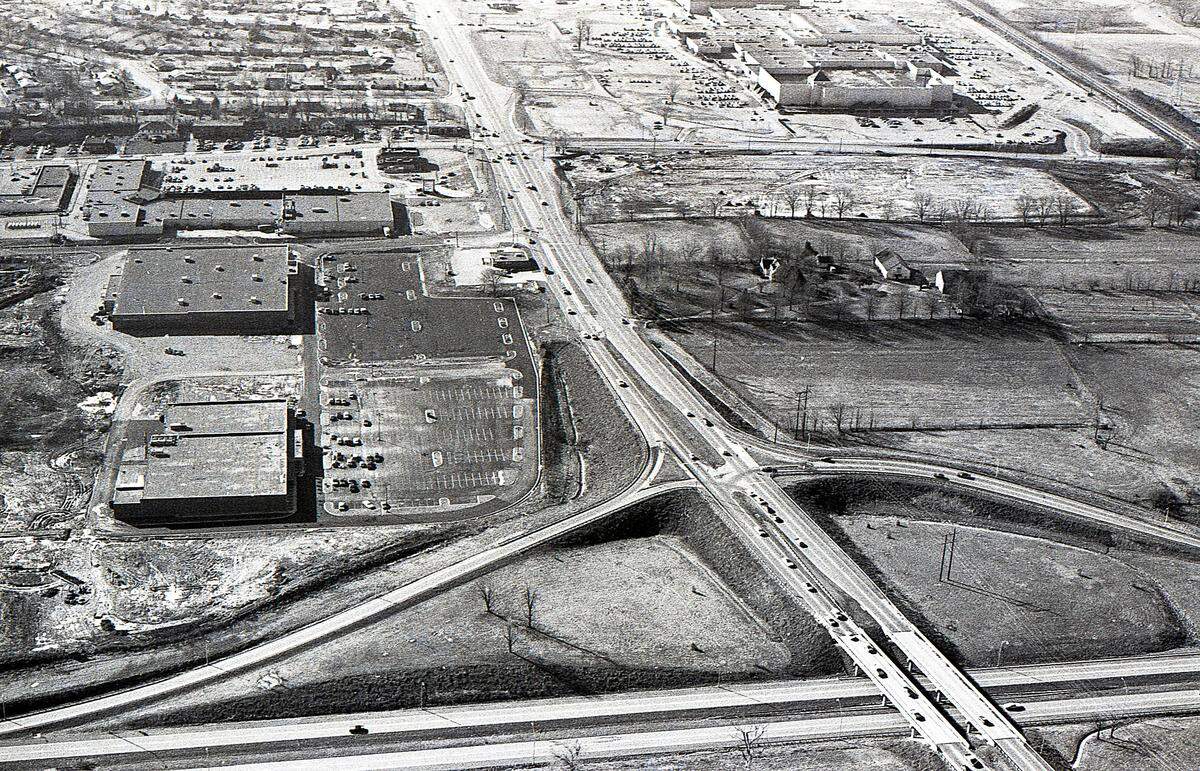
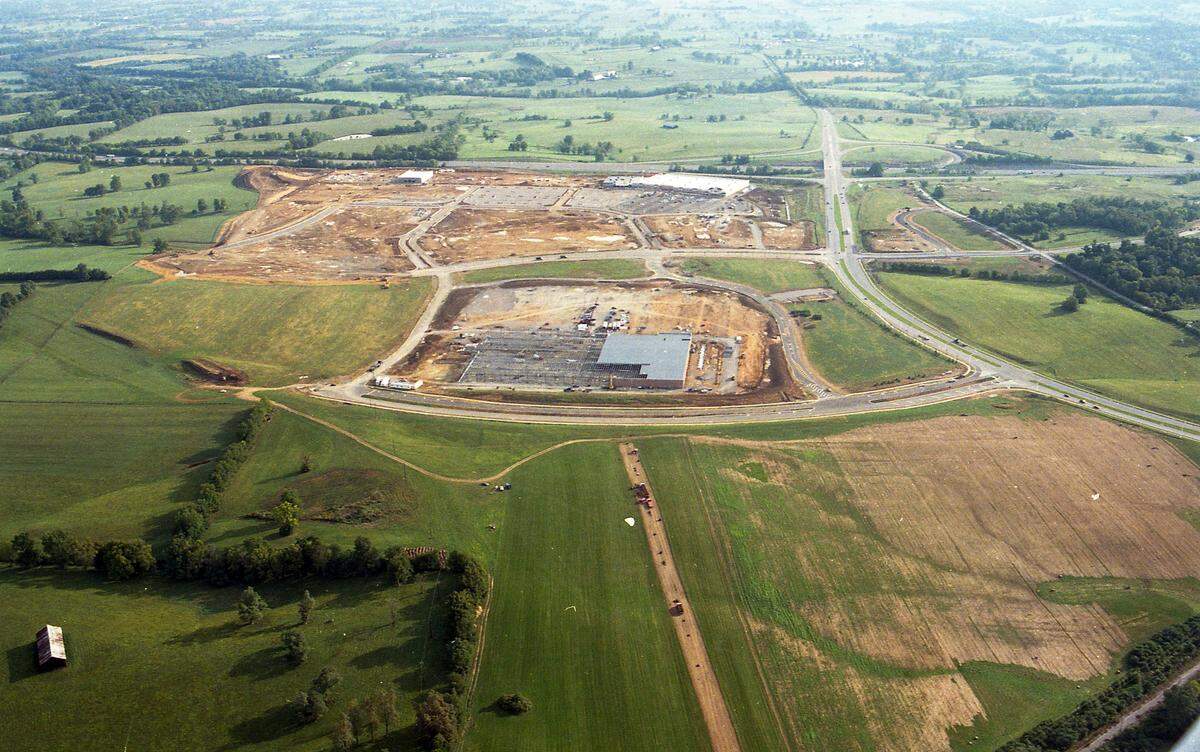
Aerial view of the Hamburg Pavilion shopping center at the intersection of Man o’ War Boulevard and I-75 on Monday, Sept. 22, 1997. Interstate 75 runs across the top of the image while Man o’ War runs up the right side. Meijer is shown under construction in the middle of the image in between what is now Pink Pigeon Parkway and Sir Barton Way. Just above that is construction of what would be come Lexington’s second Target store. Hamburg’s first stores, Target and Goody’s Family Clothing, opened shortly after this photo was taken in October 1997. Meijer, the 24-hour, 230,000-square-foot combination grocery and merchandise superstore, didn’t open until the next fall. Other original tenants of Hamburg included Kohl’s and Old Navy. The farmland at the bottom of the image today is part professional and residential development. Charles Bertram 1997 Herald-Leader staff file photo
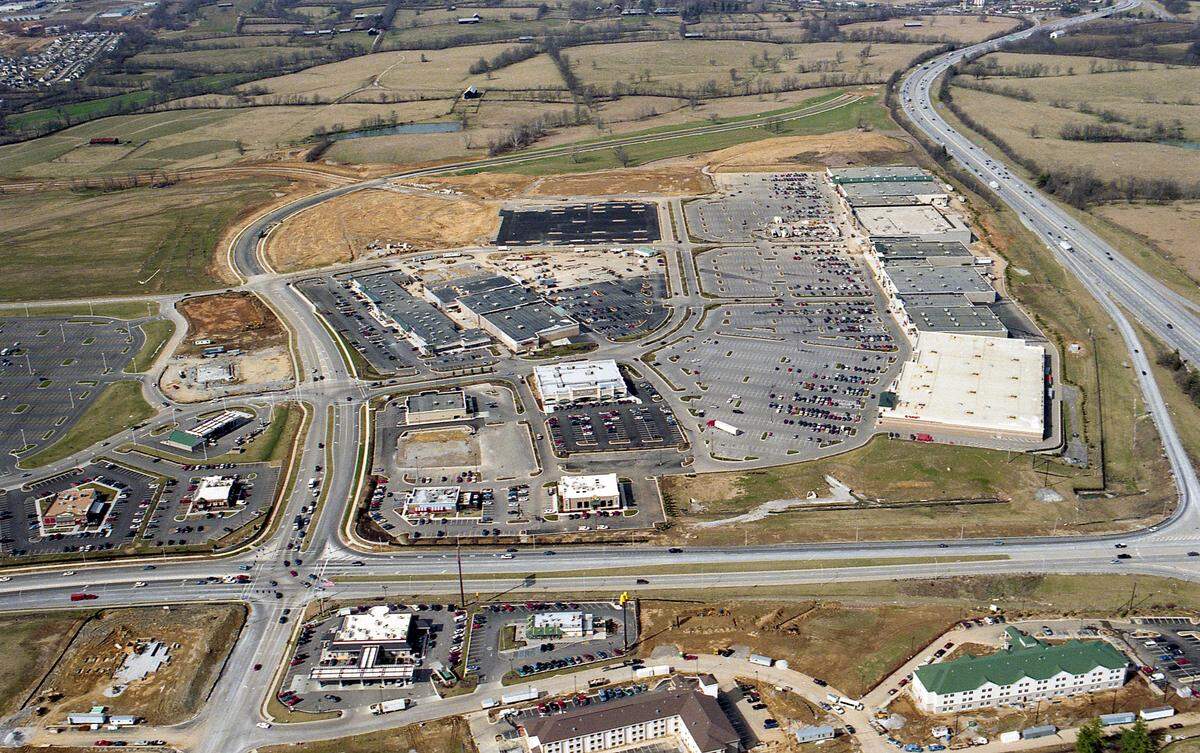
Aerial view of the Hamburg Pavilion shopping center at the intersection of Man o’ War Boulevard, running left to right across the bottom of the image, and I-75, seen at right, Feb. 15, 1999. Target is in the lower right corner of the shopping center. Restaurants facing Man o’ War from left, Max & Erma’s (today Red Lobster), Applebee’s (Chuy’s), TGI Fridays (The Local Taco) and Don Pablo’s (Old Chicago). Sir Barton Way, curving up the middle of the image is under construction and not complete. Charles Bertram 1999 Herald-Leader staff file photo
The Summit at Fritz Farm: Legal battle finally leads to development
For years, legal battles over residential vs. retail use delayed the sale and development of the agriculturally zoned Fritz Farm, at the corner of Nicholasville Road and Man o’ War Boulevard. During numerous legal proceedings in the 1990s, the Fritz family tried different proposals to develop the land for a shopping center with a Home Depot, Kohl’s and a Kroger.
In November 2009, the planning commission cleared the way for the land to be developed, long after farmer John R. Fritz, Sr., who died in 1998, began trying to get the land rezoned in the mid-1980s. The 50-acre farm sold for $13 million.
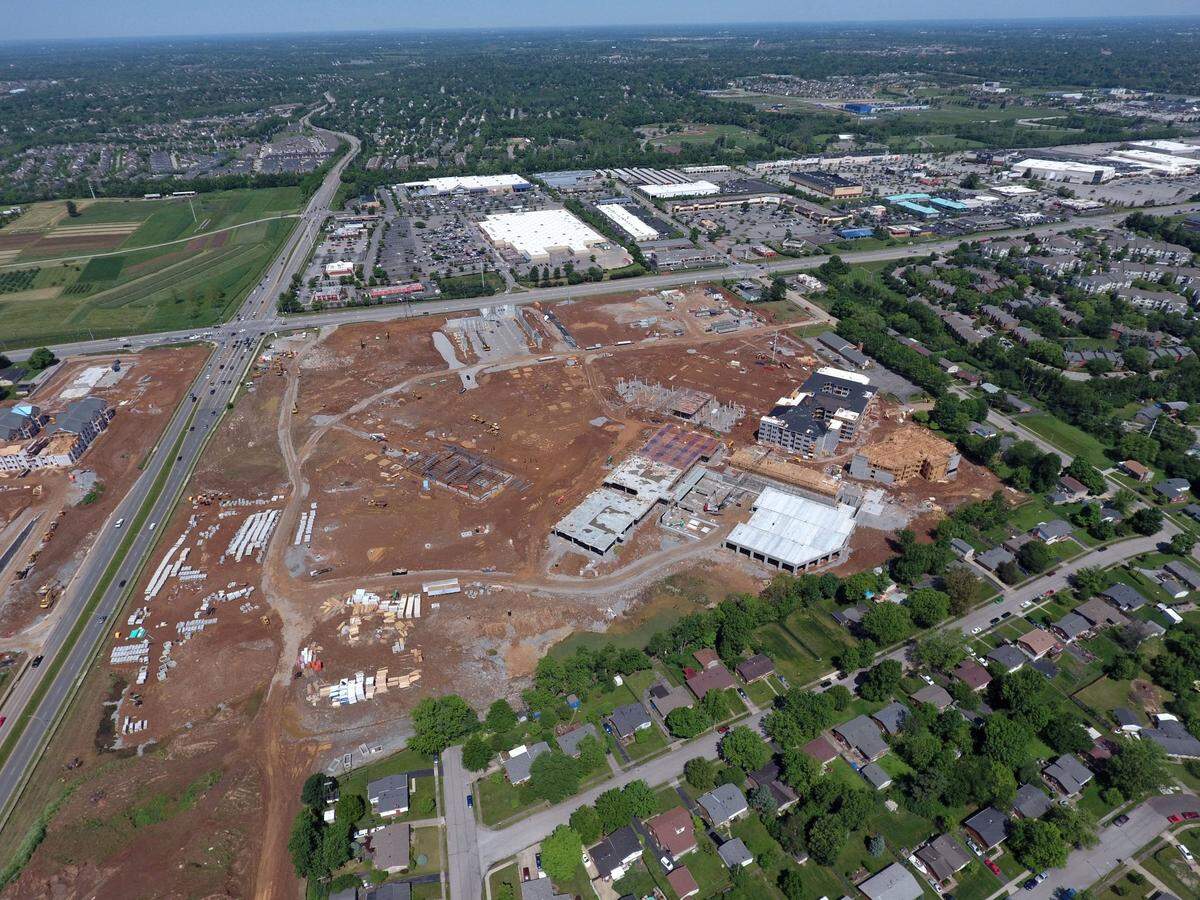
The Summit at Fritz Farm officially opened on April 27, 2017, with only 12 stores and many of the planned 70 retailers coming soon. Included was Kentucky’s first food hall, The Barn at Fritz Farm, but it closed in May 2020. Today it is multiple retail stores.
The upscale shopping center has just over 60 street-level shops, 12 restaurants, office space, apartments and a hotel.
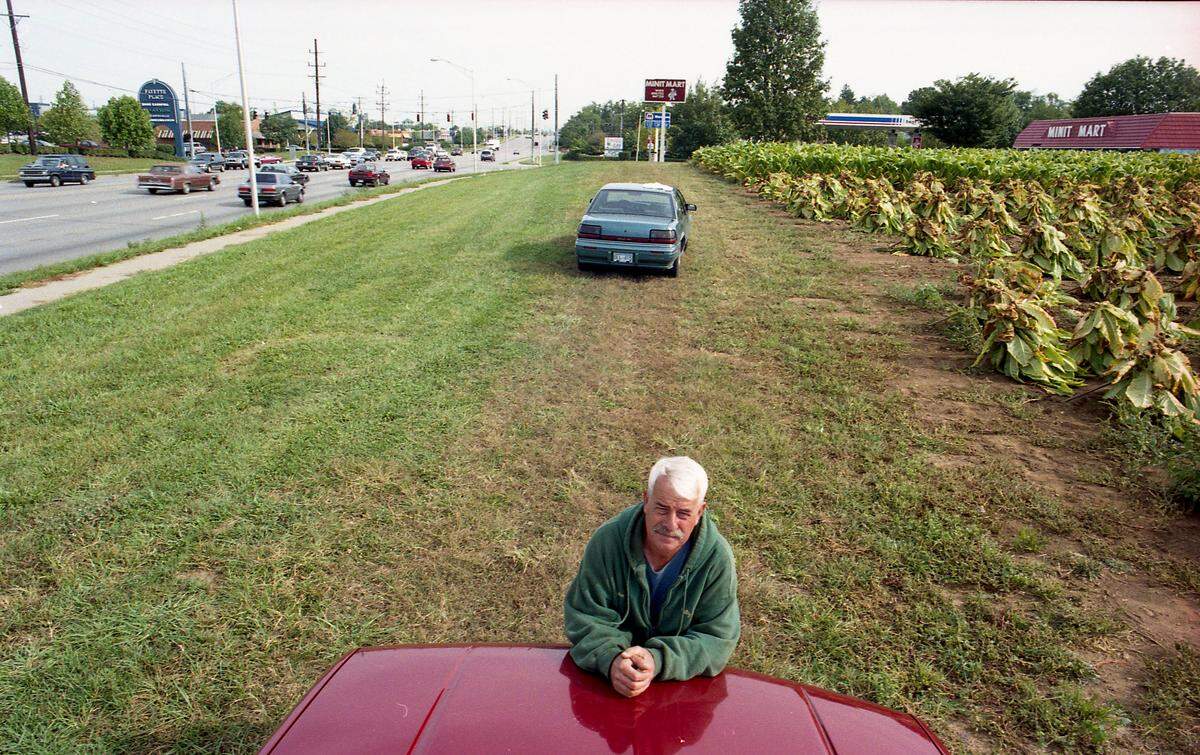
John Fritz on his farm with tobacco growing next to cars speeding down Lexington’s Nicholasville Road, Sept. 22, 1997. Years of legal fights about the development of the property ensued, with the city saying land on the east side of Nicholasville Road should be residential. Eventually the 50-acre farm would become The Summit at Fritz Farm upscale shopping center. Charles Bertram 1997 Herald-Leader staff file photo
Aerial photo of the John Fritz Farm at Nicholasville Road and Man o’ War Boulevard on Monday, Sept. 22, 1997. The 50-acre farm was on both sides of Man o’ War (from bottom of photo). Nicholasville Road runs from lower left to upper right in the photo. After a decades-long saga that saw the property owners, the Fritz family, ask that the agricultural property be zoned for development, an upscale shopping center was built on the site. Charles Bertram 1997 Herald-Leader staff file photo
Construction at The Summit at Fritz Farm, May 22, 2016. The new shopping center ushered in a new shopping trend in Lexington, breaking away from malls with upscale shops that could be entered from outside. Today the Summit has 300,000 square feet of retail and restaurant space. Many of the property’s retailers, including the J.Crew-owned apparel and accessories store Madewell and Reese Witherspoon’s Draper James were new to the Lexington market when they opened. Faron Collins Herald-Leader file photo
This story was originally published December 20, 2024 at 5:00 AM.
Brian Simms has been with the Herald-Leader for 20-plus years, most recently reporting and editing coverage of restaurants, bars, food and bourbon. He is also a photographer and manages the newspapers photo archive that dates back to the late 1930s.Support my work with a digital subscription
Get one year of unlimited digital access for $159.99