Clean-up from January storms costs Lexington more than $1 million. Here’s how it was spent
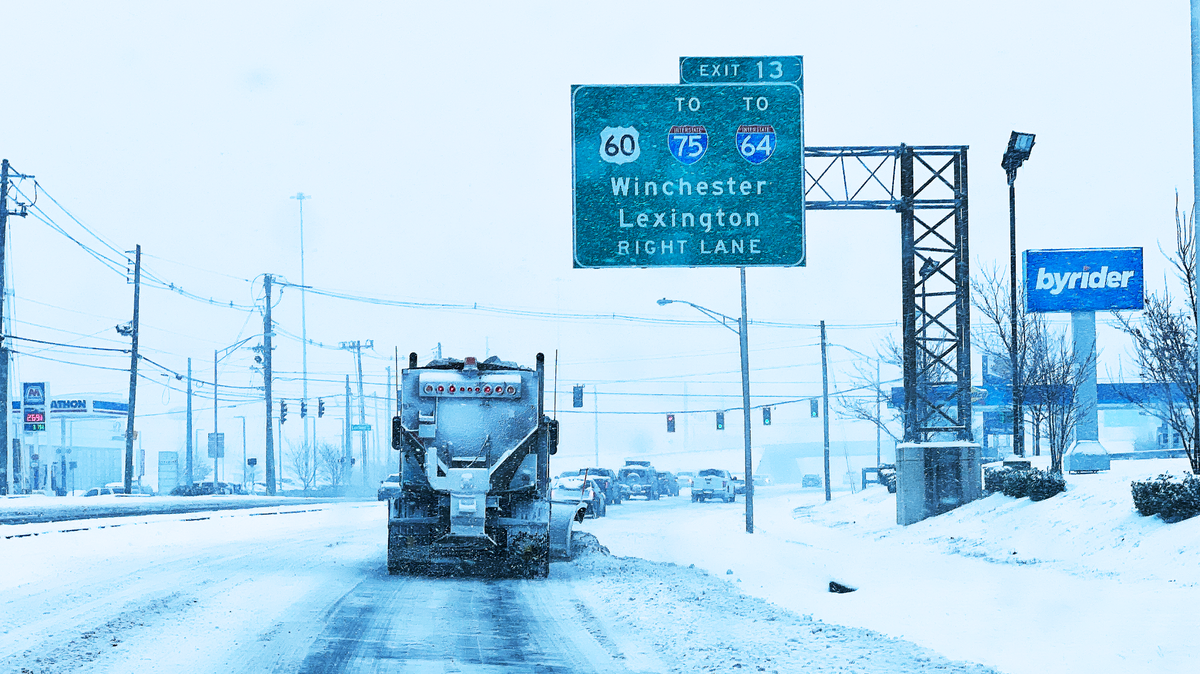
As Lexington struggles to determine how to better clear city streets from ice and snow, the costs of cleaning up two winter storms that hit the region in early January have topped $1 million, city officials said Tuesday.
The back-to-back storms that started Jan. 5 and continued until Jan. 11 dumped a combination snow, ice and more snow on Lexington streets. Crews struggled to treat and clear city streets, particularly neighborhood streets, generating multiple complaints from city residents.
The poorly cleared streets also meant Fayette County Public Schools canceled in-person school multiple days, angering parents.
Costs are still being tallied, but as of Tuesday, they had reached $1.2 million. Here’s how it was spent:
- Salt: $530,000 for 5,100 tons
- Salaries and overtime: $520,000 (that number does not include police overtime)
- Fuel, staff and parts to keep trucks operational: $60,000
- Part-time contractors: $60,000
- Beet Heat (an organic sugar substance used to treat roads): $24,000
Finance Commissioner Erin Hensley said the city looks for savings in other accounts — including its account to pay for utilities for city buildings — to make up for unexpected snowstorm costs. In recent years, since the COVID-19 pandemic, the city has had budget surpluses, including more than $20 million in October 2024.
Hensley said during a Jan. 30 meeting the city should have enough money in various accounts to pay for this round of snow cleanup.
But how the city will pay for future expenses to tackle snow and ice has not yet been determined. City leaders have cautioned that, as the city pledges to augment its storm response with more plows, and potentially more private contractors, the cost to taxpayers will grow.
Council asks for changes
In response to criticism over the city’s storm response, Mayor Linda Gorton announced Jan. 16 the city will buy five snow plow attachments and salt spreaders for city trucks to help augment the city’s fleet.
Those new attachments cost $58,745. The city installed those plow attachments in late January.
It will also eventually buy three new tanker trucks that will help the city spread more salt. Those trucks will take months to be delivered, city officials have said. The cost of those tanker trunks has not yet been determined.
Environmental Quality and Public Works Commissioner Nancy Albright told the Lexington-Fayette Urban County Council during a Jan. 30 meeting the city has heard from private contractors who are willing to help the city plow smaller neighborhood streets if the city is hit with another snowstorm in the new few months, she said.
Albright and Rob Allen, the director of streets and roads, told the council the city had to plow streets multiple times due to the multiple days of snow. It was able to salt major streets but not smaller neighborhood streets.
That meant those streets became icy and compacted with snow.
Snow plows can’t break up ice once it’s on streets, Allen and Albright said. Below-freezing temperatures meant salt and Beet Heat — a beet, sugar substance used on roads to help salt stick — didn’t work.
There are other salt products the city can use, but those products can deteriorate pavement, Allen said. Beet Heat is organic.
The ice downed hundreds of tree limbs further slowing the city’s snow removal efforts, Allen said.
The city snow plan also ranks certain streets based on traffic and if it has emergency services on it — such as hospitals or fire stations. Neighborhood connector streets are typically the lowest-ranked streets.
The city doesn’t typically plow, smaller neighborhood streets unless snow tops 8 inches. That hasn’t happened since 2015.
“The snow typically melts by then,” Albright said.
The city’s snow plan is based, in part, on prior years’ snowfalls. The January storms were unique, she said — it’s been more than a decade since the city has seen snow, ice and more snow followed by bitterly cold temperatures.
Many council members said Thursday that climate change means increasingly unpredictable weather, and the city needs to do a better job preparing and possibly finding money to pay for more private contractors and more trucks.
“Climate change is real,” said Vice Mayor Dan Wu. “Not normal is the new normal.”
Problems with Fayette County Public Schools
Lexington and Fayette County Public schools have had communication problems, including about district bus routes that should be prioritized for snow removal.
Albright said FCPS provided the city with bus routes in the spring and the fall, but school officials were also texting the city during the snowstorm with additional bus routes and information, she said.
The city’s snow plow software and the school district’s bus route software do not talk to each other, so the city can’t place bus routes over its mapping system.
“They have proprietary software, which makes it harder for them to share (that information),” Allen said.
Allen said the school system and the city are working on better communication to ensure all bus routes are clear. The school system used to have snow routes, which moved many bus stops to larger, cleared roads, but has abandoned that system due to safety concerns.
Albright said the city will look at its ranked street system and make changes as needed. It is also looking at costs to add more private contractors to tackle neighborhood streets in the event of a similar snowstorm.
That will be costly, Albright cautioned.
Sidewalks, crosswalks and turn lanes
Councilwoman Hannah LeGris, whose council district includes downtown, said during the Jan. 30 meeting she received multiple complaints from pedestrians in her district because it was nearly impossible to walk anywhere.
Moreover, many businesses’ private contractors plowed parking lots and pushed snow onto sidewalks and crosswalks, making it impossible for people to navigate city streets on foot, LeGris and other council members said.
Some of the snow plows also pushed snow into turn lanes, making them inoperable, some council members said.
Dave Cooper told the council Jan. 30 that he struggled to walk his rescue dog multiple times a day because the sidewalks near his home weren’t clear. There was ice on the roads and sidewalks, he said. He saw people using walkers or wheelchairs on those icy streets.
“Many people in my neighborhood don’t have cars,” Cooper said. “We don’t think about pedestrians enough in this city.”
The city has an ordinance requiring landowners, when 4 or more inches of snow has fallen, to clear their sidewalks within 48 hours of their street being plowed. The city asked people to do so after the snow events earlier this month, but it did not cite landowners.
The city said they understood that some people — the elderly and people with disabilities — may not be able to clear sidewalks.
Councilman David Sevigny recommended the city look at a system that exempts those are unable to clear sidewalks but still requires others to do so.
Albright said in waste management there is a program that exempts some elderly and people with disabilities from bringing their garbage and recycling to the curb. Those people may automatically be exempt from the sidewalk ordinance.
How to keep sidewalks, crosswalks and turn lanes clean will also be part of the city’s review of its snow plan, Albright said.