Lexington council advances plan to regularly assess growth boundary expansion
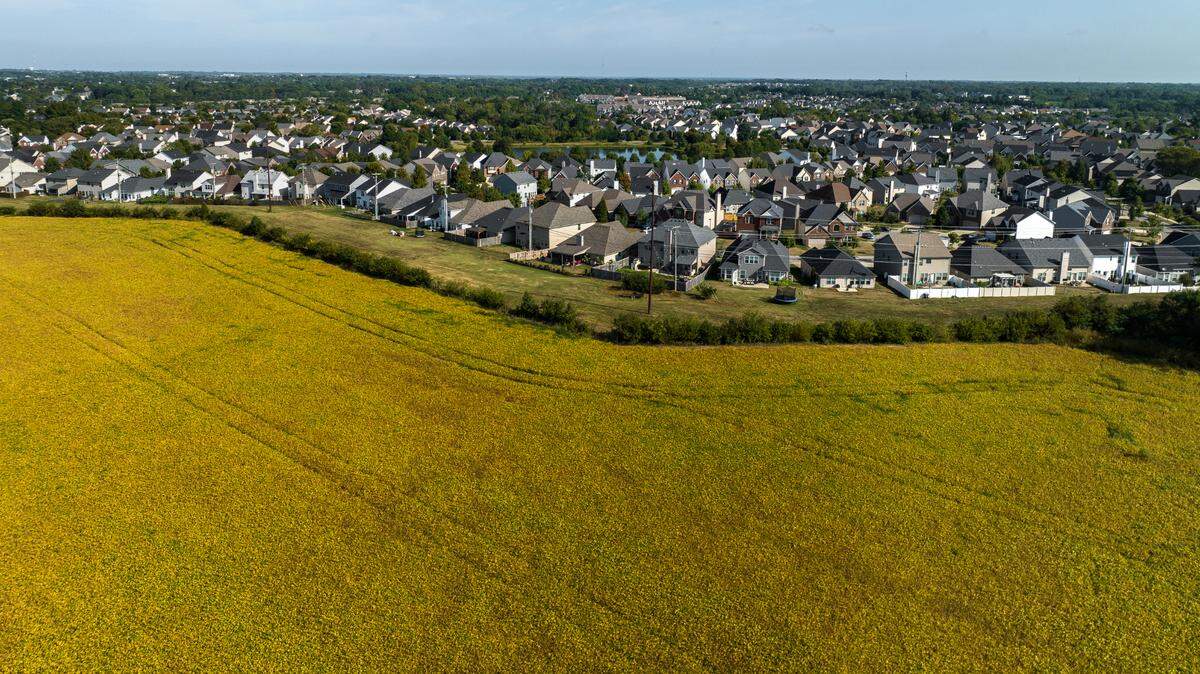
Amid rising prices and growing housing insecurity, the Lexington-Fayette Urban County Council will consider a new program that would require the city to consider altering the urban service boundary once every five years.
The full council voted in a Jan. 20 work session meeting to move the proposal, called the Lexington Preservation and Growth Management Program, forward. The plan will get a final vote of approval in the council’s Thursday, Feb. 12 meeting.
The urban service boundary, in place since 1958, restricts development to the center of Fayette County, preventing suburban sprawl and preserving rural land for agriculture, horse farms and green space.
Expanding the boundary to allow for more development has proven contentious over the years. Some believe the boundary contributes to Lexington’s increasing housing prices, while others think the boundary has no effect on the city’s housing market.
In 2023, council voted to expand the boundary for the first time since 1996. Roughly 2,800 acres were added for development by the city’s planning commission. The master plan for the new areas show they could host as many as 24,508 housing units — enough to fill the existing backlog of 22,549 needed to meet current demand.
There has never been a formal city government process for maintaining or expanding the boundary, and past decisions have been criticized for lacking transparency, long range planning manager Hal Baillie told the committee at the Dec. 2 meeting.
If approved, the LPGMP will “establish a transparent, data-driven approach” to future decisions around the urban service boundary, Baillie said.
Under the program, Lexington Division of Planning staff would calculate — using figures from the U.S. Census Bureau, the Kentucky State Data Center and residential building permits — how much land, if any, is needed for housing to meet Lexington’s expected 20-year population growth. The planning commission and council would hear those projections every five years.
If the data indicates Lexington needs new land for housing, the city council would kickstart a multi-step process to add the identified number of acres.
Before any new land could be added to the boundary, however, officials would look for undeveloped land already included inside the urban service boundary that could be taken out. A subcommittee would review the parcels if property owners are unwilling to develop. The planning commission, the council and the mayor would each be able to appoint three community members to serve on the subcommittee.
Once the subcommittee identified land for removal from the existing boundary, it would be up to the planning commission to remove that land. The total acreage of any land taken out of the existing boundary would then be added to the total amount of land the five-year report identified for addition.
If the report identified a need for 3,000 acres to be added to the boundary, for example, and the subcommittee removed 400 acres of land from the existing boundary, Lexington would then be searching for 3,400 acres for expansion.
Then, the same subcommittee would create recommendations for where the boundary should be expanded. Developers would submit proposals. The planning commission would have final approval over what land gets added to the boundary, and a master plan for those areas would be created before construction could start.
Is more land needed for housing development in Fayette County?
Lexington’s housing prices have increased dramatically in recent years. A 2024 study from EHI Consultants found the city’s median rent increased 47% from 2019 to 2024. Fifty-four percent of renters are spending more than 30% of their monthly income on housing.
Home sale prices have also increased 60% since 2019, the study found.
In 2024, the council passed a major zoning reform package that allowed for denser residential development across Lexington neighborhoods, allowed for apartments to be built on commercial properties, like strip malls and big box stores, and set design guidelines to prioritize bicycle and pedestrian safety.
The LPGMP, if approved, would require Lexington to consider and implement similar planning policies — or other ideas, like financial support for affordable housing — before pursuing any boundary expansion.
What about expansion for commercial development?
The LPGMP’s five-year review of Lexington’s land would only consider the city’s expected housing needs.
Land for economic development — specifically industrial projects, like factories that have come to other parts of the state in recent years — would be added to the boundary on a case-by-case basis as proposals are filed with the city.
No more than 250 acres could be added to the boundary for any one industrial project under the LPGMP. Developers would be required to submit a development plan, a report on how the project would boost Lexington’s economy and proof the site could house the necessary energy and sewer infrastructure.
Ten of the 15 council members would have to vote to bring in rural land for an economic development project.
This story was originally published January 20, 2026 at 5:15 AM.