Developer breaks ground on mixed-use, affordable housing in booming Lexington area
Will Hanrahan never planned to become a developer.
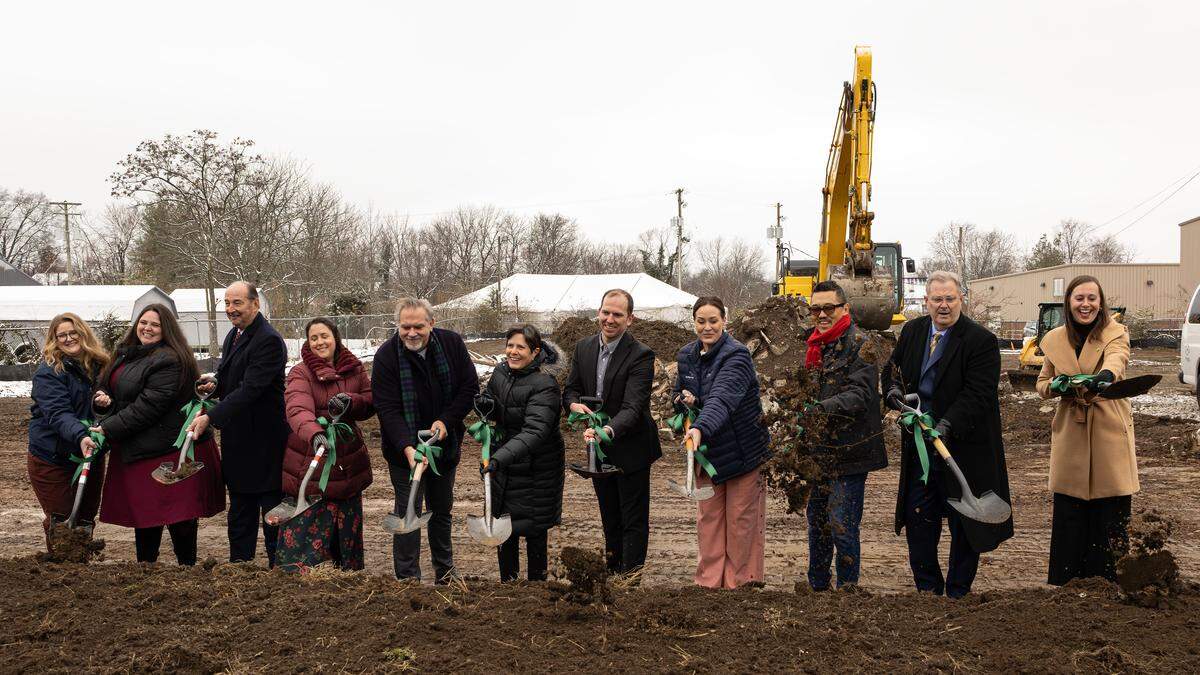
But Wednesday morning he broke ground on The Railyard, a $7.5 million residential and retail development, alongside a slate of high-ranking state and local officials.
Among those at the first-time developer’s groundbreaking were Lexington Mayor Linda Gorton and Vice Mayor Dan Wu, Lt. Gov. Jacqueline Coleman and Rocky Adkins, senior advisor to Gov. Andy Beshear.
“Today represents such a huge success for the city of Lexington as well as the Commonwealth of Kentucky,” Coleman told the crowd at the ceremony. “This is a great model for us to be able to take to other cities and counties across the state and say, ‘Look what Lexington is doing.’”
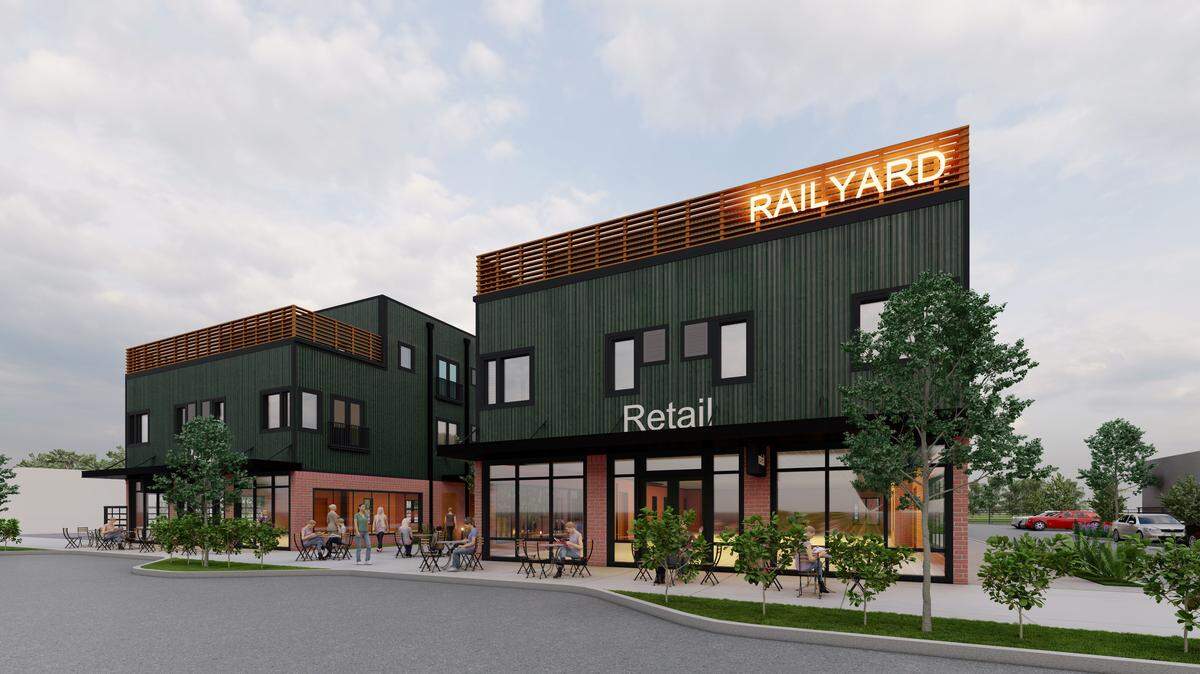
The Railyard, located at 1000 Delaware Ave., will feature 32 apartments, 12 of which will be income-restricted units intended to be affordable, and two, 1,500-square-foot retail spaces across three buildings — all built on a 1-acre brownfield in a growing part of Lexington.
It’s the quintessential example of the type of development local leaders have been pushing for in Lexington.
“This is exactly the kind of project that Lexington says it wants,” Commerce Lexington CEO Bob Quick said Wednesday morning. “It uses infill along with existing infrastructure. It is housing, and it supports workforce recruitment and retention.”
Lexington’s housing crisis has intensified since the pandemic. A recent study shows city rents have increased 49% since 2019. Fayette County needs more than 22,500 additional housing units to meet demand. Of that figure, 17,000 need to be affordable for residents making 80% or lower of the area median income, or $73,760 for a family of three in 2025, according to the study.
The Railyard’s 12 affordable units will be one-bedroom apartments with rents at $1,100.
Hanrahan, a native of the United Kingdom, moved to Lexington over a decade ago and built a career in corporate marketing. But he started itching for work that was more rewarding.
“Having lived here for 13 years, I quickly got the sense that this was the place that I wanted to be,” Hanrahan told the Herald-Leader. “I really wanted to do something that was going to give back and create an impact here in the city.”
Then came the idea for The Railyard.
“(I) got to know all of the developers and thought, maybe now’s the time for me to try it out for myself,” he said.
Hanrahan left his marketing career, bought the property in 2023 and sought ideas and advice. Developers, government officials, advocacy groups and neighbors in the area all have gotten calls from Hanrahan as he worked toward making the project a reality.
“From the very, very beginning, this was with done with the spirit of inclusion and collaboration and communication,” Brittany Roethemier, executive director of Fayette Alliance, said Wednesday morning. “(Hanrahan) worked to understand community wants and needs, and he was dedicated to talking to the stakeholders at every level.”

Several partners have played a role in making The Railyard come to life.
The project got grant funding from Lexington’s affordable housing fund, public infrastructure fund and stormwater quality fund. In total, the city gave $1,619,540 in public funding for the project.
Lexington’s affordable housing fund gives low-interest, often forgivable, loans to developers who commit to keeping units priced for families at certain income levels.
The fund provided two loans to The Railyard: an $800,00 forgivable loan with 0% interest and a $200,000 loan with 1% interest. The loans help subsidize the development costs, meaning developers have to rely on higher rents to cover the costs of the project.
Those 12 affordable units are required to be reserved for residents making 80% of the area median income or lower for 20 years.
The Railyard also got support from the Kentucky Brownfield Program, which helps property owners redevelop sites that may be contaminated from former industrial uses. The program did nearly $20,000 worth of work examining the site to determine how suitable for development it was. The Delaware Avenue property has been home to a railway maintenance station, an auto repair shop and a stone cutting facility in the past.
When the project opens in late 2026, it will be another investment in a booming part of Lexington.
Delaware Avenue has seen a growth in local investment over the last decade. Pasta Garage, an Italian restaurant, moved to the street in 2015. Pivot Brewing, which closed in August 2024, operated there for eight years. The International Book Project sends books to children across the globe from its building on Delaware.
The street is also close to National Avenue and the Kenwick neighborhood, both bustling areas with popular local businesses, like Mirror Twin Brewing and Wilson’s Grocery and Meat.
Hanrahan hopes The Railyard isn’t the last development of its kind in the city.
“So many of you have inspired me to do this project, and I hope this can inspire other people to do other projects like this in Lexington,” Hanrahan told the crowd at the ceremony. “(Lexington) needs developers who love this city and believe in this city, who want to pursue projects like this.”
CORRECTION: This story was updated at 12:39pm Dec. 4 to correct the details of the affordable housing loans for The Railyard and the monthly rent for the 12 affordable units.
This story was originally published December 4, 2025 at 11:47 AM.