Destruction of chemical weapons in Central Kentucky has reached a new milestone
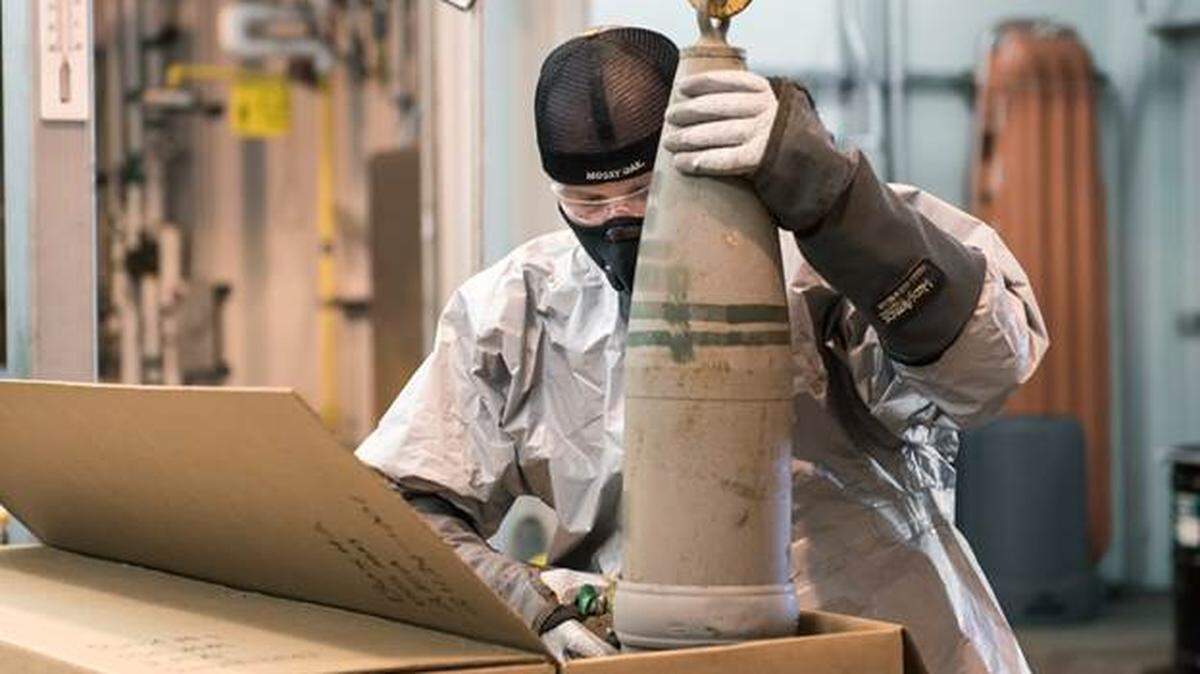
All of the projectiles containing mustard agent at the Blue Grass Army Depot have been destroyed, according to a news release from the Blue Grass Chemical Stockpile Outreach Office.
The last of more than 15,000 155mm projectiles containing mustard agent was destroyed at the Blue Grass Chemical Agent-Destruction Pilot Plant in Richmond Saturday.
About 31 percent — or more than 163 tons — of the original 523-ton chemical weapons stockpile had been destroyed as of Aug. 27. The remainder is on track to be destroyed by 2023, the outreach office said.
The destruction of all the weapons containing mustard agent was “the third of five chemical weapons destruction campaigns” to be accomplished in Madison County, the agency said Tuesday.
What remains are M55 rockets containing sarin, which is also known as GB, and VX nerve agent. Rockets containing VX nerve agent are being destroyed now, using a neutralization process.
The 155 mm projectiles containing mustard gas were the first weapons that employees at the plant began destroying, starting in June 2019. While the majority of the munitions at the 15,000-acre Blue Grass Army Depot are being destroyed via neutralization, a Static Detonation Chamber was used to get rid of the mustard, which had turned from a gas into a more solidified state inside a number of the projectiles over time.
An electrically heated chamber reaching temperatures of 1,100 degrees “deflagrated or detonated the munitions, and the chemical agents and energetics were destroyed by thermal decomposition,” the news release stated. “Gases generated as a result of the deflagration were treated by an off-gas treatment system that included a thermal oxidizer, scrubbers and a carbon filter system. Scrap metal was decontaminated for recycling.”
Nearly 4,000 8-inch projectiles containing sarin were destroyed between January and May 2020, and between January and May of this year, the agency said nearly 13,000 155mm projectiles containing VX nerve agent were destroyed.
“This marks another milestone in the overall disposal effort, making three of the five campaigns successfully completed,” Craig Williams, co-chairman of the Chemical Destruction Community Advisory Board, said in the release. “This achievement reflects what can be accomplished when the government, the contractors and the community work cooperatively towards a common objective. The workforce operating through the pandemic was a truly heroic effort.”