
Hard to trace, until it’s too late: How KY guns end up in out-of-state crime scenes
READ MORE
From commonwealth to crime scene
Guns legally purchased in Kentucky are being funneled to out-of-state buyers and winding up at crime scenes hundreds of miles away.
Expand All
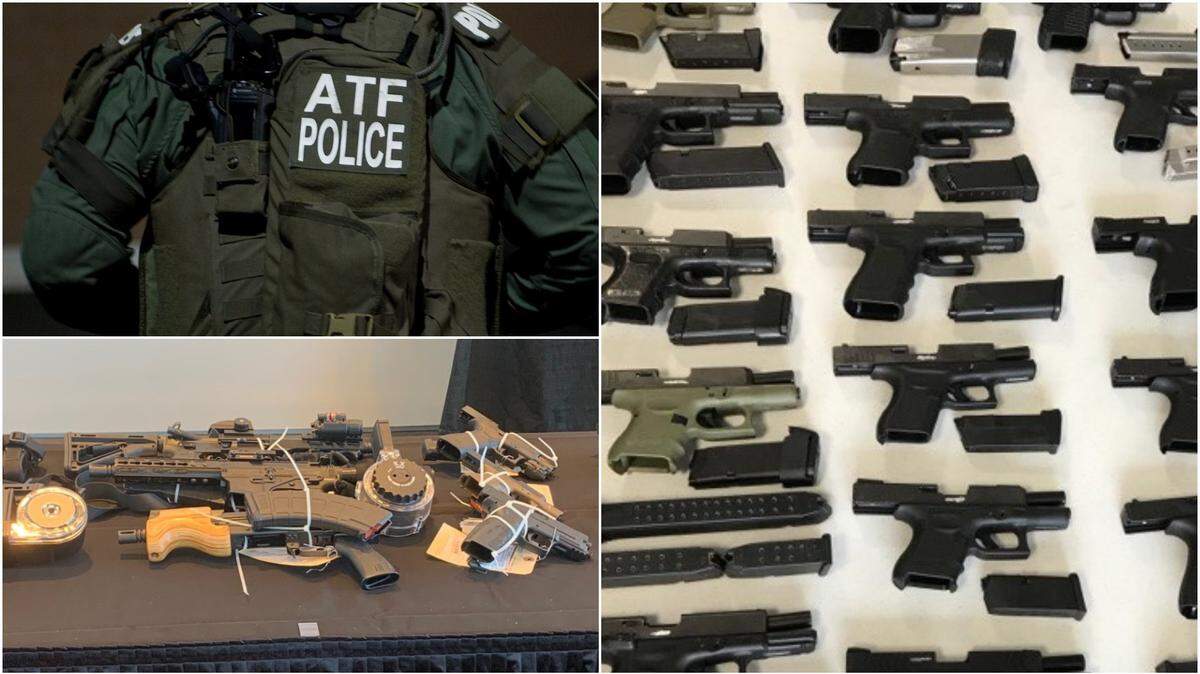
Hard to trace, until it’s too late: How KY guns end up in out-of-state crime scenes
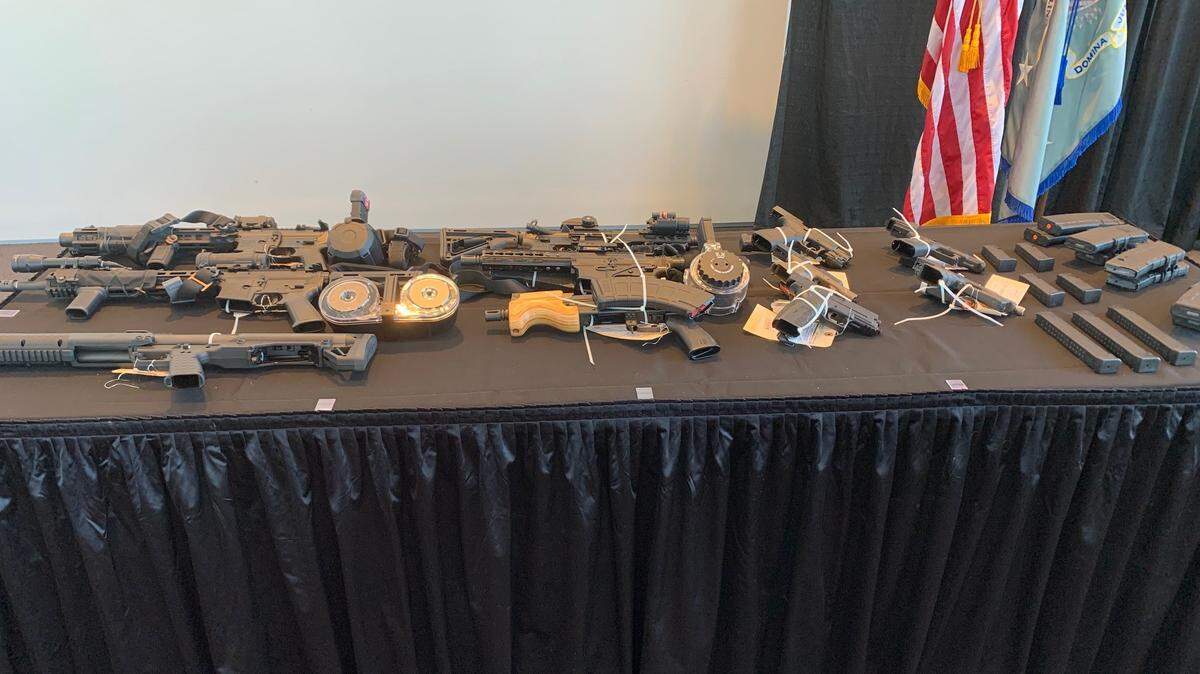
Ohio, Illinois have the most guns recovered by police and traced to Kentucky, data shows

Guns stolen from cars can wind up being ‘crime guns.’ The thefts are common in Lexington
Gun thefts from vehicles increased in Lexington between 2020 and 2021
When Chicago police responded to a mass shooting that left one person dead and others injured in March 2021, they recovered several firearms that led to the uncovering of an alleged gun funneling operation that spanned from the Kentucky-Tennessee border to the hands of violent criminals in Chicago.
With the help of the Bureau of Alcohol, Tobacco, Firearms and Explosives (ATF), Chicago police discovered the crime guns traced back to three men: Demarcus Adams, Jarius Brunson, and Brandon Miller, who were enlisted in the U.S. Army at the Fort Campbell military installation on the Kentucky-Tennesee border.
From December 2020 to April 2021, the men purchased firearms legally from federally licensed dealers in Kentucky towns including Oak Grove, Paducah, Fort Campbell and Hopkinsville. Those guns, and the people who bought them, were later connected to violent crimes and gang-related incidents in Illinois, according to federal court records.
Now the three men are among 12 people who have been federally indicted, with the other nine accused of being part of a Chicago gang, according to court records. The pending federal case is indicative of a larger problem, according to federal officials: it’s common for legally-purchased guns to be moved from Kentucky across state lines for criminal purposes.
Shawn Morrow, special agent in charge for the Louisville division with the Bureau of Alcohol, Tobacco, Firearms and Explosives, says the ATF is tracing a higher volume of guns in recent years.
Morrow said the number one priority of the ATF is to reduce the number of violent crimes which can be caused through the illegal transfer of “crime guns.” This is done through trace programs which are designed to find the original source of purchase for the firearms used in a crime. The ATF tries to seize guns before they can be distributed to other criminals.
The case involving the three men at Fort Campbell isn’t the only one in recent years.
In May 2017, Chicago native Christopher Henderson purchased a Taurus model PT111 Millennium G2 9mm pistol from a private firearms seller in Kentucky. Fourteen days later, that same firearm was found in a gangway on the west side of Chicago and tied to a crime.
That same month, Henderson, along with Chicago man John “JoJo” Phillips purchased a Walther Creed 9mm pistol in Frankfort. Thirty-one days later, Chicago police recovered it from a stolen vehicle.
These instances are just two of numerous illegal gun sales that took place at the hands of Henderson, Phillips and Jaiqail Wright, all from Chicago, who purchased and brokered firearms illegally from September 2016 to August 2017.
How one trio bought guns in Kentucky, moved them out of state
The trio would purchase firearms from various private sellers in Kentucky and traffic the firearms to Chicago. Once there, the men resold, transferred and delivered the weapons through sales often negotiated on Facebook Messenger.
Several of these guns were recovered by law enforcement while investigating crimes committed in the Chicago area, sometimes just weeks after they purchased them in Kentucky.
The firearms were purchased from someone on Armslist.com, a website dedicated to the sale and trade of firearms or firearms related items such as magazines, ammunition and gun parts between private individuals. Using different email addresses and names, Henderson and Phillips contacted sellers in Kentucky on the website to purchase certain guns.
None of these men held a federal firearms license, and have since been charged, convicted and sentenced for unlawfully dealing firearms in interstate commerce. According to court records, Phillips, a convicted felon himself, would purchase these weapons in Kentucky and knowingly sell them to other felons under false names.
Henderson and Phillips provided Wright with the make and prices of the firearms which were in some cases around 50% to 100% above the retail value of the firearms.
What’s a ‘crime gun?’
“When a firearm is part of a bonafide criminal organization and they come up with information on a gun that is possessed illegally, the ATF helps to identify the first purchaser, their name, and background information,” Morrow told the Herald-Leader. “Then investigators are making contact with the purchaser to determine how it may have ended up at the crime scene.”
According to a 2020 firearms trace data report, most traced guns investigated by the ATF in Kentucky were traced back to sales originating in the state. Law enforcement traced more than 3,650 guns that had been recovered.
But outside the commonwealth, the highest number of firearms traced back to Kentucky were found in Ohio, Illinois, Tennessee, Indiana and Michigan. Ohio had the highest amount of recovered firearms traced back to Kentucky: 501. Illinois was the second highest at 308 firearms, followed by Tennessee at 255.
For guns to be traced by the ATF, the guns must be part of a bonafide law enforcement investigation, according to ATF officials.
ATF: Variation in gun laws across states creates a market
“There has been an increase in Kentucky in the number of firearms we are tracing. Over the years from 2018 to 2019 we saw about 4,900 to 5,000 (firearms traced) by law enforcement,” Morrow said. “Now that number is about 7,000, so there has been an increase.”
In regards to out-of-state illegal sales of firearms, Morrow said the largest markets stem from other states where there are more stringent regulations and laws for gun ownership.
“Some additional laws are put in place in other states for firearms transfers, possession and purchasing and in those areas where they are more heavily regulated, that creates a market,” Morrow said. “Criminals will source from a state less-regulated with a goal from individuals in a higher-regulated market.”
This is specifically the case for Chicago, a city that has just one Federal Firearms Licensee within city limits, which creates a large market for attempting to obtain illegal firearms. According to the trace report, the city saw 172 crime guns traced back to Kentucky in 2019.
The market in Chicago is large enough that the city has more gun recoveries than Los Angeles and New York combined, according to Kristen de Tineo, the special agent in charge of the Chicago Field Division of the ATF. Her office covers two-thirds of Illinois, southern Indiana, and a portion of Wisconsin.
“That is a huge number,” she said. “Regardless of any sort of law, there is a market for guns, and those that have the desire to have them and want to obtain them will go through any mechanism to do so.”
De Tineo said it can be difficult to trace and monitor firearms, because unlike drugs, firearms are a legal commodity and until they are recovered – following a violent crime or tragedy – identifying the diversion into the illegal marketplace can prove challenging.
Gun transfers can be accomplished through theft, straw purchasing, illegal private transactions and other means.
Straw purchasing: How criminals ‘defeat the system’
“Straw purchasing,” as charged in the case for the three Chicago men, occurs when the actual buyer of the gun, being unable to pass the federal background check or desiring to not have their name on the transaction, uses another person who can pass the background check to purchase a gun on their behalf.
“Straw purchasing is certainly a big issue for ATF and investigators,” Morrow said. “The problem with that is someone is circumventing the firearm purchase to get it into the hands of someone that is not supposed to have it.
“A straw purchaser helps defeat that system and what we see often in straw purchasers, those firearms end up in crime scenes, where it is a violent crime that has been committed.”
Unlicensed dealing is an issue as well.
Morrow clarified it is perfectly lawful for individuals to sell to one another so long as they aren’t prohibited from having firearms, or have proper licensing to do so as a firearm dealer.
Regardless of the method someone may choose in attempts to illegally obtain a firearm across state lines, the ATF manages 25 crime gun intelligence centers to collect, analyze and distribute intelligence about crime guns, mass shootings and major incidents across multiple jurisdictions.
The ATF’s Louisville Field Division coordinates with the other 24 intelligence centers across the country to investigate what the circumstances are when someone has purchased or obtained a crime gun. The Louisville Field Division and others coordinate with tracing centers to find out where the gun originated.
How the ATF traces guns
Cassandra Mullins, public information officer for the ATF’s Louisville Field Division, explained the process for tracing a gun.
To start firearm tracing, an investigating law enforcement officer submits a trace request (either by email, fax, or through the ATF’s eTrace system) to ATF’s National Tracing Center in Martinsburg, W. Va. A complete request discloses the weapon’s identifying details, including its serial number, model, caliber, and manufacturer. The ATF is the only agency allowed to perform gun traces.
A trace documents the life of a gun, up to the point of sale from a licensed dealer. It will show which manufacturer made the gun, which wholesaler distributed the gun, which federally licensed firearms dealers sold or transferred the gun, and to whom (the first purchaser).
When the ATF traces a gun, it asks a gun dealer to go through its records and send a copy of the sale to the ATF. A big problem comes into play when a gun store has closed.
Dealers who go out of business must submit all their records to the ATF’s National Tracing Center, the only repository of these records in the United States, so those records can still be accessed to trace the gun to the first purchaser when a firearm is recovered in connection with a crime.
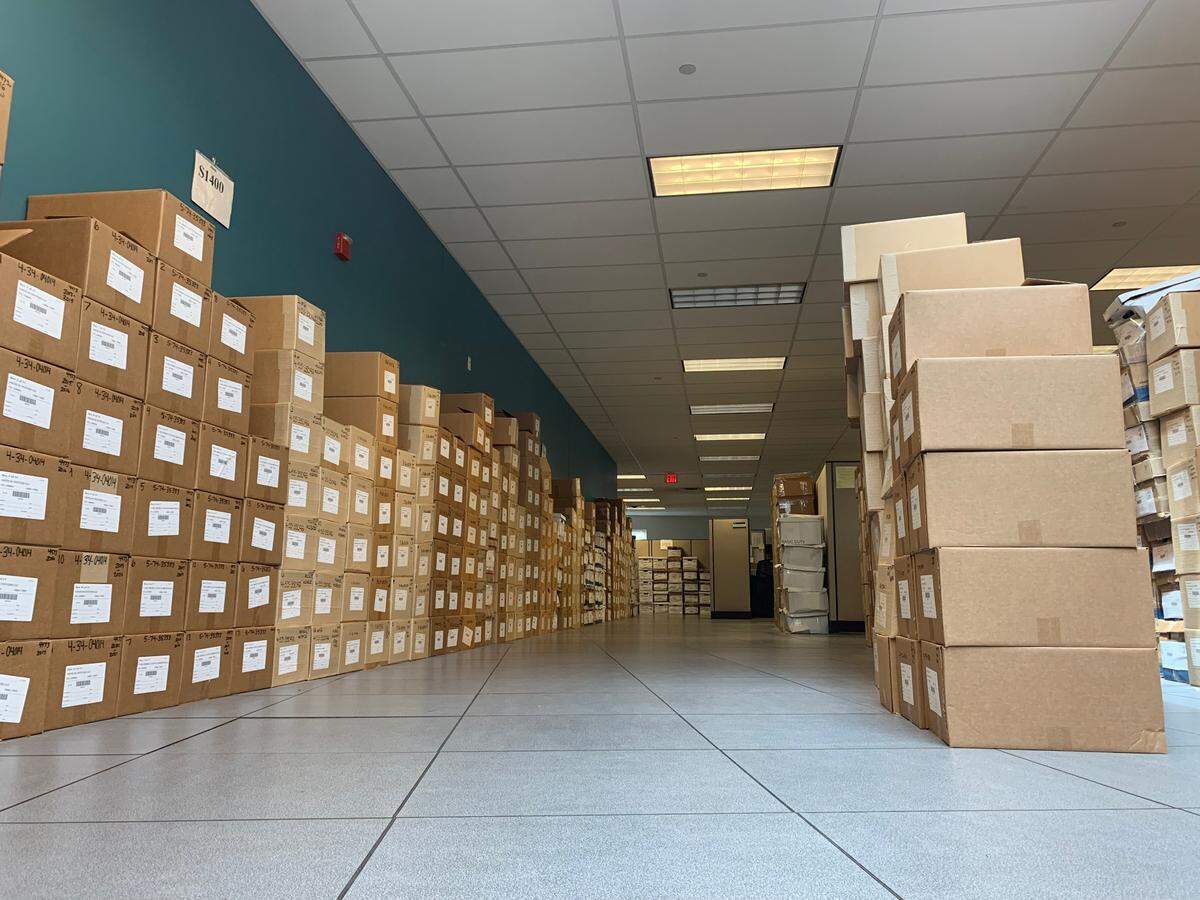
The ATF uses shipping containers as excess storage for the high volume of out-of-business records the ATF has been receiving, approximately 6 to 8 million per month. Once processed, paper records are destroyed.
The ATF currently has approximately 28,000 boxes of records in the queue to be processed, many of which are stored in the shipping containers because there is no remaining storage space inside the building.
“It is difficult when people cross borders and sell those firearms,” Morrow said. “Being sold and transferred a number of times creates difficulties in tracking the history of the gun before it was used in a crime. But we work with a variety of task forces that include the other centers, task force officers, Kentucky State Police, and other law enforcement and we can generally work strong investigations with them.
“The number one goal is to reduce violent crime and look at the ways that are most effective to target sources of crime guns and work on robust relationships with partners to prevent that and interdict firearms before criminals or trigger pullers can get them and avoid shootings and violent crimes, reduce the risk to the public, and make the community safer.”
De Tineo agreed, and said the partnerships with all law enforcement, tracing centers and prosecutors offices help them to be successful.
“The most important thing is that everything we do is in partnership. Without local law enforcement, prosecutors, the public and partnerships with other field divisions like Louisville,” de Tineo said.
“Firearms trafficking cases are impactful to violent crime traced back to Louisville or Kentucky and important for us to communicate with their office to ensure that people responsible for these crimes are prosecuted appropriately.”
This story was originally published May 26, 2022 at 11:00 AM.
CORRECTION: This story has been updated to clarify several statistics and facts about ATF gun tracing.