Mediation leads to more plea deals in Lexington felonies. Victims’ families are concerned
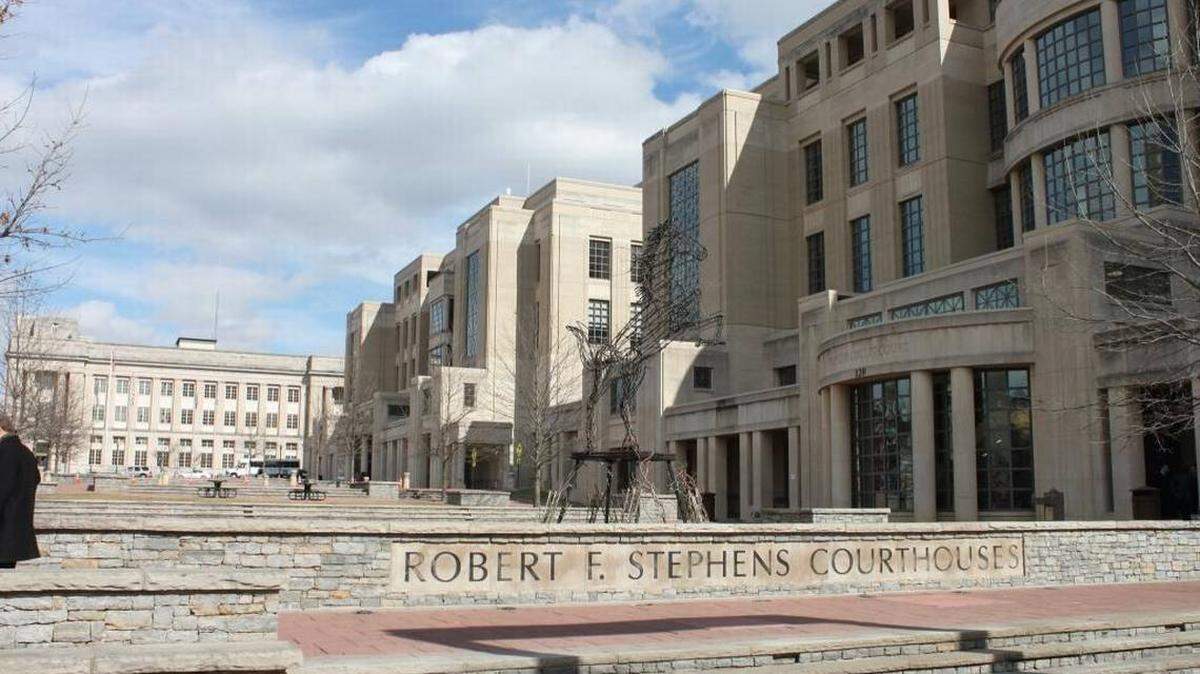
What’s happening: Families of Fayette County shooting victims have recently spoken about frustrations over suspects getting acquitted or working out plea deals with prosecutors.
They’re speaking out about their concerns as Fayette County continues to utilize felony mediation, a process started in April 2021 which helps reduce a backlog of court cases by getting prosecutors and defense attorneys to work together in an effort to reach a plea deal.
Why it matters: Fayette County’s backlog of court proceedings has caused some murder cases to go on for years without resolution. While mediation is intended to help relieve the issue, it has left some victims’ families feeling as though justice hasn’t been served.
Read more:
Plea deals have left some victims’ families upset
When James Terry was fatally shot inside a Lexington bar in 2019, his family was left with grief and the hope that the man who shot him would face justice in the Kentucky courts system.
But after more than three years of court dates, the conclusion of the case did not bring Terry’s family a sense of justice. Larry Walters, 73, admitted that he opened fire in the bar and killed Terry. But after originally being charged with murder, he accepted a plea deal from prosecutors. He pleaded guilty to manslaughter, giving him less time in prison and making him eligible for parole more quickly.
Terry’s family said in court that they wanted a harsher punishment, and they took issue with the Fayette Commonwealth Attorney’s office giving Walters a chance to plead to lesser charges.
Other victims’ families have expressed similar frustrations as they’ve watched someone responsible for killing a loved one accept a reduced conviction, or get acquitted altogether in a jury trial.
And as Lexington has begun taking part in felony mediation, a court process which brings prosecutors together with defense teams to negotiate more plea deals, some victims’ families have grown more frustrated.
‘Heartache will not end’
A handful of Terry’s family members gave testimony in court during the sentencing of Walters, saying they were unhappy with Walters’ reduced prison time.
Walters, who’s now 73, faced a life sentence when he was originally charged. However, his sentence was reduced to 20 years when he agreed to plead guilty to manslaughter. Walters will be eligible for parole after serving 20% of his sentence, according to state law. Because he has been credited for time served while waiting for his case to be resolved, he will be eligible for parole next year.
Terry’s wife, Linda Sue, and son, Chad Michael, said in court the justice system failed them when the Commonwealth Attorney’s office offered Walters a deal.
“The Assistant Commonwealth Attorney’s office failed the families with offering this sentence and compromise,” she said. “I don’t understand how he gets 20 years for killing a man and will probably only be behind bars for five and a half months. Then the burden is put on me to go before a parole board to plead for more time.
“Even after I walk out of here today, the pain, financial burden, and heartache will not end,” she added.
Walters’ case was not mediated. He accepted a plea deal earlier this year after a judge declared a mistrial in his case.
Another man, Danzell Cruse, received eight years for reduced charges after shooting and killing Jocko Green in July 2021. Cruse’s case was mediated, according to court records.
Several of Green’s loved ones spoke in court at Cruse’s sentencing and said the eight years would not bring reparations for their loss.
Green’s sister, Martina Morton, said eight years was “not justice.”
“Eight years, that is not justice,” she said. “Eight years is not going to bring these kids their dad back. That is not fair and he did not deserve to die. If justice does not happen to you now, and you get off on these charges, then it is going to keep happening with kids picking up guns.”
Victims’ families understand mediation’s benefits, still frustrated
Some victims’ family members argue, while they understand felony mediation’s purpose, victims don’t get justice if a perpetrator takes a plea deal.
Felony mediation was implemented in Fayette County in April 2021, in an effort to help address a backlog of felony cases in the court system. The COVID-19 pandemic exacerbated the issue of stuffed court dockets.
Felony mediation provides significant savings in court resources, utilizes unique knowledge and experience of retired judges to mediate felony cases, and provides restorative justice to parties involved in felony mediation, according to the Administrative Office of the Courts.
In addition to those advantages, Fayette Commonwealth Attorney Lou Anna Red Corn has previously said that her office finds itself in a situation where amending criminal charges is necessary.
“Amendments to criminal charges are sometimes necessary to account for the evidence that the prosecutor can present at trial,” Red Corn previously told the Herald-Leader. “The prosecutor must establish proof beyond a reasonable doubt and all twelve jurors must agree to convict a person.
“Any decision to amend an offense in exchange for a guilty plea is based upon the admissibility and strength of the evidence and the prosecutor’s assessment of the likely outcome of the trial. “
But Deanna Mullins, whose 19-year-old son was shot and killed in 2017, said she wouldn’t have wanted her son’s case to be mediated if given the chance. The resulting court case occurred before Fayette County began felony mediation. The man who went to trial for Howard’s murder was acquitted following a jury trial in 2021.
But no victim’s family is given a choice if the case goes to mediation. According to Red Corn, prosecutors can decide to mediate, but there have also been cases in which a judge ordered mediation despite disagreements between prosecutors and defense attorneys.
“We talk with victims/survivors about defense requests to mediate, and in some cases, we encourage it,” Red Corn said. “We want them to participate to the extent that they feel comfortable, but they are not forced to attend. Mediations are like court proceedings – victims or survivors have a right to be present, to be heard, and to speak with the mediator.
“How well that process goes varies depending upon the victim or survivor and the mediator.”
In addition, if a guilty plea results from the mediation, it is the prosecutor’s decision, according to Red Corn. The recommendation is consistent with the admissibility and strength of the evidence of guilt, and evidence of potential defenses.
The facilitator may learn potential defense evidence and defenses when they meet privately with the defendant. Red Corn said her office speaks with victims about the reasons for guilty plea recommendations, and sometimes victims do not agree with the decision.
“It is our goal to make sure that victims and survivors are treated with fairness and allowed to participate in court proceedings. It is the commonwealth’s responsibility to make the final decision,” she said.
Mullins said she feels that a plea deal “gives a positive situation to the perpetrator and to the offenders.”
“But the family of the victims are never considered in these instances,” Mullins said. “Our lives have been changed and turned upside down by the taking of our child or loved one, and we are given dates we have to go back and relive this trauma and do it over, and over again.”
For defense attorney Chris Tracy, bluegrass regional manager/assistant general counsel for the Kentucky Department of Public Advocacy, he said the felony mediation process gives “intangibles” to defendants that get to see their families.
“I can have the defendant’s family there so they can see them, and come and get in a hug. It is not the normal fodder of court and gives the parents a chance to be a part of court and help potentially younger clients that are looking at a murder charge,” Tracy said. “It is helpful to have mom and dad there to help talk it out. There is really no downside to be had.”
Mullins said it’s hurtful because the families of victims don’t get to talk to their loved one or hug them.
“A lot of the judges and defense attorneys don’t realize that we can’t hug our child or talk to our child,” she said. “We can’t go to the courtroom or call the jail and hear their voices. So saying the defendant can have their families there to give them a hug and give them advice, that is very hurtful.”
Families should play a bigger role, says shooting victim’s mom
Mullins feels the victims’ families need more say in the decision to send a case to mediation. She is a part of a group, Moms Demand Action, which works with legislators to address gun violence and offers support to other survivors.
“I know that now we have a lot of cases and reading previous articles, (attorneys) want to reduce the caseloads, but it may just be a file or caseload to them, or a number, but this is a person to us,” she said. “We want consideration that we are an extension to this individual – not a case or a file on a desk– they exist and victims should play more roles in whether they want mediation or not.
“If we don’t want it, then we want to go to trial. But we are not given that opportunity. We are given dates to show up and attend, we are not asked if we want this or not. We don’t get to make those decisions,” she said.