A Lexington judge downgraded a murder charge to manslaughter. A grand jury disagreed
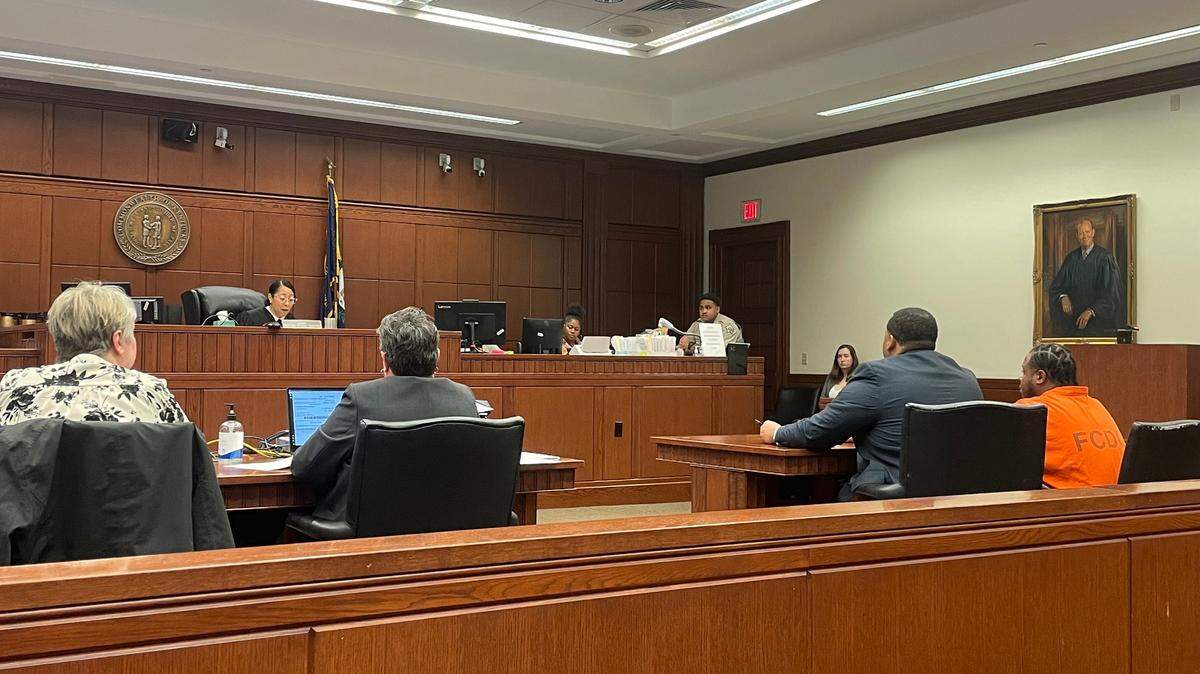
A Fayette County grand jury has decided to indict a Nicholasville man on a murder charge despite a judge’s previous decision to downgrade the offense.
Corry Jackson, 37, was indicted Tuesday on charges of murder and being a convicted felon in possession of a handgun by the grand jury, according to court documents. He was originally charged with murder, assault and possession of a gun as a felon.
On May 1, Fayette District Judge Denotra Spruill Gunther reduced his murder charge to manslaughter after she claimed a Lexington police detective’s initial testimony did not provide enough evidence to support the murder charge. She dropped the assault charge.
During the preliminary hearing on May 1, Detective Jeremy Adkins admitted that only witness statements prompted Jackson’s arrest. Jackson was not found with a weapon, and Adkins shared there was a separate suspect they were pursuing entirely who had not been charged.
Adkins also said investigators were waiting on gunshot residue testing to be done by Kentucky State Police — which has a backlogged evidence lab.
Daniel Whitley, Jackson’s attorney, said the residue evidence could exonerate his client. Whitley also said that if his client was involved at all, he could have been defending one of the victims in the incident, which left two people dead.
Jackson was arrested after the shooting in the 400 block of Chestnut Street on April 20. Lakeisha Hill, 32, and Timonte Harris, 43, both died as a result of the shooting. Jackson was arrested one block away from the scene of the shooting, and a witness later identified him as the shooter, according to court documents.
Testimony from Adkins revealed police believed Hill was actually killed by Harris, who Whitley said his client could have come to defend.
Fayette Commonwealth’s Attorney Kimberly Baird said a grand jury often hears more information than what is presented at a preliminary hearing, which could be why they decided to indict Jackson with murder.
“Once we get the case and present it to the grand jury there is more information involved, (the grand jury) asks questions about what happened, and it is more full presentation because the standards are different,” Baird said. “Based on the information they receive, they can make the determination to keep the charge as is, increase it, or dismiss it.
“Based on what they heard from the detective, they felt the appropriate charge was murder.”
Whitley said much of the time, people have faith in police and the grand jury, but after Jackson’s recent indictment, he said he feels “the system is completely flawed.”
He said his office doesn’t have discovery of the evidence against his client yet, but he hoped every piece of evidence the prosecutors have was presented.
“I am hoping that the test results were presented to grand jury and the Fayette commonwealth attorney presented all the evidence they have available. Nothing should be pending while someone is being charged with murder,” Whitley told the Herald-Leader.
“If all the evidence and test results — DNA, gunshot residue and whatever they have against my client was not presented, this is is extreme injustice and a slap in the face to everyone who believes in the system.”
Jackson is scheduled to make his next court appearance June 30.
This is a developing story and may be updated.
This story was originally published June 22, 2023 at 11:01 AM.