Plea deals ease KY court burdens, but does this ‘drive-thru-style justice’ help defendants?
When Seth Raines was arrested for a robbery in Hart County and charged with a felony, he suddenly faced 15 years in prison.
Raines, 35, had dealt with drug use for nearly 20 years, and was facing a court case that could ruin his life over an incident he had a hazy memory of. Now seven years after the arrest, Raines says he felt pressured to take a plea deal, and he didn’t understand how significantly a felony conviction would impact his life.
“It was definitely a shock and almost to me felt like (the courts) were trying to scare me into this,” Raines said. “‘If you don’t take this, if you go to trial, you can go to prison and be behind the fence for X years.’ They didn’t come off of that for a while.”
Raines was assigned a public defender like thousands of others because he couldn’t afford a private attorney. He relied on the advice of his appointed lawyer, who encouraged him to push for a better plea deal — instead of 15 years, he pleaded guilty to a reduced felony assault charge and got five years. He was released from a county jail after eight months, having received shock probation.
Raines knew he’d screwed up, but as his court case unfolded, he didn’t realize the weight of his felony conviction.
“It was a relief but it was almost – I didn’t think it through at the time,” he said. “If I was innocent, I would have fought more and went for trial, absolutely. I knew there were consequences for my actions. I had been running from consequences and I knew I needed to pay for those actions if I wanted to do anything with my life. But I didn’t know what this actually meant for the rest of my life.”
The way Raines’ case unfolded — with a push to plead guilty before he gets to a jury of his peers — is more the norm than it is the exception.
Fewer than 10% of court cases in Kentucky make it to trial. The same is true locally in Lexington. In the United States, the number of cases that make it to trial is even less — about 97% of them end in a plea deal, according to the National Association of Criminal Defense Lawyers.
A study from 2018 indicated that at the time, less than one-third of 1% of Kentucky’s cases went to trial, according to Damon Preston, Kentucky’s public advocate.
Prosecutors, defense attorneys and other criminal justice experts understand how plea deals have become a solution to a plaguing problem: the justice system has become so reliant on negotiating plea deals because the courts don’t have the infrastructure to take every case to trial, and bargaining the resolution of a case allows them to reach a mutually-agreeable outcome.
Defense attorneys argue the current system creates power imbalances between prosecutors and suspects who are facing serious prison time. But prosecutors argue plea deals aren’t used to force convictions. They are simply a way to deal with the reality of being shorthanded.
Preston told the Herald-Leader “the whole system is designed around guilty pleas at this point,” and plea bargains often have nothing to do with whether a client is guilty. He said the process can resemble “a car sale.”
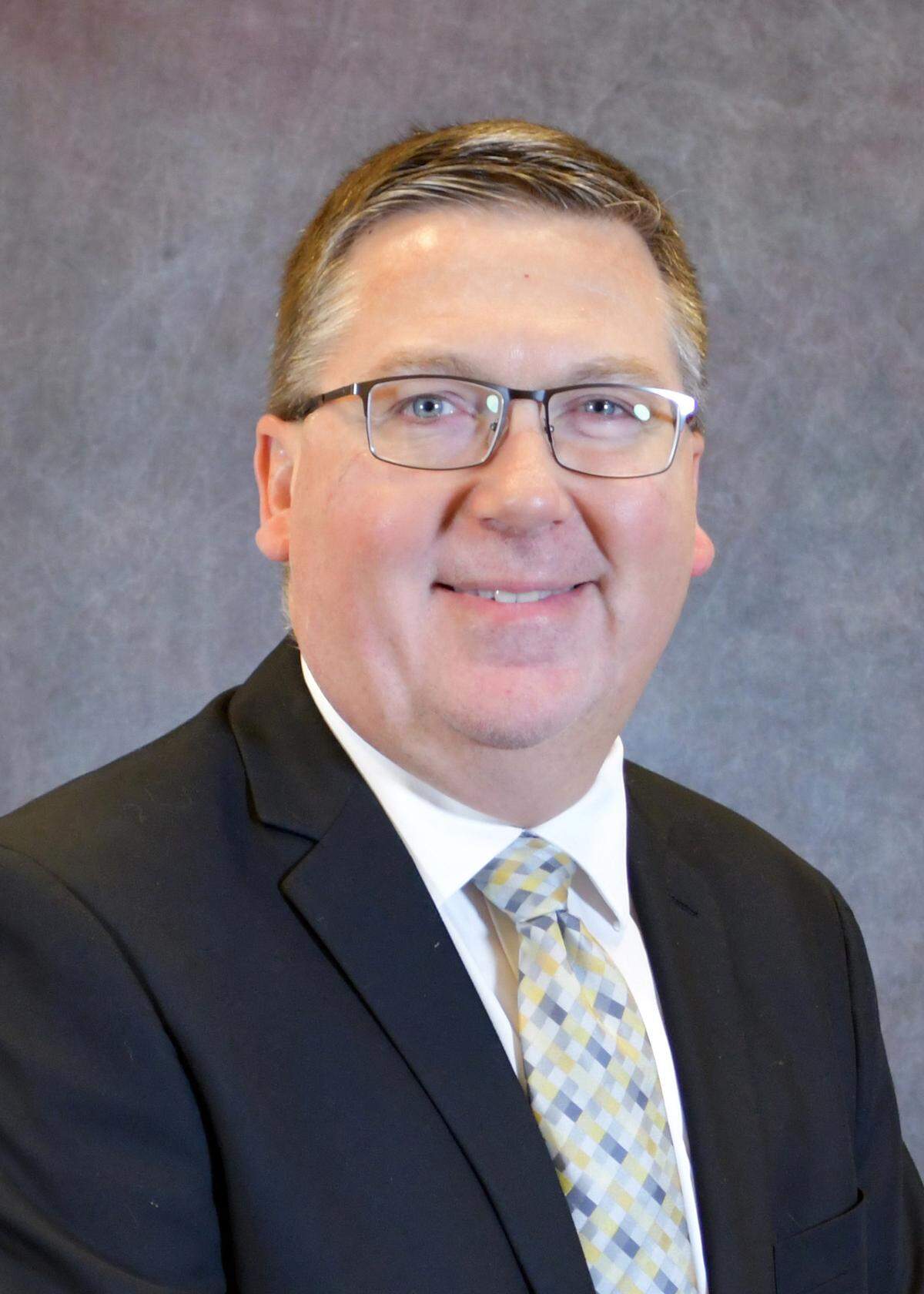
“The facts of the case don’t even come into discussion which is definitely not how it is supposed to be,” he said. “...That is how the system is designed. It’s not about the character of the prosecutors, but that is how the system is designed – that you charge as much as you can possibly charge somebody so that they will plead guilty.”
Fayette Commonwealth’s Attorney Kimberly Baird told the Herald-Leader her assistant prosecutors are each handling 100-plus cases annually. Baird is Lexington’s top prosecutor at the state-court level, and her office handles felony cases that make it to Fayette Circuit Court.
What is a plea deal?
Plea deals are an agreement between prosecutors and a defendant to plead guilty to a lesser charge and get a more lenient sentence or an agreement to drop some of the charges the suspect faces. The negotiations leading to an agreement are often conducted in private and are only made public when documentation is filed and presented to a judge in open court.
In Fayette County, 2.4% of criminal cases resulted in a jury trial in 2022, according to statistics from the state Administrative Office of the Courts. In 2023, that number increased by 1%. Statewide, jury trial frequency hovered between 7% and 8%. Some cases were also resolved by another form of trial, or had unclear conclusions, according to data from the state’s court system.
Plea deals got more frequent in Lexington as the COVID-19 pandemic further exacerbated the problem of backlogged court cases. The Kentucky Supreme Court in 2021 ordered Fayette County prosecutors and defense attorneys to begin taking part in mediation if it was ordered by a judge.
Since the implementation of felony mediation in 2021, 50 of 74 mediated felony cases resulted in a guilty plea, according to the Fayette County Commonwealth Attorney’s Office. Of those, 48 were murder cases.
Preston said the U.S. criminal legal system had originally been designed to be adversarial — both sides make their best argument to jurors who know nothing about the case ahead of time and they make their decision.
“With a plea bargain you take that out, so then it is just you and me debating, but (prosecutors) have a lot more leverage so I can say, ‘But look I have this witness, but look I have this proof,’ and (prosecutors) can say, ‘Look it is 50 years in prison if you don’t take this deal,’” Preston said.
Caseload, resources exacerbate need for deals
Fayette Commonwealth’s Attorney Kimberly Baird said a significant increase in felony cases and a low budget for the prosecutor’s office contributed to a rise in plea deals. But the number of prosecuting attorneys in Fayette County has increased to 16 — double the staffing of when Baird began 27 years ago.
Even with 16 prosecutors, the Lexington Police Department has 524 sworn officers who are always making arrests. In 2022, more than 2,000 felony arrests were made, according to Lexington police. Most of those cases find their way into Baird’s office.
The Bureau of Justice Statistics reports there are just over 2,300 state prosecutor’s offices, which employ around 26,000 chief and assistant prosecutors with more than 800,000 U.S. law enforcement officers making arrests constantly. Assuming as many as 10 million arrests are made per year, that leaves each prosecutor responsible for just under 400 cases annually.
“It is hard to process all of those cases,” Baird said. “You just can’t get trials set as quickly because there are so many on trial dockets. I think COVID was a big factor because everything came to a screeching halt. I think the department of public advocacy, being understaffed, also has a significant number of defendants coming through and it is just harder to talk to all your clients and that kind of thing.”
Even with more attorneys, the space prosecutors have in their building limits them. Baird says every closet, space, and table in the building is used to accommodate their workload — approximately 100 to 200 cases per attorney.
“I couldn’t add another attorney in here if I wanted to,” she told the Herald-Leader. “We just don’t have the physical space for it.”
Preston said a state public defender has nearly 375 cases annually — 136% of the national standard for public defenders’ offices in 2022. That comparison doesn’t include the backlog of tens of thousands of cases that are still pending because they were unresolved during the pandemic.
In a 2016 law journal article titled “Defense Bias: The Rush to the Plea,” author Molly Walker Wilson discussed cognitive and psychological biases defense attorneys may have, causing them to urge their clients to take a plea deal.
“The result is a vicious cycle—fewer resources for defense lawyers mean more, and more rushed plea bargains,” Wilson wrote. “Meanwhile, plea bargaining takes place outside of the courtroom, so there is less oversight, which contributes to lawyering mistakes and results in fewer protections.
“Accordingly, under the very circumstances in which defendants are getting less complete representation than they deserve, the quick plea bargain contributes to the existing inadequacies. It is the perfect storm of under-representation for an underserved population.”
Valerie Isom, 42, agreed to plead guilty to several drug-related charges. She said she had a public defender and often didn’t know what was going on in her case.
“You go in talk to them for a minute before court and they basically have everything already figured out, and you either take it or leave it,” Valerie said. “You don’t have sessions with them and I didn’t know what to ask about.”
Wilson referenced a New York Times article published in November 2008, in which public defenders’ offices in seven states, including Kentucky, protested overwhelming workloads, claiming “the demanding pace of representation had made the work of these public defenders a ‘plea bargain assembly line,’ (resulting in) ‘less justice and more McJustice.’”
At the time, former state Public Advocate Ed Monahan filed a lawsuit that would allow defenders to turn down cases they cannot ethically handle.
University of Louisville law professor and civil rights attorney Dan Canon said the United States has a criminal justice system designed solely for efficiency and limiting social classes, calling it “drive-thru-style justice.”
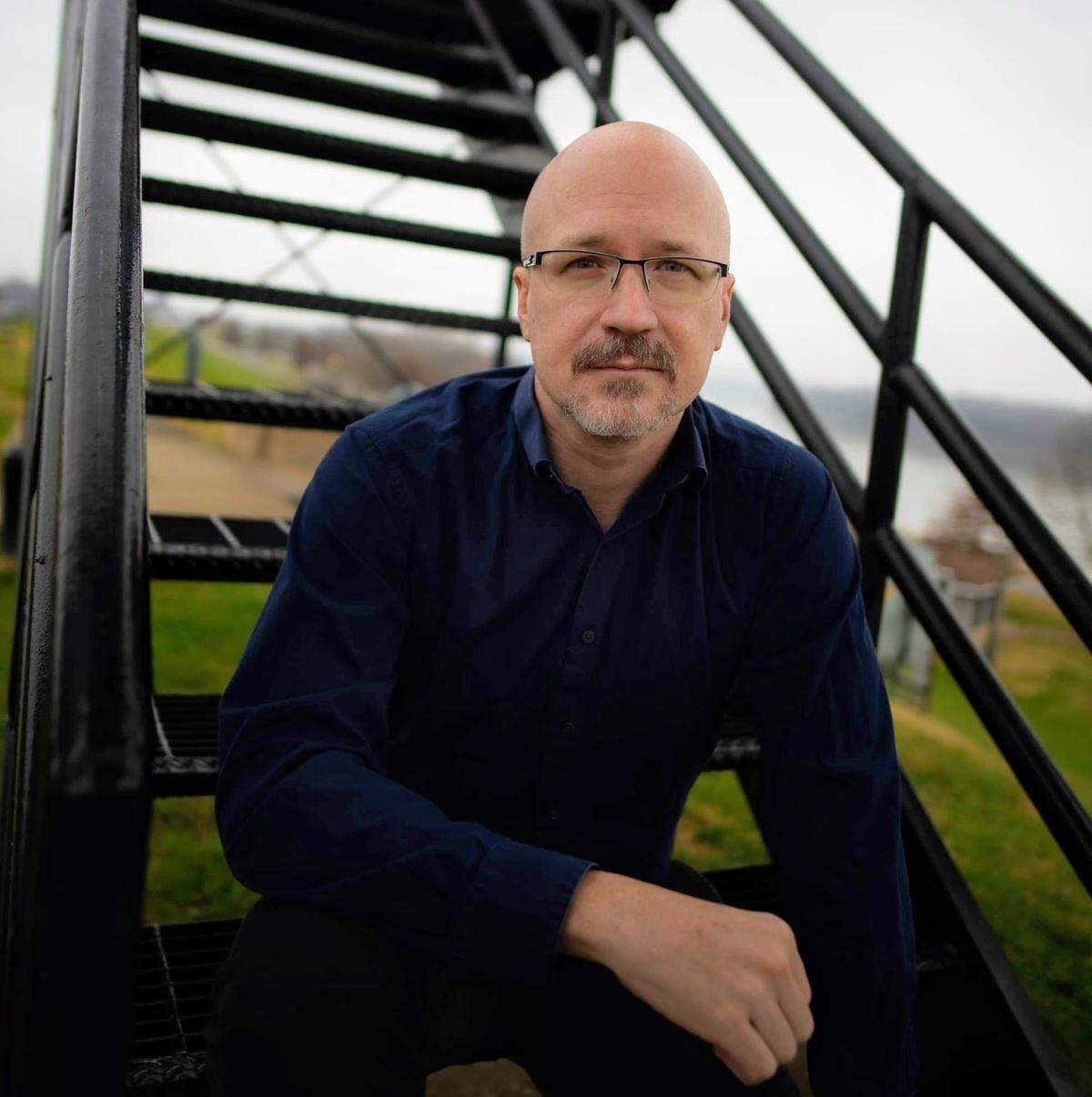
“It’s designed for speed, and it’s designed to sort of create as many convictions as possible in the shortest amount of time as possible,” he told The Herald-Leader. “And, you know, legal education over the last few generations has just sort of taught us that this is the system that we have, and we have to accept it for what it is.
“No one has time to do anything,” Canon said. “No one has time to think, is the system a good idea?”
In his book, “Pleading Out: How Plea Bargaining Creates a Permanent Criminal Class,” Canon critiques the criminal legal system and claims it is an unjust system which creates a massive underclass of people who are otherwise banished from participating in society.
‘No good option.’ Why people take plea deals
Prosecutors, judges and defense attorneys agree plea bargains are necessary because there are too many cases in the courts and not every case can get a jury trial. In theory, if a person accepts a plea deal, it is implied they are accepting responsibility for a crime they committed.
But the National Registry of Exonerations, an organization which provides comprehensive information on exonerations in the United States, reports 20% of cases reviewed since 1989 involved people pleading guilty to crimes they didn’t commit. The Innocence Project, an organization that seeks to prove wrongful convictions, reported that out of 375 DNA exoneration cases since 1989, 11% of defendants pleaded guilty to crimes they didn’t commit.
In Kentucky, there have been 23 exonerations since 1989, according to the Innocence Project.
The government benefits from plea deals because they spare them the time and cost associated with a trial, and the uncertainty of what it could bring. Defendants who accept plea deals are also spared an uncertain outcome, publicity and the risk of harsher punishment.
Plea bargains are not inherently bad, Preston said, but the reason so many criminal cases result in a plea agreement as opposed to a trial is because there often is “way more leverage on the prosecution’s side.”
“The defense has no good option,” he said. “Because of that — what I believe is excessive leverage on the prosecution’s side — there is just no reason to go to trial. You are basically begging for mercy to come up with a plea deal that is less so you don’t have to go on forever in jail.”
However, Baird put it plainly: “We don’t pressure anyone into a guilty plea, and the judges don’t.”
She said her previous boss, Fayette Commonwealth’s Attorney Ray Larson, drilled it into Fayette County prosecutors’ heads that they are not to prosecute anybody that they think is innocent.
“Like, you will be fired if you prosecute somebody that you know is innocent,” Baird said. “That is not what we do. That has been passed down from generation to generation in this office. We are very particular about cases. ... If we truly, truly thought someone got arrested and shouldn’t have, then we absolutely dismiss that case. We do not go forward on someone we think is innocent.
“When I just said I don’t have the resources — a defense attorney said I need another notch in my belt — I don’t need anymore notches. I don’t have time,” Baird said. “If I am already struggling with what I have got based on my resources, why am I taking an innocent case of an innocent person? Why would I do that?”
How pleading guilty gets some defendants out faster
Preston said he has seen repeated instances of judges denying bond reductions to defendants unless prosecutors agree with the motion. He added that defendants stuck in jail with a high bond can often get credit for time served if they plead guilty, helping them to be released earlier if they are willing to be convicted.
“They won’t let you out when you are presumed innocent, but the minute you say you are guilty, there is the door,” Preston said. “That makes no logical sense but it happens every day in district court.”
On average in Fayette County, there are more than 600 people at the beginning of each month waiting to receive a bond and release date as they wait for a court date, according to data from the Kentucky Administrative Office of the Courts from January to September. Statewide, this number is greater than 10,500.
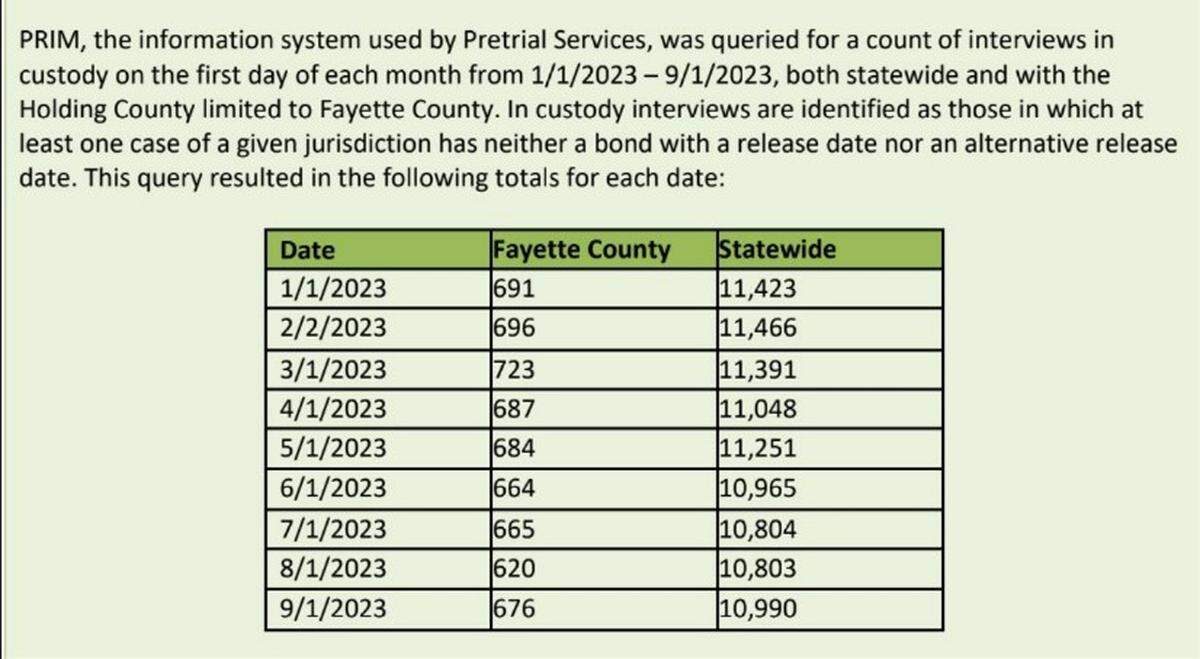
Bail reform in Kentucky would allow suspects more reasonable circumstances so they could avoid prolonged jail time while waiting for their case to progress, Preston said.
“When we know they are guilty we give them a punishment for being guilty and do it after the fact not before the fact,” Preston said. “That is a situation where people will plead guilty when they are innocent.”
The cost of the bargain
Defendants who plead guilty to a felony rather than fighting their case instantly lose their rights to a trial and protections guaranteed by the Fifth, Sixth and Fourteenth Amendments in the Constitution. Once they plead guilty, there is almost no way for them to take it back.
Convicted felons lose access to housing, food stamps, higher education loans and other benefits. Restrictions usually are tied to specific crimes, typically involving drugs — which made up 22.64% of crime in Kentucky in 2022 according to the Kentucky State Police’s annual crime report.
Private landlords can refuse to rent to people who have been convicted, as they’re allowed to cite fear of threats to other tenants. Public housing entities have more latitude, and can evict someone based on association with a person convicted of drug offenses.
Daniel Whitley, a defense lawyer in Lexington, said people who plead guilty will say they had to in order to “get this process over with,” even though it leaves them with difficulty finding work.
“That strategy should not be employed with human beings,” he said.
For Isom, it left her feeling like a lesser person.
As a felon, she cannot adopt, foster children, vote or own a gun. Isom has recently earned an associate degree in psychology, but is fearful of attempting to further her medical career — that after paying for further education she won’t be allowed to practice.
But she’s made progress in eight years of probation: she’s been sober eight years and has embraced roles as a mother, grandmother, wife and peer support specialist for others working towards recovery. Before that, the thought always loomed: “I am a felon.”
“I didn’t see myself as a whole person. I was a criminal, a felon, an addict — all those things and I basically isolated myself to the people in recovery,” she said. “I was scared what neighbors thought about me, it was scary to do a job application, get an interview and be ready to answer for that. Not everyone is accepting of the fact you can recover.”
For Raines, he wanted to get the process over with and did, but still feels long-lasting ramifications of the deal he accepted almost a decade ago.
“We had went from 15 years in maximum security prison to five years state time,” he said. “That is a huge, drastic change. My lawyer did well, but (the lasting implication) definitely wasn’t explained to me. You are going to be a violent felon and what that is going to look like for the rest of you life, that was not in the mix.”
He cannot own a gun, get a passport, or vote in any election. Raines also grappled with the stigma that comes with his conviction. But he has managed to improve his life, avoiding further drug use for nearly four years and working with others in recovery.
Reform: ‘The cost of jury trials is worth paying.’
In Canon’s book, “Pleading Out,” former Supreme Court Chief Justice Warren Burger wrote, “a reduction from 90 percent to 80 percent in guilty pleas requires the assignment of twice the judicial manpower and facilities – judges, court reporters, bailiffs, clerks, jurors, and courtrooms. A reduction to 70 percent (triples) this demand.”
If the number of plea deals were to be reduced, Baird thinks it would worsen the backlog. Right now, if a defendant were to ask for a case to be tried, they have dates set out as far as 2024 or 2025, depending on the judge.
“So if we are at that point now with the number of pleas we have, you are never going to get anything resolved because you don’t have enough days,” Baird said. “...It is just physically not possible with what the structure is that we have unless you add five more judges whose only job is to try cases and don’t have other things.”
What other ways can the system accommodate trials?
Rather than relying on plea bargains to lighten the load, critics argue, agencies should instead reform policies that create a reliance on criminalization. Many professors and legal experts sounded the alarm as early as 1960 to the plea deal process, and how its efficacy can compromise ethics.
In 1974, American legal scholar Albert Alschuler wrote the problem of providing adequate resources for criminal courts, for prosecutor and defender offices, and for other criminal justice agencies is undeniably difficult.
“...We must either endure these abuses or else restructure our criminal justice system to eliminate the overwhelming importance of the defendant’s choice of plea, a choice that is usually bent to the purposes of defense attorneys and other participants in the criminal justice system rather than to the interests of the defendant or society,” Alschuler said.
Canon said legislative overhaul could resolve issues, but the fixes aren’t politically popular, even in states that are often on the cutting edge of criminal justice reform.
Local prosecutors’ offices can be more effective in enacting change, Canon said. Prosecutors at the local level hold the power to curtail the worst abuses of plea bargaining and ensure their jurisdictions are more careful and deliberate. Still, that can change as leadership in those offices turns over.
“But you know, the next person comes in and says, ‘Alright, well, we’re gonna go back to the old way.’ And then it just becomes business as usual,” Canon told the Herald-Leader.
The most effective way, Canon said, is raising public awareness about the harm of plea deals.
“This is a difficult thing to do, especially when you have generations of lawyers now who have been trained to, you know, as we said before, expect that every case is going to end in a plea bargain,” Canon said. “And so ... that’s what their expectation is, I think, for even for most defense lawyers. When they get involved in a case, their expectation is it’s going to end in whatever the best deal is we can get for the client, not necessarily trial.”
Canon said if more defendants insisted on going to trial, prosecutors would have to make “uncomfortable decisions” about what cases they’re going to prioritize. That would cause prosecutors to ensure law enforcement officers “are bringing them good cases that they actually have evidence for.”
“As it is right now, since everybody sort of goes into the thing with the expectation that everybody’s going to plead, then police officers don’t really care about crossing the t’s and dotting their i’s. And prosecutors don’t really care about the sort of evidentiary truth of the matter. When they have a case in front of them, they just want to get it off their desk as quickly as they can.”
Even in 1974, Alschuler argued the poorest and most primitive societies manage to guarantee a right to trial.
“...It is hard to believe that our nation cannot find the resources to guarantee this right as well. Rather than rationalize the familiar, the cheap, and the easy, it may be time to reassert the judgment of the framers of the Sixth Amendment: the cost of jury trials is worth paying.”
This story was originally published November 16, 2023 at 10:00 AM.