Whatever happened to controversial dismissal of Lexington murder case?
Editor’s note: “Whatever Happened To” is a Herald-Leader effort to update readers on stories that grabbed headlines and attention with previous coverage. If you want to know the latest on a story from the past, contact us at ask@herald-leader.com.
Kentucky’s top prosecutor stepped in last summer in to assist the Fayette County Commonwealth’s Attorney’s efforts to overturn a judge’s controversial 2023 dismissal of a murder indictment.
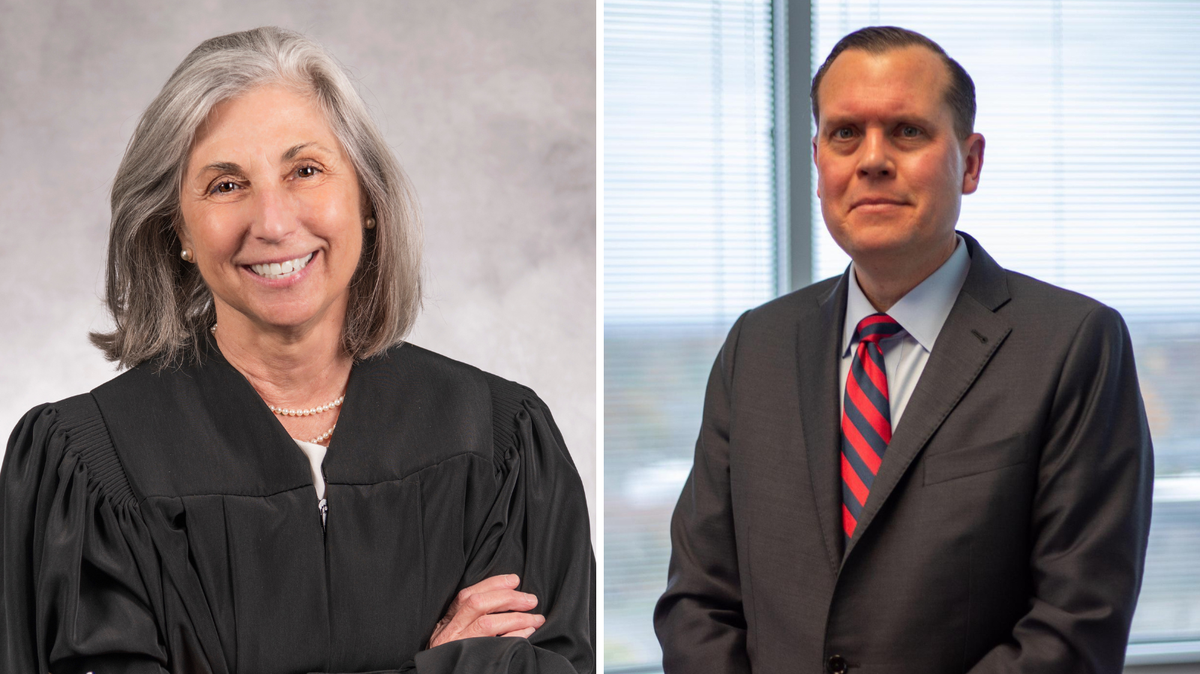
Judge Julie Muth Goodman had dismissed a murder case against Cornell Denmark Thomas II, 37, arguing he was overcharged because of his race.
Thomas was charged with wanton murder in a June 2020 crash near Leestown Road that killed Tammy Botkin, a 50-year-old Lexington woman.
Fayette Commonwealth’s Attorney Kim Baird sought to overrule Goodman’s dismissal, and Kentucky Attorney General Russell Coleman joined the fight in June 2024.
Coleman and Baird argued Goodman exceeded her authority by preventing the case from going to a jury.
But now, more than a year later, there has been little movement in the case.
Coleman has asked the Kentucky Court of Appeals to determine if Goodman overstepped her authority, and if prosecutors committed misconduct, as Goodman claimed, when they charged Thomas with wanton murder.
Both sides have filed briefs in the case, and it now awaits an opinion from Kentucky’s appeals court.
But there is no rule for how quickly the appeals court must rule. It could happen in a week, a year, or longer.
What happened in Thomas’ case
Goodman’s 24-page dismissal, issued in December 2023, accused Baird’s office of seeking disproportionately harsh punishments against minority defendants, including Thomas, a Black man.
Goodman ruled prosecutors hadn’t provided enough evidence to prove Thomas was criminally liable for murder in the case.
Prosecutors said Thomas was under the influence of drugs, which induced psychosis before the crash, but they provided no evidence of that claim, Goodman ruled.
“The Commonwealth’s failure to give its own expert, Dr. Allen, all the evidence cannot be overlooked,” Goodman wrote. “By correcting the report, therefore, the Commonwealth would have had no basis to proceed with the charges. The Commonwealth’s failure to correct the report — which has misled this Court and would have potentially misled the jury — is evidence of prosecutorial misconduct.”
What the briefs say
The three-person panel on the court of appeals can make one of three determinations: They can affirm Goodman’s decision, remand the case back to her court for further action, or vacate the decision altogether.
Prosecutors are requesting the appeals court reverse Goodman’s dismissal and reinstate Thomas’s indictment.
Coleman said the case should have gone to a jury based on the evidence, which he says is sufficient to prove Thomas acted “wantonly” by speeding excessively, running a red light, failing to brake and fleeing the scene.
Coleman and Baird say there is not enough evidence necessary under federal and state standards to support Goodman’s selective prosecution claim.
In a statement provided to the Herald-Leader, Coleman said their ask is to simply let the case go before a jury.
“The ongoing delay has caused tremendous pain to the victim’s family, who yearns for closure and to see justice done,” Coleman said.
Thomas’ attorney, Timothy Arnold, requested in his brief that the appeals court affirm the trial court’s findings and decisions.
Arnold’s brief argues that Baird’s office misled the grand jury by mischaracterizing Thomas’s actions and failed to provide a material blood test to their own expert in court.
Arnold declined to comment for this story.
How does an appeals court work?
The primary function of court of appeals panels is to review decisions made by the lower courts. The court of appeals doesn’t hear new evidence, but reviews the record to make a decision.
In total, there are 14 judges on the court of appeals, which is also known as the “intermediate court,” because it is the second-highest court body between the trial court level and the supreme court.
Panels like the ones reviewing Goodman’s decision include only a few of those judges.
The modern Kentucky Court of Appeals was created by a 1975 Judicial Article that reformed the court system. Before that time, there was only one appellate court in Kentucky’s system, and it had a severe backlog.
The last filing in the Thomas case was published in April, according to online court records.
The filing states that oral arguments aren’t necessary for the court to issue their opinion, so the panel will issue a decision based only on briefs that were filed by both sides late last year.